Vital Statistics
Charles Pitt Pynsent: 1824 – 1903 GRO1214 (Land Owner and Sheep Rancher, Victoria, Australia and Wellington, New Zealand)
Georgina Helen Ball: 1833 – 1916
Married: 1852: St. Kilda, Victoria
Children by Georgina Helen Ball:
Frances Elizabeth Pynsent: 1853 – 1873 (Married Francis Hawkins Hathaway, Ermington, Devon, 1872)
Mary Emily Pynsent: 1855 – xxxx
Charles Joseph Pynsent: 1858 – 1870
Marion Haslewood Pynsent: 1860 – 1898 (Married Barry Yelverton Goring, Wellington, New Zealand, 1893)
Florence Edith Pynsent: 1862 – 1889 (Married Augustus Edward Stanley Carr, Wellington, New Zealand, 1884)
Robert Burton Pynsent: 1869 – 1953 (Married Mary Isobel Addie, Northaw, Hertfordshire, 1906)
Family Branch: Hennock
PinsentID: GRO1214
References
Click here to view close relatives.
Charles Pitt Pynsent was the youngest son of Joseph Pinsent by his third wife, Ann (née Tucker). He was born at “Lower Jurston,” the small farm near Chagford in Devon that his father, a “ship and insurance broker” had retired to after leaving London. Joseph had indulged in a torrid correspondence with the great and powerful in Whitehall in the early 1820s, and he had retired after being soundly rebuffed! Later, the family moved to Joseph’s, larger, contiguous, farm at “Lettaford” which was across the parish boundary in North Bovey. Joseph continued his battle over political economy from there well into the 1830s.
Charles was eleven years old when his father died and he was brought up by his mother, Ann (née Tucker) and her family, and also his elder half-sister, Mary Anna Pinsent (Pynsent). Mary Anna later became a “school mistress” in the nearby parish of Manaton: “Manaton Preparatory School for Young Gentlemen: Established 1843: Conducted by Miss Pynsent, who receives and educates a limited number of boys, under ten years of age, whose happiness and improvement it is her constant endeavour to promote, by a strict but affectionate discipline. The locality is proverbially healthy and invigorating and the surrounding scenery picturesque and beautiful. The very highest testimonials from the parents of former pupils: Terms most moderate, and to be had on application to Rev. G. Jenkins, Manaton Rectory, Moretonhampstead” (Exeter Flying Post: Thursday 15th July 1859). Mary Anna never married. She died at Lettaford in 1875.
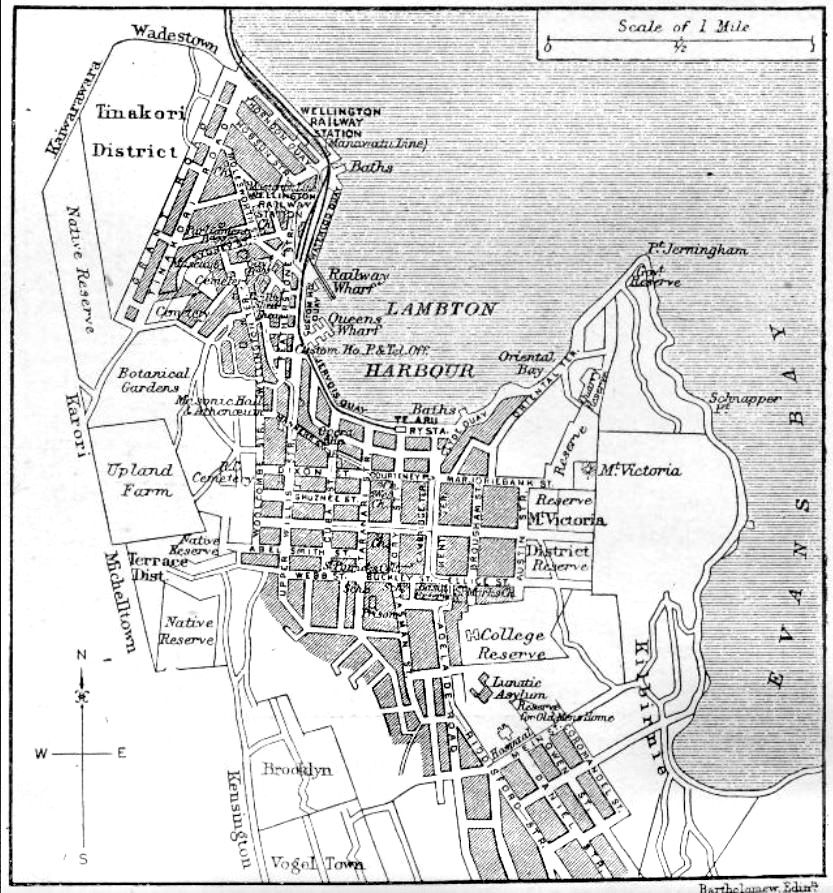
The following biographies show that Charles Pitt Pynsent and his half-sister Elizabeth both spent time in Melbourne, in Australia. Elizabeth and her husband, William Francis Splatt went out to run a sheep station and Charles went out to work for them. He was still a young man and he was to marry there and later to return to England a rich man. He spent over twenty years living in England and traveling on the Continent with a cousin (Thomas Pynsent) and his wife. However, he never settled in England and he took his family out to Wellington, in New Zealand in 1880. The following is an extract from “Cyclopaedia of New Zealand: 1897.”
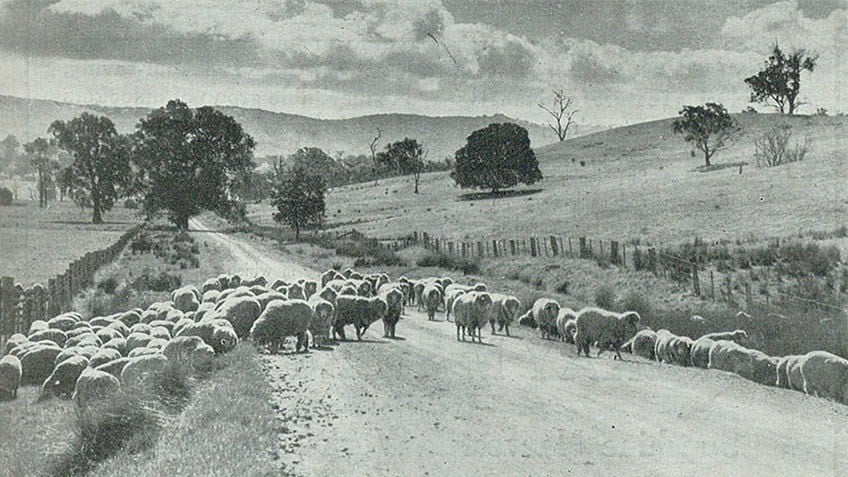
“Mr. Charles Pitt Pynsent, whose house and grounds are situated in Hobson Street, was born in Devonshire in 1829 (actually 1824, RHP). His father, Mr. Joseph Pynsent was a Devonshire landed proprietor. His son (Charles Pitt Pynsent: RHP) went to Victoria when quite young. Mr. Pynsent engaged in sheep farming from his earliest days and on attaining manhood took up a squatting lease on the Wimmera River from the Victorian Government. His venture proving successful, he obtained an additional lease having a total area of land from two hundred to three hundred square miles of territory. His sheep numbered 60,000 and for some years he led a happy squatter’s life.
In 1854 he left Victoria and returned to England where he remained several years. Later he spent some time in various parts of the continent, including France, Belgium, Italy and Switzerland. Mr. Pynsent came to New Zealand in 1880 on account of his health, arriving in Wellington on Christmas Day in that year per. S.S. Northumberland, commanded by Captain Babot, and has reason to be thankful for improved health during the period in which he has lived in the Empire City.”
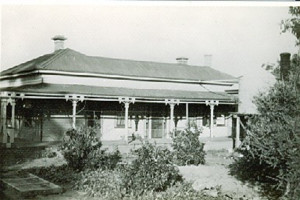
Also, Jim Heard, in a history of “Wonwondah Station” that he presented at the Annual Dinner of the Western Victorian Association of Historical Societies on 20th March, 1999, (http://home.vicnet.au/-wvahs/wonwondah.htm) tells us that:
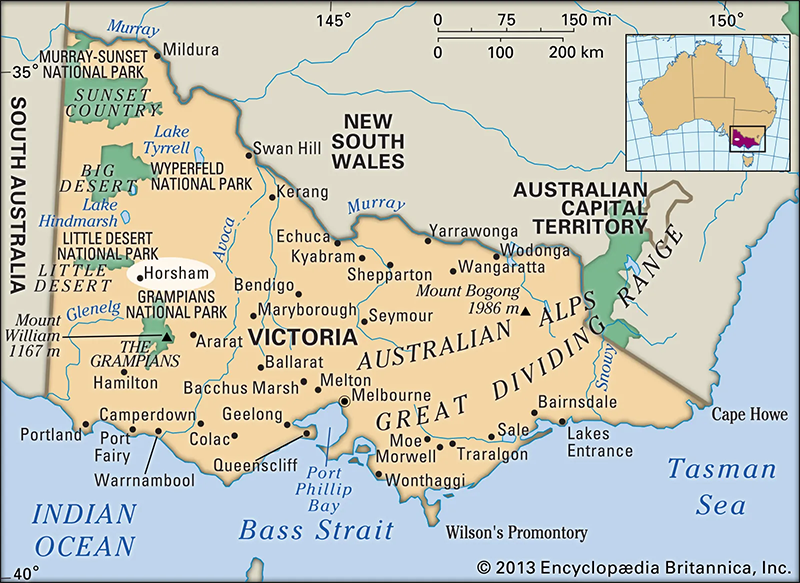
“Charles Pitt Pynsent and William Francis Splatt purchased Wonwondah Station and its livestock from Messrs Brodie and Cruikshank in August, 1845. The station then covered 140,000 acres (15 miles south of Horsham on Norton Creek in the Wimmera River area) and ran approximately 20,000 sheep. It was bordered by six other ill-defined “runs” and, as was common at the time, the boundaries were disputed, in 1847. Pynsent and Splatt were related by marriage (Splatt had married Pynsent’s step-sister). Both were influential in the founding of Horsham and later had streets named after them.
Charles Pitt Pynsent occupied Wonwondah Station in 1845 and, a few years later, (in either 1851 or 1852), he married Georgina Helen Ball, in Melbourne (a.k.a. Georgiana). He does not appear to have stayed in Australia very long. He returned to England around 1854. William Splatt was elected to the first Victorian Legislative Council in 1851. However after selling Wonwondah to John Quarterman in 1854, he also returned to England, where he became Mayor of Torquay and a Devonshire Magistrate for 28 years. He (William) died in 1893. In later life (1880), Charles Pitt, either for health reasons or “in pique because income tax was set at 6d in the pound” went out to New Zealand, where he died in 1903. His memorials include a Hotel in (Melbourne) Victoria, a street in Nairobi (Kenya), a waterfall in New Zealand and a small plant! “.
Not to quibble with Mr. Heard, but the Hotel in Victoria belonged to the AUSTRALIA branch of the “Pinsent” family and the small plant is probably the hybrid-saxifrage “Kathleen Pinsent” developed by an English gardener and named in honour of a member of the DEVONPORT branch in 1934. However, I digress.
The immediate question is: Why Charles Pitt Pynsent and not Charles Pitt Pinsent? It seems that Charles’s father, Joseph Pinsent, was obsessed with William Pitt, “The Great Commoner” under whose guidance Britain had been so successful during the “Seven Years War” (1756-1763). Joseph’s interest in Pitt was probably peaked by the fact that an eccentric baronet, Sir William Pynsent, had left his estates in Somerset (“Burton Pynsent”) and Wiltshire (“Erchfont” or “Urchfont”) to Pitt when he died in 1765. After receiving the bequest, Pitt abandoned the gentlemen in Commons and joined the aristocracy as William Pitt, “Earl of Chatham:” So much for the “Great Commoner.” The story is laid out in another part of this website: “The Pynsent Baronetcy: The Trials and Tribulations of a Litigious Family: 1687 – 1765.” Pitt built Burton Steeple, an imposing monument at “Burton Pynsent” in gratitude for the bequest. It still stands looking out over Sedgemoor. Joseph’s fascination with Pitt led him to name two of his children Joseph BURTON Pinsent and Charles PITT Pinsent.
The obsession was evidently contagious as Joseph’s nephew Thomas Pinsent – the relatively young but “senior” member of an upwardly mobile branch of the Pinsent family picked up on Joseph’s interested. Thomas checked the parish records to see if he could establish a link to the extinct baronetcy; however he failed and, to do him credit, he never claimed the link. He did, nevertheless, formally changed his name to “Pynsent” two days before his marriage to Jane Sparrow in 1842. Thomas convinced several of his cousins from Joseph’s marriages to Elizabeth Pynsent and Ann Tucker (see here and elsewhere) to change their surnames as well. This explains why we find “Charles Pitt Pynsent” running sheep in Australia in the 1850s.
Charles went out to Australia with his half-sister Elizabeth and her husband William Francis Splatt in 1841. Charles’s obituary notice, which was written in 1903, tells us that he went out after attending college in England. Perhaps he did, but he was only seventeen when he emigrated. Charles worked with Mr. Splatt and later took over as part owner and managing partner of his uncle’s sheep station at “Wonwondah.” This was when he came off age, in 1845.
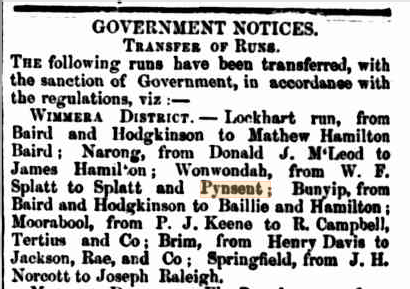
The sheep run was officially transferred from W. F. Splatt to “Splatt and Pynsent” in August 1851 (Geelong Advertiser: 2nd August 1851. Mr. Splatt had recently been appointed to the Victoria Legislative Assembly and he needed Charles to manage the family’s sheep run at “Wonwondah.” A few years later, William Francis and his wife (Elizabeth, née Pinsent) returned to England. They had had enough excitement. They left Charles to manage their Marino sheep business. However, shortly before William left, the partners acquired another major sheep run at Lexington, near Horsham in Victoria.
In “The Currency Lad” a book by T. S. Willis Cooke, there is a copy of a letter written by Mr. Splatt to the previous owner, It states: “Dear Sir, I agree to purchase your stock and stations at the price and terms described in your offer of the 23rd October inst (copy of which is annexed hereto) and I hereby authorize my partner, Mr. Charles P. Pynsent, to draw on me on sight payable to your order for the sum of £2,000 being the deposit money mentioned in your offer. Mr. Pinsent is also authorized to take delivery of the stock and stations at your convenience and on your handing me his receipt for the same and your making the usual transfer, I will grant you my acceptances for £4,000 and £2,000 as stipulated and also a mortgage over the entire property to secure the one payment of the said acceptances and also the residue of the purchase money with the interest thereon in conformity with your offer. I have only to add that if Mr. Pynsent should make any further purchases of you either of live or dead stock the same will be a binding, one, Dear Sir, Yours very Truly, Wm. F. Splatt:
P.S. As Mr. Pynsent takes an equal interest with me in this purchase and will take the active management I shall of course readily acquiesce in all his arrangements: W.F.S.” The previous owner had, evidently, over extended himself and as “It became impossible to get enough servants and farm hands as people headed for the diggings, in October 1852 (just over a year after moving into his ‘Mansion’), he was forced to sell Lexington to William Francis Splatt and Charles Pitt Pynsent on the basis of a ‘walk in – walk-out’ for the huge sum of £35,000 on mutually agreeable terms: the property was 120,000 acres, or 187 square miles” The letter included an inventory of contents; including 28 or 29,000 sheep. Lexington is approximately 95 km (59 miles) southeast of Horsham.
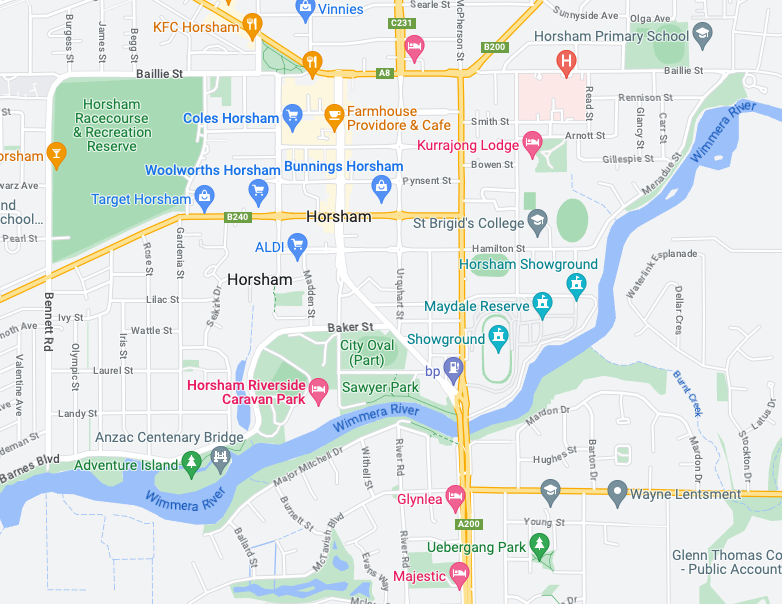
Charles was twenty-eight years old. By 1856, Splatt and Pynsent held a total of 19 Licenses (including those at “Wonwondah”; “La Rose” and “Lexington”) near Horsham, in Victoria. They had made their mark in the district and their presence is memorialized in two of Horsham’s Street names, Splatt Street and Pynsent Street.
Charles Pitt Pynsent Esq. of “Wonwondah” married Georgina Helen, the second daughter of George Palmer Ball Esq. of St. Kilda, at St. Kilda, on 8th September 1852 (Melbourne Argus: 9th September 1852). She had been born in Tasmania. They married roughly a year after the discovery of placer gold at Ballarat, in Victoria, and while Melbourne was suffering from the shock of a full fledged gold rush.
This was the moment that Charles’s half-brother, Joseph Burton Pynsent – doubtless encouraged by his half-brother and Mr. Splatt – shut down his grain importation business in Bristol and went out to Australia to join them. He sailed for Australia with his son (Thomas Ogden Pynsent) on the “S.S. Great Britain” in November 1852. Interestingly, he took his young son but not his wife. Perhaps she had heard about the reality of frontier life in Victoria! Alternatively, their relationship may have been somewhat strained by then. Mr. Splatt helped Joseph Burton,“Burton” as he was commonly known, set up in business as a “general merchant” (“Burton Pynsent & Co.”) with a store on Elizabeth Street in Melbourne and a branch outlet at “the Diggings”. It was one of the last things That Mr. Splatt did before returning to England with his wife Elizabeth. He left his two brothers-in-law to fend for themselves. Joseph Burton’s (very interesting) life is documented elsewhere in this website.
Charles and Georgina had a daughter, Frances Elizabeth Pynsent in 1953, while living at Lexington House at “Wimmera” (Bristol Mercury: Saturday 31st December 1853). Perhaps being a father was one of the reasons why Charles decided to follow his half-sister and her husband back home to England the following year. In 1854, Charles and Mr. Splatt (his silent partner) offered up 24,000 sheep for sale when “depasturing” Lexington: “These sheep have never been diseased and are considered second to none in this colony for weight of fleece and carcases” (Geelong Advertiser and Intelligencer: Saturday 1st April 1854). One sold sheep by the thousand in those days!“Lexington” was, of course, just one of their runs. They still had “Wonwondah”.
In a retrospective look at the life of a Mrs. Pickford, who died in 1912, the Horsham Times (Tuesday 12th November 1912) reflects on how she and her husband had been enticed out to “Wonwondah” by Splatt and Pynsent in 1851/2. It was shortly after their marriage in Bristol. Her husband had previously worked for Charles’s half-brother Burton Pynsent in Melbourne and he had agreed to come out as a station hand while she became a cook. They stayed on at “Wonwondah” after it was sold to Quartermain and Rutherford. Conditions were a little rough in those days. Mrs. Pickford recollected having to cook breakfast for the famous bushranger “Captain Moonlight”.
I am not sure precisely when Charles left for England with his young wife and daughter (Frances Elizabeth Pynsent) but it was probably in 1854 – about three years after the current Homestead was built. Charles was a rich man by then and he still owned property in Victoria when he left. He owned a Hotel at Craigieburne near Melbourne. Perhaps he thought he might return someday.
Back in England, Charles became a Fellow of “Queen’s College” Cambridge on 22nd January 1855. Later that year, while visiting his half-sister, Elizabeth Splatt (née Pynsent), in Gittisham, in Devon Charles Pitt prepared a Will. It is now in the Devon Records Office. In it, he refers to his wife, Georgina Helen Pynsent and his sisters, Mary Anna Pynsent, Anna Lucretia Pynsent and Harriet Cordelia (Partridge) – with whom he must have only recently reconnected after his time in Australia. Charles was still a relatively young man when he prepared the will and it included provision for as yet unborn children. He requested that the various bequests and legacies be paid out of his estates in Craigieburne. This document was to be superseded by a will he wrote in Wellington, New Zealand, in 1899.
Charles had another daughter (Mary Emily Pynsent) while staying with his half-sister Elizabeth. However, I gather she died young (personal correspondence sent to my father Robert John Francis Homfray Pinsent). I do not have the details.
Charles Pitt Pynsent and William Francis Splatt dissolved their partnership as the principal “stockholders at Wonwondah and Lexington in the Colony of Victoria” on 9th June 1856 (Government Gazette) and they went their respective ways. Charles had his signature witnessed by his cousin, Thomas Pynsent, of “Corfield House” in Weston-super-mare. Like his cousin, he too was by then a very rich man.
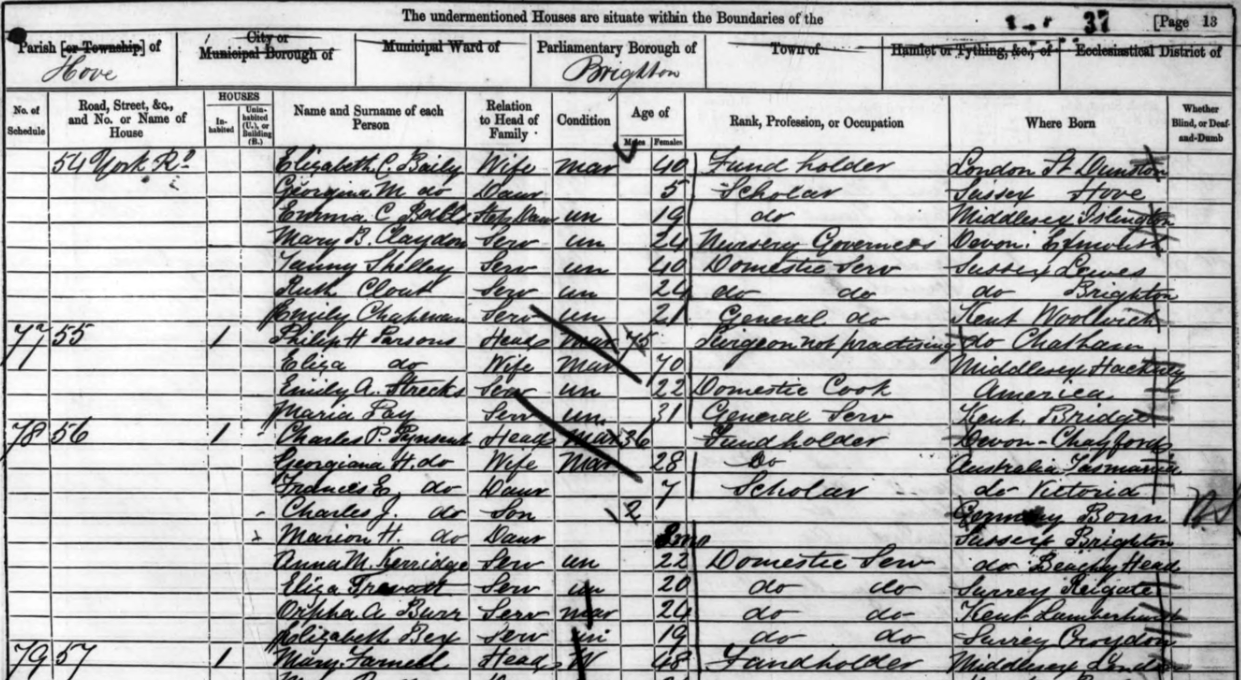
Thomas Pynsent had sold the family farm at “Pitt”, in Hennock a few years earlier and invested the money. He thought of himself as a “gentleman of leisure”. His life is described elsewhere. However, Thomas and his wife (Jane née Sparrow) and young children enjoyed traveling and they lived on the Continent for a while. Charles and Georgina (née Ball) made several trips with them and also spent time abroad. They had two daughters: Frances Elizabeth Pynsent who was born in Melbourne in 1853 and Mary Emily Pynsent who was born in Devon in 1855. They added a son Charles Joseph Pynsent in Bonn, Germany, in 1858 and on their return to England they settle in Hove, in Sussex and had their third and fourth daughters Marion Haslewood Pynsent and Florence Edith Pynsent in 1860 and 1862 respectively. When the Census takers caught up with the family while they were there in 1861, Charles said he was a “fund holder”: read independently wealthy.
The two families seem to have been particularly fond of Italy and they even had some Italian investments. William Francis Splatt of London and Charles Pitt Pynsent of Turin were both elected onto the Board of Directors of the “Italian Irrigation Company” (Canal Cavour) – which was based in Turin. This was after a managerial shake up in 1866 (London Daily News: Friday 23rd November 1866).
Charles and Georgina had a second son, Robert Burton Pynsent in Heidelberg, in Germany in 1869. Their first-born son, Charles Joseph Pynsent, was to die in Stuttgart the following year and Robert Burton was to become his father’s principal heir. According to the New Zealand Observer, Charles had a third son as it shows “the engagement of Mr. W. Pynsent, son of Mr. C. P. Pynsent, Hobson Street, and Miss Violet Deane, daughter of Major Deane, of England.” (New Zealand) Observer, Volume XXIII, Issue 21, 7th February 1903. However, this is wrong and other papers show that it was Robert Burton Pynsent who became engaged to Violet Deane. The Graphic Magazine: 31st July 1903, is right in referring to “Mr. R. Pynsent, the only son of C. P. Pynsent …” Robert Burton never actually married Violet – as far as I know. Interestingly, the announcement came a few months before Charles Pitt Pynsent died in Wellington, in July 1903, and Robert, who had been in London, had promptly gone out to New Zealand to handle his father’s estate. Perhaps that is what ended the engagement. Robert Burton Pynsent is the only son mentioned Charles Pitt’s will.
Charles’s eldest daughter Frances Elizabeth was (either formally or more-likely informally) “adopted” by her uncle and aunt (Mr. and Mrs. Splatt), and she was living with them in Devon when she married Francis Hawkins Hathaway (Captain of the 62nd Regiment), in Ermington, in 1872 (Belfast Newsletter: Monday 13th May 1872). Unfortunately, she died in November the following year. Perhaps as yet another a casualty of childbirth.
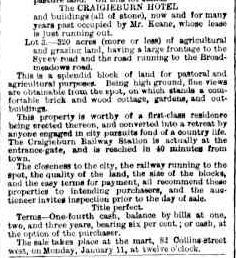
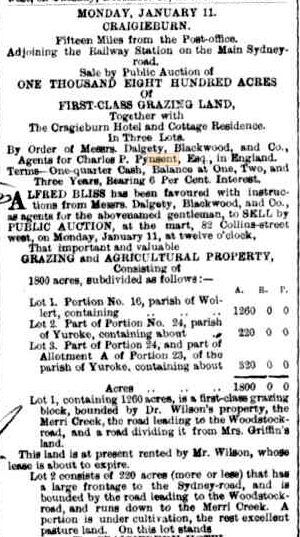
By 1874, Charles Pitt realized that he would not be going back to Australia, so he put his property there up for auction. It included “1,800 acres of first class grazing land; together with The Craigieburn Hotel and a Cottage Residence.” His agents, Messrs. Dalgety, Blackwood and Co., offered the land to the public in three lots; the grazing land; the hotel (with its frontage onto the Sydney Road) and the cottage residence area where there was valuable land “having a large frontage to the Sydney road and the road running to the Broad meadows road: This is a splendid block of land for pastoral and agricultural purposes. Being high ground, fine views are obtainable from the spot, on which stands a comfortable brick and wood cottage, gardens, and outbuildings. This property is worthy of a first-class residence being erected thereon, and converted into a retreat by any one engaged in city pursuits fond of a country life.” It was said to be adjacent to the railway station and within 40 minutes of “town” (Melbourne Argus: Saturday 19th December 1874). The lots were sold by auction at the Mart, 82 Collins Street, Melbourne, at 12.0 o’clock on Monday 11th January 1874. I hope he got a good price for them. The land would be worth a fortune today.
For some reason, Charles decided to live in New Zealand instead of Australia. He and Georgina and their family (Mary Emily Pynsent, Marion Haslewood Pynsent, Florence Edith Pynsent and Robert Burton Pynsent) emigrated and settled there in 1880. The traveled out on the “S.S. Northumberland” “First Saloon Class” and arrived in Wellington in November 1880 (Australian and New Zealand Gazette: Saturday 30th October 1880). Mary Emily Pynsent may have followed her parents out, as I have her travelling alone between Melbourne and New Zealand in September 1881 (Melbourne Argus: Thursday 8th September 1881). On arrival, Mary seems to have advertised for a position as a companion or house-keeper for a Lady, “salary not so much an object as a comfortable home” (Lyttelton Times: 23rd September 1881). Why she was not welcome in the family home, I do not know! Perhaps she just felt the need for independence. There are a few references for a Miss E. Pynsent – probably Mary Emily but possibly Florence Edith – attending concerts and playing the pianoforte in 1884 (New Zealand Mail: 22nd February and 6th July 1884), and the Misses Pynsent are referred to after the death of their married sister, Florence Edith, so they may have both been around. Nevertheless, I do not know what happened to Mary Emily. She seems to have married or died by 1888.
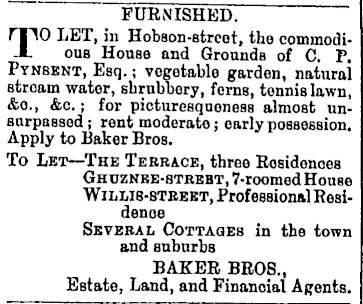
Charles and Georgina settled into a large house called “Clifton” on Hobson Street. It was near the main railway station on the north side of Lambton Harbour. The couple seem to have had only one daughter in residence by the time they let their house (Evening Post: 18th February 1888) and returned to London for a visit in May 1888 (Auckland Star: 4th May 1888). The house may have been a hotel when it was first built. It was an impressive building: “containing 10 rooms, besides bath, scullery larger pantry and storeroom, the superior residence of C. P. Pynsent, Esq. Grounds tastefully laid out, natural stream, water, ferns, shrubbery, tennis lawn, kitchen garden etc. For picturesqueness almost unequaled” (Lyttleton Times: Wednesday 22nd February 1888). Clearly, it had a lovely view out over the water.
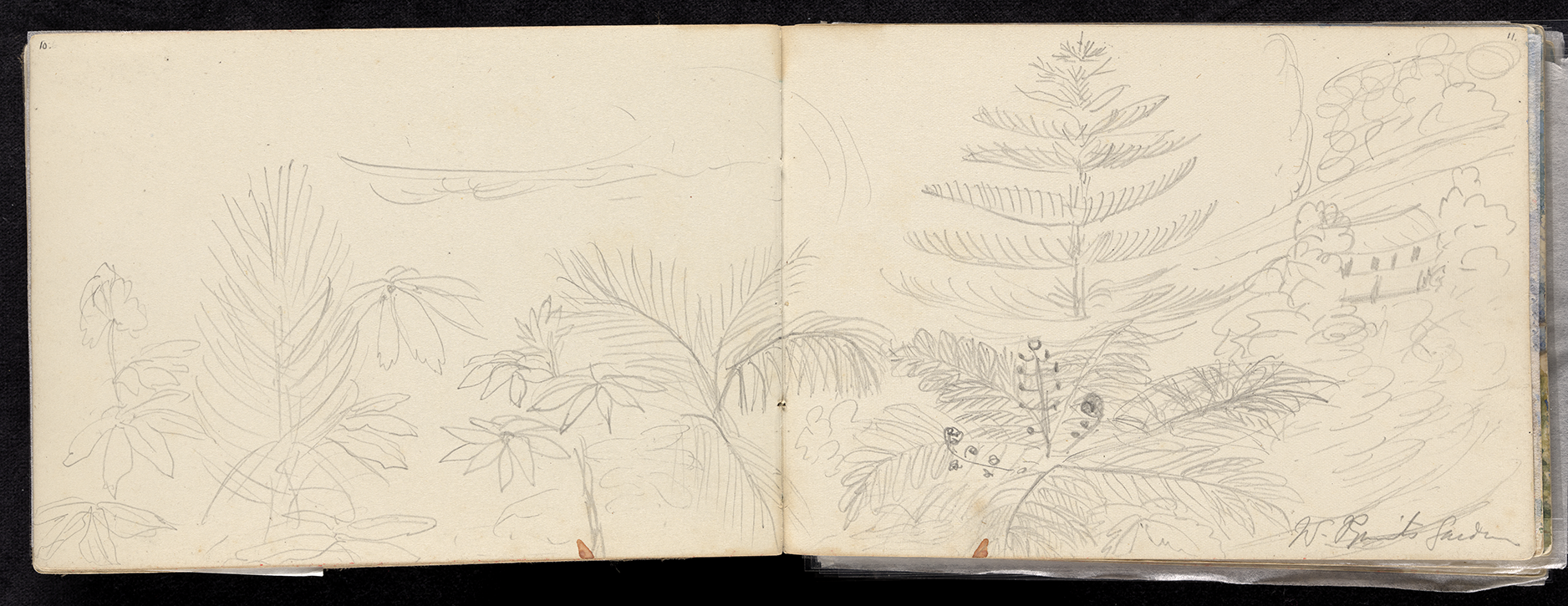
Ironically, the best description of the garden is given in the New Zealand Graphic on 6th December 1911 – several years after Georgina left for England: : “One of the few beautiful gardens left in Wellington was the scene of a very enjoyable party on Thursday when Mrs. Fitzherbert and her daughters entertained their friends. In addition to a fine lawn overlooking the bay there is—in the Pynsent place which Mrs. Fitzherbert has been occupying for some time—a most picturesque gully with winding paths, where fern trees, native bush and flowering rhododendrons all grow thickly. So, the surroundings are ideal for a garden party. Afternoon tea, strawberries and cream, and teas on the lawn were much appreciated, and there was some inspiriting music from a string band. …”. It sounds lovely.
How long the family intended to be back to England for in 1888, I do not know. However, Charles made his way back to New Zealand on the “S.S. Tainui” in March 1890 (Auckland Star: 14th March 1890). Perhaps he had his family with him, however, if so they are not mentioned and they may have returned on another ship. The local Newspapers frequently refer to one, or some, of the Pynsents traveling by ship to the South Island or Australia. However, it is not always clear who they are referring to.
Charles, Georgina and family were rich and they very quickly slotted into the “fashionable” social scene in Wellington – which is at the south end of the North Island of New Zealand. Charles attended “levees” given at Government House to honour the Queen’s birthday almost annually in the 1880s and 1890 (New Zealand Mail: 27th May 1882) and Mrs. Pynsent and her two daughters (Florence and Marion), who were musical, attended attended concerts together (New Zealand Mail: 22nd February 1884). Florence Edith moved to Invercargill after she married in July 1884, but her sister Marion stayed on in Wellington and socialized with her mother both before and after she married in 1893. They attended musical, and other, events together.
The Pynsents built up a list of “fashionable” friends and acquaintances, and were invited to countless gardens parties and other social functions. Hardly a week went by when there was not some social function; a reception at Government House perhaps (New Zealand Mail: 17th June 1893), an Oriental Bazaar (New Zealand Mail: 12th September 1884), an “At Home” given at Bishop’s Court given by Mrs. Wallis (New Zealand Graphic: 19th October 1895) a “garden party” for the Diocesan Synod given by Mrs. Tolhurst (New Zealand Mail: 15th October 1896), a “Fairwell Conversazione” given for the Earl and Countess of Glasgow at the end of their term of office as Governor (New Zealand Graphic: 13th February 1897 or an afternoon aboard the “H.M.S. Wallaroo” when it was in port (New Zealand Graphic: 14 February 1903).
These social events were, in the 1890s at least, carried out under the watchful and critical eye “Ignota” and “Violet” in the New Zealand Mail and “Ruby”, “Ophelia” and occasionally “Meye” and “Clarisa” who wrote letters to “Dear Bee” – the society correspondent at the New Zealand Graphic. They focused on the ladies’ dresses and for the most part made no mention of the their male partners. Presumably they were there, some of the time. At the dances, at least. The Wellington dress-makers must have made a good living. Mrs. Pynsent, I gather, favoured black and mauve.
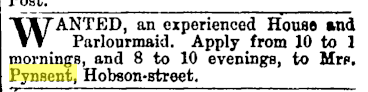
Georgina ran the household and placed numerous advertisements in the local papers pleading for “experienced house and parlour maids” (Evening Post: 31st January 1887 etc.) or for a “respectable young woman as cook” (Evening Post: 22nd April 1896 etc.). Good servants seem to have been hard to come by.
Charles and Georgina returned to England periodically. For instance, they left Tilbury en route for Melbourne on the “R.M.S. Oruba” on 20th November 1891. On this occasion, they were traveling with one of their daughters (The Colonies and India: 21st November 1891). They may well have been back in England to see their son Robert Burton who would have been settling into his law studies at Cambridge (The Times: 12th October 1891).
Georgina’s daughters fulfilled the social obligations of their social class and position. They contributing to concerts and did charitable work – while their mother kept an eye open for suitable husbands. Marian painted and received a bronze medal for her work in October 1888 (Evening Post: 20th October 1888).
Charles, meanwhile, bought property in down-town Wellington and at one point acquired a farm. However, he seems to have remained a “property owner” at heart. He went to Melbourne in Australia in January 1887 (Otago Daily Times: 1st February 1887 etc.) and Lyttleton, on the east coast of the South Island of New Zealand in December that year (Press: 21st December 1887, etc.). He traveled on his own. What these and other trips were about, I am not sure; however I suspect they were business related. Charles Pitt seems to have handed over the running of the farm he bought to his son Robert Burton in around 1894 – shortly after he returned from England with his law degree. It was probably an inducement for him to stay.
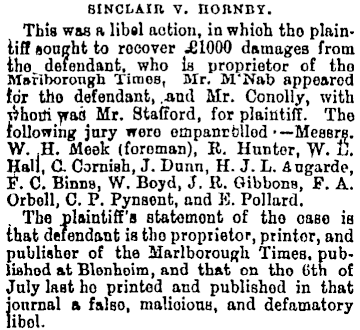
Quite early in his life in Wellington, Charles was appointed to the “Music and Ceremonial Committee” when the Wellington elite met to discuss the forthcoming “New Zealand Exhibition” (Evening Post: 3rd August 1885). Among other civic duties, Charles was empaneled as a juror for the Supreme Court hearing of “Sinclair v. Hornby” in January 1886 (Evening Post: 20th January 1886). It was a libel action, in which the plaintiff sought to recover £1,000 from the proprietor of the “Malborough Times”, claiming that there were inaccuracies in an article it had published regarding a land transaction.
Charles and Georgina made the appropriate donations to hospitals (Evening Post: 25th June 1897) and social service charities (Evening Post: 13th June 1903). They were both interested in the “Society for the Prevention of Cruelty to Animals” and Charles served on its founding committee, in October 1884 (Evening Post: 4th October 1884). He remained actively involved in it for several years. The “SPCA” examined numerous cases in and around Wellington, including one in which a man called Smith kept a mutant sheep as an exhibit. It had six legs, two of which grew out of its abdomen and were eight inches long and covered with sores. The vet said that he did not have the authority to kill the animal and he recommended the committee prosecute the owner (Evening Post: 3rd June 1885). Other cases were more predictable and less noteworthy. Charles dropped off the committee in the 1890s but Georgina still contributed to its annual subscriptions (Evening Post: 27th April 1897 etc.).
Florence Edith Pynsent, Charles’s youngest daughter, married Augustus Carr, a bank manager at Invacargill in 1884. One of her sisters were bridesmaids: “The bride wore a dress and square train of ivory white brocaded and plaid satin, trimmed with Brussels lace and wreaths of orange blossoms, also a gold necklet and diamond locket, a gift from the father of the bridegroom. The bridesmaids appeared in cream coloured suvat dresses and sapphire blue velvet bonnets, trimmed with pearls and hyacinths, while each also wore a brooch, a present from the bridegroom” (Evening Post: 17th July 1884).
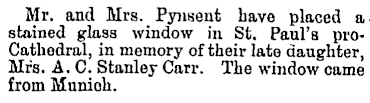
Sadly, Florence died in 1889. Her parents placed a stained-glass window to her memory in St. Paul’s Cathedral, in Wellington (Evening Post: 13th February 1892).
Florence’s sister Marion Haslewood Pynsent studied at the “Wellington School of Design” in 1886 and 1887, and (as noted above) was awarded a bronze medal for a painting in October 1888 (Evening News: 20th October 1888). She picked up another bronze the following year for a picture of foliage (Evening Post: 15th March 1890). Her father was one of many who contribution to the “Building Fund” for the “New Zealand Academy of Fine Art” (Evening Post: 7th December 1892).
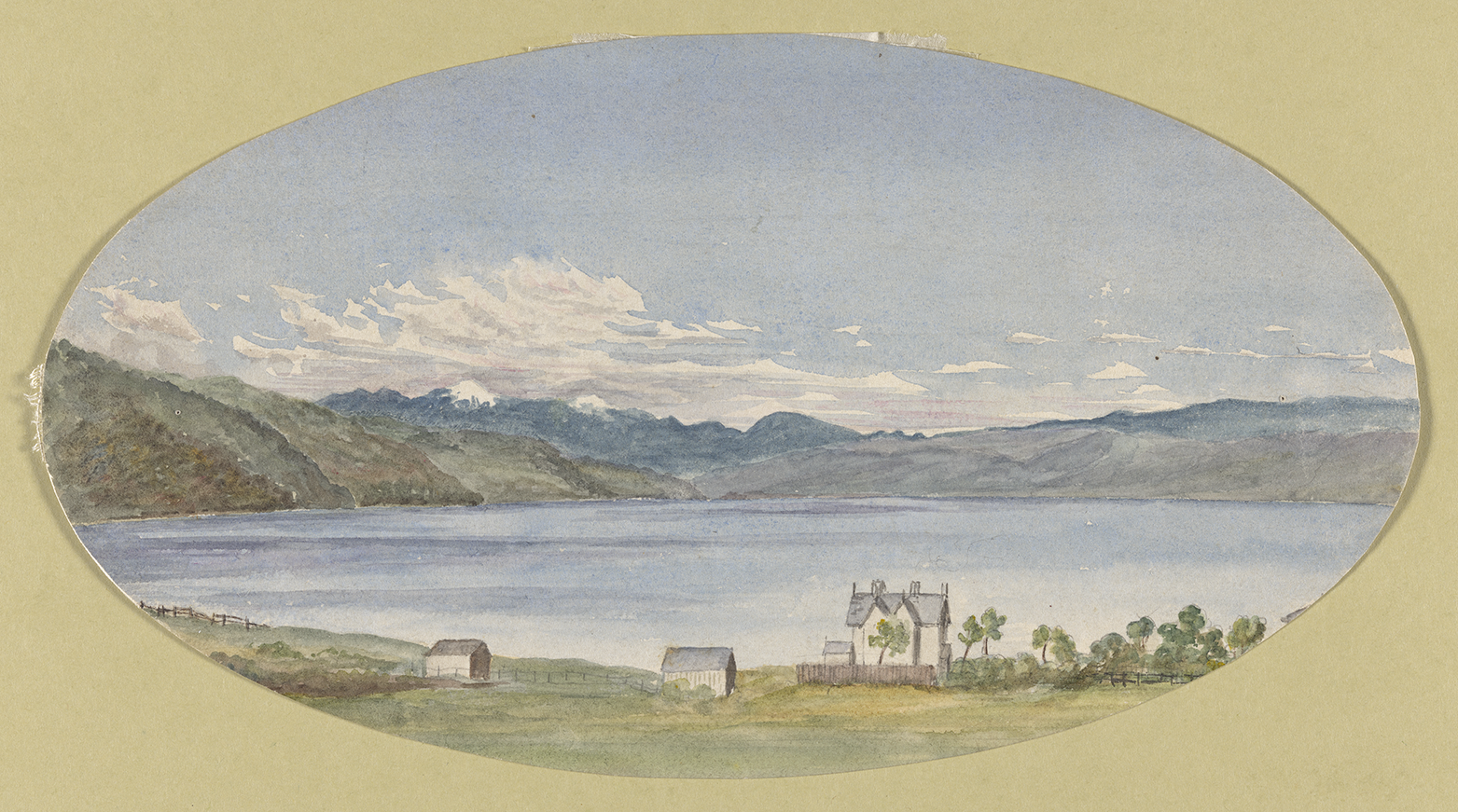
The Pynsent household on Hobson Street acquired a telephone in 1892 (Evening Post: 15th June 1892) – which must have been a boon to Marion and her mother (Mrs. and Miss Pynsent) who seem to have been ever-present on the social scene throughout the 1890s. The local papers make mention of the events they attended and, not infrequently, of the clothes they wore. For instance, Mrs. Pynsent wore a “prune” coloured creation and Miss Pynsent a “green and gold” dress at Lady Glasgow’s reception at Government House in June 1892 (Observer: 2nd July 1892). On other occasions, they attended concerts (Manuwatu Herald: 11th February 1896) and “At Homes” and played croquet (Press: 22nd February 1896).
Charles attended some of these events but he also had other interests. It is perhaps worth noting that when Mr. and Mrs. and Miss Pynsent attended a “Birthday Ball” at Government house in May 1893. There was also a single man named Mr. B. Goring in attendance (Evening Post: 25th May 1983). Barry was not single for long – Barry Yelverton Goring married Marion in December that year . The wedding is described in detail in an article in the New Zealand Mail (8th December 1893).
Barry and Marion Goring had their first child in November 1894: “Quite a large gathering assembled at Mr. C. P. Pynsent’s house last Friday afternoon by invitation of Mr. and Mrs. Barry Goring, who are staying there, the occasion being the christening of Mr. and Mrs. Goring’s baby, who appeared in very fine robes, and amid much state, received the congratulations of its numerous friends. The cake was cut and the health of the infant drunk with champagne: the name chosen being “Dorothy Edith” (Manuwatu Herald: 24th November 1894).
Marion and her mother remained close and they frequently attended social functions together. However, it is worth noting that Barry’s mother was still around and two there were two “Mrs. Gorings” in Wellington. Fortunately the sharp eyed correspondents reporting to the press frequently, but not invariably, differentiated between the two. Mrs. Pynsent and Mrs. B. Y. Goring attended events together. For instance, they attended the “Annual Spring Flower Show” in November 1894 (Manawatu Herald: 17th November 1894).
Mrs. Goring (as Marion was then) had two daughters. Dorothy Edith Goring was born in 1894 and Barbara Yelverton Goring was born in 1897. Sadly, the newspapers tell us that Marion “who has been in delicate health for some time past, died yesterday whilst on a visit to Mrs. Russell, at Palmerston North” She died in 1898 (Evening Post: 14th December 1898). Marion’s death left Barry Goring with two very young daughters and Charles Pitt and Georgina determined to look after them. From here on, Georgina was also on the look out for “nursery governesses” (Evening Post: 17th October 1904).
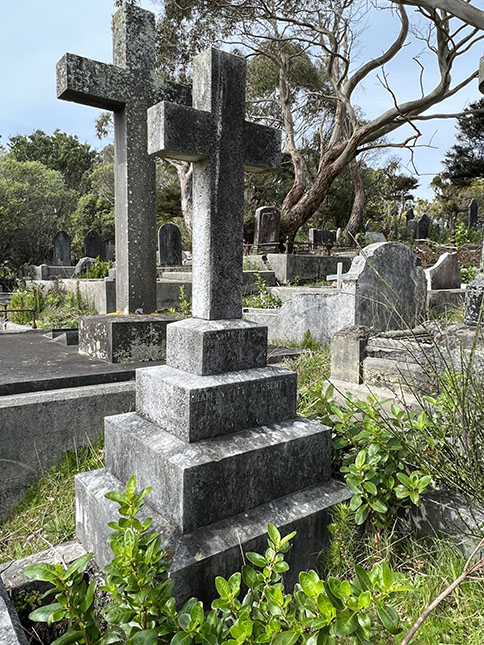
Charles died in Wellington on 31st July 1903 and was buried in Karori Cemetery after a service in St. Paul’s Cathedral (Evening Express: 28th August 1903). He was seventy-eight years old and, as the following obituary shows, an “old time” pioneer in the eyes of many Australians: “News has been received of the death in New Zealand of Mr. Charles P. Pynsent who was one of the earliest pioneers of the Wimmera. The name of the deceased (has) been immortalized in Horsham by the naming of “Pynsent Street” in honour of deceased. The late Mr. Pynsent, though he left this district about 54 years ago is still very favorably remembered by some of the pioneers, including Mrs. Healey, of Hamilton Street, Horsham. That lady and her late husband and two children lived at Mr. Pynsent’s Wonwondah station for some time, and Mrs. Healey speaks in highest terms of praise of deceased, who was a justice of the peace in the Wimmera “He was a real good, honourable man” remarked Mrs. Healey when spoken to about Mr. Pynsent’s demise. Upon his leaving the district, Wonwondah station sold to Mr. Rutherford. A brother-in-law of the deceased was Mr. Splatt, whose name is also perpetuated by a street in the borough being named in his honour. At one time Pynsent held between 200 and 300 square miles under lease from the Victoria Government” (Horsham Times: Friday 7th August 1903”.
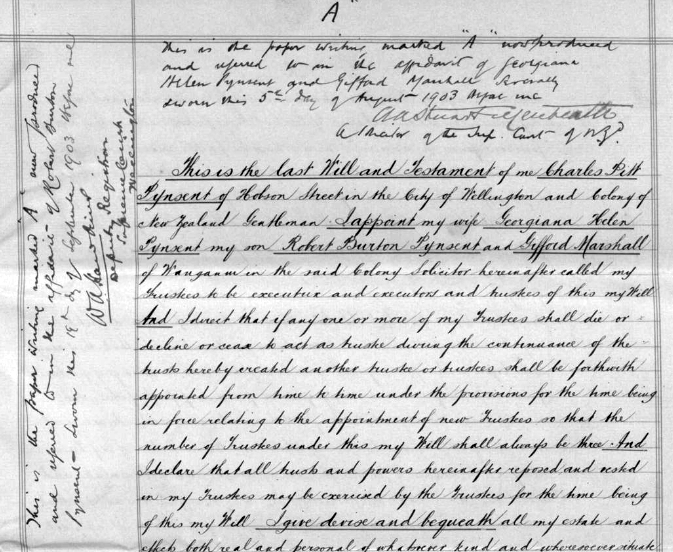
Charles Pitt Pynsent had written his “last” will and testament in 1899. He appointed his wife Georgina, his son Robert Burton and a local solicitor, Gifford Marshall as his executors. Robert was in England at the time, but he hurried home. He arrived in Wellington on 17th September 1903 (Evening Post: 17th September 1903). The will was probated in Wellington in August 1903 and it was then sent to England, where Charles have also held assets, for ratification.
Charles Pitt Pynsent asked that his executors use his investments to generated one thousand pounds a year of annual income for his wife, and allot money for his granddaughters’ (Dorothy Edith Goring and Barbara Yelverton Goring) education – the amount to be taken out of their respective twelve thousand pound legacies on their coming of age. Georgina was to have his house and garden in Hobson Street, in Wellington, for life, and, as for the rest of his real and personal estate, including his farm near Wanganui (now known as Whanganui), it was to go to his son, Robert Burton Pynsent (Probate Records: Wellington Court: 1903 P8439/03-P8500/03).
The Supreme Court of New Zealand granted probate on the 6th day of August 1903 (The Times: 12th January 1904). Charles had his estate in New Zealand valued at £104,097 (Wanganui Herald: 1st December 1903). A tidy sum! The will was processed in London on 2nd February 1904. Charles’s effects in England amounted to £32,797 16s 11d. A later entry states that probate was granted to Robert Burton Pynsent, “barrister at law” in London, 15th February 1904.
Georgina was left on her own with her son-in-law and her granddaughters and, as it was now clear that her son Robert had decided to stay on in England as a “barrister”, she decided to join him. If she took granddaughters back, they could get a “proper” English education. Presumably Barry agreed to all this. He also made plans to move to England. Georgina took the girls back, quite possibly to check out schools, around the time of King Edward VII’s Coronation. It was a two-stage journey in those days. You took a steamer from Wellington to Sydney and then took another from Sydney to London. The Sydney Mail and New South Wales Advertiser (Saturday 8th March 1902) tells us that Mr. R. Pynsent, Mrs. Pynsent and Misses D. and B. Goring had taken the Imperial German Mail Steamer “Bremen” from Sydney to London in March 1902. Similarly, the Lyttleton Times: Monday 15th December 1902 shows that “Mrs. Pynsent and two children” bound for New Zealand had recently arrived in Fremantle on the “S. S. Oruba.”
New Zealand press announced that: “Mrs. Pynsent leaves very shortly for England, where she will reside for the next few years to enable her grandchildren (to live with?) her – whilst they are being educated” in March 1905 (Otago Witness: 15th March 1905). Georgina rented out the family home on Hobson Street and the family left for Sydney en route to London on the “S.S. Moeraki” (Evening Post: 23rd March 1905).
When Georgina and her granddaughters said good by to Wellington, they may not have wished to admit that they would not be back. “Mrs. Pynsent and the Misses Goring leave by the Moeraki for Sydney on. route for England (writes our Wellington correspondent). They travel by the North German line, and will be away for two years, probably making their headquarters at St. Leonards” (New Zealand Graphic: 1st April 1905)..
Georgina enrolled her granddaughters at “Cheltenham Ladies College” (Free Lance: 31st March 1906) and took a house in the town while they were to be there. What the girls’ father (Barry Goring) made of it, I am not sure. I think he went with them as he had siblings of his own living in England. The children were by no means the first “Pynsents” to go to “Cheltenham Ladies College”. Charles’s cousin Thomas Pynsent had sent his daughters there in the 1850s. One of them later married into the Willoughby family and stayed on in the Cheltenham area. She had sent her daughter there as well. The Willoughby’s were connected to the DEVONPORT Branch “Pinsents” by marriage and they had sent their children there too. Presumably the Willoughbys and Pinsents recognized the Gorings among their many cousins.
As far as I know, Georgina never went back to New Zealand. She was a widow, living on her “own means,” looking after her (then) teenage grandchildren, Dorothy and Barbara Goring, with the help of four servants when the Census takers came knocking on her door in Hunsdon Road, in Torquay, in 1911.
During the war, Georgina moved to Bexhill in Sussex – where she, somewhat unfortunately, fell afoul of the blackout restrictions in October 1915. Evidently, there was light showing through a skylight. Georgina “Selina” (as she was named in the newspaper) was fined 10s 6d for the infraction (Bexhill on Sea Chronicle: Saturday 2nd October 1915). The following April, Mrs. Pynsent donated a “puzzle” to the local hospital which was, by then, dealing with “sick and wounded soldiers of the expeditionary forces” (Bexhill on Sea Chronicle: 1st April 1916).
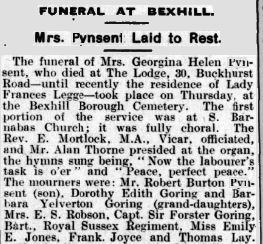
Sadly, Georgina Helen Pynsent died at “The Lodge” Buckhurst Road in Bexhill in October 1916. Her funeral was well attended by family and friends. Her two granddaughters, Dorothy Edith Goring and Barbara Yelverton Goring were there, and her Willoughby and Reynolds-Reynolds relations from Cheltenham sent wreaths (Bexhill on Sea Chronicle: Saturday 4th November 1916). Georgina’s son, Robert Burton Pynsent was granted probate of effects valued at £3,735 15s 8d. Robert Burton sold the family’s home and other property in New Zealand and stayed on in England – where there was more scope for his legal training. His nieces also stayed on in England. Barbara married into the Lambert family in 1922. Dorothy Goring, however, never married. She corresponded with my father in the 1960s.
Family Tree
Grandparents
Grandfather: John Pinsent: 1728 – 1772
Grandmother: Susanna Pooke: 1730 – 1772
Parents
Father: Joseph Pinsent: 1770 – 1835
Mother: Ann Tucker: 1785 – 1855
Father’s Siblings (Aunts, Uncles)
John Pinsent: 1751 – 1753
John Pinsent: 1753 – 1821
Robert Pinsent: 1753 – 1787
Thomas Pinsent: 1754 – 1785
William Pinsent: 1757 – 1835
Gilbert Pinsent: 1758 – 1835
Charles Pinsent: 1765 – 1765
Charles Pinsent: 1766 – 1826
Samuel Pinsent: 1767 – 1775
Joseph Pinsent: 1770 – 1835 ✔️
Male Siblings (Brothers, half-brothers)
Joseph William Pitt Burton Pinsent: 1804 – 1805
Joseph Burton Pynsent: 1806 – 1874
John Robert Pinsent: 1807 – 1808
Robert Baring Pinsent: 1818 – 1833
Ferdinand Alfred Pynsent: 1822 – 1894
Charles Pitt Pynsent: 1824 – 1903 ✔️
Please use the above links to explore this branch of the family tree. The default “Next” and “Previous” links below may lead to other unrelated branches.