Vital Statistics
John Pinsent: 1753 – 1821 GRO1134 (Baker & Newfoundland Merchant, London)
Susanna Speare: 1766 – 1830
Married: 1793: Newport, Hampshire
Children by Susanna Speare:
Mary Speare Pinsent: 1794 – 1882
Susanna Speare Pinsent: 1795 – 1819
John Pinsent: 1796 – xxxx
Robert John Pinsent: 1798 – 1876 (Married Louisa Broom Williams, St. John’s, Newfoundland, 1828)
Elizabeth Pinsent: 1801 – 1828
Sophia Speare Pinsent: xxxx – 1805
Family Branch: Hennock
PinsentID: GRO1134
Click here to view close relatives.
John Pinsent was the eldest son of John Pinsent of Wolborough (Newton Abbot) by his wife Susanna (née Pooke). He was born in Newton Abbot in 1753 and was apprenticed to Mary Speare, a “baker” in St. Thomas Parish (in Exeter), in 1767. His parents died while he was still quite young – in 1772.
John married Susanna Speare, in Newport, in Hampshire, in 1793. She was, probably, Mary Speare’s daughter; however, I need confirmation of that. There was a marriage settlement and it is (or at least was) in the Devon Records Office (“Exeter Dean and Chapter documents Bundle 7153”). I have not seen it. Why John waited until he was around forty to marry, and what he was doing in Hampshire, I am not sure!
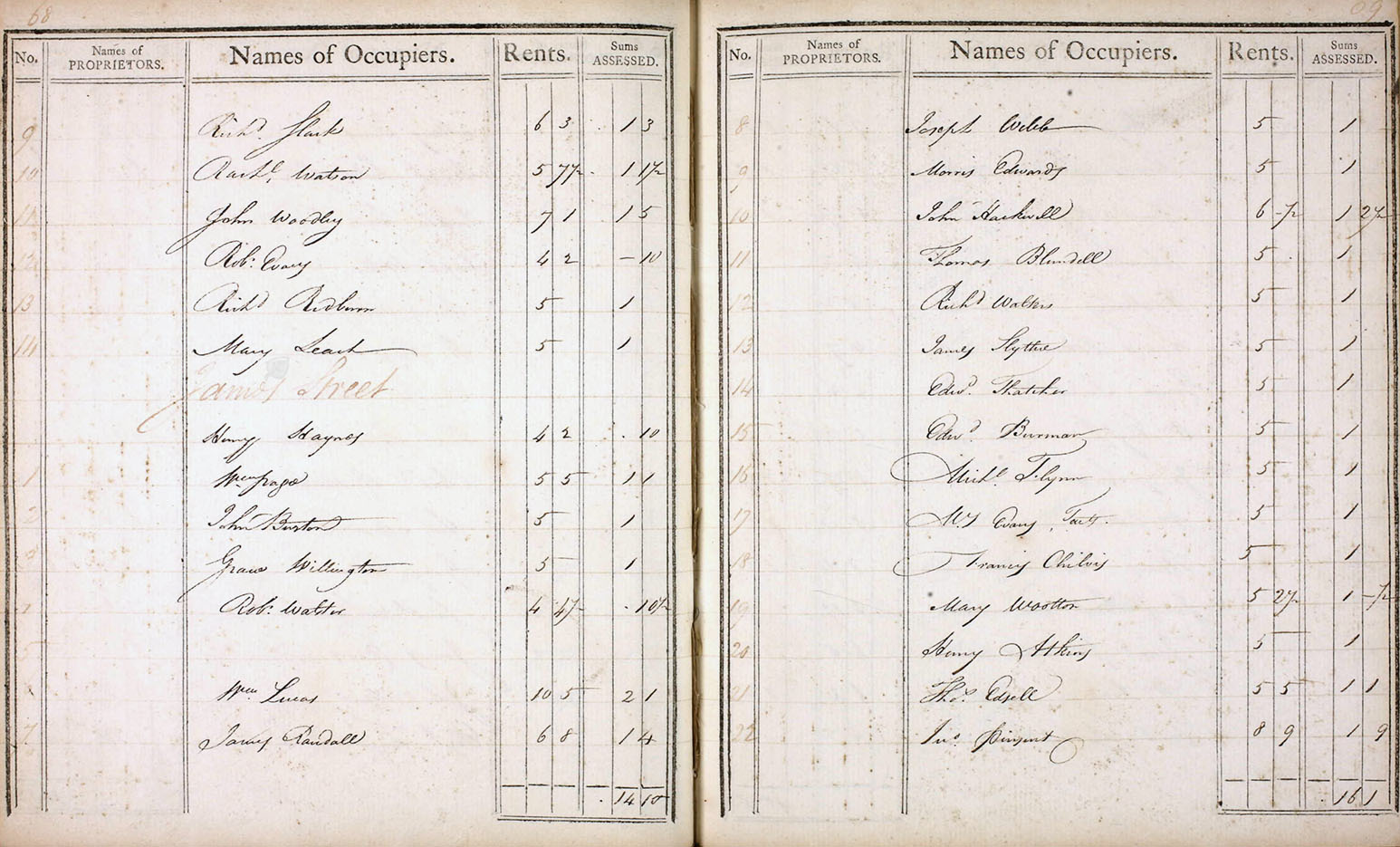
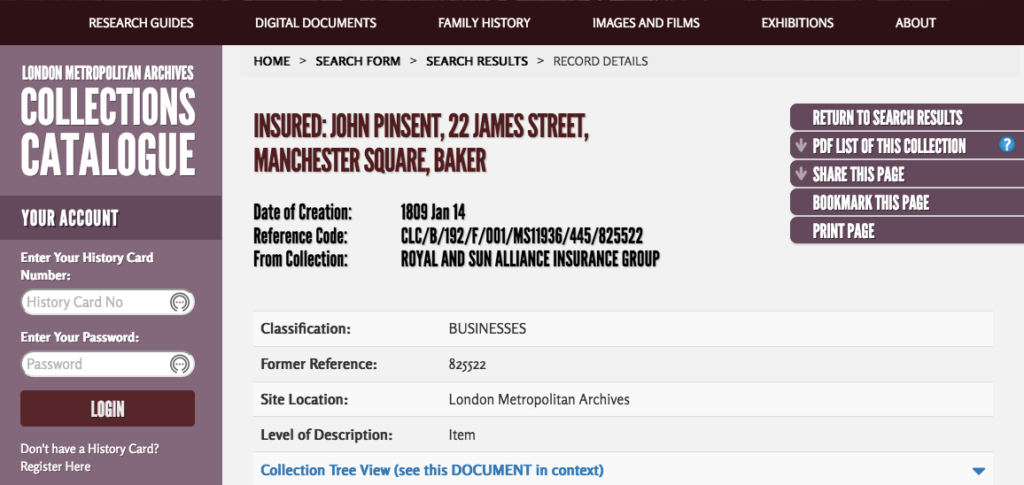
London’s Land Tax Records show that he lived at (or at least payed the taxes for) a house at 22 James Street (between Gray and Bird Street) in St. Marylebone parish from 1784 until he died in 1821. The “Sun Fire Insurance Company” issued John Pinsent “baker” a policy on the same property in 1809. He may have also held some interest in a property on Park Street in the early 1800s as anyone interested in renting a house “fit for the reception of a small family; fitted up with a degree of superior elegance, and commanding a most beautiful view of Hyde Park” was advised to apply to Mr. Pinsent, Baker, No. 88 Park Street in 1801 (Morning Post: 6th June 1801).
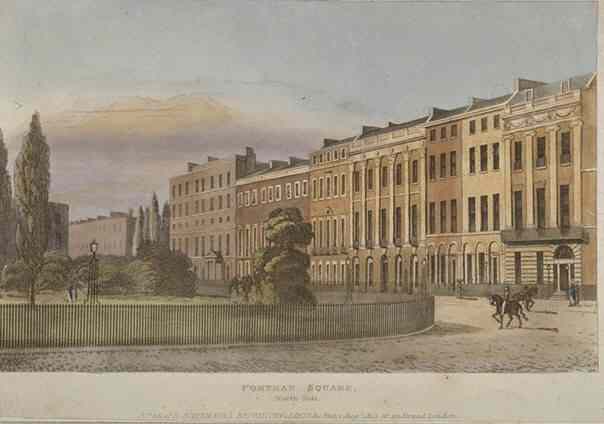

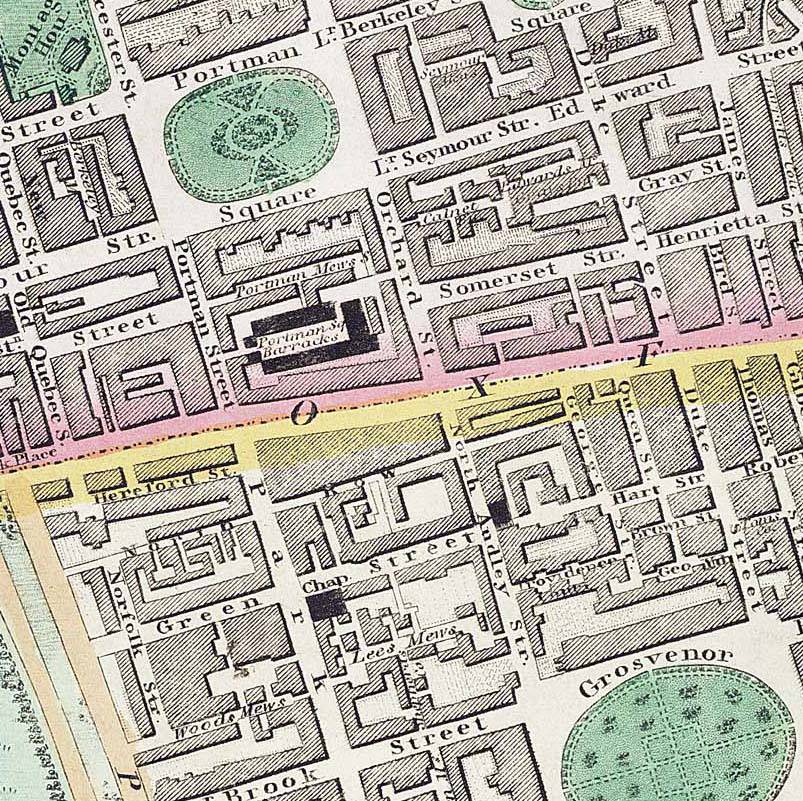
John seems to have run his business out of No. 35 Edward Street – which in those days – was, sadly, not a particularly salubrious part of London! However, it was close enough to Portman Square (which was a lot more up-market) that he included that in the address! John’s brother Robert was living at “No. 35 Edward Street, Portman Square” when he wrote his Will in 1786. Presumably the property was somewhere near today’s “Edward’s Mews.”

London’s Directories show that John had broader interests than baking and he ran the London side of a shipping business (“William and John Pinsent of Portman Square”) he had set up with his brother William in Port de Grave, in Newfoundland. John coordinated European sales and arranged shipping out of London and William dealt with day-to-day operations in Newfoundland (1792-1821).
John’s younger brother, Joseph Pinsent, may have helped out now and then, both before and after he became an accredited (City of London) shipping agent; however, there is no sign of their having a particularly deep or on-going working relationship. Joseph advertised a quantity of cod “just imported in excellent order” in March 1806. It is not clear if it came off one of his brothers’ ships (Public Ledger and Daily Advertiser: Monday 3rd March 1806). He also dealt with the sale of the hull and contents of the “William and John” which was driven on shore near Lymington in a gale in June 1806 (Public Ledger and Daily Advertiser: Wednesday 11th June 1806). I fear that this was one of the family’s ships! I hope it was insured.
John and William first show up in the Newfoundland records as partners in 1791, when they sue “Thomey for £23 debt.” It is worth noting that a “John Pinsent” captained one of the firm’s ships in 1793 and 1794 – so John may have taken a hands-on approach to the business in the early days. Perhaps he was not just pushing paper. The brothers’ ship “Pinsent” (Captain Wells) was among a list of vessels reported to be at anchor in the River Tagus (Portugal) in April 1803 (Oracle and Daily Advertiser: Tuesday 8th November 1803). The same ship unloaded cargo at Newry (Ireland) and was en route from Lisbon to Liverpool the following January (Oracle and Daily Advertiser: Wednesday 11th January 1804). It docked in Cork with the rest of the “Surinam Fleet” in April 1805. The “Pinsent” was on its way back to London (Royal Cornwall Gazette: Saturday 6th April 1805). These movements are probably fairly representative. The business is described more fully under William’s name.
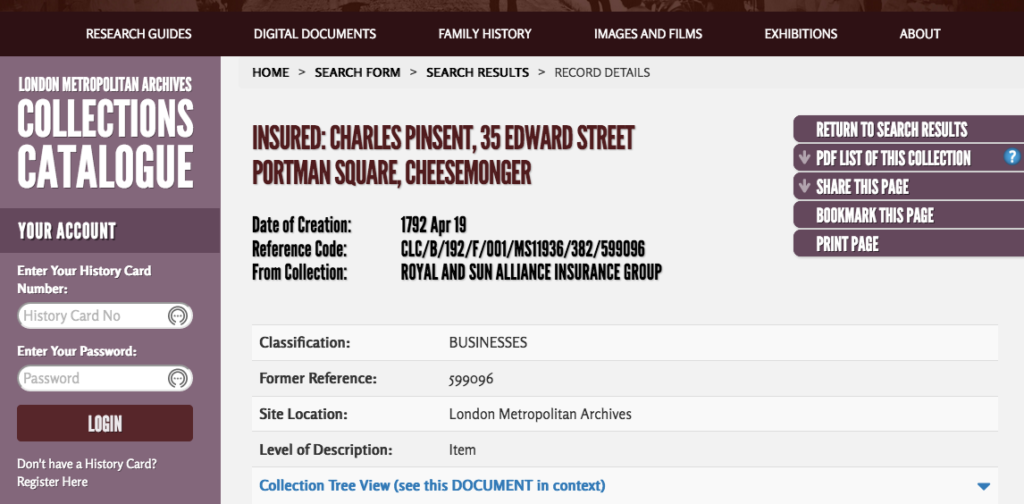
John shared the Edward Street property with his cousin Charles Pinsent from 1792 to 1798 (or, perhaps, later). Charles was the son of John’s uncle Robert Pinsent by his wife Eleanor Shapley (see elsewhere). Charles married (the very appropriately named) Elizabeth Butter in Devon in 1791 and set up as a “cheese-mongers” in Edward Street. It made sense, I suppose, bread and cheese. A document in the London Metropolitan Archives shows that “Charles Pinsent, cheese-monger” took out a “Royal and Sun Alliance” insurance policy on the Edward Street property in 1792 – so he may have had the first claim to the premises.

John and “cousin” Charles were neighbours throughout the 1790s and their children were baptized at St. Marylebone Parish Church. They would have been christened in what is now known as the “Old Church” – which had been built in 1760. It rapidly became too small for the parish and it was replaced by the new one in 1817. John would have been around to see the latter built.
Charles gave up on selling cheese in the late 1790s. He moved into the construction business and relocated to the nearby parish of Soho. His life is described elsewhere. Just to complicate matters, there was to be another Charles Pinsent “cheese-monger” living in London in the mid 1800s. However, he was not yet born, so there is no confusion.
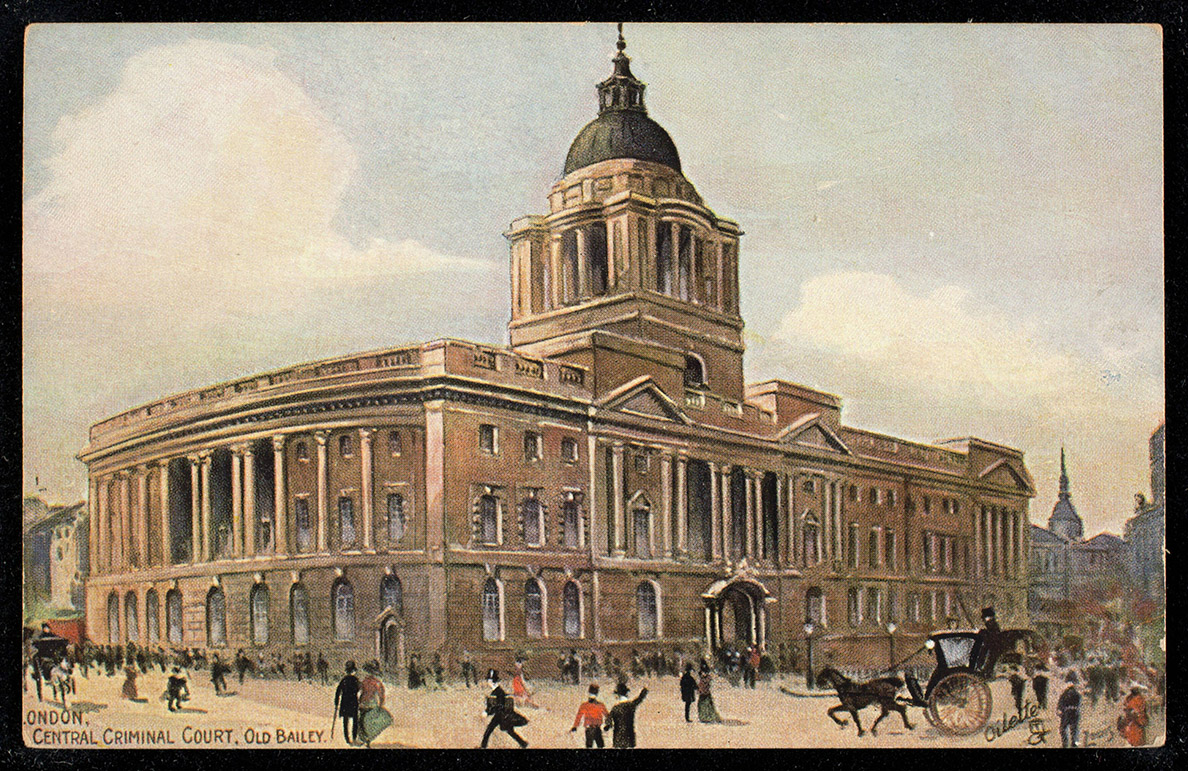
John Pinsent was, (according to the records of the “Central Criminal Court” (“Old Bailey”) that are now available on-line) summoned for jury service on 1st July, 1790 and was appointed to the “First Middlesex Jury” of the “King’s Commission of Oyer and Terminer, and Goal Delivery.” Sometime later (on the 17th February 1796) he was appointed to the “Second Middlesex Jury.” On that occasion, his cousin Charles Pinsent was appointed to the “First Middlesex Jury.” They both fulfilled their civic duty.
Interestingly, Charles was back in court as a plaintiff in 1805, when thieves stole a cart load of lumber from his work-yard. It came from a house demolition project and the perpetrators failed to notice that some of it still had wallpaper attached that could be matched to similar paper still adhering to lumber in his yard!
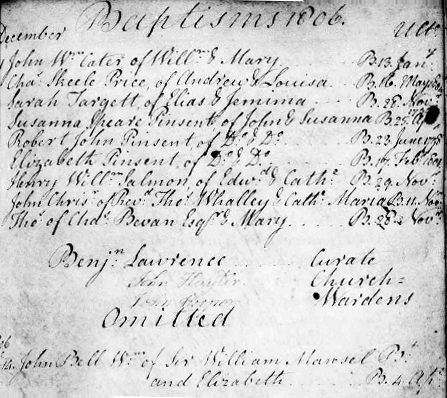
One of John’s daughters, Sophia Speare Pinsent, died in London in 1805. How old she was I am not sure as John and Susanna seem to have been slow to have their children baptized. Her sister, Susanna Speare, was born about 1795 but wasn’t christened until after a still younger sister, Elizabeth Speare, and a brother, Robert John Pinsent, were born in 1798 and 1801 respectively. All three were baptized in 1806.
In all, John and Susanna had four daughters and two sons; however, only three daughters and one of the sons survived. Infant mortality was very high in London in those days as the drinking water came from communal pumps in the street and it was easily contaminated. Diseases such as cholera and typhoid spread rapidly throughout the city. The situation did not improve much until London had its sewage and drinking water system rebuilt in the late 1850s.
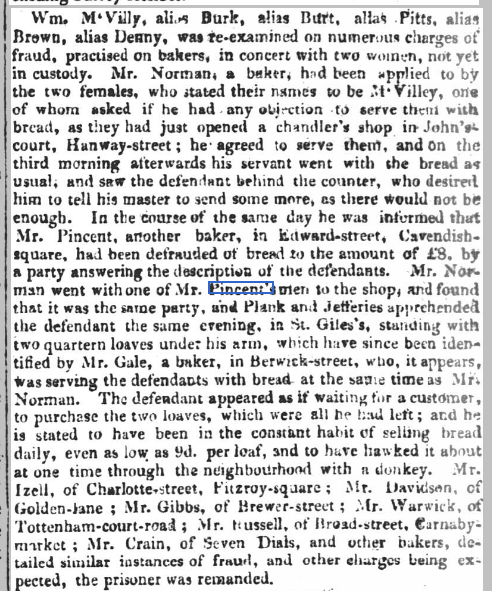
In 1818, John was, in his capacity as a baker, caught up in a fraudulent scheme that led to Wm. McVilley (alias Burk and/or countless other names) facing charges at Marlborough Street Court. Evidently, Mr. McVilley had arranged for a couple of women to visit the bakers in the district and con them into providing bread for resale at a chandler’s shop that they had – supposedly – just opened in St. John’s Court, Hanway Street. The bakers were (of course) to be reimbursed later. Needless to say, the money was not forthcoming. Mr. Pinsent was defrauded of £8’s worth of bread. Unfortunately for Mr. McVilley, the bakers talked amongst themselves and contrived to have the culprit caught (floury handed) with two stolen loaves that he was attempting to sell on the street (London Packet and New Lloyd’s Evening Post: Monday 2nd February 1818).
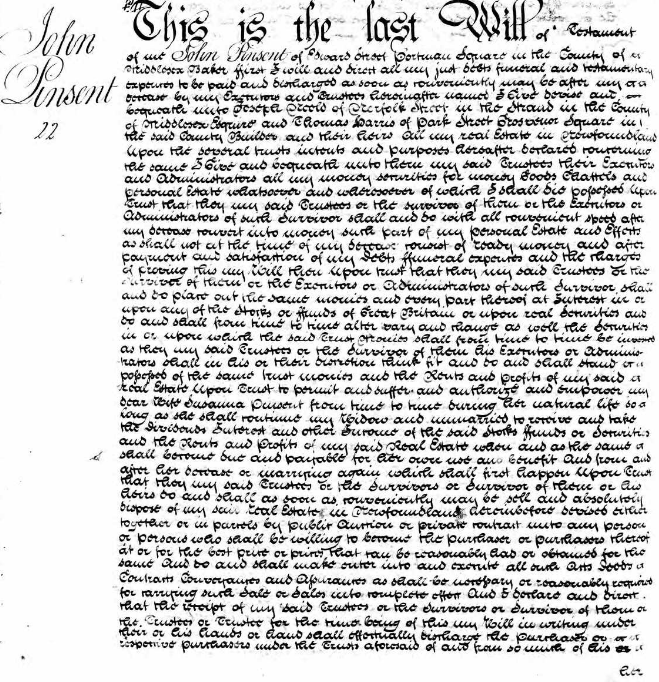
John died in London in 1821 and was buried in St. Marylebone parish churchyard. He arranged for trustees to look after his estate and appointed his unmarried eldest daughter, Mary Speare Pinsent, as his administratrix. Presumably she had a head for business as she ran a millinery business out of No. 109 New Bond Street with her younger sister Elizabeth Pinsent (London Directories).
The business was insured by the “Sun Fire Insurance Company” in 1823. John asked his assignees to divide his assets between his wife and four children – albeit he gave his son (Robert John Pinsent) the right of first refusal to buy out his mother and sister’s Newfoundland shipping interests.
After her father’s death, Mary Speare seems to have kept some exposure to the family shipping business. She became a co-owner, with her uncle William Pinsent and her father’s estate of the ship BROTHERS (115 tons, built in Cupids, Conception Bay, in 1820). Unfortunately, the vessel was lost in 1830. How or why, I am not sure. Presumably the the trustees sold the bakery and, over time, Robert John exercised his right of purchase of the shipping business. He took off for Newfoundland in 1827 – as his uncle William was getting on in years and needed his help.
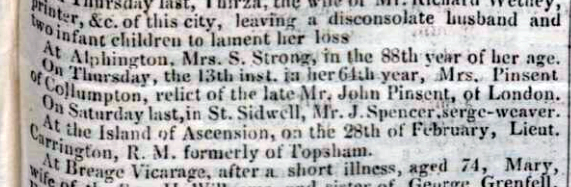
The family had maintained its Devon roots while it lived in London and Susanna and her daughters moved back there, after John’s death. Susanna’s daughter, Susanna Speare, seems to have preceded them as she was described as being “of Kingscarswell” when she died (aged 24) in 1819. Elizabeth died in Cullompton in 1828, “after two years of illness” and Susanna, herself, died in Totnes in 1830.
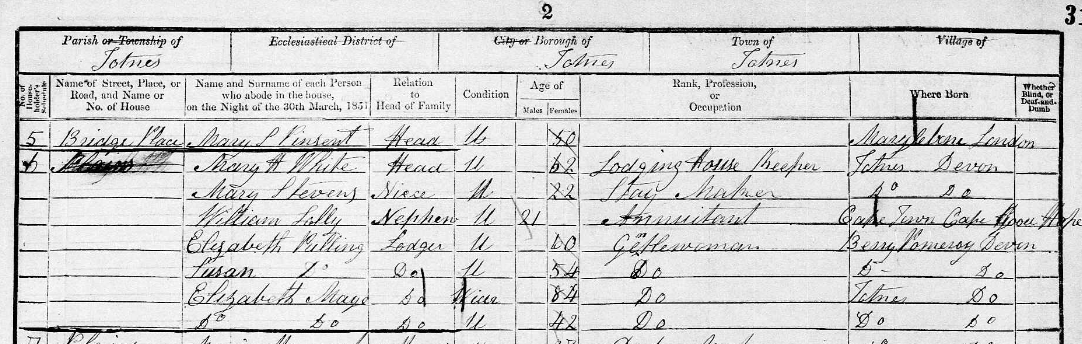
None of John’s daughters married. Mary Speare leased a property called Long Park, in Clyst Honiton owned by the Exeter Cathedral Chapter, in 1831 and periodically renewed her lease (Archives: Exeter Cathedral). While she was living there, she became entangled in a dispute between two of her neighbours. Apparently, she had sold a house and nine acres of land to a local gentleman in 1865 and, appropriately enough, had notified the sitting tenant. All should have been well; however, there was a long and ongoing dispute between the new owner and the tenant over the maintenance of a hedge between their adjoining properties and the tenant haughtily disputed the new owners right to the property. He wrote to her questioning his new landlord’s signature. The dispute made its way to the Local Assize – much to the benefit of the lawyers, but, one suspects, no one else (Western Times: Tuesday 13th March 1866).
Mary Speare Pinsent died in December 1882 at the age of eighty-eight. She had been living off her investments for many years. The Calendar of Grants of Probate and Letters of Administration shows that Mary Speare Pinsent, late of Totnes, spinster, had her will proved by Emma Derry of Paignton, “one of the executors”. Her effects were valued at £121 5s 0d.

Family Tree
Grandparents
Grandfather: Thomas Pinsent: 1691 – 1777
Grandmother: Mary Gale: 1690 – 1774
Parents
Father: John Pinsent: 1728 – 1772
Mother: Susanna Pooke: 1730 – 1772
Father’s Siblings (Aunts, Uncles)
Urith Pinsent: 1714 – 1751
Thomas Pinsent: 1717 – 1802
Julian Pinsent: 1719 – 1721
Robert Pinsent: 1721 – 1783
Gilbert Pinsent: 1724 – 1794
Julian Pinsent: 1726 – xxxx
John Pinsent: 1728 – 1772 ✔️
Mary Pinsent: 1731 – xxxx
Male Siblings (Brothers)
John Pinsent: 1751 – 1753
John Pinsent: 1753 – 1821 ✔️
Robert Pinsent: 1753 – 1787
Thomas Pinsent: 1754 – 1785
William Pinsent: 1757 – 1835
Gilbert Pinsent: 1758 – 1835
Charles Pinsent: 1765 – 1765
Charles Pinsent: 1766 – 1826
Samuel Pinsent: 1767 – 1775
Joseph Pinsent: 1770 – 1835
Please use the above links to explore this branch of the family tree. The default “Next” and “Previous” links below may lead to other unrelated branches.