Vital Statistics
Neville James Quintus Pinsent: 1921 – 2013 GRO1095 (Electrical Engineer, South America)
1. Rosemary Chiswell: 1926 – 1997
Married: 1949: Buenos Aires
Children by Rosemary Chiswell:
Daughter (GRO1097)
Daughter (GRO0410)
Son (GRO1098)
2. Maria Luisa Paez: 1930 – 2007
Married: 1972: Caracas (Venezuela)
Family Branch: Devonport
PinsentID: GRO1095
References
Click here to view close family members.
Sidney Hume’s fourth son by Beatrice Elena Le Bas, Neville James Quintus Pinsent was born in Buenos Aires. His English father registered his birth with the British Consul. Neville and his brothers grew up in Argentina but made several trips “home” to England while they were still young boys. Neville, like his brother Paul Desmond before him, attended “Ladycross School”, a private (Catholic) “Preparatory” School before going to “Downside”, a major (Catholic) “Public” (private) school at Stretton on the Fosse, in Somerset. He was considerably younger than his brothers and they had left “Downside” by the time he arrived.
We know from Ship Manifests’ that Neville’s mother Beatrice (née Le Bas) brought her children, Neville James Quintus, Paul Desmond, Roger Philip and Joyce Veronica back from the Argentine in 1927. They disembarked from the “Royal Mail Line” ship “Andes” at Southampton in July that year – probably bound for Tunbridge Wells, in Kent, where Neville’s grandfather lived with his second wife – or at least he did so before he died in 1929. Neville’s eldest brother, Harold Ross may well have already been in Kent, as he was a similar age to Neville’s grandfather’s son from the second marriage Basil Hume Pinsent. The two of them were at “Downside” together.
Beatrice and her family returned to Buenos Aires on the “Royal Mail Line” ship “Alcantara” in February 1928. However, she must have brought her children back later that same year as some of them had schools to attend. She brought her younger children, Neville and Joyce, back from Argentina in December 1929. On that occasion, they arrived at Southampton on the “Royal Mail Line” ship “Asturias”. Both children were, by then, classified as “students”. They went back to Buenos Aires on the same ship in February 1930. Two years later, in December 1932, it was Neville and his mother who arrived in Southampton on the “S.S. Asturias”. Neville would have been eleven years old and shortly to be enrolled at “Downside”. He was unquestionably a “student” there in June 1936 (Bath Chronicle and Weekly Gazette: 20th June 1936) and in 1937 and, he graduated with passes in French, English, History and, importantly, Applied Mechanics in 1938 (Western Morning News: 6th September 1938).
Neville was still considered a “student” when he sailed to Buenos Aires on the “Royal Mail Lines” ship “Highland Princess” in September 1939 – this was just as the war in Europe was starting. He studied engineering. I do not know where but probably in Buenos Aires. He graduated as an “Illuminating (Electrical?) Engineer.” He must have made it back to the United Kingdom somehow as he joined the “Royal Navy Volunteer Reserve” as an “ordinary Seaman” in 1941.
Why he failed to join as an officer, I do not know. Perhaps the navy was skeptical of his foreign credentials, or perhaps he was not prepared to take the time it took to train to serve as an officer. He was assigned to “H.M.S. Cumberland” – a county class “cruiser” in 1941 and 1942. The ship had previously gained fame participating in the “Battle of the River Plate,” which had led to the scuttling of the German pocket-battleship “Admiral Graf Spree.” Neville’s time on board the “H.M.S. Cumberland” cannot have been a particularly pleasant as its principal task was escorting convoys to Murmansk in the Russian Arctic. He became an “Acting Temporary Lieutenant (Special Branch)” in June 1941, and was sent on an “Officer Training Course” in Hove, Sussex, the following year. After that, the “powers-that-be” gave him a warmer assignment. They sent him to serve on “Defense Equipped Merchant Ships” in the Mediterranean and from there he transferred to the gunnery training ship “H.M.S. Foinavon,” in 1943.
In 1944, Neville took a “flight controllers'” course at the “Royal Navy Air Station” at Yeovilton, in Somerset. Many years later (in 2008) the Navy invited him back to see how the place had changed over 64 years (Oxford Mail: 17th December 2008). He compared the modern living conditions that he saw with the rather primitive set up that he and his contemporaries had to endure, and said he was impressed by the technology used to handle and control modern fighters. After his training, Neville was attached to the “Royal Air Force” as a “Night Fighter Controller” at St. Abbs Head in Scotland for a few months before moving to “H.M.S. Colossus” in November 1944. It was a newly commissioned “aircraft carrier” that was sent out join the Pacific fleet but arrived too late to take much part in the “Second World War”. It spent its time in clean-up duty – largely repatriating prisoners of war and internees. Neville was promoted to full “Lieutenant” at the end of December 1944. The “ordinary seaman” certainly made his contribution to the war effort! Sadly, the ship was laid off on its return to Britain in 1946.
Neville left the navy (Royal Navy Volunteer Reserve (RNVR) Officers 1939-1945) and returned to Buenos Aires. He sailed from London on the “Royal Mail Lines” ship “Highland Monarch” in April 1946. By then, he was an experienced “electrical engineer” and he probably went out to look into job opportunities as well as to see his family. He returned England and then made a similar trip to Argentina on the “Blue Star Line” ship “Brazil Star” in April 1948. This time, he may have planned to stay. Neville James Quintus married Rosemary Chiswell in Buenos Aires, in 1949. They had a son and two daughters who were presumably brought up in South America.
Neville and Rosemary arrived in Southampton from Buenos Aires on “Royal Mail lines” ship “Andes” on 3rd April 1952. On this occasion, they were home for a visit, bringing their daughter who was then just one year old. Rosemary returned to Argentina with her daughter on “Royal Mail Lines” ship “Highland Chieftain” in September the same year. Neville had probably planned to go with them, but something must have cropped up as his name was crossed out of the Manifest.
Neville left New York with his wife and daughter on the Cunard Steam ship “Mauretania” and arrived in England on 1st May 1956. Neville gave his contact address as c/o “G.E.C. Limited” (a major British Electrical Company that was then in the process of moving into radio transmission). Presumably he had business with the company, which was then based at “Magnet House, London W.C.2”. Rosemary was pregnant a the time, and their second daughter was born in Croydon a couple of months later. In November, Rosemary flew back to New York with her two young daughters. This may have been to visit her parents.
Neville worked for “Sylvania Electric Products Inc.” in Caracas, Venezuela in 1958. The Company’s head office (“Sylvania International”) was in Sao Paulo, in Brazil, and the Brazilian Government issued Neville with a three-month tourist visa for a visit there that year. The Company also sent him on a trip to Bermuda in January 1959. This was the year that the “Sylvania” (which made radios and television tubes), merged with “General Telephones” and became part of “General Telephones and Electronics Limited” (G.T.E.), a large conglomerate. Brazilian visas (with photographs attached) show that Neville and his family formally moved to Sao Paulo in May 1960. Rosemary arrived pregnant and she had their third child while they were there. This probably explains why Neville’s father, Sidney Hume Pinsent, was down for a visit the following year!
At some point, probably in 1967, Neville and Rosemary divorced. Rosemary stayed on in Sao Paulo and died there in January 1997. Neville seems to have returned to Venezuela, as he married Maria Luisa Paez Bohorquerez, in Caracas, in 1972. They had no children.
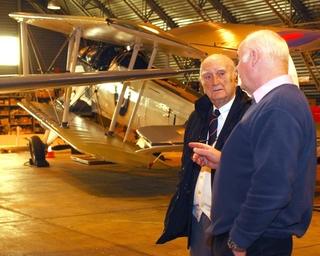
Neville and Maria returned to England and settled in Abington, in Berkshire, in 1980. By then, he would have been 59 years old. Maria Luisa died in 2007. Neville Pinsent turned 90 in 2011, so they had a family celebration in Oxford. The event seems to have been partially organized by Father Andrew Pinsent a physicist turned Roman Catholic priest. Presumably they met Neville through their common interest in the Roman Catholic Church. He is from a different branch of the same [DEVONPORT] family. He belongs to a line that broke-off six generation earlier. Neville died two years later, in October 2013. His son married and now has a son so the line should continue.
Family Tree
Grandparents
Grandfather: Adolphus Ross Pinsent: 1851 – 1929
Grandmother: Alice Mary Nuttall: 1855 – 1901
Parents
Father: Sidney Hume Pinsent: 1878 – 1969
Mother: Beatrice Elena Le Bas: 1882 – 1956
Father’s Siblings (Aunts, Uncles)
Sidney Hume Pinsent: 1879 – 1969
Frances Maude Pinsent: 1882 – 1953
Cecil Ross Pinsent: 1884 – 1963
Gerald Hume Saverie Pinsent: 1888 – 1976
Basil Hume Pinsent: 1911 – 2000
Male Siblings (Brothers)
Harold Ross Pinsent: 1913 – 1988
Paul Desmond Pinsent: 1915 – 1997
Roger Philip Pinsent: 1916 – 1997
Neville James Quintus Pinsent: 1921 – 2013
Please use the above links to explore this branch of the family tree. The default “Next” and “Previous” links below may lead to other unrelated branches.