Vital Statistics
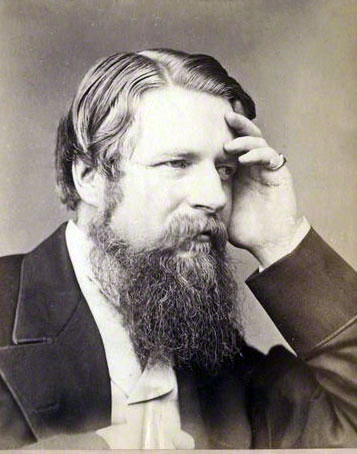
Thomas Pynsent: 1808 – 1887: GRO0835 (Gentleman of Pitt House Chudleigh & of Lakenham, Westward Ho!)
Jane Sparrow: 1809 – 1891
Married: 1843: St. Marylebone, London
Children by Jane Sparrow:
Margaret Jane Pynsent: 1844 – 1920 (Married Charles Christopher Willoughby, Captain, 60th Rifles, 1875, Pimlico, London)
Vernon Pynsent: 1845 – 1845
Florence Lombe Pynsent: 1847 – 1943 (Married Joseph Jones Reynolds-Reynolds, Gentleman, Tormoham, (Torquay), Devon, 1877)
Jane Augusta Pynsent: 1849 – 1902 (Married Colonel, 86th Regiment, Thomas Andrew Rawlins, Northam, Devon, 1877)
Family Branch: Hennock
PinsentID: GRO0835
References
Click here to view close relatives.
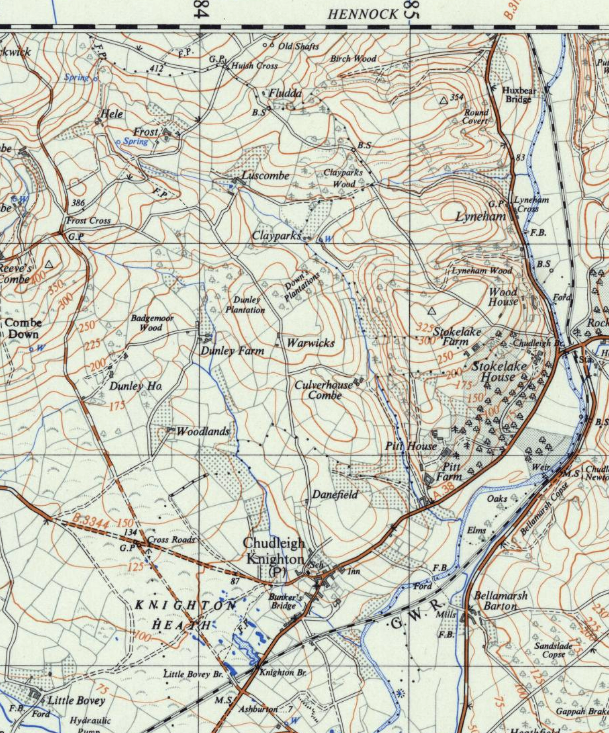
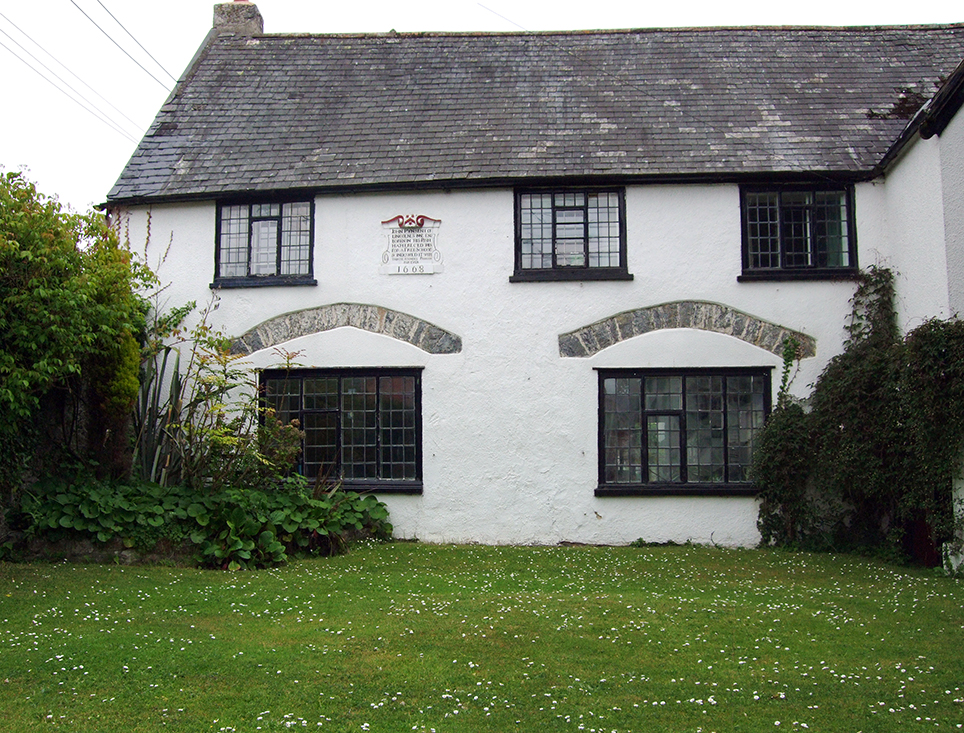
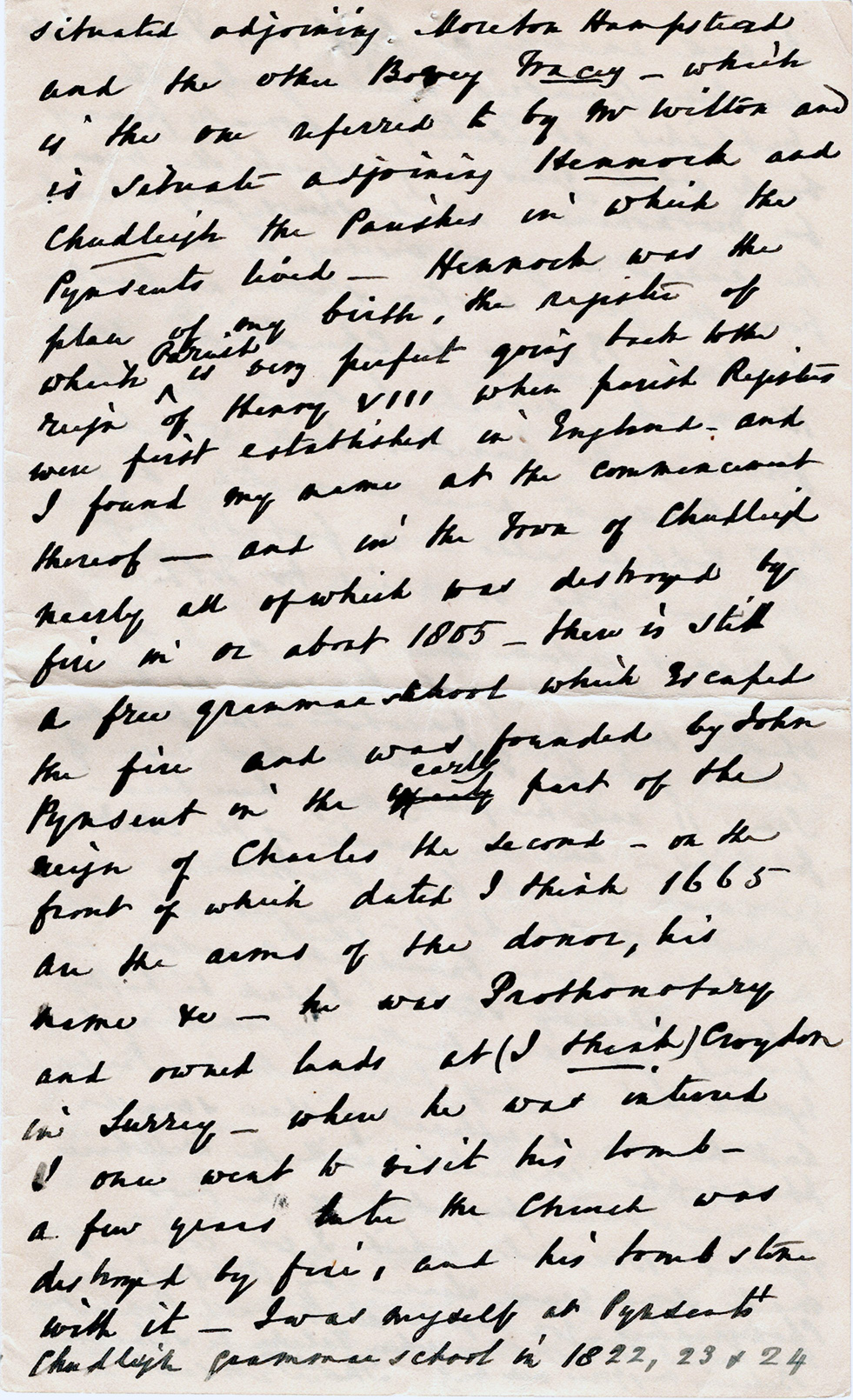
Thomas Pinsent (a.k.a. Thomas Pynsent) was the only son of Charles Pinsent and Mary (née Yeo). He was born at “Pitt Farm” in Hennock and, according to a letter (in my possession) that he wrote to a Miss Matthew in December 1886, he was educated at “Pynsent’s Free School” in Chudleigh between 1822 and 1824. John Pynsent, a Senior Clerk (Prothonotary) of the Court of Common Pleas, had endowed the school with £30 per annum in 1668. There is a plaque on the wall of the building acknowledging the fact.
Miss Matthew had, presumably, written asking about a family connection and the origin of the first “Pynsent” baronetcy. Thomas wrote at least two letters in reply. [The Pynsent Baronetcy: The Trials and Tribulations of a Litigious Family: 1687 – 1765: see elsewhere]. While he attended the school, Thomas must have been faced with the question “Was he related?” on an almost daily basis. while he attended It clearly bothered him.
Thomas was eighteen years old when his father died and he suddenly became a man of means. He had inherited “Pitt” in Hennock (Land Tax approximately £4 10s 0d) and a somewhat smaller property, called “Lower Albrook,” in Kingsteignton Parish. The latter had a Land Tax of approximately £1 16s 6d. Thomas also paid the church rates on these and other properties through to 1836, when Parliament passed an “Act for the Commutation of Tithes.” It called for parish payments – some of which were still paid “in kind” – to be determined according to the area of land held – and paid in cash. This created a bonanza for land surveyors throughout the country.
Two years later, Thomas was one of several Hennock land-owners who put out a call for Surveyors to provide a quote for a survey of the parish (Exeter and Plymouth Gazette: Saturday 3rd February 1838). Hennock was found to cover 167 acres and 9 perches, and the land-owners were charged £22 18s 3d for the Vicar and £11 15s 11d for the “impropriators” (Trustees of Charity Estates of the Corporation of Exeter). The extent of Thomas’s holdings can be gleaned from the “Apportionments” list compiled in 1838 and seen on the “Hennock Tithe Map” prepared in 1839. The “South West Hertgage Trust” has placed the data on-line.
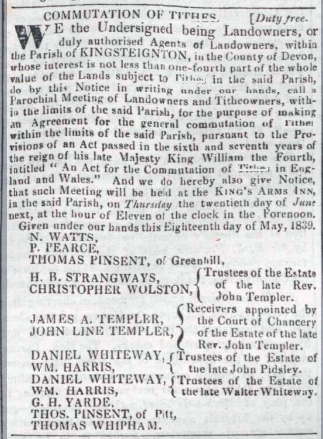
In June 1839, Thomas was similarly called to a meeting of Landowners in Kingsteignton to discuss the commutation of its tithes (Exeter and Plymouth Gazette: Saturday 8th June 1839). His holdings there were (as shown by its tithe map) small compared to those of his namesake, Mr. Thomas Pinsent of “Greenhill”. “Lower Albrook (Land Tax £1 6s 6d) had probably come from his aunt’s side of the family. Thomas owned 16 acres 3 rood and 27 perches of land and was assessed a rent charge of £1 10s 6d for the Vicar and £1 15s 0d for the “impropriators”. He probably sold “Lower Albrook” in the early 1840s when he was looking for money to build Pitt House. The second Thomas in Kingsteignton was unrelated, he was the DEVONPORT draper.
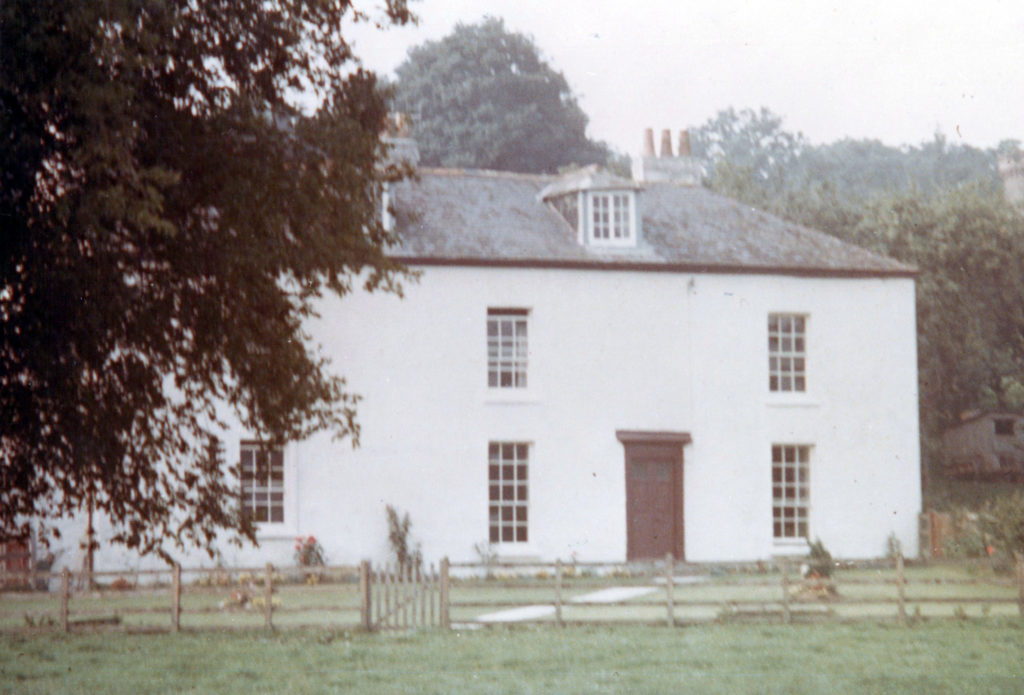
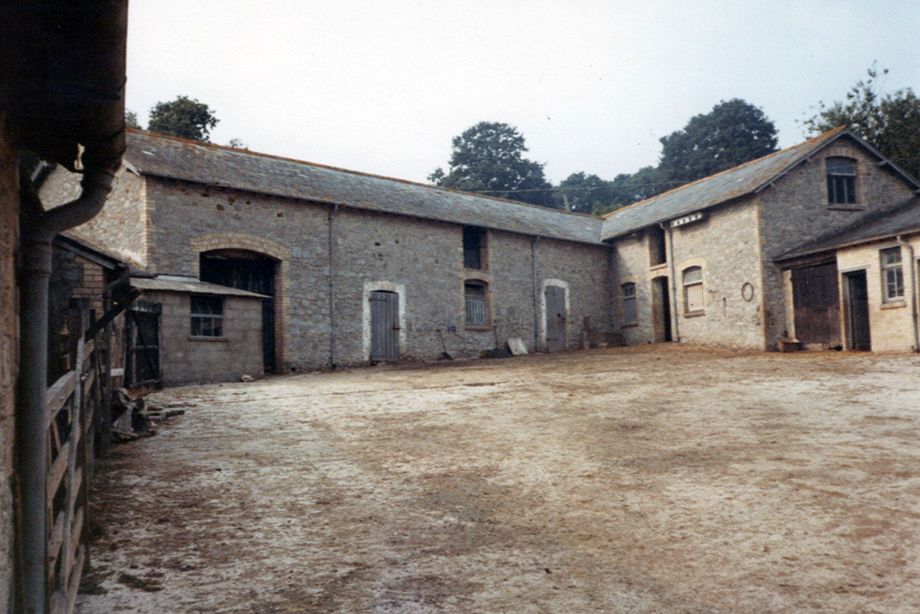
After Thomas came into his inheritance, he was (at least nominally) in charge of the family estate. However, his mother, Mary, may have had a hand in running it. She was in residence at Pitt when the 1841 Census was taken. It is unclear how much interest Thomas took in the practical side of farming. He seems to have considered himself to be more of a “gentleman” than a “farmer.” Sadly, one of Thomas’s sisters, Mary, died in 1830. The other, Anne, married and moved to Somerset in 1832.
The nearby village of Chudleigh Knighton, which seems to have over-run the DEVONPORT family’s old farm at “Knighton,” grew rapidly in the 1800s. There was a serious fire there in 1832 and Thomas responded to the charitable appeal with a contribution of £5 (Exeter and Plymouth Gazette: Saturday 28th July 1832). It does not seem like a lot for a major local landowner! He paid £3 13s 6d that year – and most others – for his “Game Duty Certificate” (Exeter and Plymouth Gazette: Saturday 22nd September 1832)! Nevertheless, he was a bit more generous when it came to building a Chapel of Ease in Chudleigh Knighton in 1840. He gave £20 and his mother, and one of her Yeo relatives, chipped in a further £5 apiece towards the venture – which was projected to cost of between £400 and £500 (Exeter and Plymouth Gazette: Saturday 18th January 1840). The chapel was built, but was unable to attract a minister for several years. It was commissioned in April 1845 (Western Times: Saturday 26th April 1845).
Although Thomas thought of himself as a “gentleman” he happily attended somewhat “down-market” events, such as the Agricultural Dinner at the New London Inn in November 1834. It ended in a fight between an Exeter City Aldermen and the supporters of a couple of highly intoxicated butchers who had objected to one of the conventional toasts! Thomas was called as a witness and claimed that he “did not see any attack on you. I saw from your appearance that you had been attacked but by whom I did not know, I was in a distant part of the room and the scuffle took pace in the centre” … perhaps – if so, given the number of people there, why was he the one called to testify (Exeter and Plymouth Gazette: Saturday 15th November 1834)?
Thomas was a member of the Conservative party and after 1836 his name frequently crops up at Conservative Meetings and/or their Dinners. He attended the “Great Conservative Dinner” held in support of Sir John Buller and Montague Edmund Parker, the Members of Parliament chosen for the Southern Division of Devon when it was held in Totnes on 19th January 1837 (Exeter and Plymouth Gazette: Saturday 21st January 1837).
Thomas seems to have thought of himself as a “businessman” as well as a “farmer” – and he was not a particularly forgiving one. He petitioned for the bankruptcy of Elias Dunsterville, a “surgeon” and “apothecary” of Silverton in Devon in 1838 (Perry’s Bankruptcy Gazette: Saturday 26th May 1838) and saw that Richard Howe was charged with stealing an iron chain valued at 2s from the back of one of his wagons. Mr. Howe claimed drunkenness and besides, one iron chain looks much like another … . He was sentenced at the Devon and Exeter Assize to three months imprisonment with hard labour (Western Times: Saturday 1st August 1840).
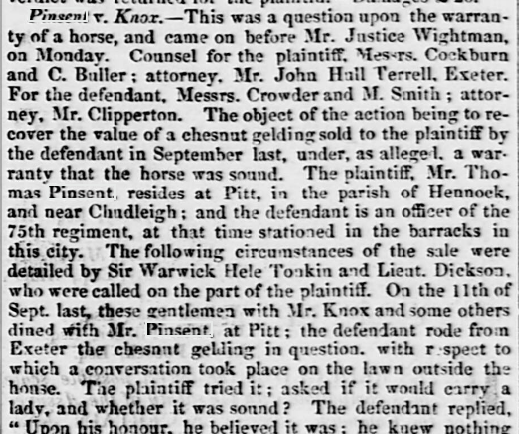
The following March, Thomas was back in the Devon County Court. It seems that he had bought a horse from a slick-talking officer in the 75th Regiment the previous September, and he wanted his money back (Morning Herald (London): Friay 26th March 1840)! The officer, Mr. Knox, had brought a chestnut gelding over to “Pitt” and invited him to try it out. Thomas did so; he asked Mr. Knox if it “was sound” and suitable for a “Lady”. Perhaps he was already contemplating marriage. Mr. Knox said he believed it was – and that he knew of nothing to the contrary. However, another visitor who was at “Pitt” at the time was less sure. Thomas bought it for £30 – subject to its getting a satisfactory certificate of health from Mr. Rogers, a well-known “veterinarian” in Exeter. After taking ownership of the horse (and its health certificate) Thomas discovered that it had badly damaged feet and that the certificate had been signed by Mr. Rogers “junior”, not (as he had thought) by the respected “veterinarian” himself. Although the judge in the case seemed to favour the defendant’s contention that a deal was a deal, the jury thought that it was sharp practice – Thomas was awarded £23 in damages (North Devon Journal: Thursday 25th March 1841).
When the Census takers visited “Pitt” Farm in the spring of 1841 they found that Thomas was absent and that his mother Mary Pinsent was living there with a younger relation, Maria Yeo (35 years old) and four servants. Thomas may have been abroad. Mary and Maria moved up to Keynsham in Somerset to live with Mary’s daughter Ann Keddell later that year – or perhaps early in the next. The census shows that Chudleigh Knighton was still a relatively small village at that time, and in addition to the usual mix of rural trades it was home to a number of “clay cutters.”
Thomas wasn’t interested in farming and, although his father may have toyed with the idea of becoming a cider merchant and built up the farm with that in mind, Thomas decided to reduce his exposure there. A major report on the architecture at “Pitt Farm” prepared for the Devonshire Association in 1996 shows that Thomas’s father had had a considerable amount of work done on the outbuildings in the early 1800s. There is a date stone “CP 1808” built into the granary and it is likely that the cider house was rebuilt around that time: – “The cider house seems to be overbuilt: When the farm was for let in 1842 the blurb stated that there “was cellarage arranged for 400 hogsheads of cider, being well adapted for a cider merchant” – at 54 gallons per hogshead, this work out at 21,600 gallons storage capacity. In an extremely good year, the apples from an acre of orchard might produce 10 hogshead of cider but 2 to 3 hogshead per acre was more usual (38) Around one hundred and fifty acres of orchards would be needed to guarantee a supply of apples. Pitt Farm had 28 acres in 1842.” There is no obvious reason for the discrepancy. Perhaps Charles was thinking of setting up in business as a custom cider processor or had in mind that his son Thomas Pinsent should become a cider merchant.
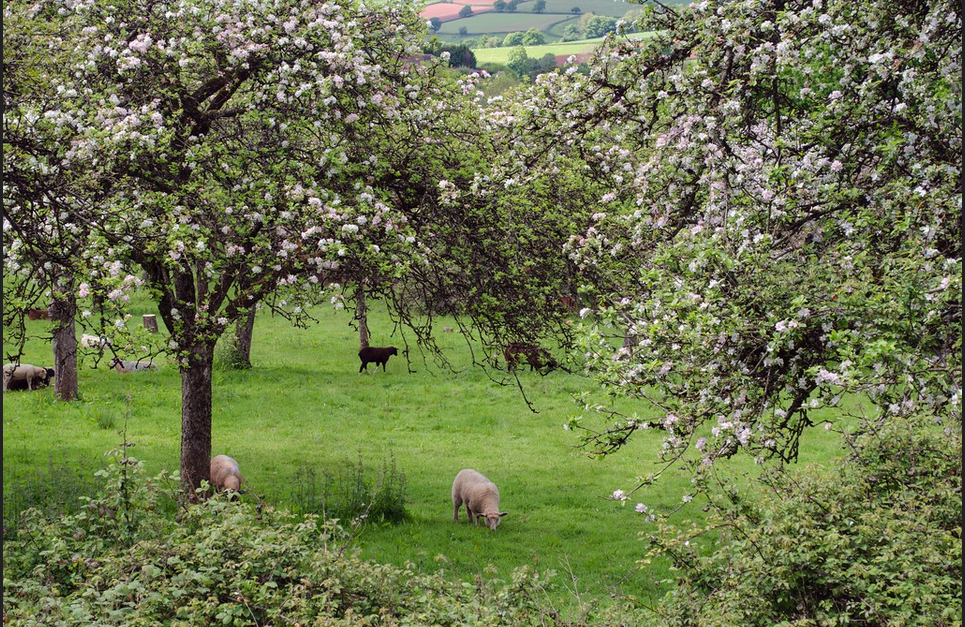
In April 1842, Thomas sold the grazing rights for the estate for the rest of the year and also disposed of 80 hogshead of what he claimed was superior cider (Exeter Flying Post: Thursday 15th April 1842). The following autumn, he offered to lease out 126 acres of cultivated land and grass and 28 acres of prime orchard for seven, ten or even fourteen years. The sales notices stressed the quality of the orchards at Pitt and the storage capacity of the cider house – as discussed above (Western Times: Saturday 1st October 1842).
After his mother left for Somerset, Thomas started to dispose of the contents of the farmhouse – including its furniture, china, glass ware, and other priceless possessions – including about 50 dozen bottles of fine old port, sherry, Madeira and other wines. Perhaps surprisingly for a “gentleman” he also put his shotguns, his horses and their tackle and his few remaining farm animals up for sale (Exeter and Plymouth Gazette: Saturday 3rd March 1842). He must have been planning a radical move to sell his liquor and his shotguns! Pitt Farm has since been subdivided and it now consists of several distinct cottages.
Thomas Pinsent married Jane Sparrow, of Gosfield Place, Essex, and of Clifton, near Bristol, in St. Marylebone, London, on 13th July 1843 (Morning Herald: Friday 14th July 1843). However, before doing so; he formally changed his name from “Thomas Pinsent” to “Thomas Pynsent”. Thomas had gone back through the parish records in an effort to determine his lineage. He was probably looking for a link between his family and that of the Prothonotary, John Pynsent, whose endowment had created the school he attended in his youth.
Thomas’s uncle Joseph Pinsent, who had lived in London and at Lettaford on the edge of Dartmoor, was somewhat obsessed with Sir William and he may well have triggered Thomas’s interest in the baronetcy, which came to an end with the death of Sir William Pynsent in 1765 [see also “The Pynsent Baronetcy: The Trials and Tribulations of a Litigious Family: 1687 – 1765”] (see also: Joseph Pinsent). Perhaps Joseph had speculated about a connection and Thomas (who was seventeen years old when Joseph died) had tried to follow up. In the event, Thomas failed to find a link and he had enough integrity not to invent one!
Two days before his wedding, Thomas Pinsent wrote the following memorandum, a copy of which is now in my possession. It is copied verbatim:
(I) My great great great great great grandfather Robert Pynsent of Huxbere buried 1625.
(II) My great great great great grandfather Thomas Pynsent, the sonne of Robert Pynsent of Huxbeare and of Dorothy Carpenter of Exminster married 1586.
(III) My great great great grandfather, Robert sonne of Thomas Pynsent of Huxbeare and Julian Stidstone of Dartington (widowe) married 1617, baptized 1624.
(IV) My great great grandfather, Thomas the sonne of Robert Pynsent and of Urith his wife, baptized 1663.
(V) My great grandfather, Thomas the son of Thomas Pinsent baptized Feb. 1690.
(VI) My grandfather, John the son of Thomas Pinsent baptized October 20th, 1728.
(VII) My father, Charles son of John and Susanna Pinsent baptized June 29th, 1766.
(Myself) Thomas, son of Charles and Mary Pinsent baptized September 15th, 1808.
The above are extracted from the Registers of the Parishes of Hennock, Bovey Tracey and Wolborough in the County of Devon and show my paternal Ancestors in the direct line closing with my baptism. From this day forward I purpose adopting the orthography of the family name used in former times and thus subscribe myself this eleventh day of July one thousand eight hundred and forty three:
(sgd:) Thos. Pynsent.
On the 13th July 1843 I was married at St. Mary’s Church, Bryanstone Square, London to Miss Jane Sparrow, the youngest surviving daughter by his first wife of the late James Goodeve Sparrow of Gosfield Place, Essex, Esquire, my present dear wife.
sgd:) Thos. Pynsent.
Thomas lived up to his word and was, henceforth, known as Thomas Pynsent. The following March it was “Pynsent” who brought a Equity cause against “Harrison” in the Vice Chancellor’s Court at Lincoln’s Inn (Morning Herald (London): Wednesday 6th March 1844). What that was about, I do not know.
Thomas was right about his father, grandfather and great grandfather and, I think, in their connection to “Huxbeare”. However, I question if the descent was through Robert Pynsent and Urith (as shown). By my calculation, their son Thomas, “born in 1663”, would have been too young to marry Ann Waters in “1678”. To me, it seems more likely that the descent came through Robert’s brother, Thomas (1633 – 1701) who married Julian Wilmead (and thereby acquired a tannery at Slade) in 1657. There are – unfortunate – breaks in the Bovey Tracey parish register around the time of his birth. If Thomas and Julian had had a son in around 1659; he could well have married Ann Waters in 1678 and had a son Thomas born in 1690/1 who would later become both the owner of the tannery and the “first” Thomas Pinsent of “Pitt Farm”.
Thomas Pynsent, the above-mentioned great grandson of Thomas Pinsent “off Pitt” inherited the farm several years before his marriage to Jane Sparrow and he had started to withdraw from farming before he married her. He had other plans. He withheld approximately 40 acres of well-located pasture from his lease of “Pitt Farm” in 1842 and commissioned a well-known architect to build him a “gentleman’s residence”. The farm itself was down to 127 acres in by the time of the census in 1851. The text associated with a later (1907) sales blurb prepared for a lithographic reproduction of a picture of the finished house and grounds (one of which is in my possession) describes Pitt House as “…. a handsome mansion of stone, in the Elizabethan style, pleasantly situated in its own park of about forty acres, on the main road from Newton Abbot to Chudleigh. It was built around 1845, from designs by the late Sir Gilbert Scott, R.A. The pleasure grounds are worthy of admiration, being well laid out in the Italian style, and from many parts of these may be obtained magnificent views of the surrounding country”. It is now a Grade II listed building that has, I believe been converted into flats.
Thomas and Jane (née Sparrow) spent much of their time in London while “Pitt House” was being built. Thomas Pynsent of “Euston Grove,” London, paid £4 0s 10d for a “London, Middlesex and Westminster Game Certificate” in November 1844 (The Age: Saturday 16th November 1844). Exactly how much use he got out of it I am not sure as he also spent a considerable amount of time in Europe. This was slightly after the “Grand Tour” period, when the British aristocracy packed their sons of to see the cultural sites – but the idea was the same. Their eldest daughter, Margaret Jane Pynsent was born in Paris in 1844 long before the construction of the Eifel Tower (Essex Standard: Friday 10th May 1844) and their two younger daughters Florence Lombe Pynsent and Jane Augusta Pynsent were born in Florence in 1847 and 1849 respectively. Interestingly, Edward Lombe Esq., had arranged for Thomas’s uncle, the Rev. Ferdinand Alfred Pynsent to be installed in the Rectory at Bawdeswell in 1851 (Norfolk News: Saturday 2nd August 1851). Presumably he was a friend of the family. Thomas’s only son, Vernon Pynsent was born during a break in their travels. He was born in Cheltenham in Gloucestershire in 1845 but only lived for three weeks (Western Times: Saturday 29th February 1845). Thomas cannot have spent much time, if any, at “Pitt House” in the 1840s.
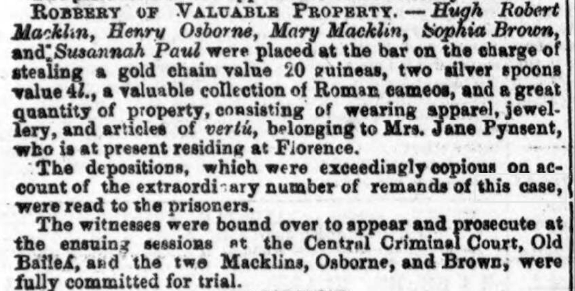
Thomas was traveling in Europe again in the 1850s. His wife, Jane Pynsent (née Sparrow), left eight boxes with her brother-in-law, Dr. Tilt, at 8 York Street, Portman Square in London to look after while she was away. Unfortunately, four of his servants broke into them and stole pieces of clothing, shoes, silver spoons (valued at 4 guineas), a gold chain (valued at 20 guineas). They also stole eight expensive Roman cameos, although they probably did not know what they were. An honest pawnbroker turned them in to the police and they were charged with theft.

Dr. Tilt informed the court (at the Guildhall) that his sister-in-law, “Mrs. Pincent who was travelling on the Continent, and had been for the last four years” was probably at Innsbruck, in Austria (Morning Post Friday 7th June 1850). He was instructed to write and inform her of the theft, and to ask where she had bought the necklace so that it could be authenticated. The trial progressed slowly, as Mrs. Pynsent was actually in Florence, in Italy and the letters had to be forwarded on to her (Morning Post: Saturday 6th July 1850). The defendants were eventually committed for trial at the Central Criminal Court at the Old Bailey.
Thomas and Jane traveled around Europe with Thomas’s cousin Charles Pitt Pynsent and his wife, Georgiana. Charles was Thomas’s uncle Joseph’s youngest son and sixteen years younger than Thomas – who presumably encouraged him to change the spelling of his surname from Pinsent to Pynsent.
Both families were living in Weston-Super-Mare in Somerset in the summer and fall of 1855 (Western Super Mare Gazette and General Advertiser: Saturday 1st September 1855), and we know that Thomas returned there the following year as he was living at Corfield House in Weston-Super-Mare in June 1856. It was while he was there that he signed on as witness to a document that dissolved the partnership that had hitherto existed between Charles Pitt and Wm. F. Splatt (the husband of his cousin Elizabeth – another of Joseph’s children). Charles Pitt Pynsent and Wm. F. Splatt had run sheep together at Lexington in Victoria, in Australia (Victoria Government Gazette: 1836-1997). Life gets complicated. The point is that the family strands were deeply entanged in those days.
Thomas Pynsent had cut his ties with Hennock by the mid-1850s. In a letter his cousin Robert John Pinsent (son of John Pinsent and Susanna Speare: see elsewhere) wrote in 1860, he says that Thomas had “sold the Pitt Estate (and house) a very few years ago, and thus it has, I regret to say, passed out of the family”. Exactly when, I am not sure.
Thomas Pynsent and the W. F. Splatt mentioned above invested in the “Torquay Hotel Company”, which ran an establishment called the Imperial Hotel. In 1864, Thomas lobbied for a position on the “Board of Directors” and was slightly put out when the chairman wrote to a friend in North Devon asking about him and Thomas had heard that the answer had been that he was “a troublesome fellow.” He said that did not intend to be so (at least on this occassion) and he dropped out of the running (Torquay Directory and South Devon Journal: Wednesday 17th February 1864). In the event, the venture did not seem to be overly profitable and Mr. Pynsent and Mr. Splatt circulated a notice of their grievances to the other principal shareholders in advance of the Annual General Meeting held in June 1869. They complained that the wages being paid were out of proportion to the income. Among other things, they suggested the stables be either sold or closed down. They knew someone (unnamed) who might be interested in acquiring them (Exeter and Plymouth Gazette: Friday 4th June 1869).
Thomas and William (Splatt) were not alone in their irritation with the management. In a separate letter to the Editor of the Western Times (Tuesday 8th June 1869), another shareholder pointed out that the directors had overvalued the stables when trying to lease them sometime earlier. The writer says “I cannot conclude without saying that Messrs. Splatt and Pynsent deserve the warmest thanks of the shareholders for their fair and business-like attempt to introduce a sounder system of management, which if early adopted by the directors must soon produce a dividend.”
As an aside, in an article on the history of the “Torre Workhouse” (which was shortly to be demolished) there is mention that a “resolution dealing with the work of the workhouse was passed by the vestry April 30th 1835, when a little waif was disregarded by its parents and left to the care of strangers. The vestry resolved that ‘Thomas Pinsent’s accounts be paid Inc. keeping a child found at his door, and that the clothing belonging to the child be sent to the workhouse'” Torquay Times and South Devon Advertiser (Friday 10th September 1937). Which Thomas this was, I am not sure; however it was presumably one of the more affluent ones in the district. Thomas Pinsent (above) and Thomas Pinsent (of Devonport) come to mind.
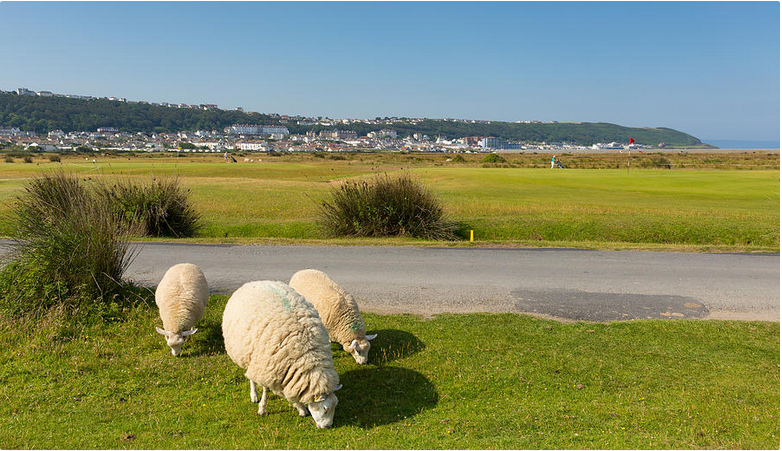
In 1855, the Reverend Charles Kingsley published “Westward Ho!” It was a seafaring yarn set in Elizabethan times that extolled the beauty of the North Devon Coast and of the area around Bideford in particular. The book was an instant hit and by 1860 it had become fashionable to rent a house for the summer in Northam, near Bideford. Clearly, Thomas read the book in the 1860s and, after checking the area out, set about purchasing land on the slope above the Northam Burrows (an area of picturesque swampy grassland bounded by a shingle ridge and sandy shore line). It was probably bought with a view to investment as he did not move their immediately. Thomas and his family turn up in several socially respectable watering holes – such as London, Cheltenham, Leamington Spa and Clifton, near Bristol etc. They were in Clifton at the time of the 1861 Census. However, they moved to Northam shortly thereafter.
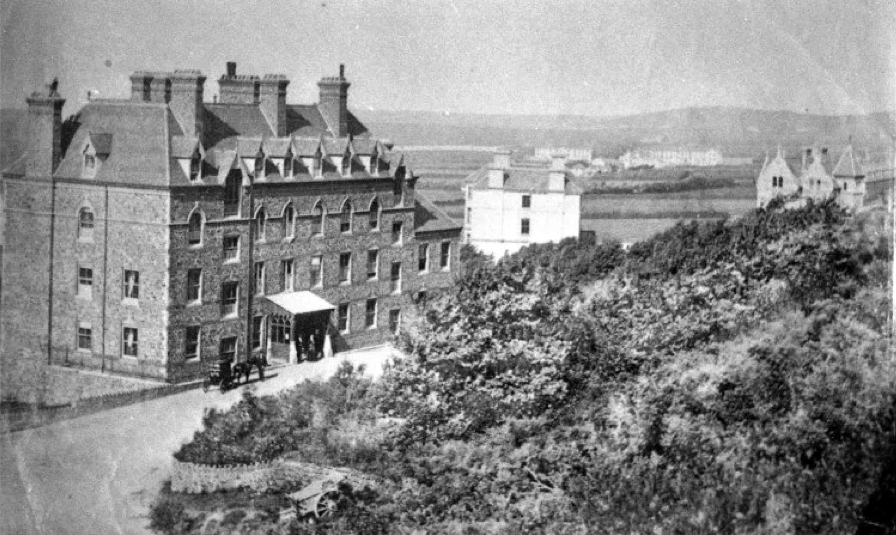
When the “Northam Burrows Hotel and Villas Company (Limited)” issued its prospectus in June 1863, it listed Thomas among its Northam-based directors (Exeter and Plymouth Gazette: Friday 25th September 1863). The stated aim of the Company was to acquire 75 acres of land, build a hotel and “villas” for upper-class residents and to turn Northam into a resort similar to Torquay.
Thomas was an enthusiastic supporter (Exeter and Plymouth Gazette: Friday 25th September 1863) of the venture and he joined the building committee in October (Exeter and Plymouth Gazette: Friday 30th October 1863). He gave a promotional talk entitled “The Past, The Present and the Future of the Burrows of Northam” in Bideford the following month (North Devon Journal: Thursday 26th November 1863). He seems to have given the same or similar talks at several venues over the next few months – including Torquay. The “Mechanic’s Institute” in Torquay liked his presentation so much they invited him back to give another talk entitled “Reminiscences of Travel of the Continent of Europe” in February 1864 (Western Times: Friday 18th December 1863). I am sorry I missed that one. A few years later, Thomas gave much the same talk at a “Penny Reading” in Bideford in 1868 (North Devon Journal: Thursday 13th February 1868). Unfortunately, it did not go down quite so well as the locals talked among themselves and stamped their feet: “Thomas Pynsent, Esq, was very badly treated, and publicly complained of the insult …” (North Devon Journal: Thursday 5th March 1868). Perhaps they were not that interested in Italian architecture.
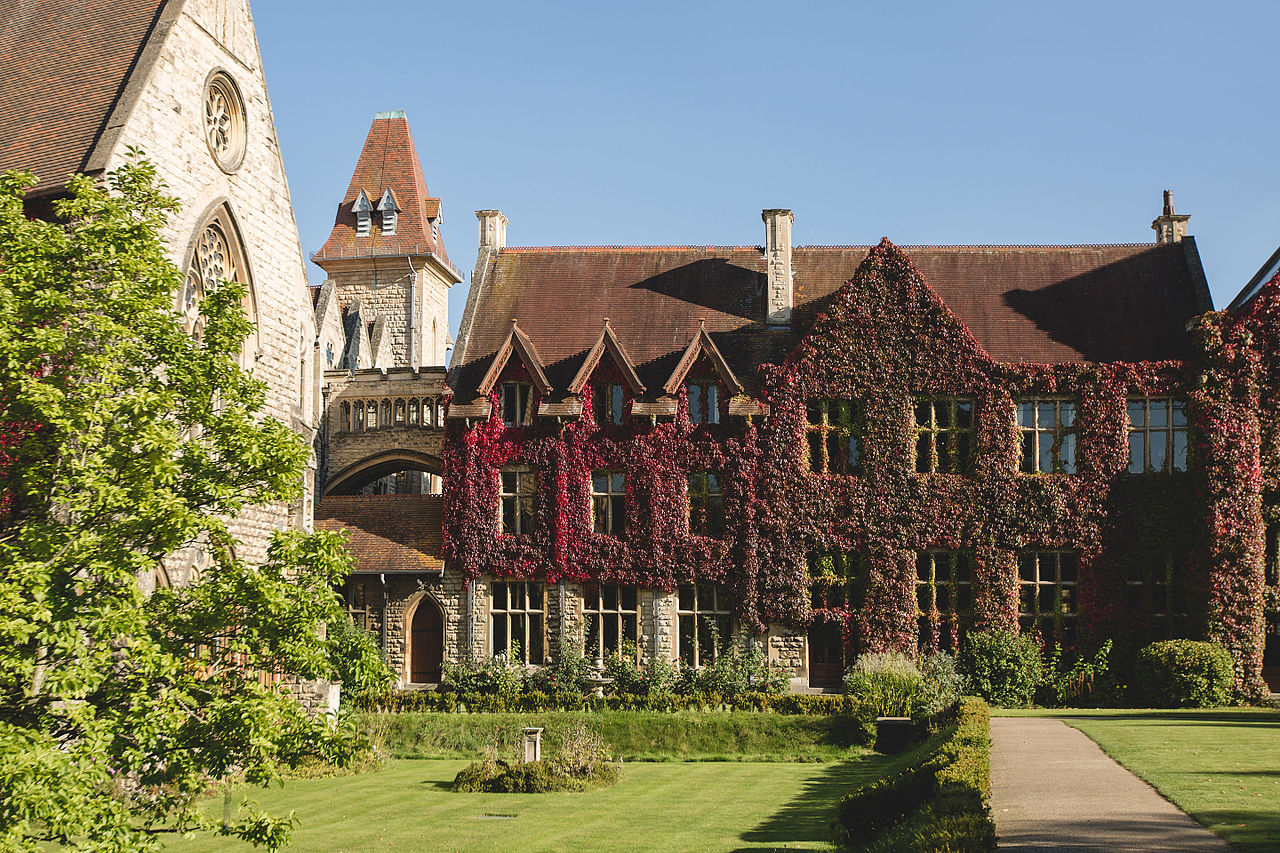
Thomas appears to have taken his family to Torquay several times a year in the late 1860s and early 1870s. His daughters were growing up fast and it was important that they be seen and heard in the right circles. We know that the eldest, Margaret Jane Pynsent, had been educated at Cheltenham Ladies College as she made a return visit there at the time of its Bicentennial Gathering in June 1904. Mrs. Whilloughby (as she was then) went back with own daughter, Lilian Whilloughby who was also an “old girl” (Cheltenham Chronicle: Saturday 4th June 1904). Margaret’s younger sisters may also have attended the College.
Mr., Mrs. and Miss Pynsent (presumably Margaret Jane) attended Balls and other social events in Torquay in the early 1860s. Presumably they enjoyed “Mr. Winterbottom’s quadrille band” in the Bath Saloon (Torquay Chronicle and South Devon Advertiser: Saturday 8th March 1862) and Miss Pynsent made her mark as a “Roman Peasant” at a Grand Fancy Ball the following month (Torquay Chronicle and South Devon Advertiser: Saturday 26th April 1862). Thomas’s wife Jane is not mentioned as going to many of the events; however, Margaret Jane’s sisters started to attend after they, in turn, came of age and “came out”. Mrs. Pynsent did, however; attend the wedding of Miss Emma Augusta Bragg (the daughter of the late Colonel Bragg of Tadbarrow) to Major Warry of the 34th Regiment, at Thorncombe, in July 1864 (Exeter and Plymouth Gazette: Friday 1st July 1864). One of her daughters (I do not know which) and a Miss Sparrow (presumably a niece) were numbered among the no-less-than ten bridesmaids. Torquay was a social hub and it is worth noting that some of Thomas’s visits overlapped with those of his aunt, Elizabeth – Mrs. Splatt.
When listing family members, the convention in the press in those days seems to have been to call the eldest daughter in attendance “Miss” and her younger sister – if present – “Miss Florence (or whomever),” so perhaps there was some logic to the system. The Sherborne Mercury (Tuesday 29th May 1866) tells us that Mr. Pynsent, Miss Pynsent and Miss Florence Pynsent attended a “fashionable ball” in Weymouth in May 1866. It was timed to coincide with Lord Digby’s inspection of “Dorset Yeomany” (Dorset County Express and Agricultural Gazette: Tuesday 29th May 1866). The Rev. R. A. Keddle and Mrs. Keddle and their daughters, Miss Keddle and Miss Louisa Keddle were also in attendance. The Keddle family crops up elsewhere as Thomas’s sister Anne had married a George Keddle in 1832.
Weymouth balls were an important part of the annual social calendar as the town was home to a large army base and a goodly supply of young officers. The arrival or departure of a regiment seems to have caused quite a stir in the press (Salisbury and Winchester Journal: Saturday 18th May 1867) and it may have caused a few hearts to flutter as well. The following year, the Weymouth Telegram complained that “The “red coats” have returned to their homes, leaving the county town to its accustomed inhabitants, much to the regret of many of them, for the assembling of the militia broke the monotony of dull old Dorchester, and their daily marches along the main street, to the accompaniment of marital music, presented an enlivening spectacle as unwonted as it was gratifying” (Tuesday 28th May 1868). I image there were a parent of two who waved them good by.
It was important for the Pynsent girls to get around and it is worth noting that one of them was in Essex at Christmas 1868. She (and “about 220 of the elite of the county”) attended a County Ball with her grandparents – Mr. and Mrs. Sparrow (Essex Times: Saturday 25th January 1868).
At least one of the girls attended the Weymouth Hunt Ball (Weymouth Telegram: Thursday 27th February 1868) the following month and Mr. Pynsent took two of his daughters (presumably the elder two) to a ball sponsored by the “Dorset Yeomanry” in May 1868 (Salisbury and Winchester Journal: Saturday 23rd May 1868). The family frequented attended the County Ball, in Exeter. Thomas was there with two of his daughters (Florence and Jane) in October 1871 (Exeter and Plymouth Gazette: Friday 20th October 1871). Where Margaret was on this occasion, I am not sure. She was still unmarried.
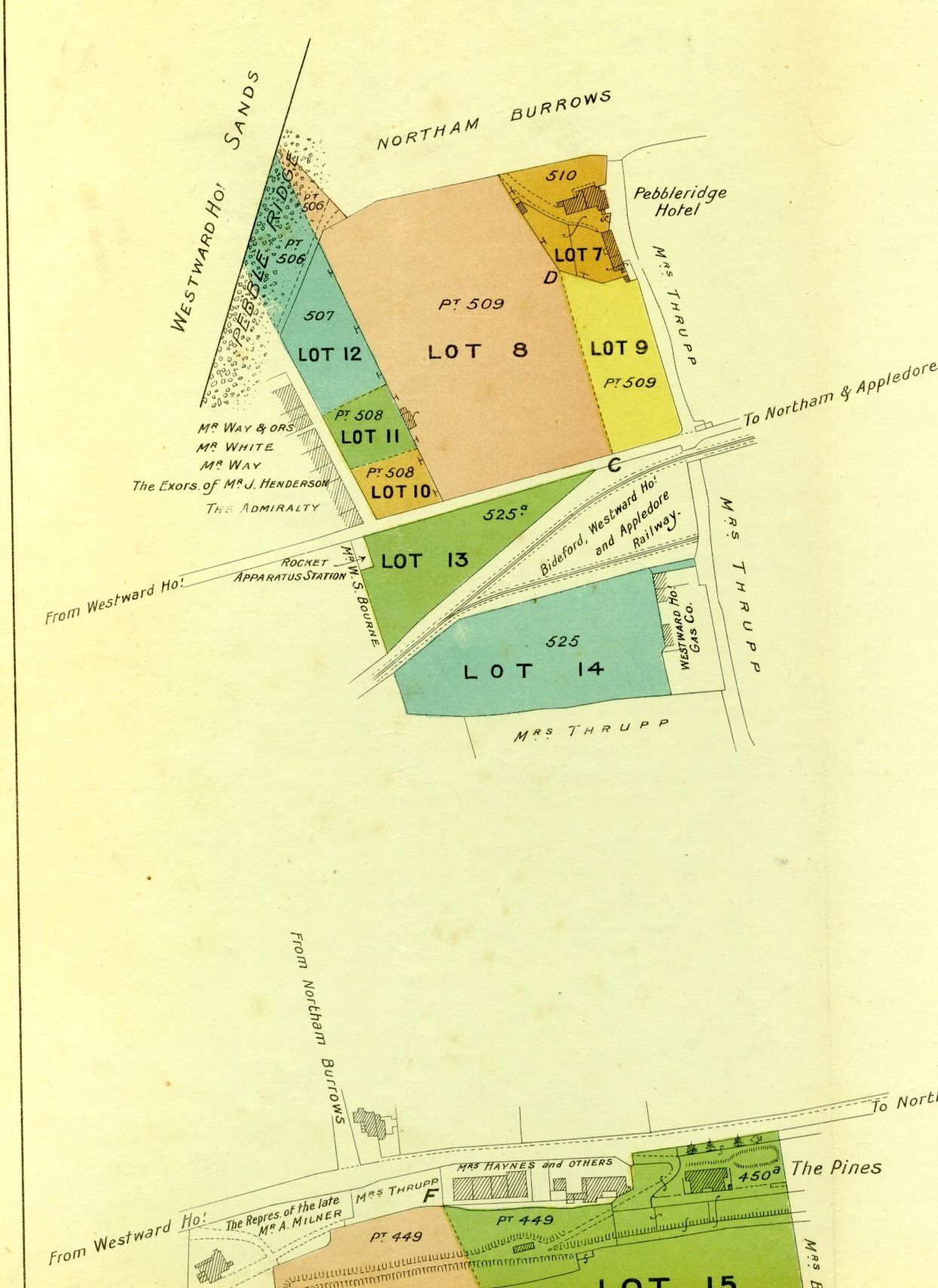
Thomas’s support and promotion of the Hotel project was clearly self-serving as he owned a considerable amount of prime land overlooking the Burrows at Northam. The full extent of his holdings – or at least of his holdings after selling a considerable amount of land for development – is best shown in a summation of the “Pynsent Estate” which was broken up (presumably for the benefit of his daughters) in 1913. The attached maps show that he had held on to a small dairy farm at “Tadworthy” on the west side of the Bideford road (three (Blocks #1 to 6), some large blocks suitable for “gentlemans’ residences” (Blocks #15-17) and a collection of cotiguous blocks down by Westward Ho! sands and the Burrows of Northam (Blocks #7 to 14) which housed the “Pebble Ridge Hotel” and the adjacent cricket field.
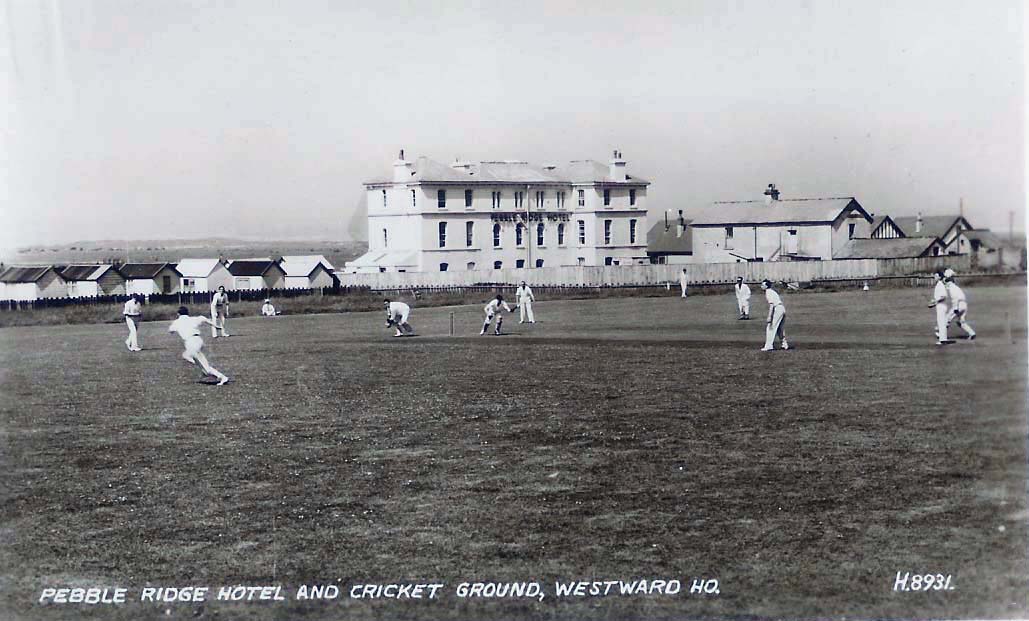
By 1865, Thomas was already busy building a hotel and houses on his own account. We are told that “That indefatigable gentleman T. Pynsent Esq., in addition to his large acreage of land (part of the semi-circular hills which back up the plain whereon he had had constructed a beautiful Chinese villa) has also built a refreshment house, with twelve rooms for lodgings, and stabling for twelve horses, separated from the restaurant, over which it was though advisable to make further provision for the restauranteur’s family. Accordingly, the speculative proprietor has built over the stabling capital rooms, one of which will dine fifty persons comfortably, with room for the family of Mr. Crowe, the innkeeper referred to …” (North Devon Journal: Thursday 1st June 1865). Thomas’s Villa, which was later known as the “Pebble Ridge Hotel,” was constructed “lower down the hill” than the establishment proposed by the “Northam Burrows Hotel and Villa Company’s”. Thomas’s Villa, “having a beautiful tower, somewhat in the Chinese style” was nearing completion in July 1864 (North Devon Journal: Thursday 21st July 1864). The “Chinese-style house” was probably actually meant be “Italianate”, if the truth were known.
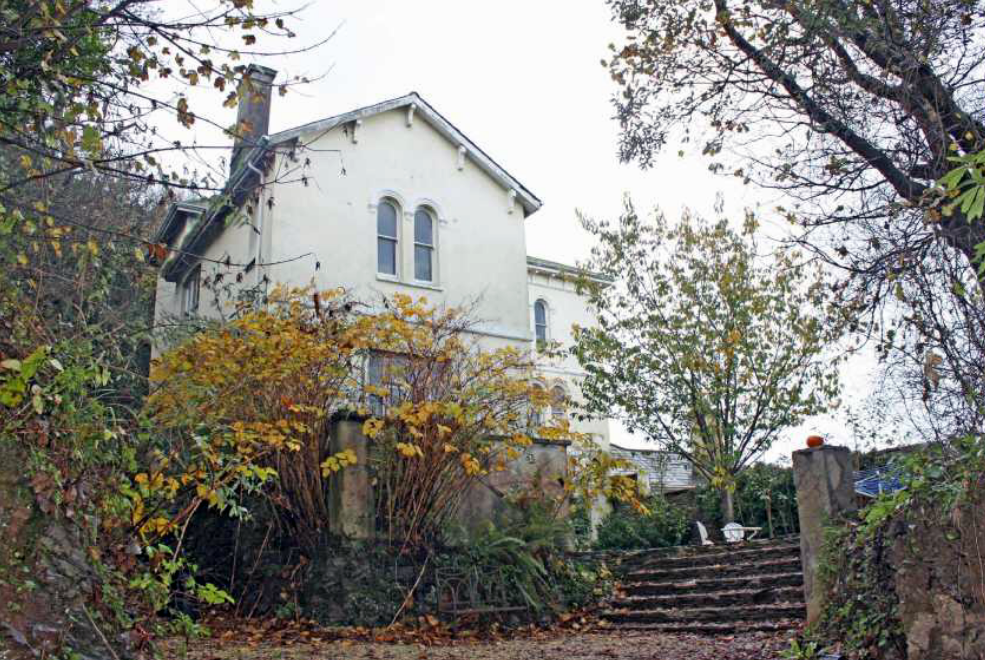
Thomas kept several houses for himself, including “Hillsborough” – a name that had resonance with his Newfoundland relations. It seems to have been on the road to Bideford. The Leeds Mercury (Saturday 18th April 1868) tells us that a hawk attracted by a cage of song birds hung up in his greenhouse at “Hillsborough” crashed through a pane of glass and lay stunned until Thomas’s daughters arrived on the scene – when it flew away! According to a recent on-line property listing, “Hillsborough House” (#84 Atlantic Way Westward Ho!) had previously been owned by a “Victorian, former sea captain.” Perhaps.
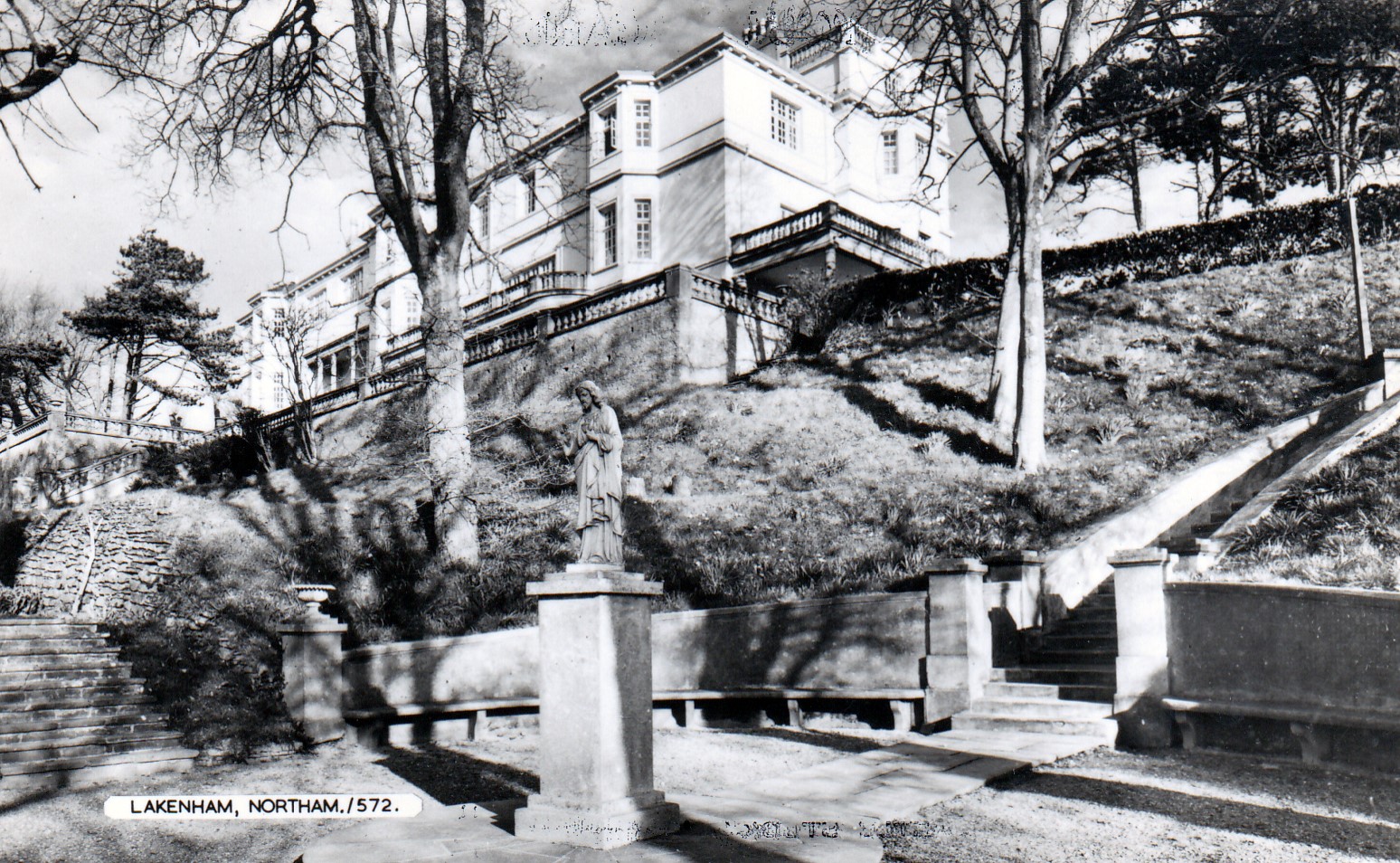
Local Directories show that Thomas owned another house, “Lakenham”, by 1866. It still stands. Two years later, his daughter, Jane Pynsent of “Lakenham” in Northam, saw her pony come in second “best pony for riding or driving, not exceeding 13 hands” in a field of nineteen at the third annual Bideford and North Devon show, held at Westward Ho! (Western Times: Friday 24th July 1868).
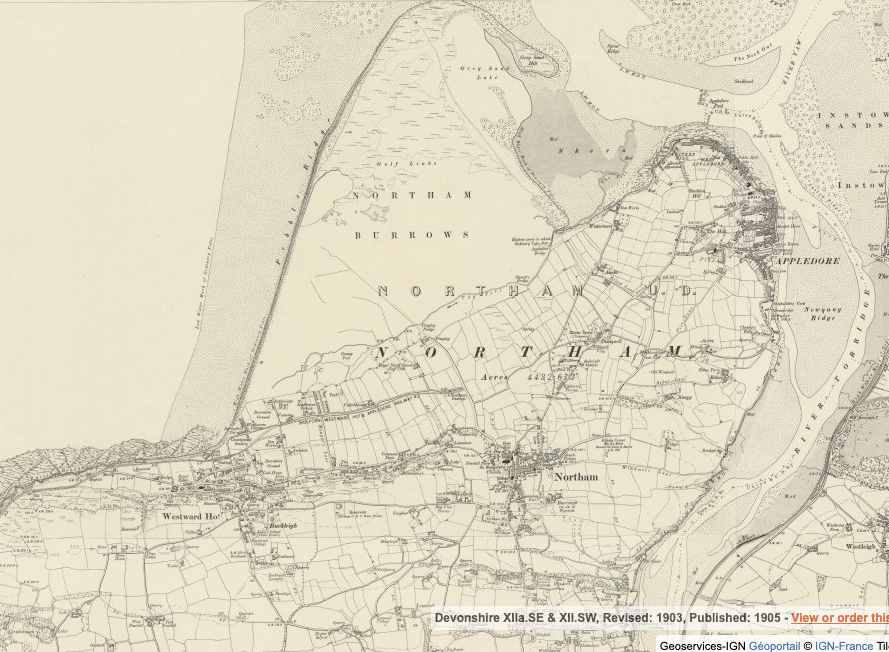
The unique charm of Northam comes from its setting. It lies on a peninsula of land constrained by the Taw and Torridge estuaries that faces west towards the Bristol Channel. The land immediately to the north and west of Northam slopes steeply down to a flat undulating plane known as the “Northam Burrows”. In those days it comprised approximately 1,000 acres of grassland and a shingle ridge with a sandy beach. Today it is probably considerably less as it has been severely reduced in size by coastal erosion. Thomas’s “refreshment house” the “Pebble Beach Hotel” was built on the grassland near the southern tip of the Burrows. It has been demolished but one can still find photographs of it on-line.
The Duchess of Portland, the wife of the Chairman of the Board of “Northam Burrows Hotel and Villas Company (Limited),” laid the foundation stone for the “Westward Ho!” Hotel in February 1864 and officially founded the community of Westward Ho! As an important early advocate and investor, Thomas Pynsent was invited to give a speech at the event. He did so, and acknowledged that he was an outsider and not an overly aristocratic or wealthy one at that; however, he said, he had come to Northam because of its healthy air and natural beauty and he felt that he should encourage others to come and enjoy its splendours – and at the same time ensure that he became extremely wealthy! Buy shares everyone! (North Devon Journal: Thursday 11th February 1864)
The “Westward Ho!” Hotel opened for business in June 1865. A small celebration followed shortly thereafter. The Northam fife and drum band and Bideford Rifles were on hand and the local lifeboats were tested to entertain the visitors (Exeter and Plymouth Gazette: Friday 14th July 1865).
The building tycoons of the day realized that it would take more than hotels and villas to make Northam/Westward Ho! into a thriving upper class resort able to compete with the likes of Torquay and Ilfracombe. While they pitched their newly constructed villas at the “gentry,” they found that they attracted a large number of retired well-to do (army and navy) officers (History of Westward Ho! by John Mayo). They came because there were already military folk living in Northam and senior officers were more than willing to sell out and retire on half pay after the debacle of the Crimean War (which ended in 1856). In those days commissions in the army could be bought and sold. The army did not discontinue the purchase system until 1871. From then on, officers were supposed to be selected on intellect and fitness for the job. One hopes that they were.
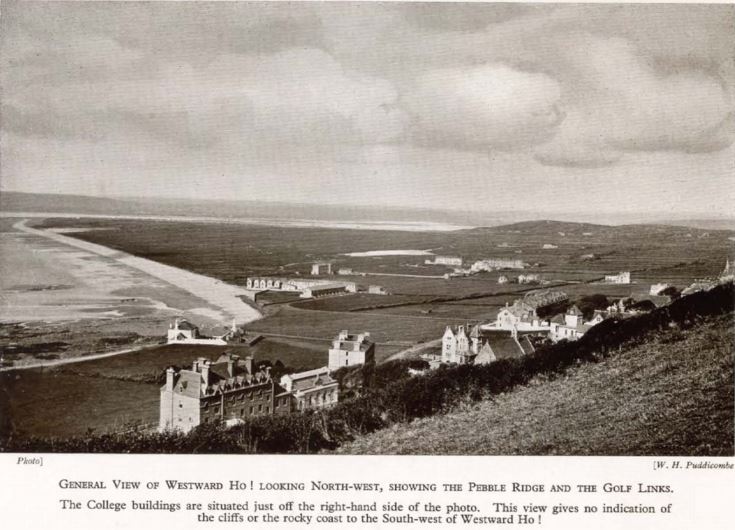
In 1864, the West of England College Company (limited) floated the idea of building a “Proprietary College at the rising watering place of Westward Ho! near Bideford, for the purpose of providing for the sons of gentlemen at a moderate cost, a sound religious classical, mathematical and general education of the highest class, and such as may fittingly prepare them for the Universities, for the Civil, Naval and Military Government Examinations, and for the active pursuits of life (Exeter Flying Post: Wednesday 28th December 1864). This was eventually to come to fruition as the “United Services College”. The school was designed on the Public (i.e. Private) School model and was aimed at giving the sons of military officers the education they needed to enter Sandhurst, Woolwich or Dartmouth. It opened in 1874 and was an important part of North Devon life until it closed and moved up to London in 1906.
In 1868, when Admiral Kelly died and left enough money to endow a college in his name, the people of Northam formed a committee to try and induce his trustees to build it in Northam. Thomas Pynsent gave the committee £200 as a show of support, which immediately elicited a similar donation from his nemesis-to-be, Captain G. M. F. Molesworth (North Devon Journal: Thursday 11th June 1868). Unfortunately, the Admiral’s trustees eventually chose Tavistock, in South Devon, instead.
The Kingsley Memorial College was founded in Westward Ho! in 1882. It was meant to educate the sons of professional people, clergymen, lawyers and doctors etc. As it happened, a lot of the boys came from Ireland and it was known locally as “The Irish College.” Sadly, it only lasted four years (History of Westward Ho! by John Mayo). Captain Molesworth was a strong advocate and when the inhabitants of Bideford, Westward Ho! and Northam presented him with an organ in recognition of his contribution to the community, he asked for it to be placed in the Chapel at Kingsley College. In responding to a Sir George Stucley, who was making the presentation, Captain Molesworth acknowledged that he was not alone in the early days, “General Hutchinson, Mr. Pynsent, Mr. Wren and others had assisted …” (North Devon Journal: Thursday 28th December 1882).
The resort grew. The “Royal North Devon Golf Club” was established on the Northam Burrows in the early 1860s and the first match of the “West of England Golf Club,” as it was then called, was played there in November 1864 (North Devon Journal: Thursday 17th November 1864). Golf was a novelty in England at the time but was catching on with the “gentry” and, in particular, with army officers. It must have helped to have a few Scots around. The English built their cricket pitch next to the “Pebble Ridge Hotel”.
In 1864, Thomas Pynsent and one of his daughters (most likely Margaret Jane Pynsent) took time out to return to the Teign Valley, west of Exeter to escort Anna Brown Pynsent (the first wife of Thomas’s uncle, John Pinsent’s grandson, Robert John Pinsent) and her young children around his old home at “Pitt” and other family-related sites in South Devon. Anna was from the Newfoundland branch of the family. They were clearly still in touch with each other. Whether Thomas took Anna to see Westward Ho! and Northam, I do not know. She does not mention it.
Bideford and Torrington were accessible by rail and the businessmen involved in the Westward Ho! project soon realized that if it was to succeed, it needed to be made more accessibly and that meant linked to the main rail system. Discussions took place to determine the best way of securing a “direct railway communication with Torrington, Holesworth, Lauceston, Plymouth and the West of Cornwall” (North Devon Journal: Thursday 16th February 1865). These were exciting times in North Devon but they did not last. It took four years to acquire the land and start work on the line. Unfortunately the principal contractor went bankrupt and The “London and Southwestern Railway” abandoned the project as uneconomic in February 1868 (Exeter and Plymouth Gazette: Friday 28th February 1868). The developers may have been disappointed at the set-back but not all the residents of Northam were in favour of the line and there certainly had been teething problems.
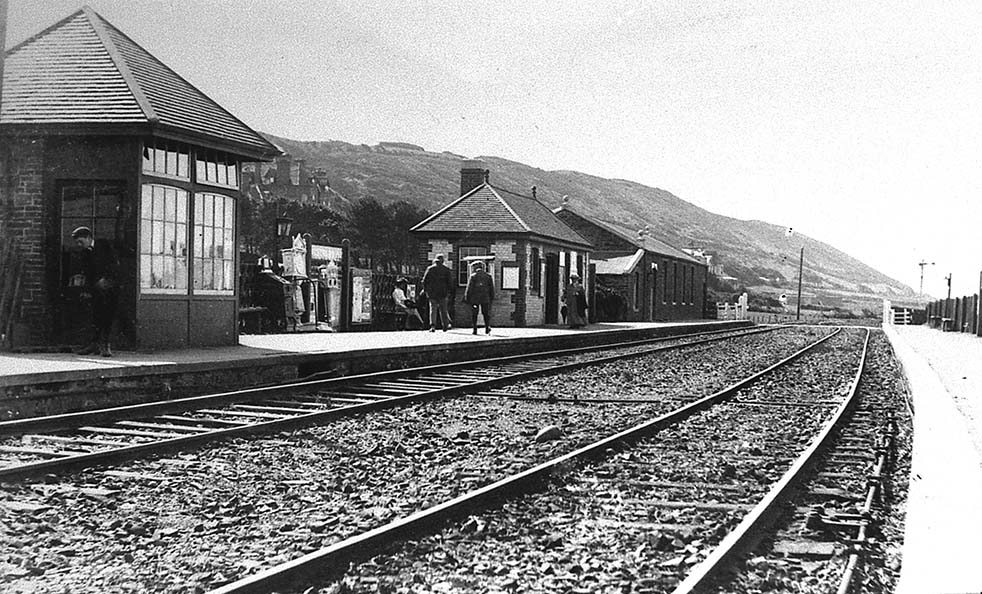
Lack of rail access was undoubtedly a problem for the community and Mr. Molesworth and other local developers formed the “Bideford, Appledore and Westward Ho! Railway Company” in a separate effort to build the line and link it to the existing “London and Southwestern Railway” line (Exeter and Plymouth Gazette: Friday 24th June 1870). The local landowners donated their land and it started out well enough but took years to actually build. It was not completed in Thomas’s lifetime. The first trains did not start to run until 1901 and, in the end, the line proved to be uneconomic. It closed in 1917.
Northam’s population grew rapidly and the parish church became too small for the parishioners; clearly it would have to be rebuilt – or at least redesigned. Its progressive Vicar (Rev. H. I. Gosset) wanted free and open access for all comers and he tore out the old box seats and replaced them with modern pews. This was too much for Mr. Benson, his Churchwarden. He felt that every seat should be assigned and paid for, just as they had been in ages past. At a Vestry meeting held to discuss the issue, Mr. Pynsent argued in favour of the Vicar’s position and, needless to say, upset those that agreed with the warden. One of the locals said: “Recollect that you are but a stranger, Mr. Pynsent; it would have been better for the parish if you had never come here. Mr. Pynsent, (replied) I am told it would have been better if I had never come into the parish: Really this very personal. If I were to consult my own advantage, it would be decidedly to my interest to support the appropriation of the seats, for I have built three houses in the parish, and may build three more. If I were to consider my interest alone, it would be to my advantage that the gentlemen who live in those houses should have seats appropriated to them, but know there is something higher than interest, and that is religion. (“oh, oh.”). I say that every man has a common right to the seats in the parish church; and I am sorry that people cannot say their prayers without looking to the right and the left for objects that annoy them. It is said that it were better I had never come into the parish; I appeal to the poor of the parish. (“oh, oh.”).” After considerable acrimonious debate, a not particularly mollified Churchwarden was induced to fulfill the rest of his term in office (North Devon Journal: Thursday 5th October 1865).
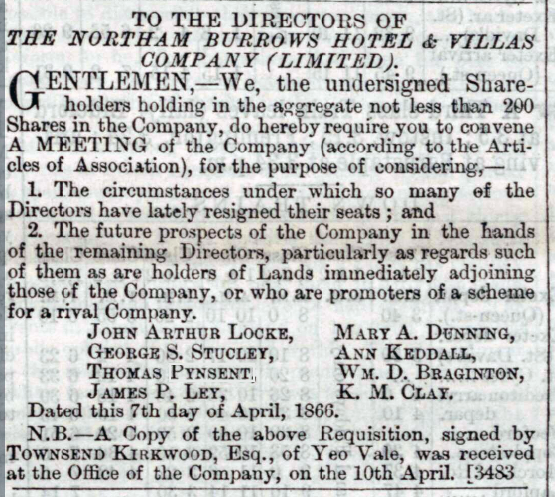
In early 1866, several key directors of the “Northam Burrows Hotel Villas Company (Limited)”, including Lord Portland, the Chairman; Mr. J. P. Ley, the Vice chairman; Mr. Thomas Pynsent; and several others suddenly resigned. There was a meeting of all the directors in April that year to discuss the reasons why. Some, it appeared, had resigned so as to sell off their shares. However, the Chairman and Vice chairman, and Mr. Thomas Pynsent and two others had stepped down in protest over the management of the company, which they thought was falling into the hands of a clique of directors who were holding back development while they themselves sold land and/or had joined a recently proposed rival hotel company (North Devon Journal: Thursday 12th April 1866). Thomas Pynsent and his sister, Mrs. Ann Keddell, attended the meeting. Presumably, she also had an interest in the hotel.
At the meeting, Thomas described his early enthusiasm and past efforts on behalf of the company and explained his reasons for resigning. He said that several of the directors who were reluctant to continue developing the Westward Ho! Hotel complex were now directors of the newly proposed “Grand Hotel Company, Westward Ho!” He pointed out that the prospectus of that company showed “The requirement for such erections has for some time been daily evidenced by the total inability of the present hotel (erected by the Northam Burrows Company) to meet the demands made upon it for accommodation.” It did not look good.
Thomas also objected to a promotional map then being circulated by the North Burrows Company being used to promote the interests of other people. Thomas got into a heated argument with Mr. Molesworth (another very aggressive local businessman) who – hardly surprisingly – argued that more development by other people would ultimately be beneficial for the hotel. Mr. Molesworth also objected to the airing of these internal issues in public (North Devon Journal: Tuesday 1st May 1866). Captain Molesworth, R.N., had a piece of most of the action in and around Bideford in those days. He was instrumental in the building of the “Nassau Baths” (adjacent to the United Services College), in rebuilding the pier in Northam and in the plans for the railway. Clearly he was happy to see bits of Hotel Company’s land sold off at a profit and developed by others … including himself!
Thomas’s spat with Captain Molesworth, who was a Justice of the Peace was personal and a few days later he brought a charge against the man who operated the “Pebble Ridge Hotel” on Mr. Pynsent’s behalf. He charged Mr. Crowe with selling beer at three-half pence per glass, and with preaching in competition to the Vicar! Mr. Molesworth also charged Thomas for allowing it to happen. He claimed that: “It was Mr. Pynsent who was working (if anybody) in opposition to the Company. He had built a beer shop, and used the Company’s roads to go to it. He had established a beer-shop in opposition to the hotel, and preacher in opposition to the vicar” (Laughter). Thomas wrote a letter to the press refuting the charges on the grounds that Mr. Crowe was a well-respected South African War veteran who had been a constable on the local police force for three years. He also said that Mr. Crowe was the sitting tenant when he bought and built the hotel, and he left him to manage the place. He pointed out that Mr. Crowe was entitled to operate a beer-shop and that he had only done so for a short time, evidently, “he did not like the class of people who came” so he closed it down and the building now served soley as a hotel. He never preached, but was entitled to his own religious views. The beer-shop had been outside of the grounds of the hotel complex and, despite Captain Molesworth’s insinuation, it did not rely on Company roads (North Devon Journal: Thursday 10th May 1866). Mr. Crowe was probably a Methodist. He invited the children from the Wesleyan School for a meal at the hotel while they were on a day-trip to the Burrows (North Devon Journal: Thursday 10th August 1865).
After the Annual General Meeting of the “Northam Burrows Hotel Company”, in September 1866, Thomas Pynsent wrote another letter to the Editor of the North Devon Journal. He pointed out that the company had published and advertised its tariff list in 1865 and that it had radically increased its prices since then. He acknowledged the hotel’s right to do so; however, he felt that the new rates should be advertised or else customers would have justifiable grounds for complaint (North Devon Journal: Thursday 6th September 1866). Although Thomas was no longer a director, he was definitely still an interested shareholder. He attended the annual general meeting and suggested that the “Westward Ho! Hotel and Villa Company” issue a three per cent dividend or risk loosing its investors. The idea was rejected (North Devon Journal: Thursday 25th August 1870). Thomas was not amused. After the Local Board had discussed its finances, he issued an address stating the board had to mortgage its rates to pay £2,000 for roads £1,200 for drainage in the Westward Ho! area and the costs would fall disproportionately on house occupants in Northam who would derive little or not benefit from the work (Western Times: Tuesday 8th November 1870).
If that was not enough, the community had to decide whether to impose a rate-aided School Board under the Education Act or continue to rely on volunteer support of the school system. It was a contentious issue. Thomas Pynsent argued for a School Board, claiming that the voluntary support approach had been a miserable failure. He pressed for the vestry to be polled, and it was a few days later: 174 parishioners voted to continue the voluntary system and 38 advocated a School Board. A disappointed Thomas “hoped that those who had voted in the majority would give the system the support it deserved” Western Times: Saturday 3rd December and Exeter and Plymouth Gazette Daily Telegrams: Saturday 10th December 1870).
Less than two years after the opening of the Westward Ho! Hotel, the first grumblings were heard about environmental degradation. The Northam Burrows, which were the central attraction of the area, were common land and the inhabitants of Northam and nearby Appledore were upset that visitors’ vehicles were ruining the grasslands. In March 1867, a Mr. Chappell led a large body of men to the Burrows and pulled down three bridges to impede access to the Burrows. Needless to say, “The higher classes are greatly annoyed by this resort to lynch law, being very much interested in the Westward Ho! Hotel or the houses and villas near; the whole of which will be depreciated in value, if no access can be obtained to the Burrows”. The local Justice of the Peace (Captain Molesworth, no less) had Mr. Chappell arrested (North Devon Journal: Thursday 7th March 1867). The following year, Mr. Molesworth – who was never accused of consistency – tried to restrict public access to part of the beach at Cleave House (Exeter and Plymouth Gazette: Friday 21st February 1868).
Population pressure was proving to be a challenge and there were other worrying signs of what was to come. At a vestry meeting in March 1867, Thomas suggested that a committee of fourteen people be set up to study the condition of the streets and sewers around Appledore and Northam, and he supported a resolution that a meeting be called to discuss the recent “Local Government Act” – through which communities could set up a central board to handle health related issues (Exeter and Plymouth Gazette: Friday 8th March 1867). There was talk of cholera at Appledore at the time, so he had no difficulty in getting enough votes to apply to the Central Government (Western Times: Tuesday 26th March 1867). The application was approved, and Thomas was one of twenty-four people elected to the newly formed Local Board (North Devon Journal: Thursday 27th June 1868).
The community had woken up and meetings were held to discuss the state of the parish and neighbouring area, and of the Burrows in particular, throughout that summer. The bridge incident had not passed unnoticed. There were proposals for controls on grazing on the Burrows and road works; however, the improvements needed to be funded and much had to be done by special subscription by those affected and that proved to be a problem.
The Local Government Board was faced with road maintenance issues and with water supply and sewerage concerns for the growing population in its district. It was a thorny problem, partly because of the contrasting needs of Appledore (a poor seashore fishing village) and Northam (a more affluent farm based community) that now included (a small but growing population of very demanding “gentry” at Westward Ho!). For instance; when Mr. Pynsent complained that the conditions at Appledore were deplorable in October 1867, he upset it’s inhabitants, who said it was not – and the affluent residents of Northam said that in that case why should they spend money there? (North Devon Journal: Thursday 31st October 1967). The board did; however, agree to discuss the need to sink additional wells in Appledore (North Devon Journal: Thursday 28th November 1867). Meanwhile, it studied road and sewerage proposals – and built a nice drinking fountain in Northam for visitors to the Burrows. Admittedly, some of the money spent for that was by subscription, so it did not all come out of the rates (North Devon Journal: Thursday 27th August 1868).
There was to be a General Election in 1869 and Thomas Pynsent dove right in. He had moved away from the Conservative values of his youth and he now held a decidedly more Liberal point of view. This time round, he supported Mr. T. D. Acland. Esquire.
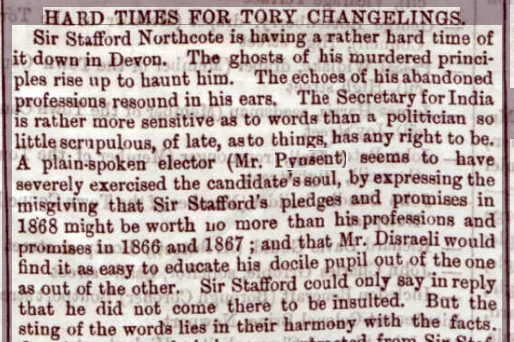
Thomas gained national fame (or notoriety) in September 1868 after being asked to put questions to Sir Stafford Northcote (the sitting M.P. and Conservative Candidate for the area, who was also Minister of State for India) and Mr. Walrond, another Conservative candidate at a large, open-air meeting in Bideford. He asked Sir Stafford about his position on “dissenters” and the Test Act (in favour – i.e. require adherence to the Church of England for government positions) and on the “Romanization” of the English Church (against) and – specifically – if he supported his own government’s plans for funding a Roman Catholic University in Ireland, which was a hot topic at the time. Sir Stafford waffled. Thomas then accused him of being a “hypocrite” for condemning the Liberal Government Reform Bill as being too extreme and then supporting it. He also accused him of reneging on promises he had previously made – particularly “if your master and teacher (Mr. Disraeli) educate you to abandon them”. Sir Stafford left the balcony where he had been standing in high dudgeon and Thomas Pynsent proposed a vote of censure that was seconded by a Mr. White. It passed easily (Western Times: Friday 18th September 1868).
Mr. Pynsent’s activities caused considerable embarrassment to some of the more conservative Pinsents in Devonshire. This notice appeared in the Exeter and Plymouth Gazette a week later, on Friday 25th September 1868: “We are desired to state that the Mr. Pynsent, who was insolent to Sir S. Northcote at Barnstaple and Bideford; is not Mr. Pinsent, a respectable hay and straw vendor, Market-place, but his cousin Thomas, who has changed the “i” into “y,” and is now called Thomas Pynsent, Esquire. Mr. White, who seconded Mr. Pynsent, is not Mr. E. M. White, of Bideford, the architect who built Bideford Church, but Mr. White, a respectable tailor, Mill-street, Bideford”. The Newton Abbot brewers from the DEVONPORT branch of the family voted Conservative and, clearly, they were not amused.
Elsewhere, the idea of standing up to a politician seems to have been more popular. Thomas and Mr. Molesworth both contributed fields for the twelfth annual Bideford Union Ploughing Match that was held in Westward Ho! in October that year (1868). At the dinner (a “capital repast”) the Mayor said he was delighted with what he had seen that day and, after a strongly cheered toast to “the Westward Ho! Company” Mr. Pynsent responded by giving a well-received speech in which he discussed the gradual development of the district over the past five years. He ended by saying that although he was a South Devon man by birth, he was a North Devon man by election (Exeter and Plymouth Gazette: Friday 30th October 1868). Some; however, saw things differently. The North Devon Journal (Thursday 29th October 1868) tells us that the dinner was “very scant in provision and imperfect in attendance, reflecting no credit on the catering.”
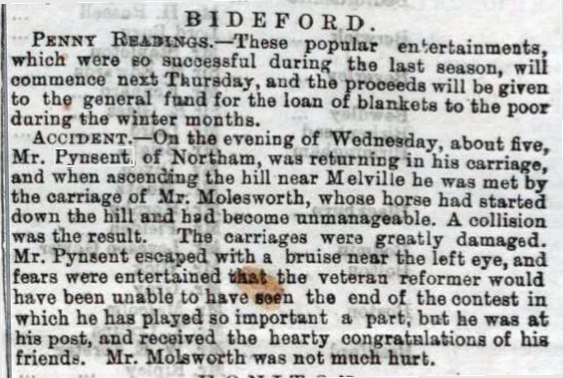
The Bideford incident rattled around the Conservative and Liberal press for a couple of months and when Sir Stafford attempted to fudge his position, he was held to his original comments by a letter Thomas Pynsent wrote to the Editor of the London Times (Thursday 12th November 1868). Sir Stafford Northcote (Conservative) and Mr. T. Acland (Liberal) were eventually elected to Parliament (Western Times: Tuesday 24th November 1868). Ironically, that was the day the carriage taking Thomas Pynsent home was hit by Mr. Molesworth’s conveyance when the latter’s horse lost control coming down a steep hill. Fortunately, neither party was seriously injured (Western Times: Tuesday 24th November 1868).
Politicians have long memories and a decade on, the Conservatives objected to Thomas Pynsent being on a Westward Ho! voters list. The rate collector testified that although Thomas was rated at £41 10s for his house and fields, his coachman had stated that Thomas had let out a portion of his house the previous Lady Day (25th March). The coachman said that he lived in a building next to the coach house that he was paid by Mr. Pynsent. He had been left in charge while Thomas and his family spent several months in South Devon. Mr. Pynsent had left his carriage and pony behind, and one of his duties was to look after them. The Revising Barrister asked if the new tenant used the coach house and, when he was told he did not, he decreed that Mr. Pynsent’s name be struck off the roll. The Liberal barrister was not overly bothered. He said “It matters little to us, Sir, as we have him on another list.” Thomas owned several properties. They couldn’t get rid of him (North Devon Journal: Thursday 10th October 1878).
After the 1868 election, it was back to local matters. The Local Board frequently received complaints about the state of the roads and “nuisance” (smell)(Western Times: Friday 11th December 1868). In January 1869, Thomas, who frequently contributed to subscriptions in support of local improvements, had his own hand slapped for the state of his roads (North Devon Journal: Thursday 21st January 1869). However, the big issue was sewerage and what to do now that Northam had increased in size and administratively included Westward Ho!
In 1869, the Government sent an Inspector to Westward Ho! to study the matter. The problem was that the Northam ratepayers did not feel like funding sewerage at Westward Ho! and the residents there were reluctant to antagonize the ratepayers by asking for it (North Devon Journal: Thursday 22nd April 1869). That August, Mr. Latham, the Inspector reported back with a drainage proposal that required access to the Burrows. It seemed to be acceptable. Mr. Pynsent was willing to go along with it and he suggested that if the other residents of Westward Ho! wanted anything more, they could pay for it themselves. Nevertheless, there was dissent. Some board members baulked at the idea of any of the Burrows land being used for irrigation purposes (Exeter and Plymouth Gazette Daily Telegrams: Tuesday 31st August 1869). After further discussion, it was agreed to pass the sewage through a filtration tank and then irrigate just four acres of Burrows land. It was not an ideal solution, as some buildings (including the Pebble Ridge Hotel) were not included and the area was prone to flooding – which could be a complication (North Devon Journal: Thursday 21st October 1869).
The following month, Thomas Pynsent applied to the Local Government Board for plans to erect a further 64 cottages near the Burrows for mechanics and labourers (Exeter and Plymouth Gazette: Friday 24th December 1869). There were plenty of construction jobs in the community around then and cheap housing was in short supply. Presumably these were buildings close to “Hillsborough” which the board approved the following August (North Devon Journal: Thursday 18th August 1870).
That autumn, there had been some talk in the community as to whether Westward Ho! should separate from Northam for administrative purposes. Thomas Pynsent complained to another Government Inspector, a Mr. Morgan who was considering the matter and also taking another look at the drainage, that although he was the largest landholder in the Westward Ho! area, he had not been privy to any of the recent meetings. Perhaps he had been in Torquay or abroad. At any rate, he and several other landowners rejected the idea of separation as then proposed by Mr. Molesworth (North Devon Journal: Thursday 20th January 1879). Mr. Morgan was back in Northam in February 1870. On this occasion he was told that the Burrows were off-limits and residents wanted the sewage collected in tanks and the effluent drained by a dike cut to Goosey Poole and then discharged (North Devon Journal: February 1870). In the meantime, some work was being done on the original plan; however, much of the effluent from Westward Ho! seems to have been piped to what were supposed to be “temporary” septic tanks.
In another sign of ongoing development, the Northam Local Government Board met to discuss an application for a Gas Works in March 1870 (Exeter and Plymouth Gazette: Friday 18th March 1870). The application was approved in December that year (Exeter and Plymouth Gazette: Friday 23rd December 1870).
The success or failure of the Westward Ho! venture was very much tied to its ability to sell the idea of beautiful vistas, fresh clear water and brisk fresh air, and the Local Board was well aware of the health implications of unsanitary conditions. It was, however, reluctant to advertise that they were an issue. In February 1871 it decided (to Mr. Pynsent’s chagrin) that there was no need to appoint a medical officer for Northam parish (North Devon Journal: Thursday 23rd February 1871).
As fate would have it, however, a week or so later, the Government’s Sanitary Inspector (Dr. Thorne) blamed poor sewage disposal for the unsatisfactory conditions he found in both Appledore and Northam (Exeter and Plymouth Gazette: Friday 3rd March 1871). The board was finally shaken out of its complacency. Mr. Pynsent recommended setting up a temporary hospital for people with infectious diseases. Whether that was done or not, I do not know but that December the parish hired a Dr. Pratt to be its medical officer. The Chairman of the Northam Board sagely remarked that the related issues of water supply, drainage outfall at Appledore and garbage disposal could no longer be avoided (North Devon Journal: Thursday 7th December 1871).
Meanwhile, Westward Ho! was coming of age, and it acquired its own committee which was tasked with working with a Northam Committee on matters of sewerage (North Devon Journal: Thursday 9th May 1872). Thomas Pynsent’s extensive work on the local Northam Board was recognized and when he (along with several others) sought re-election to the Board in May 1872, he was re-elected with the most votes of anyone (North Devon Journal: Thursday 30th May 1872).
Thomas did love to travel – and his long absences abroad and apparent efforts to disengage from Northam through the lease or sale of his property were noted; and the Northam Board decided that he had abandoned his position. It held a by-election in July 1873. The electors stayed resolute: “The Local Board have elected Mr. Pynsent to fill a vacancy created by his absence for six months from this country, and the ratepayers of Westward Ho! have appointed Captain Molesworth, Mr. Pynsent, and Mr. Beer a Committee on their behalf “ (North Devon Herald: Thursday 31st July 1873). Thomas may have been a thorn in the side of the board, but it was not getting rid of him that easily!
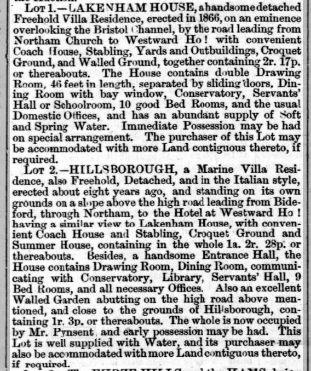
Thomas put “Lakenham House,” “Hillsborough,” “The Pebble Ridge Hotel” and much else besides up for sale in July 1873 (Western Times: Friday 25th July 1873). The properties are described in considerable detail in the auctioneer’s notice of sale (North Devon Journal: Thursday 11th September 1873). According to the “Returns of Owners of Land in Devon in 1873” his holdings, which included 73 acres of land in Northam Parish were valued at £282 in terms of Land Tax.
However, his property did not sell and he seems to have been re-elected to the local board! This was partly, I suspect, because he was one of only four representatives of the Northam ratepayers who lived in Westward Ho! and thus was critical to its negotiations with other members from Northam and Appledore (North Devon Journal: Thursday 24th July 1873). Thomas was back living at “Hillsborough” in October 1876. By then, he seems to have once again left the Northam Local Board, and he was acting as a private citizen when he corrected an error in the press that implied he had asked for money for road improvement when, in fact, he was offering to assist in the making of a footpath from the Burrows to Northam for free (North Devon Journal: Thursday 19th October 1876). Thomas was still on the Westward Ho! Drainage Committee, though. It must have been a thankless task.
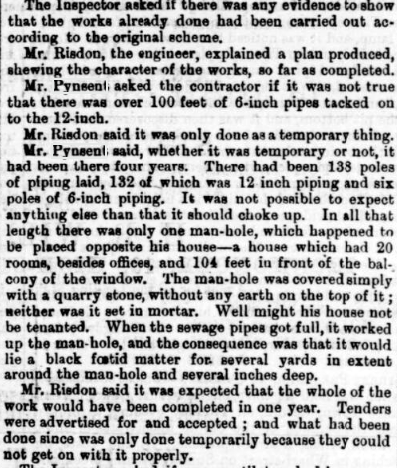
The Northam Local Board had spent several years trying to implement the drainage plan proposed by Mr. Latham in 1870 but it was not working. One (predictable) problem was that there was insufficient gradient over the Burrows to carry the sewage. In 1875, there was yet another Government Inquiry into the issue. Evidently, there had been delays in getting permission to work on the four acres of Burrows land designated for irrigation, there had been design changes and the costs had kept rising. It was not helped by sewage ponding in pipes and leaking into the soil where they were poorly laid. In the summer of 1874, when Mr. Pynsent move from “Lakenham” back to “Hillsborough”, he commented that the current arrangement had 12 inch piping leading into 6 inch and there was a manhole leaking sewage only 104 feet away from his balcony window! It was hardly surprising that the house was not tenanted (North Devon Journal: Thursday 23rd September 1875).
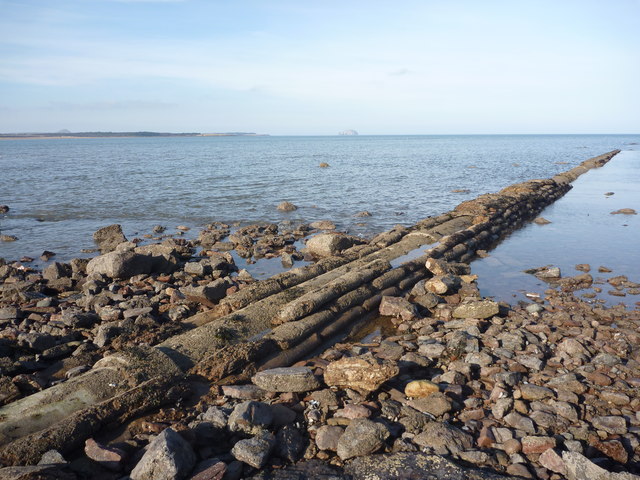
The Board had recently asked Mr. Ellis, the Surveyor to Exeter Town Council for his insight and he recommended a completely different approach, taking some of the sewage west to the sea, as there was insufficient gradient and water flow to carry the sewage out over the Burrows flats. He admitted that his scheme was not perfect, as it could not include all the houses. Most of the Westward Ho! rate payers balked at his idea, concerned about the serious risk of wash-back of sewage on the local beaches. They felt that the original plan to carry the sewage to the east should be made to work. Thomas, however, opposed the easterly route because of the public nuisance and the damage to his property. The community was badly split on the issue (North Devon Journal: Thursday 23rd September 1875).
Another concern that arose at around this time was to become an ongoing issue into modern time. This was the silting up of the Taw and Torridge estuaries and the effect of tidal erosion and flooding of the Burrows by winter storms. Thomas had an answer for this. While living in Florence, he wrote a letter to the editor of the North Devon Journal suggesting that the recently proposed “Instow, Appledore and Westward Ho! Steam Ferry and Tramway” track should be built with an adjacent canal along the entire length of the Burrows. It could be built in such a way as to provide protection, in the same way that a new road system protected the Pontine Marshes (North Devon Journal: Thursday 6th April 1876). It could have worked, but it would have been an eyesore.
Thomas either returned to Northam shortly afterwards, or continued to conduct his business by mail. The Chairman of the Local Board was clearly flustered when he started to receive threatening letters from Mrs. Pynsent’s solicitor – presumably over the “nuisance” (North Devon Journal: Thursday 25th May 1876). The drainage issue simmered on, giving Thomas the time to argue with the Northam Board over the footpath mentioned earlier (North Devon Journal: Thursday 19th October 1876).
Thomas was back in town when the Northam ratepayers were called to a meeting in November to discuss a compromise drainage plan proposed by Mr. Ellis, the engineer. It was a lively meeting not helped by the fact that they did not have any copies of the report available for study and there was nothing definitive for them to discuss. There were also concerns raised over who had actually been called to the meeting.
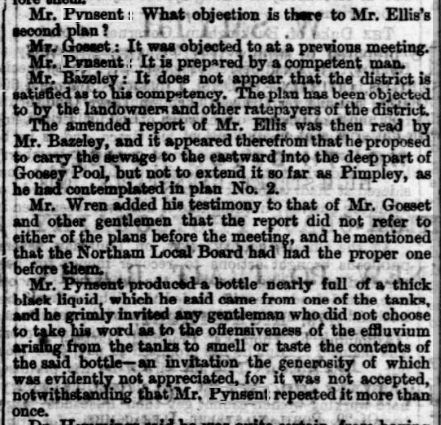
Thomas had had enough. He objected to what he thought was deliberate delay and obstructionism. He just wanted his drainage problem fixed. Evidently, some remedial work had been done over the summer but it had only moved the “nuisance” from one spot to another. Mr. Pynsent “read a letter from a reverend gentleman in which testimony was borne to the extreme offensiveness of the nuisance which arose from the sewage exposed in front of the Pebble Ridge Hotel” Mr. Pynsent produced a bottle “full of a thick back liquid which he said came from one of the tanks, and grimly invited any gentleman who did not choose to take his word to the offensiveness of the effluvium arising from the tanks to smell or taste the contents of the said bottle.” Predictably, there were no takers. Mr. Ellis proposals were for discharge to the west and for containment tanks on the Burrows, eventually leading the effluent east to Pimpley. Neither Mr. Latham’s or Mr. Ellis’s option went over well. Thomas demanded to know why Mr. Ellis’s plans were not being implemented.
Thomas’s nemesis, Captain Molesworth advocated strongly for Mr. Latham’s original plans for draining east across the Burrows and he won an acrimonious vote (North Devon Journal: Thursday 30th November 1876). Mr. Pynsent followed up with another of his letters to the editor. In this one, he pointed out that he had not filled the bottle of effluvium from the tanks but from a cesspit below the balcony of the Golf Club House that was in process of being washed away by the encroaching sea. He pointed out that the two previous tanks which had been constructed further out in around 1871 had already been eaten up by the sea and that the Golf Club House would eventually have to be moved. Mr. Ellis’s plan would at least redirect the problem. After waxing lyrical for a further page or two, Thomas pointed out that whereas Torquay was planning to spend £70,000 on drainage works; the ratepayers at Westward Ho! had refused to pay £579 to implement one part of the plan and £375 for another (North Devon Journal: Thursday 14th December 1876). He considered it to be absurd.
Other meetings followed but Thomas threatened to sue the Northam Board and it eventually caved. Captain Sangster proposed “against his own convictions” … “That all resolutions bearing on the scheme for the drainage outfall at Westward Ho! to the westward be rescinded, and that Mr. Ellis’s scheme No. 2 for carrying the drainage to the Pimpley, with a view to its discharge in to the existing dyke be adopted; and that the Local Government Board be informed thereof” (Exeter and Plymouth Gazette: Friday 21st December 1877). The revised scheme was approved and the requisite funds were tentatively approved by the Local Government Board “provided they are satisfied that the scheme will suffice for the drainage of Mr. Pynsent’s houses. In order that this may be ascertained, they request to be furnished with a section of the proposed main sewer, showing the level of its invert with reference to the level of the basement of these houses” (Exeter and Plymouth Gazette Daily Telegrams: Thursday 23rd April 1878). You cannot be too careful! Clearly, the scheme did not go down well with some of Mr. Pynsent’s neighbours; however, as Thomas showed in yet another letter, (written while in Gilon sur Montreux in Switzerland) the joint Westward Ho! Committee had no legislative authority and the plan to drain eastward to Pimpley was now approved and funded by the Local Government Board (North Devon Journal: 8th August 1878) and that was that.
Despite, or possibly because of this, the Local Government Board sent yet another Inspector to Northam to determine why the Northam Board had failed to implement the project and advise as to whether the three component parts, Appledore, Northam and Westward Ho! should be allowed to continue as a unit – or have some or all of its parts added to the larger Bideford Union. The Inspector said he was responding to a complaint (likely by Thomas Pynsent) under the Public Heath Act. Thomas explained how, on one occasion, Canon Kingsley (whose book had led to the whole Westward Ho! phenomenon and actively hated what had happened to the place) had taken sick after being exposed to the smell from the balcony of the Pebble Ridge Hotel. The hotel was now uninhabitable. Several locals attempted to explain why it had taken eight years to reach closure on the drainage issue. Mr. Molesworth, for instance, felt that the Northam Board was never committed to the original scheme as it was expensive and largely to benefit the residents of Westward Ho! and Mr. Williams remarked that Mr. Molesworth had actively opposed the Pimpley scheme. The Westward Ho! ratepayers would rather have had their effluent piped out to sea to the west. Mr. Wren explained how difficult it was to deal with the sewers in the summer with visitors around and the town clerk mentioned communication problems and personal tension between Mr. Ellis and Mr. Molesworth as other contributing factors. It did not help that coastal erosion was eating away at their temporary collection tanks and piping while this was all going on and money was constantly being syphoned off for repair work.
As to the administrative structure, it was clear to the Rev. Mr. H. I. Gosset, the Chairman, that the 24-man Northam Board should be reduced; however, he felt it should be kept as an entity. Thomas favoured joining up with Bideford. The meeting ended with a final plea from Thomas that the Local Government Board be given a deadline for completing the Pimpley project (Exeter and Plymouth Gazette: Friday 8th November 1878 & North Devon Journal: Thursday 14th November 1878). Thomas made another complaint regarding the drainage around the Pebble Ridge Hotel and his Villa in 1881 (Exeter and Plymouth Gazette: Friday 9th September 1881). It took a year, but the Northam Surveyor proudly announced that he had extended the sewer from Pebble Ridge Terrace 600 feet further into the Burrows “in order to abate the nuisance complained of by Mr. Pynsent” in October 1882 (North Devon Journal: Thursday 12th October 1882). The job was done, for now at least; however, drainage was to be an ongoing issue well into the 1900s.
When Thomas Pynsent was around seventy he transferred the license for the Pebble Ridge Hotel to a Mr. Kempe (North Devon Journal: Thursday 4th December 1879). Nevertheless, he was still active in local matters and he approached the local board for approval to erect two more houses in March 1881 (North Devon Journal: Thursday 24th March, 1881). He even ran for a position on the Northam Board in April 1882. However, this time he was unsuccessful (Western Times: Saturday 8th May 1882). His time had passed.
Thomas had been on the move since the late 1860s when his three daughters had started to come of age and the drainage issue had started to make life uncomfortable. He travelled a lot and as we have seen, fought some of his battles by mail. Presumably his daughters avoided some of it by going to boarding schools and travelling and visiting with their family.
The family was away from home the night of the 1871 census. Jane and her daughter Florence were lodging in Tormoham, in Torquay; Margaret and Jane were staying at Hardwick House, in Great Malvern (along with other “respectable people”) and Thomas was visiting with his cousin Charles Pitt Pynsent at the home of Charles’s half-sister, Elizabeth Splatt (daughter of Joseph Pinsent, see elsewhere), at Flete in Holberton, Devon. The family-at-large was still well connected.
Thomas’s three daughters were expected to find suitable husbands and were given plenty of exposure to the “county set” at hunt balls and the like. It is worth noting that one of them paired up with a Miss Rawlins for a golf competition at Westward Ho. in 1873 (Exeter and Plymouth Gazette: Friday 17th October 1873). It was probably Jane Augusta who later married Thomas Andrews Rawlins. He was a widower and a Colonel who had recently retired from the 86th (Royal County Down) Regiment Foot. The regiment had returned from the Cape of Good Hope in 1875 and the Colonel had taken up residence in Northam. The Rev. F. A. Pynsent (Thomas’s uncle) was present and assisted at the wedding at Northam in 1877. Despite the generational difference, he was only about 27 years older than Jane.
At least two of the Pynsent girls were members of the Thorncombe Tadborow Archers (Exeter and Plymouth Gazette: Friday 4th September 1874) and one of them was into good works. She went to Bideford Workhouse on Christmas day 1874 and gave those who could read, a book, and the young children a current bun (Exeter and Plymouth Gazette: Friday 4th September 1874). All three were extremely eligible, having a rich father and no brother to worry about.
Thomas’s eldest daughter, Margaret Jane Pynsent married Charles Christopher Willoughby (“late Captain 60th (Royal Rifles) Regiment”) in Belgravia, in London in June 1875 (Western Times: Saturday 19th June 1875). They settled in St. Mary’s, Charlton Kings, near Cheltenham and had a daughter Lilian Margaret Christine Willoughby who died, unmarried, in 1937. They also had a son, Edwin Charles Willoughby who added an interesting twist to this story as he married Dorothy Helen Ryland, the daughter of Mr. Sidney Proctor Ryland, a Cheltenham solicitor in 1909.
The wedding was something of family gathering as Sidney’s sister, Laura Proctor Ryland had married Richard Alfred Pinsent – (later Sir Richard Alfred Pinsent, Bt.), in 1878. Edwin’s wedding was well attended by DEVONPORT Pinsents and by HENNOCK Pynsents – as exemplified by Margaret and her married sisters Florence Lombe Reynolds Reynolds and Jane Augusta Rawlins. Sadly, Captain Edwin Charles Willoughby died at Gallipoli in 1915 – a few days before Richard Alfred’s son, Lieutenant Laurence Alfred Pinsent suffered the same fate. Both families lived near Cheltenham and they were obviously close. In the 1930s, Sir Richard’s eldest son, Roy Pinsent was asked to act “in loco parentis” and “give away” Captain Edwin Charles’s two daughters when they married.
It must have been either Florence or Jane Pynsent that was involved in a four-wheeled carriage accident on the Northam Road in September 1876. Part of the carriage broke, which so frightened the pony that it broke free and in the process managed to break two of its legs. Miss Pynsent was unhurt (Exeter and Plymouth Gazette: Daily Telegrams: Tuesday 19th September 1876). The family was living at Belmont, near Westward Ho! (Northam) by 1877; the year that the two younger daughters married.
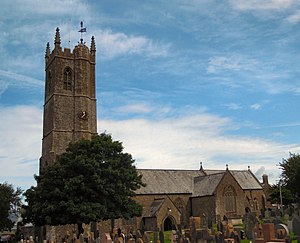
Thomas’s second daughter, Florence Lombe Pynsent married Joseph Jones Reynolds-Reynolds, a “gentleman” and a resident of Northam in February 1877 (North Devon Journal: 15th February 1877). They later moved to Cheltenham. Thomas’s third and youngest daughter, Jane Augusta Pynsent, married Thomas Andrews Rawlins, a widowed “Colonel in the 86th Regiment of Foot” who lived at Tadworthy, near Northam, that October (Allens Indian Mail: 5th November 1877). Interestingly, the Rev. Ferdinand Alfred Pynsent, Rector of Bawdeswell in Norfolk, assisted at the ceremony which took place in Northam Church. He was one of Charles Pitt Pynsent’s brothers. The Somerset Archives contain a copy of Jane’s pre-nuptial settlement and other papers relating to their son, Reginald Rawlins dated 1901-2 [Rawlins ref. DD\BR\ry/8].
Thomas’s early interest in the Pynsent baronetcy seems to have continued throughout his life and at some point he seems to have acquired at least one portrait of the second, and final, Sir William Pynsent – who died in 1765. My guess is that he picked it up at one the house sales at Burton Pynsent. There appear to have been several portraits, of which at least two were, for a while, in Pinsent hands. Thomas and his cousin Elizabeth Satterley Splatt (née Pinsent) of Torquay both had copies in the 1880s. [see below and in “The Pynsent Baronetcy: The Trials and Tribulations of a Litigious Family: 1687-1976” elsewhere on this website].
In 1929, my grandfather (Francis Wingfield Homfray Pinsent) went to visit his half sister Lucretia Anna Maud Pinsent (a “Sister in Religion” living in Rome) and in the course of his stay he abstracted the following from her diary entry for the 11th July 1886.
“When cousin Ellie (Ellen Maria Keddell: Mrs. Keddell’s daughter and Thomas Pynsent’s niece) was here about a fortnight ago she gave me some particulars of our family which being of historical interest I insert them: Sir William (the 4th Baronet (sic)), owned an estate which was and is very fine in Somersetshire called Burton Pynsent. Out of admiration to the great statesman, William Pitt, he presented it to him on the death of him and on the death of his only child, a daughter, Leonora Anne, and so it went out the family 140 years ago. Baron Pynsent (sic) was one of Pitt’s titles later on. Among other places this may be found in Macauley’s Essay on W. Pitt. …. An original portrait of this latter (Sir William Pynsent), which came from Burton Pynsent, is in the possession of Mr. Thomas Pynsent of Westward Ho! An excellent copy of it is in the Elms, Torquay; the property of Mr. Splatt, whose wife was a Miss Pynsent.” Lucretia would have been “Abbess of St. Scholastica Abbey” in East Teignmouth when she made the entry.
Thomas Pynsent died in 1887 and his copy of the picture passed to his daughter, Jane Augusta and her husband Colonel Thomas Andrews Rawlins. Where it went from there, I do not know; however, I have my suspicions! According to Richard H. Saunders (John Smibert: “Colonial America’s First Portrait Painter”: Richard H. Saunders, 1995) there is a portrait of Sir William Pynsent by Thomas Gibson in the Earl of Rosebery’s collection and there is also a similar but miss-attributed portrait in the Brooklyn Museum. Evidently, it passed for the likeness of Lt. Gov. William Tailer and was erroneously attributed to John Smibert, not Thomas Gibson.
According to Saunders, “Sheldon Keck, paintings conservator at the Brooklyn Museum, examined the portrait in the 1940s and concluded that the signature “is definitely later, probably over 150 years later, than the original paint underneath”. The portrait is virtually identical to other portraits, such as of Sir William Pynsent [Earl of Rosebery] [cat. No. 522] by Smibert’s London Contemporary Thomas Gibson (c. 1680-1751)”.
While in Rome, my grandfather also photographed a memorandum describing the portraits. It appears to have been written by Thomas Pynsent on the 8th August 1881 and it was likely sent to Lucretia by Thomas’s sister (Mrs. Keddell) Interestingly, it had been placed on a page from a prayer book (“The Lament for a Sinner”) for photographing.
It states: “Sir William Pynsent was born 168- died in 1765; at the back of the right hand of Sir William was painted “J. Gibson, 1739”, which letters cannot now (1881) be seen. The picture was cleaned by Hopson of Bideford (near to where Thomas lived) – I think it was the painter’s name and date probably destroyed thereby – Gibson was born in 1680, died 1751. Mrs. W. R. Peren, of Compton Darville House, Southern Petherton, near Martock, Somersetshire, has a similar portrait of Sir William with the name of Thomas Gibson 1737 thereon, in which the position of the left hand is different from what it is in this picture, consequently this picture, dated 1739, may have been copied from the one Mrs. Peren had, and the position of the left arm altered: – Memorandum – August 8th, 1881. Thos. Pynsent”. Evidently, if you had an American client who wanted a portrait of his worthy ancestor painted by a premium colonial artist, what better than to find him a suitable English canvass with the painter’s name removed in cleaning?
Whether Thomas Pynsent ever had his own copy of the portrait photographed is unknown; however at some point he appears to have taken the copy from “Above the fire place in the dining room at the Elms” and also “a portrait of a daughter of Sir William Pynsent which I saw at the house of a Mr. Munckton of Curry Rivel in which parish Burton House was situated” to Mr. C. Payne, a photographer in Langport, in Somerset. Copies of these photographs are (perhaps again through the generosity of Mrs. Keddell and her daughter – long ago) now in my possession. It is interesting to note that the position of Sir William’s left hand in the photograph is similar to that of the better authenticated of his portraits, the one in the Earl of Rosebery’s collection.
If the attribution to Sir William’s daughter (which is written on back of the photograph and signed by Thomas Pynsent) is correct, it is almost certainly the likeness of Leonora Ann Pynsent, as it is of a mature woman; her sisters Elizabeth and Mary died aged nine and twenty-five respectively. So – where did the portraits come from? The most likely answer is that they came from Joseph Pinsent, who was Thomas Pynsent’s uncle and Elizabeth Splatt’s father. Joseph was somewhat obsessed by Sir William Pynsent.
Although Thomas’s only son, Vernon Pynsent died at birth, his efforts to refound the “Pynsent” family were ultimately successful. He managed to persuade several of his cousins – sons and daughters of his uncle Joseph Pinsent by two of his second and third wives, Elizabeth Pinsent and Ann Tucker, to adopt the name and it has continued down the years through two of them, Joseph Burton Pynsent from the first marriage and Charles Pitt Pynsent from the second. Joseph Burton has the distinction of carrying both the HENNOCK and the DEVONPORT lines forward. They are discussed elsewhere.
Thomas was an old man when elected to the Committee of the “Friends of the Bideford Dispensary and Infirmary” in February 1885. Nevertheless, he immediately argued for the construction of a new Cottage hospital on Meldrum Street (Exeter and Plymouth Gazette Daily Telegrams: Tuesday 10th February 1885). The proposed ground plan was discussed a few months later. The site and building were to cost £1,300, of which half had already been raised. Mr. Pynsent himself had agreed to give £100 (North Devon Journal: Thursday 14th May 1885). Mr. and Mrs. Pynsent spent part of the summer that year by the Devon Coast at Ilfracombe (Ilfracombe Chronicle: Satruday 4th July 1885) and he was living at “Belmont” in Ilfracombe when he wrote to Miss Matthew in December 1886. Presumably the air was no fresher than at Northam, so perhaps it was the social attraction of Ilfracombe, that attarcted him. It was becoming a well known summer resort.
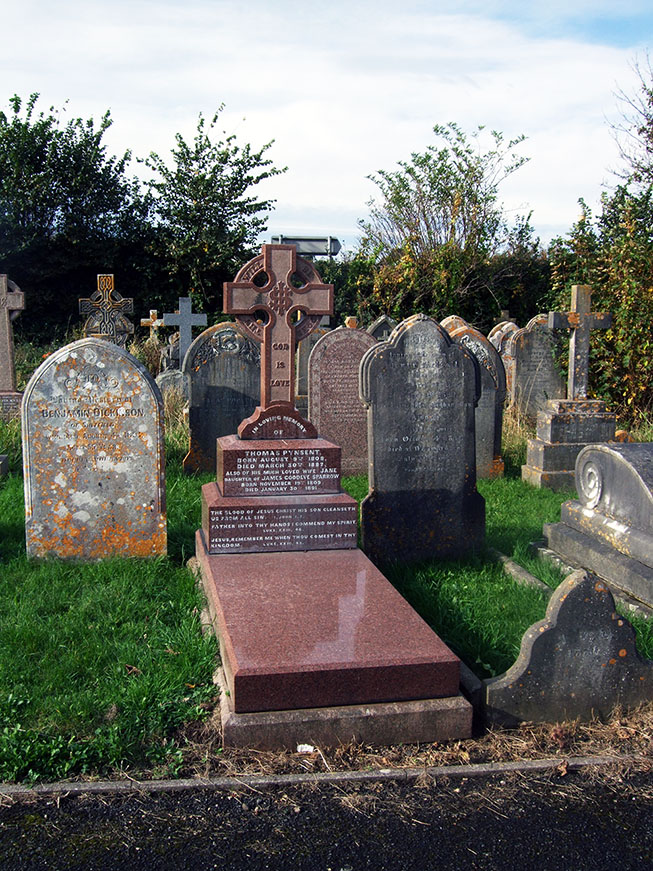
Sadly, he did not live to see this final act of social benevolence come to fruition. Thomas died on 30th March 1887 and his death was announced in the North Devon Journal on 7th April. The paper noted that he had been particularly active with respect the New Infirmary but had died the evening before it opened! One of his last acts was to offer to defray the cost of two extra verandas proposed for the new building.
Thomas’s widow, Jane Pynsent stayed on at “Belmont.” She was his sole executrix. Thomas seems to have transfered most of his estate ahead of time and his personal estate only amounted to £50 (Calendar of Grants of Probate and Letters of Administration)! When Jane died in Clifton four years later, her two sons-in-law, Thomas Andrews Rawlins, (a retired Colonel) and Charles Willoughby (a Captain) in Her Majesty’s Army, Knightly Musgrave Clay of the Royal Thames Yacht Club, and James Curtis Leman, a solicitor of Lincoln’s Inn Fields, London proved her will (with its codicil added). Her personal estate was then reputedly worth £104,307 4s 4d. The bulk of it was divided between her three daughters and their families (Henley & South Oxford Standard: Friday 25th April 1891 and other newspapers).
Thomas and Jane are buried in Northam Churchyard; where an imposing slab and cross of red granite mark their grave.
Family Tree
Grandparents
Grandfather: John Pinsent: 1728 – 1772
Grandmother: Susanna Pooke: 1730 – 1772
Parents
Father: Charles Pinsent: 1766 – 1826
Mother: Mary Yeo: 1772 – 1844
Father’s Siblings (Aunts, Uncles)
John Pinsent: 1751 – 1752
John Pinsent: 1753 – 1821
Robert Pinsent: 1753 – 1787
Thomas Pinsent: 1754 – 1785
William Pinsent: 1757 – 1835
Gilbert Pinsent: 1758 – 1835
Charles Pinsent: 1765 – 1765
Charles Pinsent: 1766 – 1826 ✔️
Samuel Pinsent: 1767 – 1775
Joseph Pinsent: 1770 – 1835
Male Siblings (Brothers)
Thomas Pynsent: 1808 – 1887 ✔️
Please use the above links to explore this branch of the family tree. The default “Next” and “Previous” links below may lead to other unrelated branches.