Vital Statistics
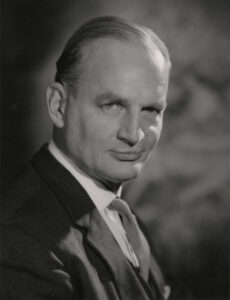
Roger Philip Pinsent: 1916 – 1997 GRO0754 (Civil Servant, Sao Paulo, Brazil)
Suzanne Smalley: 1917 – 1999
Married: 1941: London
Children by Suzanne Smalley:
Daughter (GRO0728)
Daughter (GRO0141)
Son (GRO0721)
Family Branch: Devonport
PinsentID: GRO0754
References
Click here to view close family members
Roger Philip was the third son of Sidney Hume by his wife Beatrice Elena Pinsent (née Le Bas). He was born in Rosario, Argentina and his father registered the birth at the “British Consulate Office”. He grew up in Rosario but, like his brothers before him, he was sent back to England for his education. Harold Ross, Paul Desmond and Roger Philip sailed (unattended) from Buenos Aires to Southampton on the “Royal Mail Lines” ship “Almanzora” in September 1930. Presumably, they were heading for “Downside”, a Catholic “Public” (private) School in Stretton on the Fosse in Somerset.
Roger seems to have been a typical schoolboy: His parents must have been mortified when he, along with an older boy (who should have known better) daubed red paint on statues of lions and white paint on a Post Office pillar box on the Isle of Wight – presumably after consuming an excessive amount of some alcoholic beverage (Portsmouth Evening News: 20th September 1932). He was fined 10s and ordered to pay £2 10s in damages. Roger apologized to the Magistrates through his parents. On a more pleasing note – for his parents at least – he played cricket for his school (Western Daily Press: 2nd June 1934). He graduated that summer and, according to “Who’s Who 1982” studied modern languages at “Lausanne”, “Grenoble” and “London Universities”. After a trip home to Argentina, Roger returned to the United Kingdom with his parents and other siblings on the “Royal Mail Line” ship “Arlanza” in September 1937. On that occasion, they were heading for an address in “Kensington Palace Mansions”, in London.
Roger was a “student” studying Modern Languages when the wartime “Register” was compiled in 1939. He finished his degree and graduated with an “Honours Degree in Modern Languages” from London University. The war was well underway by then, and as Roger had served as a “Cadet” in the “Officer Training Corp.” while at school and at university, he joined the “Gloucester Regiment” as a “Second Lieutenant” in February 1941 (London Gazette: 11th March 1941). He married Suzanne Smalley, the daughter of Lt. Col. Edgar Smalley, a “cotton merchant”, in London shortly thereafter, and they had three children who were born during the war: They are still alive – as far as I know.
Although Roger was nominally a “Lieutenant” (later a “Captain”) in the “Gloucester Regiment”, his talents as a linguist were recognized and he transferred to the “Special Operations Executive (S.O.E.)”. The National Archives have a file on him (HS-9/1190/5) but I have yet to see it! What I do know is that “S.O.E.” was a clandestine unit that ran agents and arranged for acts of sabotage in occupied Europe and Roger was sent to the “British Consulate General’s Office” in Barcelona in 1943.
Spain was nominally neutral but the British Government expected the Germans to invade it, and the “S.O.E.” was there to developed plans for sabotage if they ever did so. Over time, its role evolved into one of intelligence gathering (“Against the Grain”: Special Operations Executive in Spain, 1941 – 1945: Intelligence & National Security 20:1 (2005): by David A. Messenger).
In 1946, Roger joined “His Majesty’s Diplomatic Service.” It must have seemed a logical step for a linguist with an ability for intelligence-gathering. Initially, he was attached to the “Southern (European) Department” and assigned to Turkey and Bulgaria. This was at a time when Britain was trying to decide what to do about Bulgaria. Evidently, Roger argued against recognizing it as an independent country as it would inevitably be in the pocket of the Russians (Bulgaria in British Foreign Policy 1943-1949: by Marietta Stankova).
Roger took his family out to America in July 1947 and he joined the “British Legation in Havana”, Cuba the following year. He was part of a “British Delegation” to a “United Nations Commission” that was conducting an economic survey of South America (Report of the Economic Commission for Latin America: Second Session: E/1330/Rev.1). Ships’ manifest records show that Roger and his family returned to England via New York on the “S.S. Queen Mary” in February 1950; however, it was to be a short stay. He was appointed the “British Consul” in Tangiers later that same year. His name crops up in a small item in the Billings (Montana) Gazette of all places (Billings Gazette: 4th November 1951)! It describes American and British annoyance with the French for expelling a Tunisian nationalist. Roger moved back to Europe in 1952. He was posted to the “British Embassy” in Madrid. However, this too must have been a short stay as he was back at the “Foreign Office,” in London, between 1953 and 1956. It must have been a welcome break from overseas assignments.
Other ships’ manifests show that Roger and his wife Susanne left England for Rio de Janeiro on the “Royal Mail Lines” ship “Highland Princess” on 24th November 1956. He was heading to South America for a posting as “Charge D’Affair” in Lima, Peru. On this occasion, there is no indication that their children went with them. They would have been of school age by then, so they probably stayed home in England. Suzanne have come home early from this assignment as Roger returned alone, on the “S.S. Potosi” in June 1959.
While he was back in Britain, Roger was assigned to a delegation to the “European Community” between 1959 and 1964. He was part of a negotiating team in Luxembourg led by the Right Honourable Edward Heath, M.B.E., M.P. in July 1962 [www.gouvernement.lu/1831389/BID_1962]. Ted Heath was later to become Britain’s “Prime Minister”.
Roger was sent back to South America as British “Ambassador to Nicaragua” in 1963 (Illustrated London News: 2nd November 1963]. This does not seem to have been one of his more enjoyable assignments; however, it may have been one of his more memorable ones! Certainly, Roger is best known to the outside world for a five-page “Confidential” letter of introduction entitled “Last Glance at Nicaragua” that he left for his successor at the Embassy in 1967. Little did he realize that it would come back to haunt him over forty years later. In 2009, the “BBC Radio” acquired it through “freedom of information” and released it on 16th October 2009. Roger was not overly impressed with Nicaragua – or its people:
“Nicaragua is a land of contrasts. The approaches to the towns are squalid to a degree that shocks the visitor from Europe. On arrival we unwittingly caused some offense by inquiring the name of the first village we passed through on leaving the airport, which turned out to be the capital city of Managua”; … also … “There is, I fear, no question but that the average Nicaraguan is one of the most dishonest, unreliable, violent and alcoholic of the Latin Americans” [BBC: Radio 4’s parting Shots: 16th October 2009: see also BBC.co.uk/radio4/transcripts/Roger-Pinsent: img_2373.jpg)] There is a photograph of Roger taken by Walter Bird of the International Magazine Service while he was in Managua at the “National Portrait Gallery”, in London.
Roger was a “Counselor” (Commercial) in Ankara, Turkey, from 1967 to 1970. However, he was back in South America for his final posting as “Her Majesty’s Consul-General” in Sao Paulo, Brazil. He was there from 1970 to 1973. While in Sao Paulo, he was “President” of the “Consular Society of Sao Paulo”. Presumably the most senior diplomat then active in Brazil. Roger said his farewells and returned to England in March 1973 (Diario Oficial do Estado: Sao Paulo 20th March 1973).
On his return, he retired to Stow on the Wold, in Gloucestershire, where he died in May 1997. His widow, Suzanna, died there in July, two years later. A relatively early entry in Who’s Who (1982) shows that Roger was a member of the “Institute of Linguistics”, and that he liked music, photography, bookbinding and golf. His son married in Indonesia in 1993; however, I am not aware of any children.
Family Tree
Grandparents
Grandfather: Adolphus Ross Pinsent: 1851 – 1929
Grandmother: Alice Mary Nuttall: 1855 – 1901
Parents
Father: Sidney Hume Pinsent: 1878 – 1969
Mother: Beatrice Elena Le Bas: 1882 – 1956
FATHER’S SIBLINGS and half-siblings (AUNTS, UNCLES)
Sidney Hume Pinsent: 1879 – 1969 ✔️
Frances Maude Pinsent: 1882 – 1953
Cecil Ross Pinsent: 1884 – 1963
Gerald Hume Saverie Pinsent: 1888 – 1976
Basil Hume Pinsent: 1911 – 2000
MALE SIBLINGS (BROTHERS)
Harold Ross Pinsent: 1913 – 1988
Paul Desmond Pinsent: 1915 – 1997
Roger Philip Pinsent: 1916 – 1997 ✔️
Neville James Quintus Pinsent: 1921 – 2013
Please use the above links to explore this branch of the family tree. The default “Next” and “Previous” links below may lead to other unrelated branches.