Vital Statistics
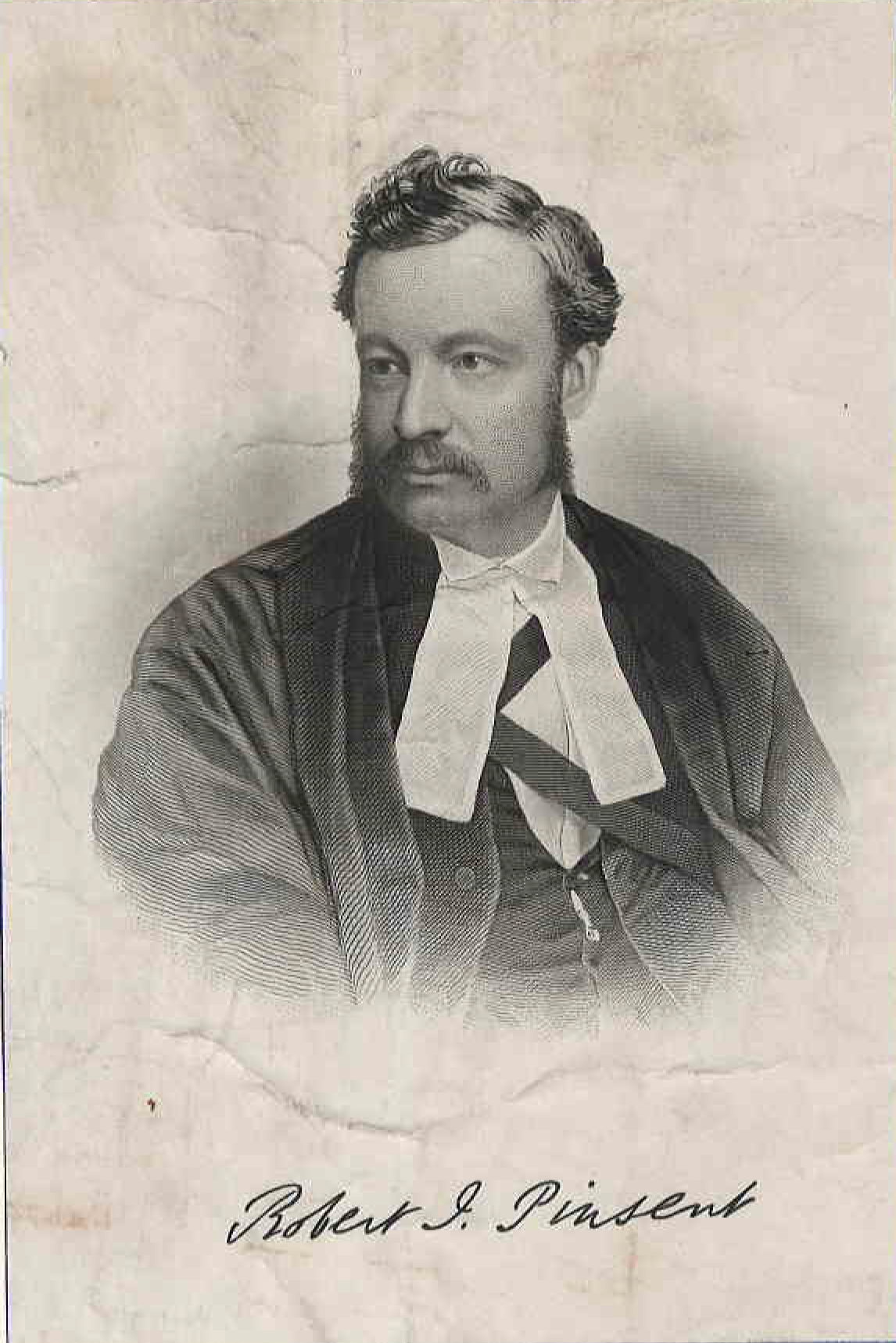
Robert John Pinsent: 1834 – 1893 GRO0747 (Justice of Supreme Court of Newfoundland)
1) Anna Brown Cooke: 1837 – 1882
Married: 1856: St. John’s Newfoundland
Children by Anna Brown Cooke:
Lucretia Anna Maude Pinsent: 1857 – 1934 (Lady Abbess, Teignmouth Devon, Vatican, Rome)
Louisa Catherine Pinsent: 1858 – 1890 (Married George Shea, St. John, Newfoundland, 1888)
Marianne Hedley Pinsent: 1859 – 1859
John Cooke Pinsent: 1861 – 1861
Robert Hedley Vicars Pinsent: 1862 – 1888
William Satterly Splatt Pinsent: 1864 – 1865
Charles Augustus Maxwell Pinsent: 1866 – 1910 (Married Fanny Sophia Colley, Topsail, Newfoundland, 1897)
Arthur Newman Pinsent: 1867 – 1946
2) Emily Hetty Sabine Homfray: 1845 – 1922
Married: 1872: Froxfield, Wiltshire, England
Children by Emily Hetty Sabine Homfray:
Mabel Louisa Homfray Pinsent: 1873 – 1951 (Married William Annesley Eden, xxxx, 1895)
Robert John Ferrier Homfray Pinsent: 1874 – 1899 (Married Annie March, St. John’s Newfoundland, 1896)
Francis Wingfield Homfray Pinsent: 1875 – 1948 (Married Janet Cowtan, Kensington, London, 1911)
Emily Maude Homfray Pinsent: 1876 – 1877
Hilda Constance Homfray Pinsent: 1879 – 1882
Beatrice Mary Homfray Pinsent: 1883 – 1965
Guy Homfray Pinsent: 1889 – 1972 (Married Ethel Betty Brittan, Sheepstor, Devon, 1923)
Family Branch: Hennock
PinsentID: GRO0747
References
Click here to view close family members.
Part II
Return to Part I.
Robert John Pinsent was the eldest son of his, like-named, father, by Louisa Broom Williams. He was born in Port de Grave and brought up there, and in Harbour Grace – along with two brothers and two sisters. Robert John “senior” had been born in London and had moved to Newfoundland in the late 1820s to help his elderly uncle (William Pinsent) run a mercantile and shipping business in Port de Grave. He had married in St. John’s in 1828 and been appointed a magistrate in Brigus four years later. After an eventful career (see elsewhere) he was appointed a Judge of the Labrador Court in 1863. He dispensed justice in the out-port communities along the coast of Labrador until he retired in 1874. Perhaps it is not surprising that his son, Robert John “junior” (later Sir Robert) entered the legal profession.
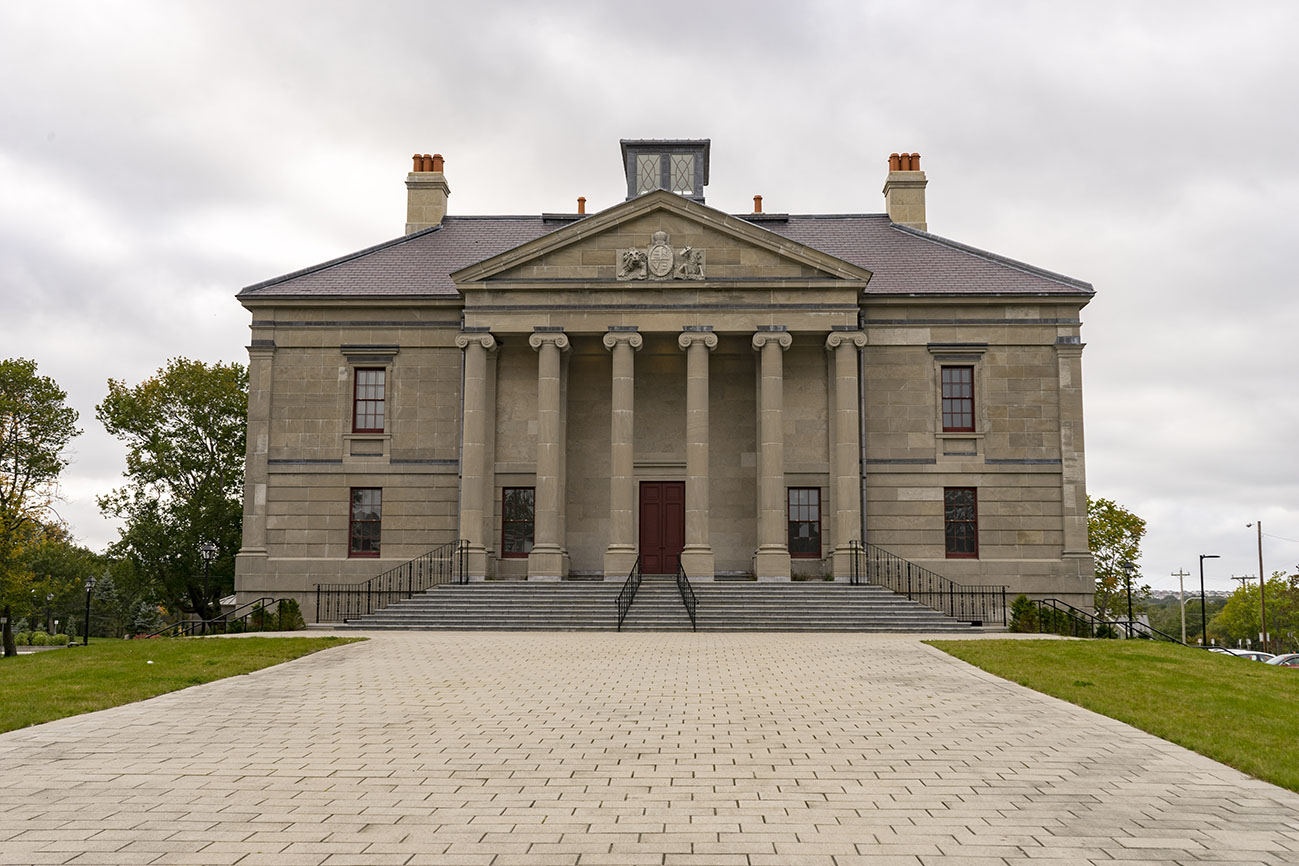

The Newfoundland Evening Telegram published “A Biographical Sketch of Hon. Mr. Justice Pinsent, D.C.L.” in its Christmas edition in 1888 (19th December 1888). It provides a summary of his life through to that date but, of course, misses out on his last few years. I have extracted short exerts from this “sketch” and have given them here in italics, inter-mixed with information derived from other sources. Robert John’s life is well documented in St. John’s newspapers and journals of the (elected) Newfoundland “House of Assembly” and the (appointed) “Legislative Council” – all of which are available in the “Memorial University Digital Archive.” I have divided his life into two parts. The first (Part I) covers the period from his birth to 1870, the year he divorced his first wife. The second (Part II) continues on from there, through until his death in 1893.
After his divorce was finalized, Mr. Pinsent took up his post in the “Legislative Council;” however, he was back in England before too long. He sold some of the furniture at his house (“Hillsborough”) in St. John’s on 4th April 1872 (Times and General Commercial Gazette) and re-married in England two weeks later.
He married Emily Hetty Sabine Homfray, the daughter of the late Reverend Samuel Francis Wingfield Clarke Homfray – rector at Bintry [a.k.a. Bintree] and Themelthorpe in Norfolk. The wedding took place at Froxfield, near Hungerford in Wiltshire, on 16th April 1872 (Week’s News (London): Saturday 20th April 1872). Why there, I do not know. Perhaps there was still some stigma attached to remarring after a divorce. The Reverend Reeve Rackman M.A. who seems to have taken over from Emily’s father at Bintry was one of the officiating ministers. Robert’s daughter, Lucretia Maude, from his first marriage and Emily’s sister, Louisa A. Homfray, witnessed the marriage. It seems that the Reverend Rackman had married Emily’s widowed mother, Louisa Anne Homfray (née Killick) – which would explain why she was living in the Rectory at Bintry after her father died. Note that the “Bintry” spelling is used here as it seems to have been the one favoured by the family.
Bintry is only a few miles from Bawdeswell, where Reverend Ferdinand Alfred Pynsent (the youngest son of Joseph Pinsent) was then the rector. Joseph was Robert John Pinsent’s grandfather’s youngest brother. His life (along with Ferdinand) is discussed elsewhere! It is reasonable to suppose that Robert John met Emily while visiting Bawdeswell around the time of the divorce.
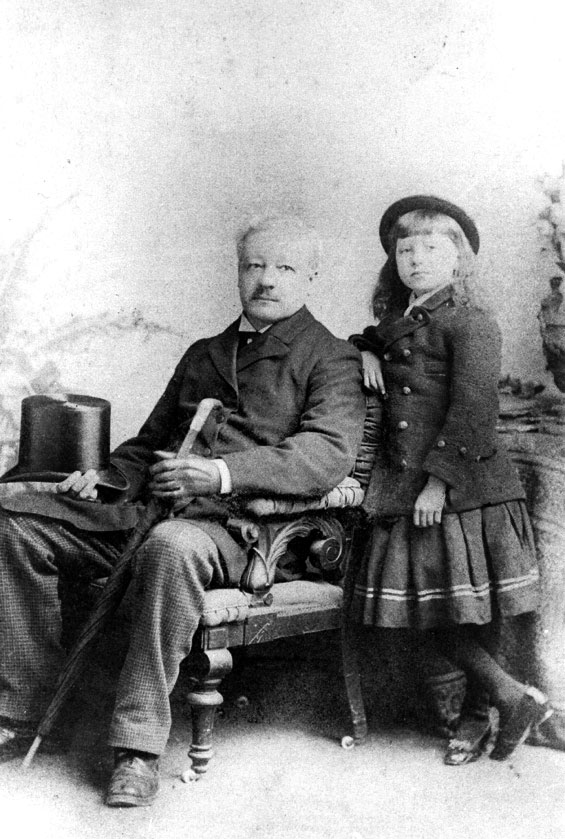
Robert John and Emily had eight children between 1873 and 1889 and they were added the five that remained from his earlier brood. Of the newcomers, two, Emily Maude Homfray Pinsent and Hilda Constance Homfray Pinsent died young. The other six, Mabel Louisa Homfray Pinsent, Robert John Ferrier Homfray Pinsent, Francis Wingfield Homfray Pinsent, Beatrice Mary Homfray Pinsent and Guy Homfray Pinsent were still alive when their father died in 1893. With the exception of Mabel, their lives are discussed elsewhere. Mabel’s is included with her mother.
In Newfoundland the French fishery question was never far from the public mind. In 1873, Mr. Justice Robinson, a Newfoundland judge, responded to an otherwise un-contentious observation by the British “Colonial Secretary” that seals are not fish. He stated that “our law books abound in terms which proclaim it to be nothing else than a fish — and that its oil is fish-oil.” Robert John was not prepared to let that go. He argued that although in local parlance seals were included in the fishery and classed as fish it was absurd to project that idea into the international sphere and into treaty documents! Seals never were and never would be fish (The Patriot: 1st March 1873). Unfortunately, old habits died hard.
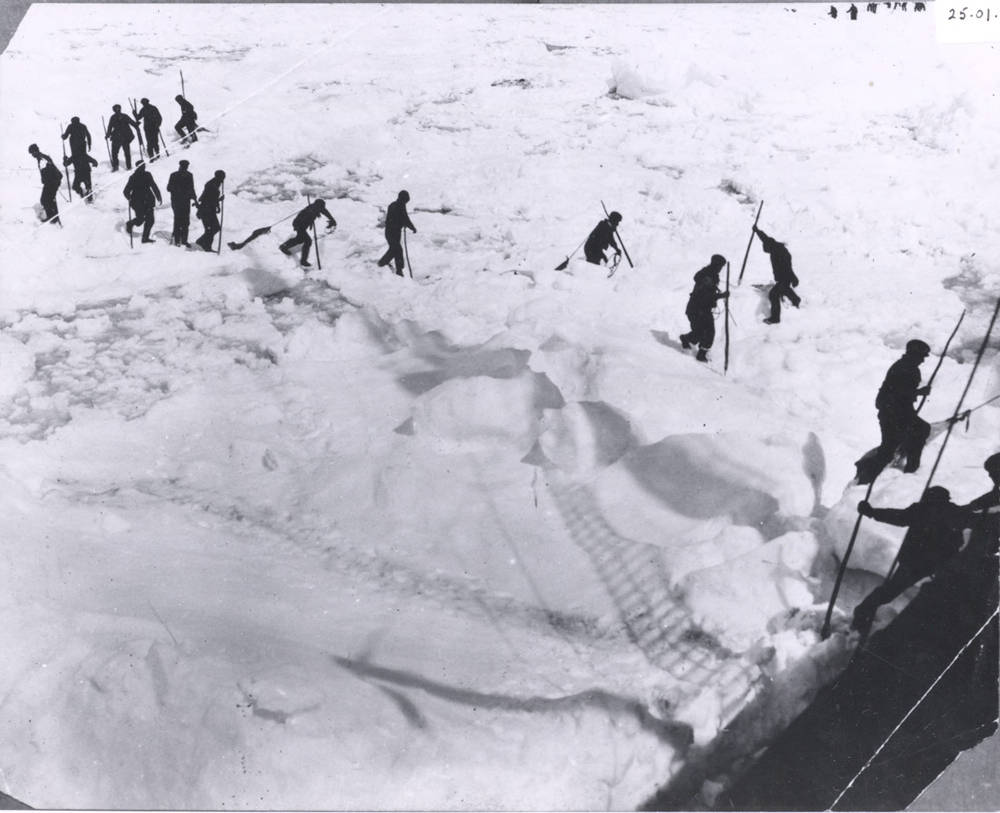
Mr. Pinsent had a soft spot for seals. He introduced a bill that fixed the time for the departure of steamers bound for the ice fields as anxious sealers all too often went to the killing grounds early and killed mother seals before their young were born – which, as one newspaper noted, was a “horrible and ruinous practice” that seemed to be diminishing the seal population (The Patriot: 31st May 1873).
Hon. R. J. Pinsent had entered the Legislature as part of the Carter-Shea administration but he had become increasingly disillusioned by its policies and its tendency to exploit and pander to (Protestant) religious interests. He introduced a bill designed to give the English inhabitants on the “French Shore” representation in the House of Assembly. It should not have been particularly contentious, one would have thought, but the Hon. “Acting Colonial Secretary” at the time demurred – saying that the legislature was the wrong place for such a bill (The Patriot: Saturday 21st March 1874). Presumably he thought it should pass through the elected House of Assembly before the Legislative Council looked at it.
Robert John switched his allegiance from the Confederates to the Liberals and in 1874 ran for a seat in the House of Assembly in Fortune Bay. The government greatly feared his influence in the House and, at the last meeting of the Council they passed a bill that seems to have been specifically designed to block him from returning to the Legislative Council – should he lose his bid to obtain a seat in House of Assembly. It then went about trying to destroy his reputation in the press: “Since that time he has been visited with the coarsest abuse and the most heartless slanders which the ghouls of the government press could devise, and which must be considered as a flattering testimonial to a man who had a name and a reputation to preserve; and well may they exhibit mortification and rage, for who have they that in point of ability can fill his place?” To be fair, the “Patriot” was probably equally prejudiced – but in his favour (The Patriot: 12th January 1875).
Mr. Pinsent was known to be in favour of confederation and, unfortunately, this did not endear him to the electorate. He did, in fact, lose; however, there may have been some questionable aspects to the poll: “… Alexander the Little, fearful that his seat is in danger, orders the Returning Officer to strike from the list a number of votes for the hon. R. J. Pinsent and the Returning officer accordingly complies with the demand. Had fair play prevailed, Pinsent would have defeated Alexander by a hundred votes” (The Patriot: 23rd November 1874): perhaps, perhaps not. The pamphlet Robert John published in 1869 entitled “Confederation Considered” was still out there – in fact it was put to good use when the issue of confederation was re-aired in 1887: (Evening Telegram: 15th February 1887).
Back in the real world, Robert John spent the next few years in Court either arguing for one side or another in civil cases or prosecuting (or defending) perceived criminals. Elections came quickly in those days (every four years) and Mr. R. J. Pinsent Q.C. ran in Burin District in 1878. He lost again, but not without the usual grumbles about bribery and “use of public money for personal electioneering purposes” (The Patriot: 18th November 1878). He was to have another chance of a seat the following year. As the “Sketch” in the Telegram put it: “In 1879, he was invited to stand for the District of St. John’s West and he accepted and would have run but for the retirement from the Bench of the Supreme Court of Chief Justice Hoyles and Mr. Justice Sir Bryan Robinson. He was offered Mr. Justice Sir Bryan Robinson’s position [Puisine (“Junior”) Judge – RHP]. In the spring of 1880, he returned to Harbour Grace on Circuit to receive the compliments of his erstwhile friends and colleagues. Six years of the eight that Mr. Pinsent was on the bench (prior to date of writing), he was on Circuit and he was well informed on the resources, conditions and wants of the colony.”
What had happened was that a group of electors in “St. John’s West” had placed the, by then almost “pro-forma”, letter in the press calling on Robert John to run as their candidate and offering him their allegiance and support (Advocate: 1st October 1879). After showing token reluctance, he published his response: thanking them and giving his consent (Advocate: 18th October, 1879). Although he was a Protestant, Mr. Pinsent was known to be sympathetic to the Catholics and he was thought likely to run unopposed and win by default. An unnamed correspondent writing to the Harbour Grace Standard concluded his pitch to the St. John’s electorate by saying: “Gentlemen of the West End, go on in your good work. Pinsent is your man. He, at all events, won’t disgrace you. Moreover, he is much wanted at present in the Assembly. His country wants him there — his countrymen want him there — and, lastly, his political opponents don’t want him there” (Evening Telegram: 20th October 1879).
That was probably true; the Government still feared his influence in the House and certainly did not like the idea of his running! It promptly forced the “Chief Justice” and “Assistant Justice” (Sir Bryan Robinson – Robert John’s erstwhile mentor) into early retirement and the appointment of Robert John to the Bench of the “Supreme Court” (Evening Telegram: 23rd October 1879) as Sir Bryan’s replacement. This was not an uncommon method of politically neutralizing a perceived opponent. In this case, the new Justice was at least qualified for the job! Needless to say, the electorate of St. John’s West felt slighted and some firebrands muttered about bribery and corruption in high place.
As the “Sketch” shows, Mr. Justice Pinsent spent much of his time traveling around Newfoundland by ship and/or rail dispensing justice in the “out-ports” and this gave him a unique understanding of both the state of the colony and the needs of its inhabitants. On arriving at a given destination he would address the local court and inform it of any changes in the law or administration of the Colony that had been made since the circuit’s last visit. The foreman of the “Grand Jury” would then make him aware of conditions in the community and any need for Government help that it might have: For instance, in Great Placentia: “We much regret to state that at present in consequence of the shore fisheries for some years past, together with the unfavorable state of the weather the present season, very serious loss has accrued to our people, both in the catching as well as in the curing of our staple article, the codfish. The Jail here just now is in a very dilapidated condition, and not at all suitable for the reception of prisoners; and we recommend that the necessary accommodations be made as soon as possible” (Evening Telegram: 9th September 1881). He passed the information along and built up his own understanding of conditions in the colony.
The people of Bay St. George on the “French Shore” reminded him that they were subject to British and Colonial law but still had no representation in the House of Assembly, and that the French claimed “rights” that they themselves were denied. To make matters worse, they had been told at a public meeting with colonial officials in 1876, “that our houses and stores could be removed at any time by the French, and that we were only, squatters, through the kindness of the French fishermen” (Evening Telegram: 21st September 1881).
There was no denying Mr. Justice Pinsent’s popularity at this time: One of the Evening Telegram’s correspondents was amused to find that there was a “schooner” with his name – and it was landing fish at “Messrs. Walter Grieve & Co’s” wharf. The owner, Simon Tibbo said he named the schooner “… after the best man in the country — that’s certain — and one that every Newfoundlander ought to feel proud of.” Apparently, he had not told his Honour but he said: “I intend to ask him to call down and have a look at the little schooner. Perhaps he’ll make me a present of a set of flags” (Evening Telegram: 4th November 1881)
According to the “Sketch”: “When not in St. John’s or on Circuit, Judge Pinsent lives at “Woodlands” in the Salmonier valley. He is active in nearly all movements and institutions for public advancement and he promoted the Young Men’s Literary and Scientific Institute and the Athenaeum into which it merged. He was also interested in the Agricultural Society, and was a member of the Synod of the Church of England until his appointment to the Bench.
The Archbishop of Canterbury, on the recommendation of the Bishop of Newfoundland, awarded Hon. Robert John Pinsent an “Honorary Doctor of Laws” degree (D.C.L.) for his Church, education and community work in Newfoundland, which included his chairmanship of the “Colonial Church and School Society”. He had also helped revise and consolidate the constitution of the church in Newfoundland (Southwark Mercury: Saturday 5th March 1881) and he received credit for that (Irish Ecclesiastical Gazette: 12th March 1881). Robert John “was also at one time President of the Law School. He was a Fellow of the Royal Colonial Institute and, in 1884, read a carefully prepared paper there entitled ‘Newfoundland: our oldest Colony’”. We will come to that.
One of the Colony’s biggest complaints about Her Majesty’s Government was that it insisted on appointing Englishmen to positions of power when, as Thomas Condon pointed out in a letter to the Evening Telegram, there were perfectly well-qualified Newfoundlanders available: “… I hope the worthy race of this ancient and loyal colony will meet with encouragement to which their unswerving and true allegiance entitle them. I am not to forget a gentleman who is a doctor of the law, as well also as a talented, gifted and natural genius, and I will also add a great Statesman. At present, this gentleman is an assistant Judge in the Supreme Court; his address is R. J. Pinsent, D.C.L. It might be well that Her Imperial Majesty and Government would know that so eminent a Newfoundlander exists here in his native clime, in order that should any higher position offer than he at present fills, he may be held by the Home Government in view for it” (28th April 1884). Mr. Condon had made a similar pitch two years previously (Evening Telegram: 27th May 1882) and it was repeated two years later (Evening Telegram: 29th March 1886).
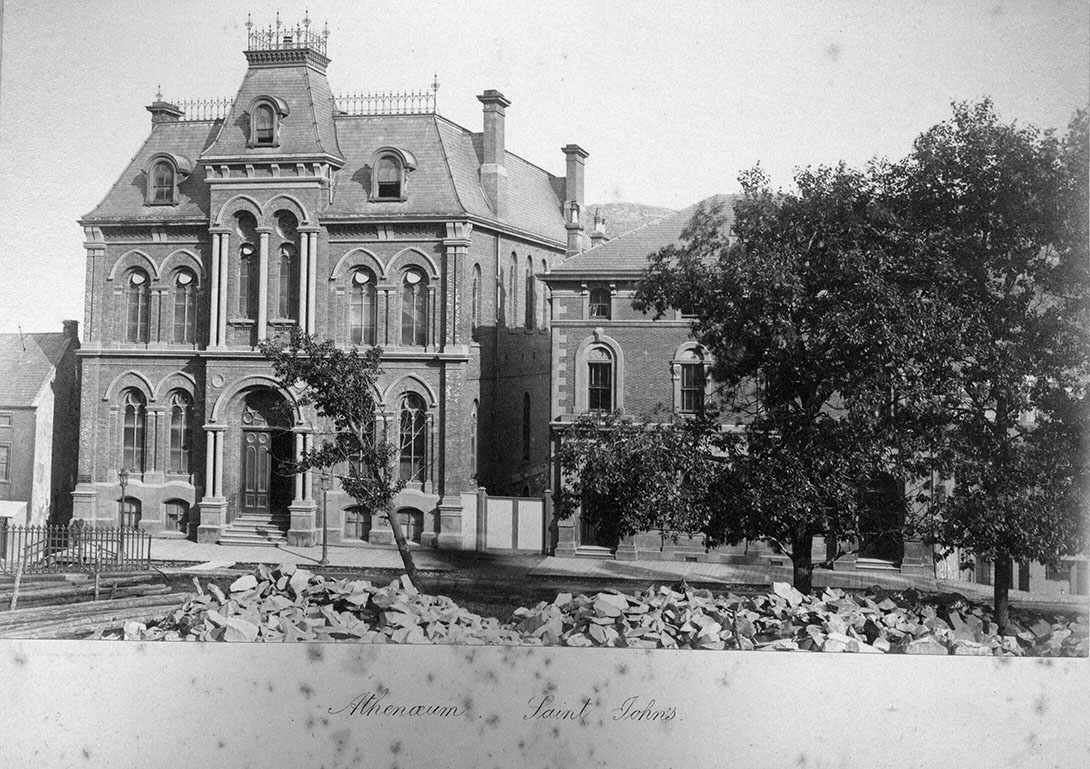
Robert John was a popular speaker when it came to the “Athenaeum Lectures”. He spoke annually on topics that ranged from “Growth of Empire” in 1883 (Evening Telegram: 27th January 1883) to “Victoria” in 1887 (Evening Telegram: 31st January 1887). He also gave a three-part “History of St. John’s” which came with illustrations in 1891 (Evening Telegram: 10th February 1891). The three parts were labelled “St. John’s As it Was,” “As it is” and “As it Will Be” – which very much echoes “The Past, The Present and the Future of the Burrows of Northam” a series of talks given by his “Cousin” Thomas Pynsent, in Bideford almost thirty years before (Thursday 26th November 1863). Several years later Mr. A. A. Parsons, wrote an article in the Newfoundland Quarterly (1905) describing how he called on Mr. Pinsent in 1890 to ask him to write a paper for the Christmas Number of his newspaper. He agreed to write a paper entitled “The Past, Present and Future of Newfoundland” but it arrived too late to be included that December and Sir Robert took it back and developed the text into the lecture series he gave in the following year. A more detailed description of their encounter is given below.
Despite his commitments to the Bench, Mr. Justice Pinsent, D.C.L. found time to preside over other talks at the Athenaeum – including one by Mr. Courtney Kenny M.P., who spoke on the “Political Problems of the Present Hour” in September 1886 (Evening Telegram 24th September 1886). Meanwhile, he found time to support the arts and for many years he sponsored a prize for the “best original oil or water color picture of an autumn scene in Newfoundland” at the annual Art Exhibition (Evening Telegram: 8th November 1883).
At the outset, Mr. Justice Pinsent was given one of the most sensitive cases in the Colony to adjudicate; his judgement in the celebrated “Railway Case” came down in October 1881. The “Newfoundland Railway Company” had been formed in 1880 to build 340 miles of narrow-gauge railway across the island. It built fifty-seven miles – from St. John’s northward to Whitbourne and then went into receivership. The bondholders then added a twenty-seven mile branch line to Harbour Grace and the Government had added a line to Placentia by 1888. It then went looking for a contractor to complete the line across the island and signed a deal with Robert Reid (founder of the railway company). The grade was extended to the Exploits River (about halfway) across the island and was then redirected to Port Aux Basque. It was completed in 1898. Reid’s contract was renegotiated (heritage.nf.ca/articles/economy/railway-narrative.php).
The Court case was related to the original contract signed by the Government, and its deal with the Company regarding expropriation of the land it needed. In essence, the Government gave the company all the Crown land it required and agreed to expropriate and buy out any private property needed to a maximum dollar value. Beyond that, the company would have to repay the Government for land it bought for them (Evening Telegram: 5th November 1881).
The case arose when a plaintiff with waterside property in St. John’s objected to the company’s failure to justify its need for a certain property and for its entering and damaging the property prior to expropriation. In his judgement, Mr. Justice Pinsent seems to state (it is a complex argument) that the Company was the best judge of its need for the – in this case water-side property – and that it should be allowed access to survey and determine how best to use the land and assess its worth; however it had no right to damage the property in any way prior to expropriation and payment for it (Evening Telegram: 11th, 14th, 18th November 1881). Mr. Justice Pinsent’s preliminary judgement was forwarded to the full Bench of the Supreme Court for a final judgement which came later.
Mr. Justice Pinsent disposed of countless cases, either on his own, on circuit, or with or without his brother Justices on the Bench of the “Supreme Court” in St. John’s. The court handled criminal and civil cases, and was also a court of equity. The docket was thus extremely varied – covering everything from homicide to probate and fraud and from mercantile squabbles to bankruptcy. The cases are not discussed here; however, many are covered in detail in contemporary newspapers and can be found (along with much else besides) on the “Memorial University of Newfoundland” website. There were, however, three issues that arose in the 1880s that were particularly impactful; they were the fall-out from the “Harbour Grace Affray” in 1883, the “Railway Case” in 1887 and the ongoing “French Fishery Question.”
The “Harbour Grace Affray” was a riot triggered by a provocative march by members of the “Loyal Orange Association” on St. Stephen’s Day (Boxing Day) in 1883. The fracas occurred when 100 – 150 Catholics blocked Harvey Street to prevent 400 or so “Orangemen” from making their traditional parade through the town. Both sides seem to have come ready and eager for a fight and five men were killed and eighteen wounded. Nineteen men were arrested and charged; however, only a few of them stood trial. They were tried at a special sitting of the Court in May and June 1884. Mr. Justice Pinsent made the final charge to the jury on the 27th June and, much to the displeasure of the Protestants, and the accused were acquitted for lack of incontrovertible evidence (Evening Telegram: 30th June 1884). The “affray” definitely occurred but, without cell-phone footage, it was impossible to say who did what during the melee.
While on one of his many trips back to England, Mr. Justice Pinsent read a paper entitled “Newfoundland, Our Oldest Colony” before the Marquis of Lorne and other members of the “Royal Colonial Institute.” Apparently, one of his daughters – “Miss Pinsent” – was in attendance (British Australasian: 16th April 1885). This could have been Lucretia Maude (who was by then a Sister in Religion in a convent in Teignmouth) I suppose; however, it was probably her younger sister Louisa Catherine (“Kitty”). She would have been twenty-seven years old and as yet unmarried. The talk was meant to remind the audience of Newfoundland’s significance within the Empire. Robert John reviewed the Colony’s history and discussed its fishery, its mining and its agricultural resources. He addressed misconceptions (yes, they did speak English) and he raised the issue of the Colony’s strategic importance – located as it was at the mouth of the St. Lawrence River – a major arterial route into North America. He reminded the audience that Newfoundland was at the western end of the trans-Atlantic cable system [Morning Post: Thursday 16th April 1885]. He did not know it but it was soon to become the west end of the Trans-Atlantic flight path. It seems to have had the desired effect, judging by the level of outrage it induced in the local press (Echo (London): Saturday 18th April 1885). Something should be done about the French …
I have a typescript of an article he wrote entitled “A Sketch of the History of Newfoundland” [RHP]. It covers some of the same points. The talk evidently went well, although a disgruntled clergyman was said to have “declar(ed) that it was a common superstition across the Atlantic that when the Great Spirit had finished America he shot all the rubbish into Newfoundland”. The Marquis in the chair was not amused (South Australian Register: Monday 25th May 1885). Mr. W. H. Mare, on the other hand penned a long article in the Colonies and India (17th April 1885) discussing what he heard. He finished by saying: “In conclusion I would say, as a long resident in the Colony, I feel much indebted to Mr. Justice Pinsent for having brought the interests of the island so prominently before such an influential assembly.”
Robert John’s love of history came through in the many talks he gave – and in the encouragement that he gave to a friend and colleague Judge D. W. Prowse who compiled a “History of Newfoundland” which he published in 1895. In his response to an attack made on the Government for purchasing a large number of copies that year, he mentions that: ” … My first idea was to write a history of the Newfoundland fishery, which I actually commenced in the Colonist in 1888. From that time forward the work grew on my hands. The late Sir Robert Pinsent encouraged me with the larger project. I threw my whole heart and energy into the subject, and for eight years have spared myself no labour and grudged no cost to write a worthy history of my own country” (Evening Telegram: 25th July 1895). He gave a copy of the book to Sir Robert’s son, Francis Wingfield Homfray Pinsent – my grandfather – endorsed “from his old friend, the author” in 1897. I still have it.
1885 was another election year and the Evening Telegram (which unabashedly supported Mr. Justice Pinsent in nearly everything he did) mused that “an effort should be made to induce the Honorable Mr. Justice Pinsent to resign his seat on the Bench and once again enter the political arena. The apparent need of an honest, prudent and patriotic political leader, at this important crisis in our country’s public affairs, renders it imperatively necessary that the best choice possible should be made and where, we ask, can another person be found so competent as Mr. Pinsent, and so honored with the confidence of his compatriots of all denominations:” (Evening Telegram: 14th March 1885). Whether the comment was supposed to be taken seriously I do not know. It may well have been floated to enrage one of the Government’s mouthpiece’s, the “Daily Mercury” – which evidently rose to the bait (Evening Telegram: 19th March 1885). Maybe it is just as well (for present purposes) that “Memorial University Digital Archive” only contains scanned copies of the “Telegram” and not the “Mercury.” Had the situation been reversed, this account of Mr. Justice Pinsent’s life might have read very differently.
The “Railway Case” that had been adjudicated in 1881 returned to the fore in 1886. The Government had originally agreed to give the “New York and Newfoundland Railway Company” a subsidy of land and £108 per mile per annum for a 100 miles of track; however, only 85 miles had been built and rather than pay a proportionate amount to the debenture holders, the Government reneged on the deal – leaving the financiers to shoulder the debt. They sued the Government and the Chief Justice and Mr. Justice Pinsent ruled for the company (Evening Telegram: 4th January 1887). “The justices felt that that would be ruinous for the reputation and credit of the Colony and they should pay proportionate share. The Colonial Government then appealed the ruling to the Judicial Committee of the Privy Council in London” (Evening Telegram: 22nd February, 1887). It eventually paid up. The cost of paying for the railway did nothing to improve the Colonies finances and it was a factor in the financial crash that occurred in 1894 (see Charles Speare Pinsent).
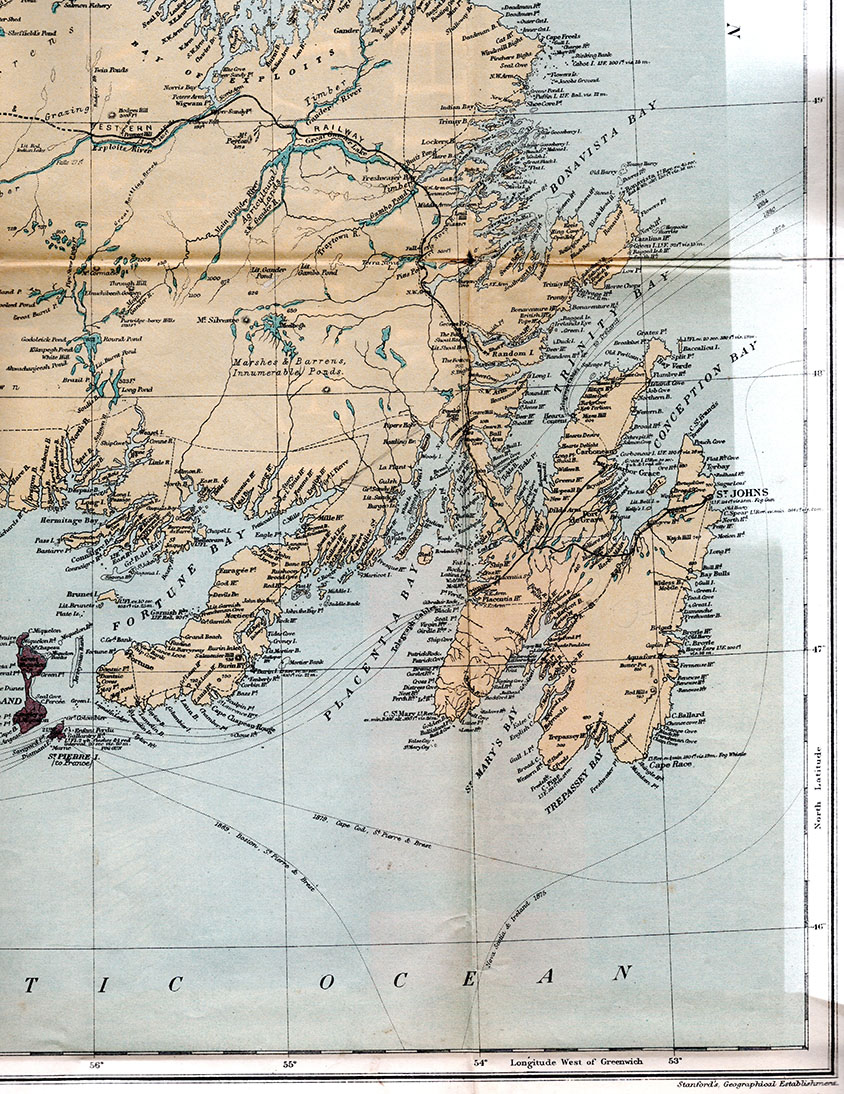
In 1888, Mr. Justice Pinsent noticed a discrepancy between the limits of Newfoundland’s jurisdiction in Labrador – as defined by “Letters Patent of 28th March, 1876,” and as shown by a map published under the authority of the Canadian Government (“Newfoundland: Island into Province: St. John Chadwick”: Cambridge University Press, 1967). He asked the Governor of the Colony to take up the issue with the British Government. Predictably, not much happened and the issue was not resolved until around 1927.
When Mr. Justice Pinsent arrived in Bay St. George on Circuit in 1887, he found there had been a significant deterioration in relations between the English colonists and the French fishermen – and that some of it was the fault of the Colonial Government when it passed the recent “Bait Act” which prevented unlicensed Newfoundlanders from selling herring and capelin (used as bait in cod and lobster traps) to foreigners. This blocked the local fishermen from selling into their principal market – whereas the French and Americans had no such restrictions and could fish for their own bait or buy and sell from each other. The justice referred the residents to a clause in the bill that allowed them to obtain licenses to sell bait to foreigners and promised to encourage their usage (Evening Telegram: 22nd October 1887).
The lobster fishery was, in itself, a growing problem as the French insisted that they had the right to build cannarys on shore and to stop the locals from doing so. They appeared ready to back up their claims by force if necessary – the residents of Bonnebar asked Judge Pinsent to acquaint the Imperial Government that the French Ironclad “Minerve” had arrived in Pictou, likely to “protect” French fishermen who were encroaching on their herring and lobster fisheries. He promised to do so (London Evening Standard: Monday 12th and 26th September 1887).
Tension remained high and there were some who wished to increase the tension by exaggerating the level of French interference in St. George’s Bay. Dr. Richard Howley, a Newfoundlander living in England wrote to the “Pall Mall Gazette” about the “outrages” committed by they French (Evening Telegram: 15th November 1889) and after a visit to the “French Shore” in October 1889, it fell to Mr. Justice Pinsent to damp down the rhetoric. He is quoted as saying that he was happy to find there was no truth to the “hideous outrage” that had been reported and: “I understand that the Instances are few in which there has been open or secret disturbances of the nets of English subjects, for the purpose of appropriating their bait and moreover I learn with satisfaction that any such practice is discountenanced by the French authorities, and would be punished by them if the offenders were discovered.” He put such blame as was appropriate on the French colonists of St. Pierre rather than on true Frenchmen (Harbour Grace Standard: 26th October 1889).
The following year the British Government reached a “modus vivendi” agreement with the French regarding the canning of lobsters on the “French Shore” that should have allowed both countries’ citizens to can lobsters, and have any problems that arose adjudicated by Naval Officers from either England or France. This did not go over well in Newfoundland and there was a public outcry when it became known that Sir Baldwin Walker (the British Commodore in Newfoundland) had closed a cannery in St. George’s Bay.
The owner sued Sir Baldwin in February 1891, and the then Chief Justice and Mr. Justice Pinsent heard the case. The plaintiffs argued that the defendant had wrongfully entered their premises at Fishell’s River in Bay St. George and taken possession of their lobster factory. They claimed $5,000 and asked for an injunction to restrain Sir Baldwin from doing it again. In his defense, Captain Walker claimed he was obliged to enforce the “modus vivendi” agreement. Their Lordships gave for the respondents, saying: “that in an action of this description to which the parties are British subjects, for trespass committed within British territory in time of peace it is no sufficient answer to say, in exclusion of the jurisdiction of the municipal courts, that the trespass was an “act of State,” committed under the authority of an agreement or modus vivendi with a foreign Power.” Nevertheless the ruling gave the defendant leave to appeal to the Judicial Committee of the Privy Council – which he did the following July (Evening Mail: Wednesday 20th July 1892).
The British Government – fearing Sir Baldwin might lose – tried to ram a bill through Parliament that enshrined its arrangement with the French into law. The Colonists sent a delegation to England to lobby against the bill. Sir Robert Pinsent (as he was by then) was sent over in 1893 to work his magic.
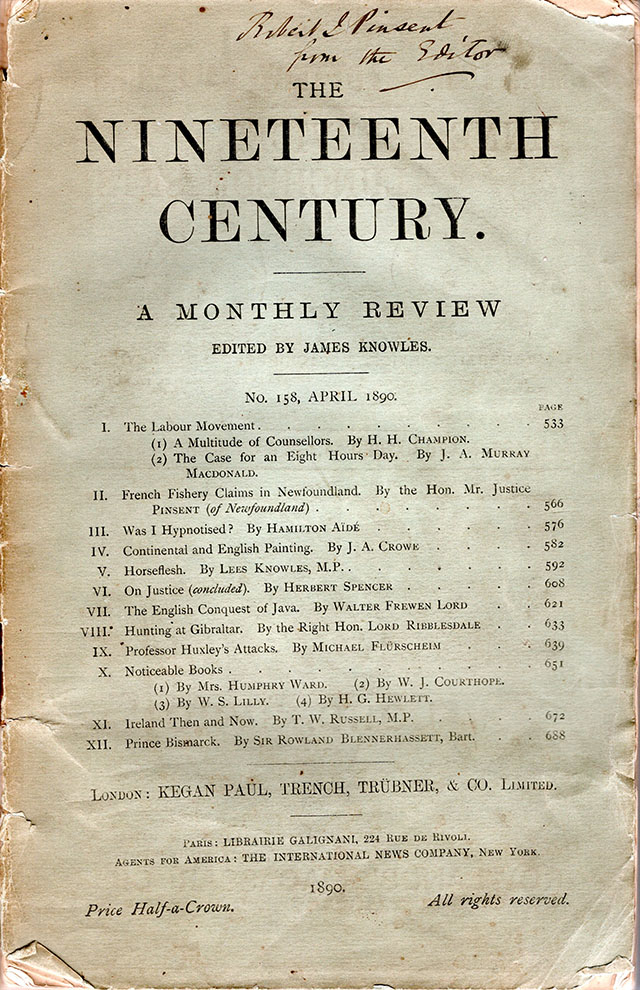
Mr. Justice Pinsent had written a well-advertised article in the monthly review “The Nineteenth Century” (No. 158, April, 1890) entitled “French Fishery Claims in Newfoundland.” In it, he had refuted French claims that the Treaty of Versailles (in 1783) gave them the right to “catch fish and dry them on land” without “interruption or competition” and gave them the exclusive right to the fishery on the “French Shore”. He had agreed that they were entitled to fish for cod, but not to the exclusion of the local colonists and they had no right what so ever to settle, or to catch and can lobsters as they now claimed. Lobsters were not even covered under the terms of the treaty. He had suggested the British Government renegotiate the relevant sections of the treaty. However, he thought this was unlikely to happen any time soon, as any “renegotiation” would require the British to make concessions or payments for something that the local Newfoundlanders already considered theirs by right (Yarmouth Independent: Saturday 25th January 1890).
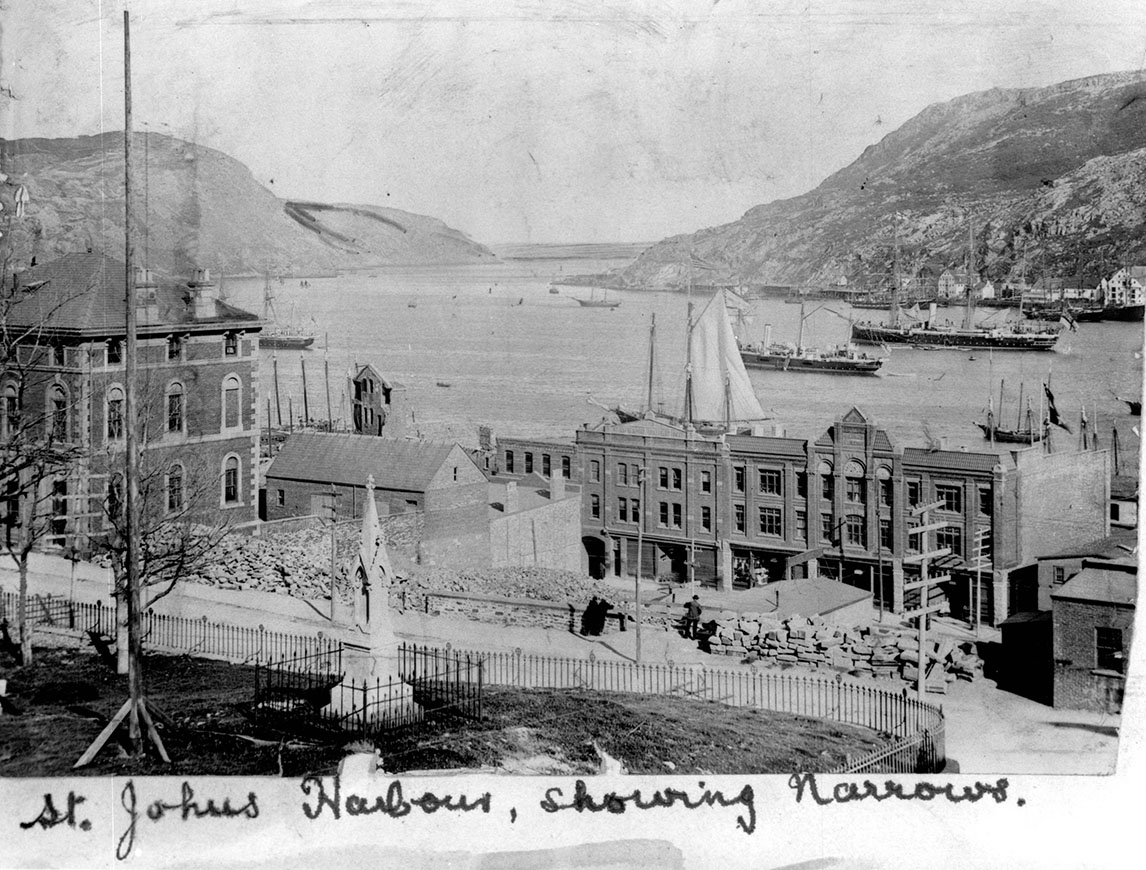
In the months that followed, the Newfoundland fishery issue was discussed in the British, Newfoundland and Empire Press and Mr. Justice Pinsent’s views were thoroughly aired and broadly accepted. As the National Observer (Saturday 5th April 1890) but it: “Put Yourself in his Place.” What if the Government had given been given way Arran and Lewis and exclusive rights to fish of the Scottish coast from Greenock to Dundee? There were, of course, a few who thought he was way to soft on the French (Evening Herald: 1st April 1890). There were even Englishman who felt he was being overly accommodating: “I note also the arrival in England of the Assistant Judge of the Supreme Court of Newfoundland, Mr. Justice Pinsent, who appears in his usual position as “standing counsel” for the French. Mr. Pinsent overlooks the fact that, according to his interpretation of the Treaty, the French could claim possession of the shoreline of any bay or harbor as “necessary” for the prosecution of their cod fishery:” this from G. Allen of Bristol (Evening Herald: Thursday 27th February 1890). Still, he appears to have been in a minority. Even the Home News for India, China and the Colonies (Friday 24th January 1890) appreciated that the current arrangement was untenable and the French “rights” (such as they were) should be bought out or exchanged. There were negotiations and compromises, but the issue was not fully resolved until 1904 (Fish, Bankruptcy and Confederation: 1889-1895: Melvin Baker (1994): ucs.mun.ca/melbaker/1889-5).
In May 1890, His Excellency the Governor “received a telegram from the “Foreign Office” announcing that Her Majesty had been pleased to confer the dignity of Knighthood upon Mr. Justice Pinsent” (Evening Herald: 22nd May 1890); so it was as a “Knight Commander of the Most Excellent Order of the British Empire (K.B.E.)” that Robert John sat on the bench of the Supreme Court and received the congratulations of the legal profession less than a week later (Evening Herald: 26th May 1890). A deputation of citizens added their congratulations at his home at “Hillsborough” in July and he responded in a letter to the press written at his country house, “Woodlands” a few days later (Evening Herald: 25th July 1890). The honour was widely noted, not only in Newfoundland and Canada but also elsewhere in the Empire (Colonies and India: Wednesday 21st May 1890).
In 1891, the Colonial Government called on Sir Robert, who was about to take one of his judicial Circuits around the Island and would be visiting Bay St. George to stay on as a Commissioner for a few days and “investigate the losses sustained by the people of St. George’s Bay during the last three years through the enforcement of treaties with France, compensation being expected from the Imperial Government” (Colonies and India: Saturday 8th August 1891). He was, after all, eminently qualified. The “S.S. Fiona” arrived at Bay St. George on 27th August and Sir Robert, after completing his judicial duties he conducted his enquiry. According to the Evening Herald (Saturday 26th September 1891): “Sir Robert Pinsent closed at St. George’ Bay on September 1st, after six days’ investigation. The evidence showed High-Handed Proceedings on the part of the French during the past three years. In 1889, the people were prevented, by Commander Russell, from prosecuting the herring fishery. ln 1890, the French ordered their nets to be taken up and prevented them from fishing, and in 1891 the French forbade the sale of herrings to Americans and themselves gave only 10 cents barrel. The Losses were shown to be not less than $20,000, and after a careful examination by Judge Pinsent the claims made were fully established.“
Some Newfoundlanders tried to score political points by questioning the cost, worth and propriety of the “Commission” Sir Robert had been given. Sir James Winter called it a “sham and a fraud” that it should never had been done by a sitting Justice while on circuit. For its part, The Government felt “… they had made the best selection they could have done, for none was better fitted to perform the service. Now, the hon. member Sir James, had referred to the work having been done on circuit. Well, how could it have been done more cheaply or inexpensive? And yet have combined in the enquiry all the dignity of a commission enquired into by the Supreme Court, and the exactness of a patient enquiry taken on the spot, and under the scrutiny of experienced officials (Evening Telegram: 23rd June 1893)”.
Interestingly, I have an original (as far as I know unpublished) article entitled “A Newfoundland Circuit” that he wrote sometime over the winter of 1892/3. There is a copy in the Maritime History Archive in St. John’s. It describes a Circuit he made in the “S.S. Fiona” in either 1891 or 1892. Sir Robert described the characteristics of the various out-ports he visited, but tactfully fails to discuss his time in Court. He does; however, say of St. George’s Bay, “… this yearly intrusion of the French, and the claims and pretensions they make for exclusive possession while they are upon this part of the coast, is an absolute deterrent to British and foreign enterprise and the investment of any large amount of capital in the mining, agricultural and timber resources of the entire west side of Newfoundland.” Beyond that, he seems to have been more interested in fishing in the local rivers! This is not altogether surprising as he was an ardent fisherman.
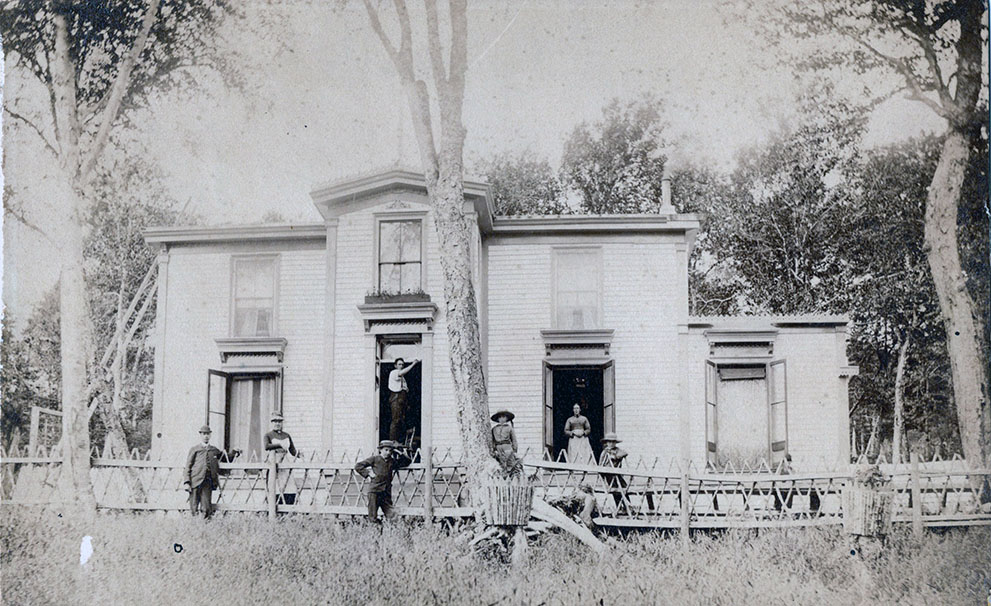
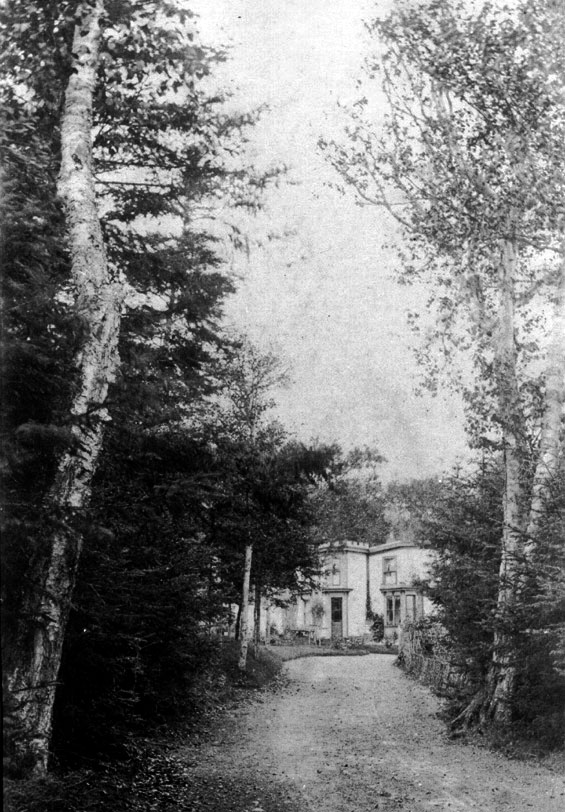
His house at “Woodlands” was built near the Salmonier River and his sons cut the first track through the bush to “Pinsent Falls” – arguably one of the best salmon fishing spots in Newfoundland. The Colonial Government arranged for Earl Haig to fish there when he paid a courtesy visit to Newfoundland to thank them for the efforts of the “Royal Newfoundland Regiment” during the First World War (Evening Telegram: 5th July 1924). Needless to say, the Field Marshal landed “the largest fish caught at Salmonier for the season.” Sir Robert’s wife, Emily, also fished and wrote. “The Field” magazine published an article she wrote on salmon fishing at Salmonier on Saturday 23rd December 1890.
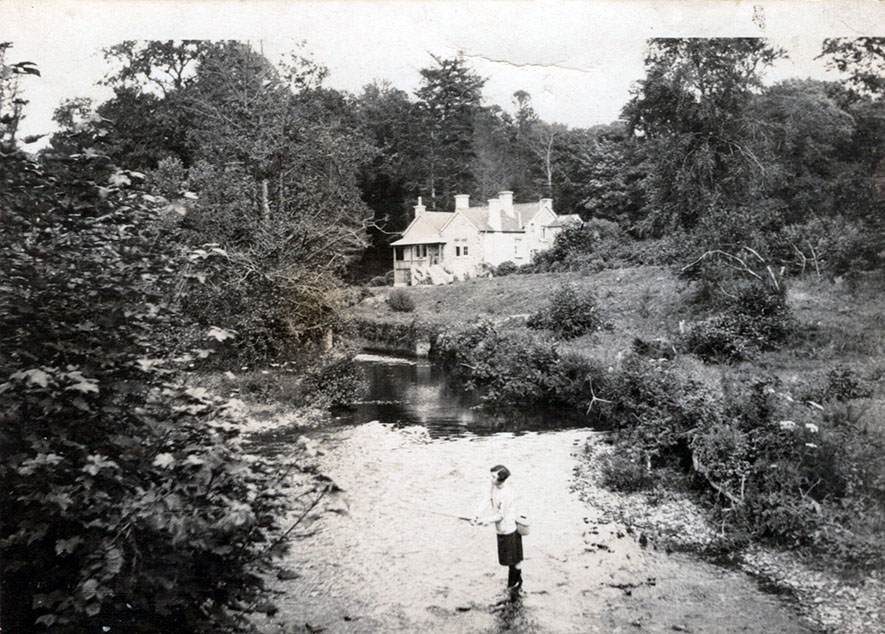
Perhaps that was what caught the Earl Haig’s attention. The same magazine published an article by Emily on fishing for sea-trout near Colinette on 30th July 1892.
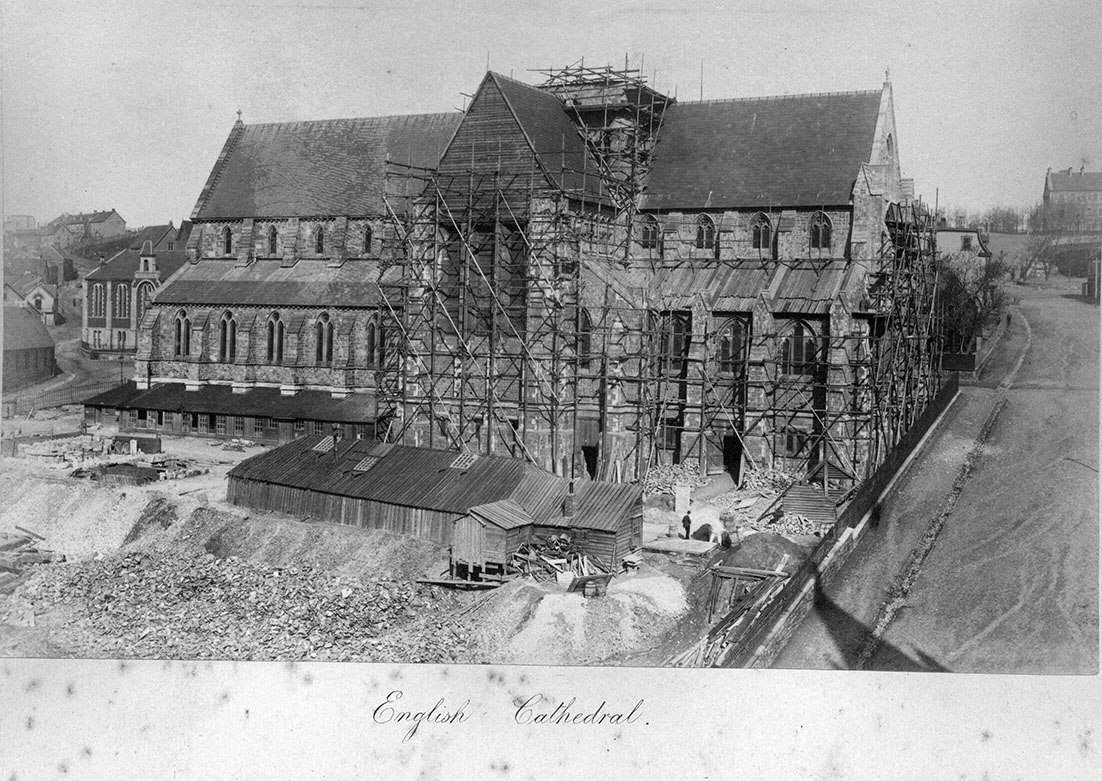
Sir Robert was back in St. John’s for the opening of the Supreme Court in November 1892. He served out that session and then left for England the following January for a well-earned six-month break. It must have been a particularly difficult session as the Court House in St. John’s, along with much of the heart of the city itself was destroyed in a fire that had ripped through it in July that year. The Anglican Cathedral, and much else besides was destroyed.
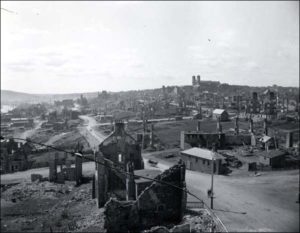
The trip was partly to promote his report on French Fishery abuses in Newfoundland (He wrote numerous “letters to Editors” and he gave several talks and interviews on the subject). However, he was also in England to receive a “Fellowship” in the “Royal Geographical Society” (Evening Mail: Wednesday 15th March 1893). Sir Robert gave one of his last major interviews to a “Reuters Agency” correspondent. In it, he re-iterated his well-known position on the “French Fishery Question” and commented briefly on the “ Privy Council’s” support of the Colony’s position in the “Baird vs. Sir Baldwin Walker” case.
He was asked about the then current spat between America and Canada over the seal harvest in the Behring Sea but largely demurred, as it was not a Newfoundland issue. Nevertheless, he felt that the “fishery” should be open to others and not an Americans reserve. The interviewer goes on to say: “We may just add that Sir Robert Pinsent’s name is mentioned at Downing Street in connection with a certain colonial governorship, and also with the vacant consul-general-ship at Constantinople” (Evening Telegram: 11th February 1893.
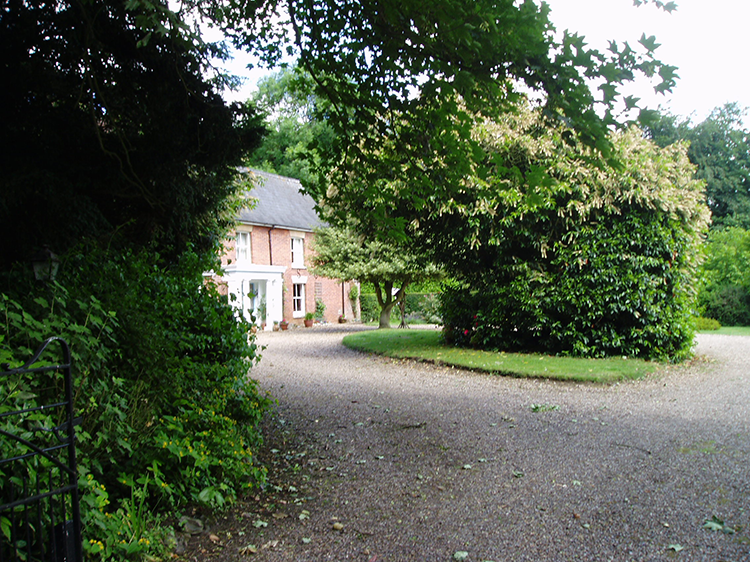
Sir Robert and his wife Emily (Lady Pinsent) and family thought of Bintry, in Norfolk, as their “home” while they were in England. Her father had been a local clergyman and well known in the district. On one of their previous visits, Mr. Justice Pinsent and his wife had attended a ball given at Sandringham House as part of the festivities around the Prince of Wales’s (Prince Edward Albert Victor’s) “Coming of Age” (Pall Mall Gazette: Thursday 8th January 1885).
On another occasion, “Miss Pinsent” – “the granddaughter of the much-esteemed Rector” – presented a bouquet to Miss Mary Jane Shaw, the daughter of the host of “Ye Royal Oake,” on her wedding day (Norwich Mercury: Saturday 31st August 1889). This could have have been a young Beatrice – if she was then in Norfolk, or it could have been Lady Pinsent’s eldest daughter, Mabel Louisa Pinsent. She was at Bintry when the census was taken in 1891 and was, probably, at school in England. Several of Sir Robert’s children (from both marriages) had or were being educated in England. The 1893 trip was a chance to see them and also to visit Lucretia Maude, his daughter – the Lady Abbess – in Rome. While they were in Rome, they had an audience with Pope Leo XIII (Evening Herald: 18th May 1893).
After getting back to England on 10th April, Lady Pinsent returned to Bintry and Sir Robert went up to London to do some furniture shopping for their house in St. John’s and to visit friends and relations. Letters in my possession show that he wrote to his wife to discuss his purchases and to tell her of his surprise at meeting up with his son Charles Augustus Maxwell in London (see elsewhere). Charles had, for some reason, decided to visit London.
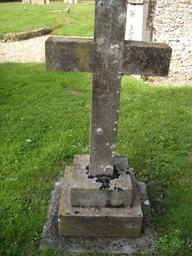
Sadly, Sir Robert went down with influenza on the 13th April (Evening Herald: Thursday 18th May 1893) while staying with a cousin near London. He took a train back to Norfolk on the 19th but had a relapse en route (Daily Tribune: Wednesday 17th May 1893) and, although Lady Pinsent added a note to a letter that his daughter Mabel wrote to her half-sister Maude in Rome the following day saying he was “in no immediate danger” [letter in my possession RHP], she was mistaken. Pneumonia set in and he died on 27th April 1893, at the age of 58. He had, apparently, been in the midst of writing a lecture to be given to the “Royal Colonial Institute” (Daily Tribune: Wednesday 17th May 1893).
Sir Robert’s death came as a shock in Newfoundland (Evening Telegram: 28th April 1893) and the Secretary of State for the Colony tabled a “Resolution of Sympathy“ in the House of Assembly the following day. There were speeches in both houses tacitly acknowledging that: “His place on the Bench will be difficult to fill, for he possessed those requirements which peculiarly fitted him for the position of Judge. As a lawyer he stood at the head of his profession, and early in life showed those powers of mind which afterwards so distinguished him. All must admit the great loss the country had sustained by the death of our talented Judge” (Evening Telegram: 12th May 1893). His colleagues on the Bench and in the Judiciary paid him similar tribute (Evening Telegram: 15th May 1893). Most, if not all, the Newspapers in St. John’s included an obituary in their pages. Sir Robert was replaced on the Bench by Sir James Winter – the same “gentleman” who had called his commission into the fishery a “sham” and a “fraud” (Trowbridge Chronicle: Saturday 27th May 1893). What he would made of that, I hate to think. Certainly the Evening Telegram was to rail against Sir James for year to come.
Sir Robert lived on in the memories of his friends and legal colleagues and it was not uncommon to hear grumbles in the press that “this would not happen in Sir Robert’s day ….” Perhaps this was best summed up by an anonymous colleague who published “Sir Robert’s Three Rules of Conduct” in 1923. He claimed that “Sir Robert John Pinsent was one of the ablest men we have ever had at the bar and in public life here. I once received from him the following counsel: — never listen to any man when he abuses his relations. He will make it up with them and hate you for knowing that he abused them.” On another occasion he said to me: “A friend of his of great practical ability told him he has laid down for himself these rules of conduct: “Never react, never explain!! Get it done and see your political opponents howl!!!” “Sir Robert repeated these paradoxical maxims with a characteristic laugh, which seemed at any rate, not to mark disapproval. ” (Evening Telegram: 13th October 1923).
Mr. A. A. Parson had this to say about Sir Robert in 1905: “The late Judge Pinsent, whenever asked to contribute to a Christmas Number or other local publication would almost invariable reply: “Shall I write about the French Shore Question?” He was nearly as fond of that subject as the present genial Judge Prowse, who still seems to have a hankering after it, notwithstanding the fact that the whole question has been officially and forever settled. But speaking of Sir Robert Pinsent, I remember the last time I called on him for a Christmas contribution. He was seated in a comfortable chair near the fire, absorbed in the pages of Dumas’ “Three Guardsmen.” As I entered he looked up and greeted me in that peculiar official manner of his which seemed to fit him so perfectly for the Supreme Bench. While he held out his hand, I looked at the book he had just laid aside and smiled, perhaps a little suggestively. Any way, he caught by meaning in a moment and remarked good naturedly: “You smile at finding me reading a book like that!” “Yes” I said, “because I expected to see you differently employed; for instance, either critically examining the latest edition of our ‘Consolidated Statutes’ or ‘writing a Judgment’ on one of the more important cases recently decided by you.” “Do you know,” he rejoined, “I find it a great relief, after a busy and prolonged sitting in the Court, to spend a few hours with a clever author like that Frenchman. There are times at night when light mental food is necessary to enable us to properly digest the heavy accumulations of the day. It clears the intellectual atmosphere, so to speak” (Newfoundland Quarterly, December 1905).
Membership of the “Royal Colonial Institute” gave Sir Robert name recognition well beyond England and Newfoundland and news of his death even reached what is now Pakistan, where a local paper gave a short summary of his life (Civil & Military Gazette: Saturday 27th May 1893). Where his life would have taken him if he hadn’t died is impossible to say. However, a few weeks before he died he had dampened speculation that he was likely to succeed Sir Ambrose Shea in the Governorship of the Bahamas, claiming he had heard nothing on the subject (Glasgow Herald: Friday 10th March 1893).
Sir Robert’s death once again threw the family into disarray. His eldest son and executor, Charles Augustus Maxwell Pinsent, was with him when he died; however, shipping manifests show that he left Liverpool for St. John’s on 9th May. Although Sir Robert had previously transferred most of his estate to Charles and his siblings from the first marriage, there would have been probate and other legal matters to attend to. Sir Robert had not lived long enough since his divorce to rebuild his fortune and this was much to the detriment of his second family. However, Sir Robert had (in his will witnessed in 1890) left the proceeds of several life insurance policies to his widow (Lady Pinsent), and he made minor bequests of largely sentimental value to his younger children. Charles A. M. Pinsent was granted probate for an estate sworn at under $18,200.
According to an unattributed obituaries in Lady Pinsent’s possession: Sir Robert was survived by three children from his first marriage: (Lucretia) Maude “Abbess of St. Scholastique Abbey in Teignmouth” [actually by then in Rome]; Charles (Augustus Maxwell) “merchant of St. John’s”; Arthur (Newman), “now farming in the United States” [actually Saskatchewan in Central Canada], and five from the second: Robert (John Ferrier Homfray) “engaged in the lumbering industry on the St. Lawrence,” Frank (Wingfield Homfray), “in the Surveyor-General’s Office in Newfoundland”; and also Mabel (Louisa Homfray), Beatrice Mary Homfray) and Guy (Homfray) Pinsent “now with Lady Pinsent at Bintry”. Apart from Mabel, they are all discussed in greater detail elsewhere in this Database.
Lady Pinsent stayed on in England after her husband died and, as far as I know, never went back to Newfoundland. She too is discussed elsewhere in this database.
Return to Part I.
Family Tree
Grandparents
Grandfather: John Pinsent: 1753 – 1821
Grandmother: Susanna Speare: 1766 – 1830
Parents
Father: Robert John Pinsent: 1798 – 1876
Mother: Louisa Broom Williams: 1808 – 1882
Father’s Siblings (Aunts, Uncles)
Mary Speare Pinsent: 1794 – 1882
Susanna Speare Pinsent: 1795 – 1819
John Pinsent: 1796 – xxxx
Robert John Pinsent: 1798 – 1876 ✔️
Elizabeth Pinsent: 1801 – 1828
Sophia Speare Pinsent: xxxx – 1805
Male Siblings (Brothers)
Robert John Pinsent: 1834 – 1893 ✔️
Thomas Williams Pinsent: 1837 – 1890
Charles Speare Pinsent: 1838 – 1914
William Burton Pinsent: 1846 – 1846
Please use the above links to explore this branch of the family tree. The default “Next” and “Previous” links below may lead to other unrelated branches.