Vital Statistics
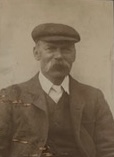
Richard Alfred Pinsent: 1852 – 1948 GRO0738 (Solicitor, Baronet, Birmingham, Warwickshire)
Laura Proctor Ryland: 1855 – 1931
Married: 1878: Walmley
Children by Laura Proctor Ryland:
Roy Pinsent: 1883 – 1978 (Solicitor; Married Marion Jordon Lloyd, 1913; Married Mary Tirzah Walls, 1918)
Clive Pinsent: 1886 – 1948 (Commander, R.N.; Married Kathleen Jane Macpherson, 1921)
John Ryland Pinsent: 1888 – 1957 (Captain, Royal Engineers, Co. Director; Married Kathleen May Boyce, 1915)
Laurence Alfred Pinsent: 1894 – 1915 (Lieutenant, 7th North Stafford Regiment)
Philip Ryland Pinsent: 1897 – 1916 (Lieutenant, Royal Flying Corps.)
Family Branch: Devonport
PinsentID: GRO0738
References
Click here to view close family members.
Richard Alfred Pinsent was the second son of Richard Steele Pinsent by his wife, Catherine Agnes (née Ross). He was born in Devonport in 1852 and was educated at “Amersham Hall” (a “public” i.e. private school) near Reading, and at “Edinburgh Academy” (The London Times: 5th October 1948). From there, he went to Birmingham, where he articled under his late aunt Sarah Pinsent’s husband, Mr. Thomas Smith James.
He was an exceptionably able student and quickly came to the public’s attention; firstly, at a “Birmingham Law Students’ Society” debate in 1871 – where he was one of three student who argued in favour of the “Court of Exchequer Chamber’s” decision in the case of “Lord Dunraven v. Llewellyn.” This was a classic case concerning a manor tenant’s right of access to the commons (Birmingham Daily Post: 26th October 1871). Richard Alfred clerked with Messrs. James and Oerton of Birmingham and with Messrs. Church and Clarke of London and, in the “Easter Term” of 1873, passed his “Incorporated Law Society” exams with “honorary distinction” (London Daily News: 16th May 1873). In fact, the Birmingham Daily Post (Tuesday 20th May 1873) noted that “Mr. R. A. Pinsent, who served his articles with Mr. Thomas Smith James of this town, has been placed second in the “Honours” Division.” Mr. Smith Jones was, of course, his uncle. The “Birmingham Law Society” awarded Richard its gold medal prize for 1873 when he was admitted to the bar the following year, (Birmingham Daily Post: 2nd April 1874).
Birmingham had started life as a small industrial town near the coalfields of the “Black Country” and it had developed a reputation for intricate metal work and for the manufacturing of glass. In fact, one of Richard’s other aunts, Elizabeth Savery Pinsent, had married a glass manufacturer. Birmingham’s location in the middle of England doubtless helped as it was also transportation hub. The city grew rapidly after connecting to the national canal system in the 1760s, and to the railway system in 1837. It was an entrepreneurial city, full of small manufacturing businesses that rose and fell with the state of the economy. The city was a good place for an up and coming lawyer to be.
Richard Alfred was an alumni of the “Birmingham Law Student Society” and also one of its staunch supporters. In April 1878 he chaired a debate at the “Birmingham Law Library” on moot point No. 593 (“Is the decision in the case of Woodley v Metropolitan Railways Company in accordance with the settled law on the subject, or consistent with natural equity?” Birmingham Daily Post: 3rd May 1878). I am not a lawyer and have no idea! Richard was moderately active in civic politics and we find him presiding over a polling booth at the junction of Hawkes Street and Muntz Street in “Bordesley Ward” during the “Birmingham School” Election, in November 1873 (Birmingham Daily Post: 18th November 1873). Richard Alfred had, in his capacity as solicitor to the trustees of the Chaplaincy at St. John’s Deritend, helped organize an unusual poll to determine who should be the chaplain the previous year. There were three candidates and the appointment was hotly contested. The Rev. J. O. West was, eventually, elected (Birmingham Daily Post: 27th May 1889).
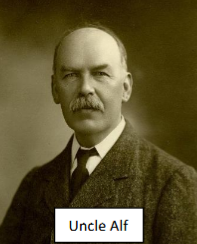
Richard Alfred may have practiced on his own behalf for a few years. Certainly, he made a court appearance on behalf of the “London and North Western Railway Company” in 1876 when the latter was sued by a local “jeweller” for the loss of a (doubtless valuable) parcel (Birmingham Gazette: 15th July 1876). Nevertheless, on 1st January 1877, he joined Thomas Siviter Smith in what was to become a long-running and highly successful legal partnership . They practiced with a third, older, partner, Mr. Barlow, out of his home at “#39 Waterloo Street, Birmingham” under the name of “Barlow, Smith & Pinsent” for a few years before going alone. Mr. Barlow was a “Commissioner to Administer Oaths in the Supreme Court”, however, he seems to have kept a low profile and is rarely mentioned in the press. I know very little about him – other than that he retired at the end of December 1887. From then on, the junior partners continued working from the same address under the title of revised title of “Smith, Pinsent and Company”.
The firm looked after the interests of the living and the dead. They organized patents and probated the wills of deceased professionals and entrepreneurs, and undertook a variety of other tasks. For instance, when Mr. Lawson Tait took out a writ against Councillor Fulford for libel, he called on “Smith Pinsent and Co.” to assist with his defence. Cooler heads eventually prevailed, and the write was later withdrawn (Birmingham & Aston Chronicle: Saturday 25th October 1890). T. Siviter Smith, the then senior partner, looked after the interests of the relatives of the late Mr. E. Harold Carpenter of Sutton Coldfied at the inquest following his death by drowning in the Keeper’s Pool in Sutton Park. Mr. (Richard) Alfred Pinsent attended his funeral (Warwickshire Herald: Thursday 19th May 1887). He attended many over the course of his professional career.
There were two branches to the English legal system in those days and Richard Alfred’s job as a “solicitor” was to provided background legal support and instruction to a “barrister” who prosecuted a criminal case in court. He was rarely seen or heard in the criminal court. However, when it came to civil proceedings, he was able to present his own legal opinions. Thus, when a “miller” called Evans sued the “London and North Western Railway Company” in “Birmingham County Court” over charges it had made for storing his flour in March 1878, Richard Alfred was called upon to defend the charge. He explained that, prior to 1876, the “Company” had indeed allowed customers to leave items at stations free of charge; however, it had changed its policy and had notified Mr. Evans and its other customers. He claimed that the company had the legal right to charge for “incidental services” – and the Judge agreed (Birmingham Daily Post: 12th March 1878). I doubt if Mr. Evans was mollified. “Barlow, Smith and Pinsent” did not play favourites, however, and they worked behind the scenes for Mr. Alfred Young, Q.C., when he appeared for a plaintiff who was attempting to recover damages from the “London and North Western Railway” for shock and concussion that he said he received in transit (Birmingham Mail: Monday 5th February 1883).
“Smith, Pinsent and Company” practiced commercial law – and did very well for itself not only seeing firms established but sorting out problems that arose when businesses failed and (perhaps inevitably) disputes followed. The partners also dealt with one-off issues: They were called upon to find a buyer for an unspecified business “in one of the healthiest of the English Colonies.” There was no indication what the business was about, of course, only that “the assets comprise complete plant of highest quality of manufacture, a small stock-in-trade and patent rights governing a vast tract of country which is daily growing in importance and enterprise” London Evening Standard (Tuesday 9th April 1889). Apply to the solicitors and all will be revealed … …
The changes wrought by the industrial revolution were dramatic and qualified individuals were very much in demand, so the firm was only too happy to handle a company’s hiring needs: “Wanted: A thoroughly practical Blast-Furnace Manager, who has been accustomed to making part mine and cinder iron as used in North and South Staffordshire mills and forges” (Birmingham Mail: Friday 31st May 1889).
Nevertheless, as time passed the firm’s practice became more focused on larger corporate and municipal issues. The partners helped negotiate deals concerning improvements in the handling of sewerage and water; the introduction of electrical lighting (replacing gas in around 1880) and also the replacement of horse-drawn omnibuses by electrical trams. Each of these changes wrought havoc in the streets – and lead to lucrative court cases to settle real or perceived grievances. For instance, a firm of millers from Bilson and Wolverhampton sued the “Dudley and Wolverhampton Tramway Co.” for £13 after an accident that occurred when a tram and a wagon collided on a street that was encumbered by snow, Messrs. Barlow, Smith and Pinsent supported the plaintiff and Mr. Shakespeare (no less) was for the defendant (Cradley Heath and Stourbridge Observer: Saturday 23rd July 1887).
Sometime later, “Messrs. Pinsent and Co.” supported Mr. Batten and Mr. Maddocks when they appeared on behalf of the “Birmingham Tramways Company” in its action against George Law – claiming that he was responsible for an accident on the Bristol Road route through his negligence in re-laying track. Mr. Hugo Young, K.C. and Mr. Shakespeare appeared for the defendant (Birmingham Mail: Tuesday 22nd March 1910). The legal profession was small enough that everybody knew everybody. Then there was the Saltley manager who claimed breach of contract against the “Metropolitan Carriage, Wagon and Finance Company Limited.” “Messrs. Pinsent and Co.” supported the defendant – (Birmingham Mail: Thursday 12th December 1912). You get the picture.
All the municipal land-use changes that occurred in the late 1800s required considerable negotiation and a copious amount of legalese. For instance, the “Midland Light and Power Company Limited” needed help when it sought an order from the “Board of Trade” for a “Provisional Order” to “to generate, store, take and supply electricity for pubic and private purposes with the Urban District of Kenilworth, in the County of Warwick” (Kenilworth Advertiser: Saturday 22nd November 1913). I defy you to read the fine print.
Horses-drawn trams were, eventually, replaced by motor vehicles. Whether that was an improvement or not, I am not sure! Presumably the streets were cleaner. Nevertheless, there was still non-stop lobbying for easements and control of the streets (for tram tracks, pipes, wires etc). This required copious amounts of regulation – which the municipal politicians were only too happy to supply at the cost of the taxpayer. Lawyers and accountants were much in demand.
“Pinsent and Co.’s” expertise was also needed in negotiations between different branches of Government. When part of Solihull was incorporated into “Greater Birmingham” in 1911, the rural council “Guardians” were left with a Workhouse that was far too big for its own needs – and something had to be done about it: “It was reported by the [Birmingham] Clerk (Mr. F. L. Thompson) that the Committee of the Board had met Mr. Pinsent, their solicitor, and had submitted to them a draft cause as settled between the Town Clerk and Mr. Pinsent and amended by counsel on behalf of Birmingham. The Committee carefully considered the clause and eventually settled it subject to certain amendments being made in other sections of the Bill to protect the interests of the Guardians in connection with financial adjustment” (Kenilworth Advertiser: Saturday 25th March 1911).
“Greater Birmingham” meant changes in the poor-law responsibility and the “Meriden Union” was similarly bothered. It took its larger neighbour to arbitration (Kenilworth Advertiser: Saturday 17th July 1915). Later, the formation of “Regional Districts” became a touchy matter and small local committees took issue with the arrangements proposed for them. In 1920 “Messrs. Pinsent” helped out the “Meriden Rural District Council” when it had to deal with the “North Warwickshire Company” and the “Nuneaton Corporation” (Kenilworth Advertiser: Saturday 10th January 1920). Yes, it was all in the fine print.
Land transfer meant regulation transfer and one has to feel for Mr. T. M. Colmore of Knowle who blissfully cut down two roadside trees that prevented him from safely entering and exiting his driveway. He wrote to “Solihull District Council” to apologize for the trespass explaining: “I have to-day had an interview with Mr. Pinsent, whose opinion has been taken about the trees on this road by your Council, and he informs me that though when the Parish Council had control of this road I had the power (with the consent of the owner) to take trees down as I did some years ago, I had no power to do so now, and the District Council had obtained (a fact of which I was not aware) urban powers, and in, remedy (if any) was by indictment for a nuisance. I shall therefore be glad if you will convey to the Council my deep regret at having taken the trees down, and to say how vexed I am at the occurrence, and further say that I have told Mr. Pinsent that I shall be happy to pay his costs, as I should not wish them to fall on the ratepayers” (Coleshill Chronicle: Saturday 24th September 1910).
By 1861, even probating a will was becoming a challenge: “Pursuant to the Statute 22nd and 23rd Victoria, Chapter 35, entitled An Act to Further Amend the Law of Property and to Relieve Trustees” creditors were now required to submit their claims against testators’ estates to the executors’ trustees by a date advertised in the press. Most would have done so through a lawyer. Thus, “those having claims against the estate of John Whyley Wright, late of Spon Lane, in the county of Stafford, licensed victualler, (who died on the 20th day of October, 1876) and whose will was proved by George Thompson in the county of Worcester, maltster and Joseph Withers, of Smethwick, in the county of Stafford, gentleman, the executors thereof, were required to send, in writing, the particulars of each such claim or demand to” … the undersigned, “Barlow, Smith and Pinsent, of #39 Waterloo Street, Birmingham” in the County of Warwick on or before the 16th day of February 1877 (Birmingham Daily Post: 18th January 1877). This is one of many such notices the company placed in the press over the years.
In later years, the firm sometimes cut out the middle-man and were drawn into the process as executors. Thus, when Mr. W. W. Bagot of Pype Hayes (Walmley) died, Richard Alfred was the sole executor (Warwickshire Herald: Thursday 22nd March 1894); and when Sir William B. Avery of Windsor passed “Mr. Richard Alfred Pinsent, solicitor, Birmingham, and Mr. John Frederick Wright, Camberley, Surrey” were co-executors – and Richard received an extra £1,000 for his pains (Birmingham Mail: Thursday 3rd December 1908).
In January 1877, “Barlow, Smith and Pinsent” had a different sort of challenge to deal with. They assisted “Hinks and Company” in the matter of a patent for “an improvement in lamps for burning paraffin oil and other volatile liquid hydrocarbons” (Birmingham Daily Post: 25th January 1877). Perhaps Richard Alfred introduced his elder brother Adolphus Ross Pinsent to the Company’s management – as the latter became a fixture on its board of directors in the early 1900s. Alternatively, of course, Adolphus Ross may recommended his brother’s company handle the application.
Richard Alfred and Adolphus Ross (“Ross” as he was generally known) took a trip to North America in the spring of 1894. I do not know why. They had left Southampton for New York on the “U.S.M.S. New York” (Anglo American Times: 2nd June 1894) and crossed over into Canada and headed west on the “Trans Canada Railway”, which had been completed in 1885. They passed through Winnipeg, Manitoba, in May 1894 (The Daily Nor’Wester: 14th May 1894). Ross was familiar with the wide open spaces to be found in Uruguay and Argentina and he may have been looking for business opportunities. Both their wives stayed home with their respective children. Richard Alfred did eventually take his wife for a trip. According to a Ship’s Manifest, they went out to Madeira in 1914!
Business’s, as elsewhere, were subject to economic cycles and “Barlow, Smith and Pinsent” not infrequently found themselves represented the creditors of failing firms. For instance, when Anson Edwin Martin, a “druggist and chemist” met with his creditors in November 1877, one of them claimed that his debts had already been secured to one of them – much to the detriment of the others … (Birmingham Daily Gazette: Friday 9th November 1877). Similarly, in March of the following year, 1878, Mr. Pinsent represented the creditors of Thomas Williams, a failed “builder and brick maker” from Moseley at a meeting at the “Great Western Hotel”, in Birmingham. They discussed the bankrupt’s finances in some detail and discussed his ability to pay (Birmingham Daily Post: 23rd March 1878). It must have been a slow time in the construction industry as Richard Alfred represented the “Worcester City and County Bank” against another failed brick manufacturer the following year (Kenilworth Advertiser: Saturday 20th December 1879).
The collapse of “Messrs. Greenway, Smith and Greenway, bankers of Warwick and Leamington” in 1887 caused considerable disruption and, of course, litigation (Kenilworth Advertiser: Saturday 21st January 1888). Richard got to know the “Official Receiver” (Mr. L. J. Sharpe) extremely well! They also attended meetings held to discuss the accounts of the financially embarrassed – such as Mr. Thomas Fairfax – (Birmingham Mail: Wednesday 1st August 1888). Perhaps Richard Alfred Pinsent specialized in bankruptcy law. Note that the firm did a prodigious amount of work under its own name both then and later, neither Richard nor Hume being specifically mentioned.
Toward the end of the 19th century, there were many more failures as small firms found it difficult to export their wares in the face of stiff and growing competition from German and the United States. The bicycle industry seems to have collapsed in the late 1880s. “Messrs. T. Smith and Sons” went down in October 1886 and it was left to “Barlow, Smith and Pinsent” to sort out the mess and distribute the assets (Birmingham Mail: Thursday 21st October 1886). Interestingly, Mr. Dunlop squabbled with Mr. Palmer over the terms of a deal he had with the “Tubeless Tyre Company” (Cycling: Saturday 21st October 1899). It was something to do with patents. The “Preston Davies Tyre and Valve Co.” needed restructuring (Coleshill Chronicle: Saturday 20th April 1901); there was a strike at the “Cycle Components Work” at Bournebrook because of a wage cut – Mr. Pinsent, meanwhile, prosecuted several cases of assault and intimidation – in 1902 (Coleshill Chronicle: Saturday 13th September 1902). The “New Rapid Cycle Company” went into receivership “owing to the continued depression in trade” in 1904 (Coleshill Chronicle: Saturday 16th July 1904). There were other failures (both personal and corporate) aired in the press but enough is enough. Presumably, Richard became less immediately involved as time went by.
There were successes as well as failures. The firm helped several important, upcoming, firms to get established. For instance, they supplied much of the legalese when the “Birmingham District and Counties Bank” amalgamated in 1906 (Coleshill Chronicle, Saturday 20th October 1906), and when “B.S.A”. (“Birmingham Small Arms”) amalgamated with “Eadie Manufacturing Company” (Birmingham Mail: Wednesday 27th October 1907). Even bicycles made a come-back. The firm arranged for the registration of the “New Rover Cycle Company” when it was spun-off from the more profitable “Rover” motorbike and car manufacturing company in 1912 (Kenilworth Advertiser: Saturday 15th June 1912).
Another sign of the times was, as previously noted, “Pinsent and Co.’s” part in the “Midland Electric Light and Power Company’s” seemingly endless negotiations with the Urban District of Kenilworth and (other nearby jurisdictions) over their applications under the “Electric Lighting Acts of 1882-1909” (Kenilworth Advertiser: Saturday 11th April 1914). Bureaucracy is nothing new.
Richard Alfred’s brother Hume Chancellor Pinsent and another young lawyer, Arthur William Freeman, joined the firm as Mr. Barlow retired, on the 1st January 1888. Hume Chancellor had been called to the bar as a “solicitor” in 1882 and may have been working for the partnership since then. His mathematical ability would have been useful. The partners changed the name of the firm to “Smith Pinsent and Co.” It continued to work out of “#39 Waterloo Street, Birmingham” until November 1896 – when moved to “#6 Bennett’s Hill, in Birmingham”. Thomas Siviter Smith, the senior partner, died in 1894 (Birmingham Daily Gazette: Tuesday 30th January 1894) and the firm, once again, changed its name – to “Pinsent & Co.”.
As might be expected of a firm of solicitors based in one of the main growth centres in the nation, the firm of “Barlow, Smith and Pinsent” and its successor companies were active in conveyancing – The papers (Birmingham Daily Gazette, Birmingham Mail, Birmingham Daily Post and Warwickshire Gazette etc.) list countless examples of both primary and preexisting residences: for instance “Springfield”, Wylde Green on the Chester Road which went under the hammer in 25th June 1885 (Warwickshire Herald: Saturday 13th June 1885) and building land – as in the “Ripe Freehold Building Land” on Gravelly Hill that went to auction on Friday 3rd October at 6.30 prompt (“subject to condition to be then produced”, of course) (Birmingham Mail: Saturday 20th September 1913). Conveyancing was, over time, to become an increasingly important part of the company’s business.
Although the original firm and its successors, “Smith, Pinsent and Co.” and“Pinsent and Co.” were primarily involved in commercial law; they did occasionally help out in the criminal court. When William Hart, a “grocer, baker and beer-seller, formerly trading at #45 Oxford Street, Bilston,” was charged on remand with fraudulent bankruptcy at “Bilston Police Court”, the case for the “Treasury” was presented by a Mr. Darling “instructed by Messrs. Barlow, Smith and Pinsent, of Birmingham.” The prisoner was committed for trial at the next “Sessions” but allowed bail of £200 for himself, and two further sureties of £100 each (Birmingham Daily Post: 19th July 1880).
There were a large number of personal bankruptcies and businesses failures in the 1880s and Mr. Pinsent (presumably Richard, but possibly also his brother Hume) appeared at hearings on behalf of the trustee appointed to manage the books. “Messrs. John and William Gray, cornfactors” got into trouble in Smethwick in 1885 (Birmingham Mail: Monday 6th July 1885) and “Mr. John Vaughan Horton of Gravelly Hill, factor” went down later the same year (Birmingham Mail: 15th December 1885). Then there was the draper from Aston in Birmingham who absconded to Australia with a considerable amount of fraudulently obtained money (Birmingham Mail: Wednesday 12th May 1886). It must have been a depressed time for commerce – but not for the legal profession.
Richard Alfred and Hume Chancellor Pinsent were both active partners until Hume Chancellor nominally retired and moved to Oxford with his wife, Ellen Frances Pinsent in December 1913. In practice, Hume helped out at the firm during the “First World War”. In the meantime, Roy Pinsent, Richard Alfred’s son, joined the firm on 1st January 1910. It was very much a family business.
Sir Richard Alfred (as he later became) retired in 1942 (London Gazette: 9th January 1942) and another partner, Sydney Thornhill Tracey, left at the same time. Sydney had worked out of the firm’s subsidiary office at “Clements Inn”, in London and he left to build his own practice. Roy took over the family firm and ran it until his death in 1978. He had two principal partners Robert Basil Hodgkinson and Roderick Sydney King-Farlow. Since then, “Pinsent & Co.” has gone through several mergers and acquisitions and it now it exists as “Pinsent Masons LLP.” It is still based in the United Kingdom but it has offices in Europe, Asia and the Middle East.
The firm first came to National prominence in the early 1900s when a large number of small privately owned companies went public and sought listing on the London Stock Exchange. “Pinsent and Co.” were there to assist in the paperwork. Much of the work was done through “Pinsent and Co.” with or without input from Richard Alfred or Hume Chancellor; however they were clearly involved in some listings. As an early example, “Hermann Schuroff and Co. Limited was Registered on July 20 by Waterlow Brothers and Layton Limited, Birchin Lane, E.C. with a capital of L. 50,000 in L. 10 shares: Object, to acquire business of a foreign merchant carried on at Birmingham by Hermann Schuroff under the style or firm of Herman Schuroff and Co., and to carry on the business of foreign and general merchants, factors, commission agents, exports, importers, carriers, shipowners, warehousemen, contractors, brokers, storekeepers and manufacturers of and dealers in hardware, cutlery, edge tools machinery etc.”. R. C. (sic) Pinsent and H. C. Pinsent, both of, 6, Bennett’s Hill, Birmingham, were listed among the initial subscribers having one share each (Financial News: 26th July 1901).
Similarly, “Richard Smith and Co” was formed of shares valued L. 1 each amounting to a total of L. 50,000 in 1906. The company was formed “to acquire all or part of the undertaking and assets of Richard Smith and Co., nurserymen and seedsmen of Worcester: the signatories area.” and registered on the Stock Exchange on December 19th that year with R. Pinsent and F. E. Smith, both of 6 Bennetts. Hill, Birmingham, holding one share apiece. (Financial News: 24th December 1906). It is worth noting that Richard Alfred & Hume Chancellors’ brother, Adolphus Ross, was living in London at the time, acting as a director of the “Buenos Ayres (New) Gas” and other Argentine based companies.
The Birmingham firm acted for the “Port Talbot Steel Company Limited” (1906, 1914), “Baldwins Limited” (1919), “Wolseley Motors Limited” (1919), “E. G. Wrigley & Co. Ltd.” (1920), “John Walker & Sons Limited” (1923) and the “Provincial Insurance Company Limited” (1933) and many other companies as they sold shares and raised funds through prospectuses. They were also on hand when large freehold estates came up for sale – and when private companies, such as the “Fotheringham Manor Farm Limited,” were formed (Spalding Guardian: Saturday 22nd September 1923). “Pinsent & Co.’s” activities throughout the 1910s, 1920s and 1930s (and beyond) are well documented in local newspapers (Financial News, Birmingham Daily Post and Birmingham Gazette, Leamington Spa Courier etc.) and they are only touched on here.
Richard Alfred would not have been involved in all aspects of the firm’s activities and, after his brother and later his son joined the firm, it becomes difficult to know which “Mr. Pinsent” is referred to in a given newspaper article. Nevertheless, it was clearly Richard who acted on behalf of the “Birmingham District and Counties Bank” when it amalgamated with the “Bradford Old Bank Limited” and changed its name to the “United Counties Bank” in 1907. He took care of the fine print (Leominster News and North West Herefordshire & Radnorship Advertiser: Friday 25th January 1907: – note this newspaper is the winning entry in the broadsheet with the longest title competition).
Richard Alfred was president of the “Birmingham Law Society” from 1901-1903 and again, in 1926. He seems to have been a stickler for detail and, at the Annual meeting in 1902, he remarked that the “the accounts were satisfactory; partly, he thought, because they were not very interesting. The society was not formed for profit … …” (Birmingham Mail: Wednesday 26th February 1902). Still, on another occasion he had the unpleasant duty of reporting to his colleagues on “a prominent member the profession, and a member of the committee, (Mr. Robert Harding Milward) who had brought disgrace upon himself and discredit upon his profession, and disaster upon a great number of innocent people” (Worcestershire Chronicle: 28th February 1903). Mr. Milward had been charged with five counts of misappropriating funds and been sentenced to six years penal servitude on just one of them (Derby Daily Telegraph: 13th December, 1902). Mr. Pinsent’s address stressed the need for solicitors to keep their clients’ money and their own completely separate, and to have their books audited regularly (Birmingham Daily Gazette: Thursday 26th February 1903).
Richard felt strongly about this issue and in 1907 he was appointed to a committee to look into it: “There were some things”, he said, “which were peculiar to their profession. In the first place its members were exposed an unusual amount of temptation. Then the injury as a result of malpractice did not fall on those who were able to bear it, but the widow and orphan; and if confidence in the profession were not repaired it injured them all, good and bad alike” (Birmingham Mail: Thursday 28th February 1907). Evidently, he was surprised to find that some older solicitors resented the thought of having to have someone over-see their books! Nevertheless, he was not always delivering bad news. In 1903, he wrote an open letter to congratulate Mr. A. S. Field of Leamingon, a “Clerk of the Peace” and “Clerk to the County Council of Warwickshire” for his nearly 70 years of service to the legal profession (Kenilworth Advertiser: Saturday 28th March 1903).
Richard Alfred does not seem to have been overly litigious himself; although he took the “Cooperative Cruising Company” to task at “Court of King’s Bench” in August 1902 for its failure to provide a full refund for the £54 12s he had paid for four tickets on the “S.S. Pretoria” for an outing to experience a naval review. The review had been postponed and the tickets cancelled. The Judge considered his action premature and gave for the defendant (Manchester Courier and Lancashire General Advertiser: 12th August 1902): A rare loss.
Richard Alfred was a regular delegate at (National) “Law Society” conferences and a “Member of Council” by 1902 (County Courts Chronicle: 2nd June 1902). He was elected president in July 1918. It was a difficult time for the profession – given the loss of so many qualified men during the war -and there was a need for change. In February 1919, the “Law Society” met to discuss the fusion of the hitherto separate professions of “barrister” and “solicitor,” and to discuss the possibility of allowing women into the legal profession. It was agreed to put the two issues to a general vote (Western Daily Press: 1st February 1919).
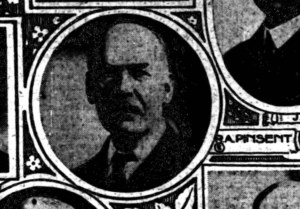
That March, Richard Alfred presided over a “Law Society” meeting held to address the two issues. The need for fusion was partially driven by cost. Was it really necessary to pay for two professionals to conduct relatively simple business? One solicitor arguing for fusion said that barristers were over-charging, particularly in the “Divorce Court” where solicitors were (he thought needlessly) obliged to employ them. However, positions were entrenched and the idea of a merger was firmly rejected (Queenslander: 31st May 1919). A few days later, Richard Alfred again referred to the matter of divorce costs and recommended that the system by which they were calculated should be changed (Western Argus: 23rd September 1919).
On the other issue, the “Law Council” gave its consent to Lord Buckmaster’s “Barristers and Solicitors (Qualification of Women)” Bill by 50 votes to 33. The resolution read: “That, in view of the present economic and political position of women, it is in the opinion of this meeting expedient that the existing obstacles to their entry into the legal profession, should be removed, and the council is requested to report this opinion to the Lord Chancellor, and to support Lord Buckmaster’s Bill.” The Chairman (Mr. R. A. Pinsent) said that “if the’ Bill had been introduced five years ago he did not think the meeting would have been held, but a great deal had happened since then. The war had produced few changes so great as that of the relation, of women to the economic work of the country. The views of the council on the admission of women to the profession had hitherto been divided, and it had not been ascertained whether they were divided now, but in view, of a resolution passed by the associated Provincial Societies, they thought it right to call the meeting” (London Times 1st February, 1919; Evening Post: 6th June 1919).
A decade later, Richard Alfred argued for a pension scheme for lawyers’ clerks, saying that it was too late for some of the older clerks but the scheme would benefit the younger ones (Birmingham Daily Gazette: Thursday 28th February 1929).
Richard’s ability was recognized by his peers: while he was “president” of the “Law Society”, “Birmingham University” conferred on him the “Honorary Degree of Master of Arts.” And in 1928, it awarded “six men of distinction in the legal profession” (including Richard Alfred) the “Honorary Degree of LL.D.” “to mark the inauguration of the Faculty of Law” (The London Times: May 25th, 1928). Another ten years on, the London Gazette informed the world that “The KING has been graciously pleased to signify His Majesty’s intention of conferring Baronetcies of the United Kingdom on the following: – (a list including) -Richard Alfred Pinsent, Esq., LL.D., Senior Member of the Council, and Chairman of the Statutory Discipline Committee of the Law Society” (London Gazette: 31st December 1937).
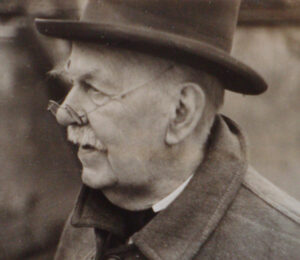
The “Chairmanship of the Disciplinary Committee” was far from being an honorary position. In the 1920s and early 1930s, Richard Alfred oversaw the dismissal of an alarming number of solicitors convicted of malpractice (The London Times: August 14th 1936 etc.). Sir Richard held the position of Chairman of the Committee for many years but eventually resigned, in 1939. According to the Birmingham Post, he had been an “extraordinary representative on the Law Society of England and Wales” (Birmingham Daily Post: Thursday 23rd February 1939). He was eighty seven years old and still going strong! A few years previously, he had attended a reunion of “Old Boys” at “Amersham Hall School” (Reading Standard: Friday 3rd May 19535). I wonder how many of his erstwhile school friends made it.
Sir Richard Alfred Pinsent held the second “baronetcy” granted to the family. Another lawyer, Sir William Pynsent, of Lincoln’s Inn in London, had purchased the first from King James II, in 1685. However, that one was to be short-lived. Sir William’s son, the second Sir William Pynsent, died without living children and somewhat surprisingly gave his lands in Somersetshire and Wiltshire to “The Great Commoner” – William Pitt – in 1765. Pitt promptly arranged for an “Earldom” and was, henceforth, known as the “Earl of Chatham”. Sir “Richard Alfred Pinsent, Bt. of Selly Hill” registered the modern Pinsent coat of arms, which has since passed down through his son, Sir Roy and grandson Sir Christopher Roy to the current baronet. The baronetcy will likely, in the absence of sons, end with him.
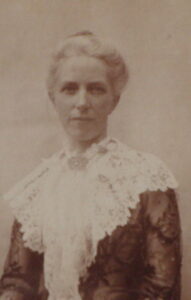
Richard Alfred Pinsent “of Erdington” (in Warwickshire) married Laura Proctor Ryland, the youngest daughter of Mr. Thomas Ryland, Esquire, of “The Redlands, Erdington”, in Walmley Parish Church on 7th August 1878 (Worcester Journal: Saturday 10th August 1878). The Ryland family was well-respected in Birmingham. Louisa Ann Ryland (1824 – 1889) – a lady who had inherited a fortune from her father – gave a considerable amount of land to the Birmingham City fathers in 1873. Some of it was later turned into “Cannon Hill Park”.
Laura Proctor’s father, Thomas Ryland, Esquire’s, personal wealth came from the firm of “Ryland and Proctor” which manufactured “chemical manure” – as fertilizer was charmingly referred to in those days. He owned property, in Aston, at Gravelly Hill in Erdington and at Moxhull and Wishaw, near Sutton Coldfield.
Richard’s brother, Hume Chancellor Pinsent, may have introduced him to the Rylands, as there was a “Mr. Ryland” at “St. John’s College” in Cambridge at the same time as Hume. This was probably one Sidney Proctor Ryland, one of Thomas’s sons. He too would later to become a well-known “solicitor in Birmingham. They were both elected to “Sizarships” (scholarships) at St. John’s in October 1874 (Hour: Saturday 10th October 1874).
According to Leamington Spar Courier (Saturday 12th January 1878) a “Mr. Pinsent” was staying at the “Clarendon Hotel” in Leamington in early January 1878 at the same time as a large contingent of Rylands. Whether this was Hume Chancellor or his brother Richard Alfred is not clear; however, it is interesting to note that the stay occurred shortly before Richard’s marriage to Laura Proctor – the daughter of Thomas Ryland Esq. of The Redlands, Erdington.
The timing of their wedding, in August that year, proved to be very unfortunate! Around then the local papers were full of graphic stories about a local “midwife” called Ann Pinsent [GROxxxx xxxxx] of Nechells in Birmingham who had been charged with concealing the births of illegitimate babies, and burying those that were still-born in her back garden (Edinburgh Evening News: 2nd August 1878). Ann does not fit on any of my trees and is was most likely a “Pinson” or possibly a “Vincent”. Still, it must have been an embarassment.
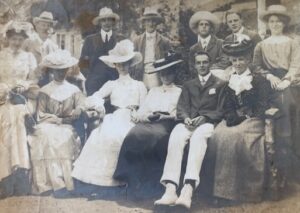
Richard Alfred and Laura Proctor Pinsent had five sons, Roy Pinsent, Clive Pinsent, John Ryland Pinsent, Laurence Alfred Pinsent and Philip Ryland between 1883 and 1897. The first two were born at the family home at “Eversley” in Birches Green, Erdington, and the others after the family moved to “Sellywick House, Northfield in King’s Norton” around 1888. Richard was an active member of the “Erdington Institute” (a discussion and social group) up at least to 1887 (Birmingham Mail: Thursday 8th September 1887).
“Sellywick” was to be Richard and Laura’s home for the rest of their lives. It was a substantial house (16 rooms) with a large garden and extensive grounds. Laura Proctor had up to six servants to help her run the place – at least she did in 1911, before the First World War. One of the less pleasant aspects of life in Birmingham during the “Industrial Revolution” must have been the smoke generated by the industrial activity. It almost certainly reached King’s Norton and to some degree encroached on the family home. If so, it is not surprising that we find the family spending time in Wales, where they could at least see the sun – if and when it shone. Mrs. R. A. Pinsent “and family” were in Tenby in 1888 (Tenby Observer Weekly List of Visitiors and Directory: 24th May 1888) and two of her sons Laurence Alfred and John Ryland were packed off to Penmaenmawr in the summer of 1901 and 1902 (Weekly News and Visitors’ Chronicle for Colwyn: 20th September 1901). There are numerous references to Mr. and Mrs. Pinsent vacationing around the coast around this time and several probably refer to Richard Alfred and his family.
Richard Alfred’s five sons were born into that unfortunate generation that fought in the “First World War”. Roy, John Ryland and Laurence Alfred served in the “Army”, Clive in the “Royal Navy” and Philip Ryland in the “Royal Flying Corps”. Laurence Alfred and Philip Ryland died on active service.
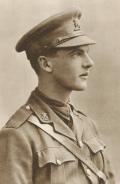
Laurence Alfred Pinsent had been educated at “Winchester College” a “Public” (private) school and at “Trinity College” in Oxford. He had been in the Officers Training Corps. at Winchester and he received his commission in September 1914 (Civil and Military Gazette (Lahore): Thursday 1st October 1914). He joined the Prince of Wales’s “North Staffordshire Regiment” as a “Second Lieutenant” and was promoted to full “Lieutenant” in the “7th Battalion” on 6th March 1915 (Civil and Military Gazette (Lahore): Sunday 11th April 1915). Sadly, he died of wounds he received on 15th August 1915. Apparently he was hit by a stray bullet while serving in the trenches at Gallipoli (Birmingham Daily Post: 21st August 1915). Laurence had successfully extricated his men from a dangerous situation only a few days before and he had just been mentioned “in the dispatches” (Liverpool Echo: 29th January 1916). His photograph was one of many published in “The War Illustrated” (11th September 1915).

Philip Ryland Pinsent, or “Pip” as he was known, also attended “Winchester College”. On leaving school, he went to the “Daimler Works” in Coventry and took a three months’ course in “aeronautical engineering” before joining the “Royal Flying Corps”. He obtained his commission in March 1916 and was sent to Allonville in France to join “34th Squadron” as an observer in July. He developed a reputation as a skillful pilot and director of artillery fire. However, his plane was hit by canon fire from an unseen enemy on September 23rd 1916. The German pilot had turned off his engine and silently come at him from behind. Philip died of his wounds the following day – the eve of his nineteenth birthday. He is now buried in the cemetery at Allonville (www.winchestercollegeatwar).
Tim Gell quotes the memoirs of one of Laura’s nieces as saying that he was originally buried near the site of the crash with a small wooden cross to mark his grave and that “Aunt Laura” arranged for this to be returned to the family when his body was moved. She placed it in a small shrine in her garden (Stories, Memories and Histories: Public Member Stories: Ancestry.ca). Richard Alfred’s three elder sons Roy, Clive and John Ryland survived the war. They married and had children and their lives are described elsewhere. Captain William Charles Coleman Gell, of the Royal Warwickshire Regiment articled with “Messrs. Pinsent and Co.” before the war and was awarded the Military Cross in 1917 (Kenilworth Advertiser: Saturday 6th January 1917).
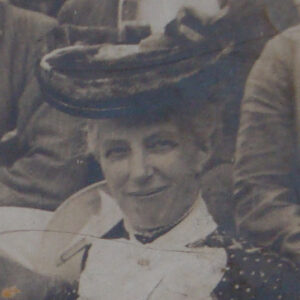
Richard Alfred and Laura were still living at “Selly Wick” when the census was taken in 1921. However, their three remaining sons were long gone. Laura had a large house to manage – which she did with the help of four servants; a cook, parlour maid, house maid and kitchen maid.
Richard Alfred was much affected by the loss of his sons, and of his two nephews (Hume Chancellor’s sons) who also died during the war. He was also distraught by the loss of several past members of “Pinsent and Co”. In February 1921, he wrote an open letter to the legal profession describing the “Law Society’s” plans for the unveiling a memorial plaque to those that had fallen. He encouraged relatives to get in touch with the “War Memorial Trustees” at the “Law Society’s Hall” in Chancery Lane regarding the event – as there would not be enough room to accommodate the relatives of all the fallen at the unveiling (Yorkshire Post and Leeds Intelligencer: 3rd February 1921).
Many years later (after the “Second World War”) Sir Richard and his family donated a 5,200 square yard freehold site on the Pershore Road to the “War Memorial Appeal” of the “Selly Park, Birmingham Branch of the British Legion”. This memorial was to be a new branch headquarters costing approximately £25,000 (London Times; 31st January 1946). Sir Richard’s son, Mr. Roy Pinsent opened a temporary headquarters in a relocated and repurposed army hut in November 1947 (Birmingham Daily Gazette: Monday 17th November 1947).
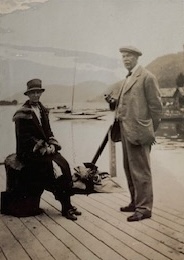
Coming from the wealthy upper middle-class, Richard and his wife, Laura Proctor (née Ryland) were expected to give to charity in those days, and their names appear on numerous subscription lists in local papers. They gave £250 0s 0d (over five years) to the “Bishop of Birmingham” in response to his appeal on behalf of Birmingham’s newly founded “Art Gallery” (Birmingham Daily Gazette: Saturday 7th July 1906). After the war, he gave 50 guineas to the “Westminster Abbey Fund” (London Times: 5th February 1921).
The local papers also show that Mr. R. A. Pinsent made regular donations to other charitable causes. He gave a subscription of £2 2s to the “General Hospital Fund” in May 1882 (Birmingham Daily Post: 3rd June 1882), and an unnamed amount to the Erdington Dispensary in 1886 (Warwickshire Herald: Thursday 29th April 1886). That was before his move to King’s Norton. This is to say nothing of the £1 1s to the “Womens’ Hospital Fund” in 1888 and countless other large and small donations over the years.
Before the War, Richard and Laura had supported the developing arts scene in Birmingham. The local papers tell us that Richard Alfred attended a meeting of the “General Committee” of the “Birmingham Music Festival” along with his partner-in-law, Mr. Thomas Siviter Smith, in 1882 (Birmingham Daily Post: 16th February 1882). He gave £5 5s to the organizers when it opened in 1888 (Birmingham Daily Post: 29th August 1888) and was equally or, at times, more, generous to the festival in other years -he gave £21 in 1909 (Birmingham Mail: Friday 8th October 1909). It was clearly a priority.
Richard Alfred’s brother, Hume Chancellor, married Ellen Frances Parker in July 1888, and the two of them and their respective spouses were invited to the “Mayor’s Annual Ball” at the “Council House” in 1890 (Birmingham Daily Post: 9th January 1890) – and in other years, besides. Costume balls were in vogue in those days. Richard and Laura were, apparently, the “Laplanders” who attended the Lord Mayor’s (costume) ball in 1881 (Birmingham Daily Post: 6th February 1891)!
When the “Society for Devonians in Birmingham and the Midlands” was formed in 1892, R. A. Pinsent (Devonport) was one of several “vice-presidents” (Western Times: 17th October 1892). This was another of his on-going interests (Exeter and Plymouth Gazette: Monday 24th November 1902, etc.). It is nice to know that he had not forgotten his Devon roots.
The Pinsents’ social circle overlapped that of the Rylands – and they were frequently to be found attending funerals such as that of Mr. William Fowler, J.P. in Erdington in 1887 together: (Warwickshire Herald: Thursday 2nd June 1887) and other more enjoyable events. Richard Alfred and Hume Chancellor and their friends attended many so-called “fashionable” weddings over the years – particularly before the first war: Who can forget Miss Ethel Wilkinson’s marriage to Mr. Arthur Woodall Heaton of Church Hill, Handsworth, in October 1896 (Warwickshire Herald: Thursday 15th October 1896)? The press loved it.
One wedding is of particular interest to us: Dorothy Helen Ryland, one of the daughters of the previously mentioned Sidney Proctor Ryland, married Mr. Edwin Charles Willoughby at Charlton Kings, near Cheltenham in September 1909 (Cheltenham Chronicle: 18th September 1909). The bridegroom’s mother was Margaret Jane Pynsent of Northam, in Devon and she and her two married sistersFlorence Lombe Reynolds-Reynolds and Jane Augusta Rawlins were there with their respective families. Clearly the Pynsents, (who come from the HENNOCK branch of the family) and the Rylands who, lived in Cheltenham, knew each other well. Many years later, in the 1930s, Richard Alfred’s son, Roy Pinsent was invited to “give away” Dorothy Helen Willoughby’s daughters when it became their turn to marry!
The “Birmingham Pinsents” attended their fair share of family and other high-profile funerals in the early 1900s and “Pinsent and Co.” was frequently called upon to probate family estates. When Richard Alfred Pinsent’s sister-in-Law, Miss Mary Proctor Ryland died in 1903 (probably of cancer) the family rallied round: it fell to Mary’s brother Howard Proctor Ryland and her brother-in-law Richard Alfred Pinsent to handle her estate. She left £10,000 in trust for her niece Gertrude Jennie Ryland Gell, and £1,000 to her father, Thomas Ryland – who probably had no pressing need for it! She gave her jewelry to her sister, Richard Arthur’s wife, Laura Proctor, she made other smaller bequests and left the residue of her estate to her various nieces and god-children (Coleshill Chronicle: Saturday 14th and 28th November 1903).
Richard Alfred’s father-in-law, Thomas Ryland, J.P., Esquire died at “The Redlands,” Gravelly Hill in Erdington in March 1905. He left an estate valued at £171,832 gross, and with £121,876 personality (Coleshill Chronicle: Saturday 22nd April 1905). He asked that his land, his stocks and his bonds to be divided among his many children and their offspring. However, most of it went to his eldest son, Howard Proctor Ryland. His daughter, Laura Proctor, received £13,000 (Leamington Spa Courier: 21st April 1905). That was a considerable amount in those days.
It was a rough few years for the Rylands. Howard Proctor Ryland of Moxhull Park died in January 1906 and it was left to his son Thomas Howard Ryland and Richard Alfred Pinsent to probate his estate – valued at £175,077. After providing for his widow and daughter and other family members, Howard left the residue to his son Thomas Howard (Coleshill Chronicle: Saturday 6th January and 3rd February 1906).
In 1908, the family finally had something to cheer about. Gywneth Howard Proctor (one of Howard’s daughters) married into the Vickers family. The tide had turned and this time screeds of Rylands and Pinsents (and others!) turned out for a “fashionable wedding” (Coleshill Chronicle: Saturday 31st October 1908).
In the summer of 1906, the “Bishop of Birmingham” decided to reorganize the boundaries of several of the parishes in the Sutton Coldfied area and, for this, he required the agreement of Thomas Howard Ryland – who held an interest in the “advowson” or right to appoint to the benefice of Cudsworth (London Gazette: 3rd August 1906). In August 1929, Thomas (through his solicitor, Richard Alfred Pinsent) sold his two-thirds interest to the “Bishop of Birmingham.”
Laura Proctor, wife of Richard Alfred Pinsent died on 27th October 1931 and the probate of her will was granted to her husband and her son Roy. Her effects were valued at £13,053 16s 3d (Calendar of Grants of Probate and Letters of Administration). Sir Richard Alfred stayed on at “Selly Wick” and died there on 2nd October 1948. He was aged ninety-six. There was a Memorial Service held for him at St. Stephen’s Church, in Birmingham on 7th October. His estate was valued at £71,024 (The Times: 11th January 1946).
Family Tree
GRANDPARENTS
Grandfather: Thomas Pinsent: 1782 – 1872
Grandmother: Mary Savery: 1780 – 1859
PARENTS
Father: Richard Steele Pinsent: 1820 – 1864
Mother: Catherine Agnes Ross: 1830 – 1906
FATHER’S SIBLINGS (AUNTS, UNCLES)
Mary Savery Pinsent: 1806 – 1884
Thomas Pinsent: 1807 – 1826
Anna Pinsent: 1809 – xxxx
Elizabeth Savery Pinsent: 1811 – xxxx
Sarah Savery Pinsent: 1812 – 1813
Savery Pinsent: 1815 – 1886
Sarah Pinsent: 1817 – 1847
John Ball Pinsent: 1819 – 1901
Emma Pinsent: 1823 – 1831
MALE SIBLINGS (BROTHERS)
Hume Chancellor Pinsent: 1857 – 1920
Please use the above links to explore this branch of the family tree. The default “Next” and “Previous” links below may lead to other unrelated branches.