Please use the above links to explore this branch of the family tree. The default “Next” and “Previous” links below may lead to other unrelated branches.
Please use the above links to explore this branch of the family tree. The default “Next” and “Previous” links below may lead to other unrelated branches.
Please use the above links to explore this branch of the family tree. The default “Next” and “Previous” links below may lead to other unrelated branches.
Please use the above links to explore this branch of the family tree. The default “Next” and “Previous” links below may lead to other unrelated branches.
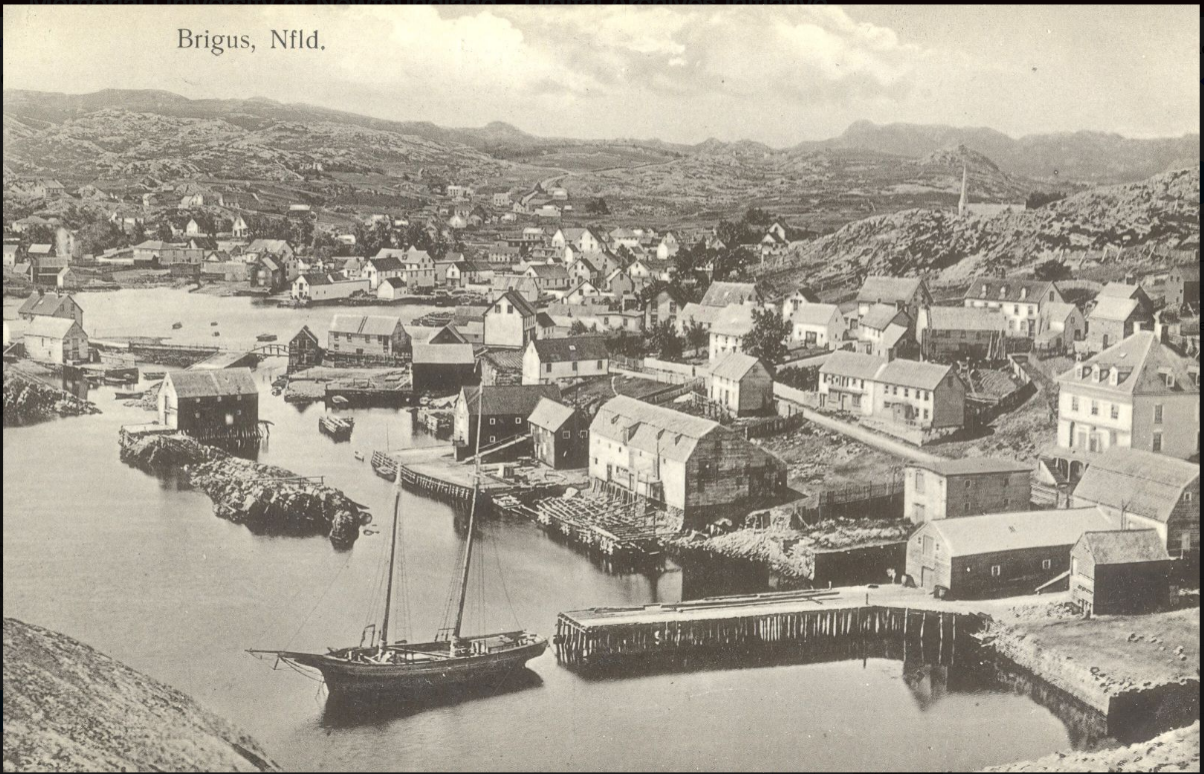
Brigus, Newfoundland, via Memorial University of Newfoundland
Thomas Williams Pinsent was the second eldest son of Robert John Pinsent, a Magistrate in Brigus, Newfoundland, by his wife, Louisa Broome Williams. He was born in 1837 and grew up alongside two brothers (Robert John and Charles Speare Pinsent) and two sisters (Louisa Williams and Mary Elizabeth Pinsent. The boys were educated at Harbour Grace Grammar School and went onto successful careers in St. John’s. Their lives are discussed elsewhere.
Harbour Grace Grammar School, 1845-1902.
Thomas trained as an accountant and worked for the “General Water Co., of St. John’s” in the 1870s. He had the awkward responsibility of collecting the local water rates – which, unfortunately, did nothing to endear him to his friends, or the public at large.
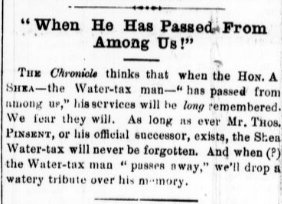
Evening Telegram, July 6, 1880.
A wistful item published in the Evening Telegram (6th July 1880) states: “The Chronicle thinks that when the Hon. A. Shea—the Water-tax man—”has passed from us,” his services will be long remembered. We fear they will. As long as ever Mr. Thos. Pinsent, or his official successor exists, the Shea Water-tax will never be forgotten. And when (?) the Water-tax man “passes away”, we’ll drop a watery tribute over his memory.”
Thomas’s family’s adherence to the temperance movement may have caused some (one hopes good-natured) ribbing too. An item placed in the “Patriot” newspaper (Monday 24th December 1877) made doubtful comparisons between Mr. Thomas W. Pinsent’s watery and unsophisticated grog and the “expressed juice of the sugar cane!”
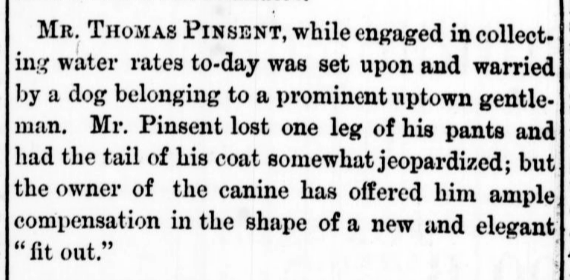
Evening Telegram, June 18, 1881.
The position was not without its dangers either as: “Mr. Thomas Pinsent, while engaged in collecting water rates today was set upon and worried by a dog belonging to a gentleman. Mr. Pinsent lost one leg of his pants and had the tail of his coat somewhat prejudiced; but the owner of the canine has offered him ample compensation in the shape of a new and elegant “fit out”. (Evening Telegram: 18th June 1881). Thomas was not impressed; he sued the gentleman for $200 (Evening Telegram: 20th June 1881) but eventually settled for $25 (Evening Telegram: 26th November 1881).
Evening Telegram, May 19, 1882.
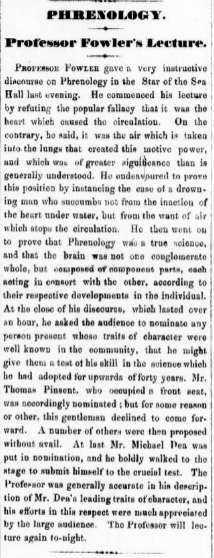
In a world where there were only limited entertainments available, public lectures were far more popular that they are today and Thomas attended a series on “Phrenology” put on by a Professor Fowler in May 1882. Unfortunately, he made the mistake of sitting in the front row: “At the close of his discourse, which lasted over an hour, he (Professor Fowler) asked the audience to nominate any person present whose traits of character were well known in the community, that he might give them a test of his skill in the science which he had adopted for upwards of forty years. Mr. Thomas Pinsent who occupied a front seat, was accordingly nominated; but for some reason or other, this gentleman declined to come forward. A number of others were then proposed without avail. At last Mr. Michael Dea was put in nomination, and he boldly walked to the stage to submit himself to the crucial test” (Evening Telegram: 19th May 1882). I am sure Thomas had his reasons!
In another wistful look – this time back to the 1860s, the Evening Telegram mentions the “water question” and the authorities seizing property for non-payment and concludes that nowadays “Mr. Thomas Pinsent is the tax gatherer, and they say he is the best dun in the country” (Evening Telegram: 8th October 1883). A “dun” is, by definition, someone who makes demands for payment. Yet another somewhat poetic item in the Evening Telegram (28th February 1885) goes “There, like dew from nature’s still, or Water from our hydrant’s rills, It flows for all (see Pinsent’s bills), Or Ask at Devon Row.”
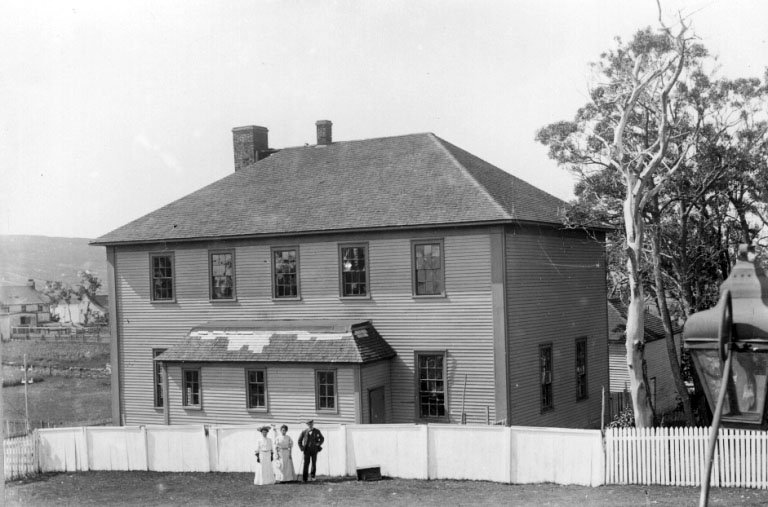
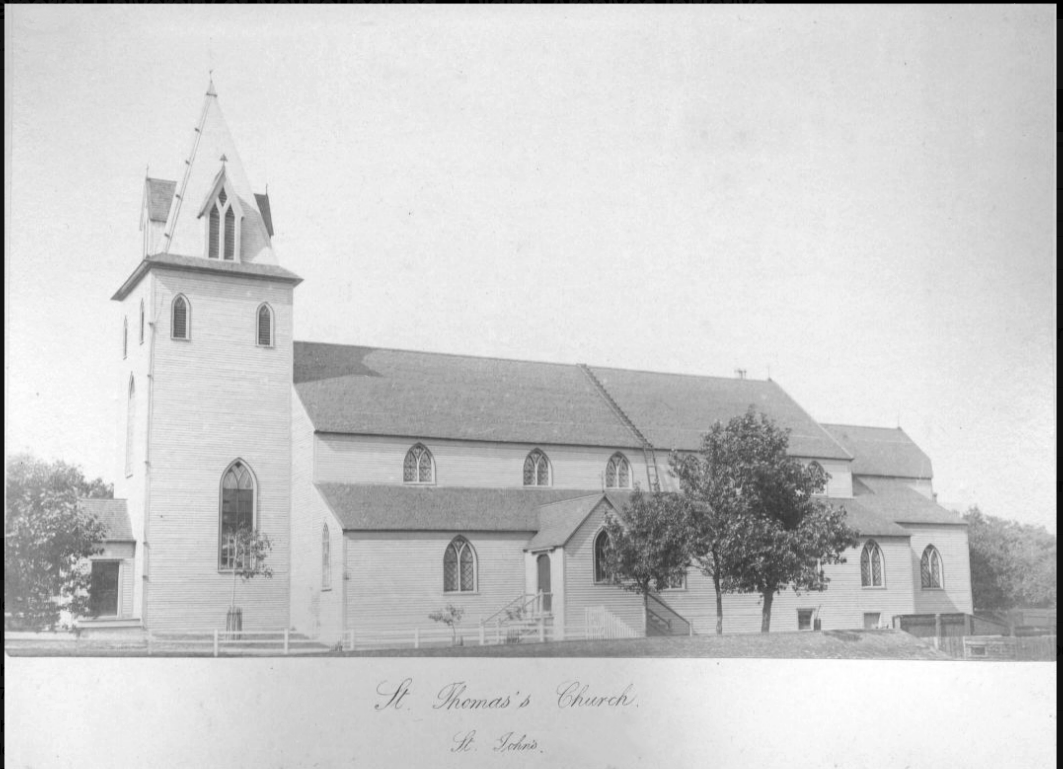
St. Thomas’s Church, St. John’s, via the Memorial University of Newfoundland.
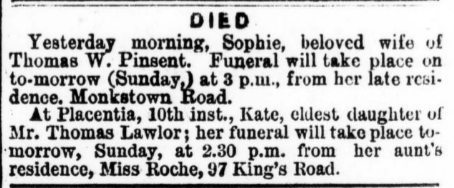
Thomas was living with his father (Lovell’s Newfoundland Directory, 1871) in Cochrane Place,on Military Road while working for the water board. He married Sophia Milroy – although I do not know where or when – and they moved to Catherine Row on Monkstown Road, in St. John’s and had a child, Arthur Alfred Pinsent on 12th June 1885. Sadly, Sophia died in childbirth. It was too much for Thomas and he decided to move house. His furniture was auctioned off on 20th June the same year. His son survived and was baptized in St. Thomas’s Parish Church on 28th June 1885.
Evening Telegram, June 13, 1885.
Thomas continued to collect water taxes – and to meet periodic resistance that was generally good-natured but occasionally otherwise. On one occasions he visited a “Senor Morey” – A Mexican resident who offered to pay part of his bill in Mexican silver dollars. Thomas was having none of it. He considered the debt unpaid and arranged for the foreign gentleman’s water to be cut off. Senor Morey wrote to the manager of the “General Water Company” saying that he was joking and that he was more than willing to adjust the value of the currency according to the current rate of exchange. However, as he had been insulted, he would insist that he pay in Mexican dollars (Evening Telegram: 14th February 1887). Judge Conroy resolved the issue in the Central District Court. The Water Company got its money but it had to accept some of it in Mexican dollars (Evening Telegram: 16th February 1887)! Perhaps the citizens would have been less flippant about their water taxes if they had realized that approximately three quarters of the city – including the cathedral and the Duckworth and Water Street commercial centre was to be destroyed by a fire in July 1892.
Thomas died of bronchitis in January 1890 and his household furnishings on Queen’s Road were sold off in April (Evening Telegram: 15th April and 22nd April 1890). His son, Arthur Alfred Pinsent was five years old when he died of diphtheria, in October that year (Evening Telegram: 22nd October 1890). Thomas’s younger brother, another accountant, Charles Speare Pinsent administered the estate (Evening Herald: Tuesday 26th August 1890.)
Please use the above links to explore this branch of the family tree. The default “Next” and “Previous” links below may lead to other unrelated branches.
Thomas Ogden Pynsent (II) was the fourth and youngest son of Joseph William Pynsent by his wife Nellie (née Garland). He was born at Bondi, in Sydney shortly before his father took up a farm and dairy (later called Pynsent’s Dairy) in Marrickville, another suburb of Sydney. He was part of a large, Catholic, family and grew up with ten siblings (three brothers and seven sisters), all of whom married.
Thomas worked in the family dairy as a “carter” and he later became a “lorry” (truck) driver. Sydney’s Electoral Rolls tell us that he was living with his brother Charles and his mother, Nellie (née Garland) on Duke Street in Canterbury in 1930. He married Lillian Mary May Clough the following year and then moved to Rogers Street, in Lang (near Sydney) sometime before 1936. They started their family there, and moved to Parramatta. The Electoral Rolls show that Thomas was a “depot hand” living on Bowden Street in Parramatta in 1943. Six years later, he was a “milk carter” on Francis Road in Bennelong. The family finally settled on Peggy Street in Merrylands West (an outer suburb of Sydney) in 1954. By then Thomas was firmly established as a “lorry driver.” He was still living in Merrylands in 1980.
Thomas and Lillian appear to have had a large family (three boys and six girls) but I am unable to supply the birth dates or even birth order for all of the children. One of the girls, Rosemary Pynsent, died at the age of eight in 1953. Her death was announced as follows: Death: Pynsent: Rosemary: February 16th, 1953, at hospital; beloved daughter of Lillian and Thomas Pynsent of 1 Peggy Street, May’s Hill and dear sister of [Daughter (GRO1624)], Nellie, [Daughter (GRO1625)] … … aged 8 years. See Wednesday’s “Herald” for funeral notice (Sydney Morning Herald: Tuesday 17th February 1953). Their son Thomas Henry Pynsent also died young. He died within a week of birth and was buried with his grandmother, Nellie (née Garland) in 1937.
I do not know what happened to the other two sons Norman Michael Pynsent and Son (GRO1689). However, Norman seems to have died in Kington in New South Wales. Whether he had had a family or not, I do not know. His brother (GRO1689) is an enigma. Perhaps he married. I know nothing about him. Similarly, the girls may have married and had children.
Thomas Ogden Pynsent (II) died on 18th November 1980, aged 75 years and his widow, Lillian Mary May Pynsent died on 20th May 1994, at the age of 80 years. They were buried in Rookwood Catholic Cemetery, in Cumberland, New South Wales, alongside their predeceased daughter Rosemary Pynsent and close to other deceased relations.
Please use the above links to explore this branch of the family tree. The default “Next” and “Previous” links below may lead to other unrelated branches
Please use the above links to explore this branch of the family tree. The default “Next” and “Previous” links below may lead to other unrelated branches.
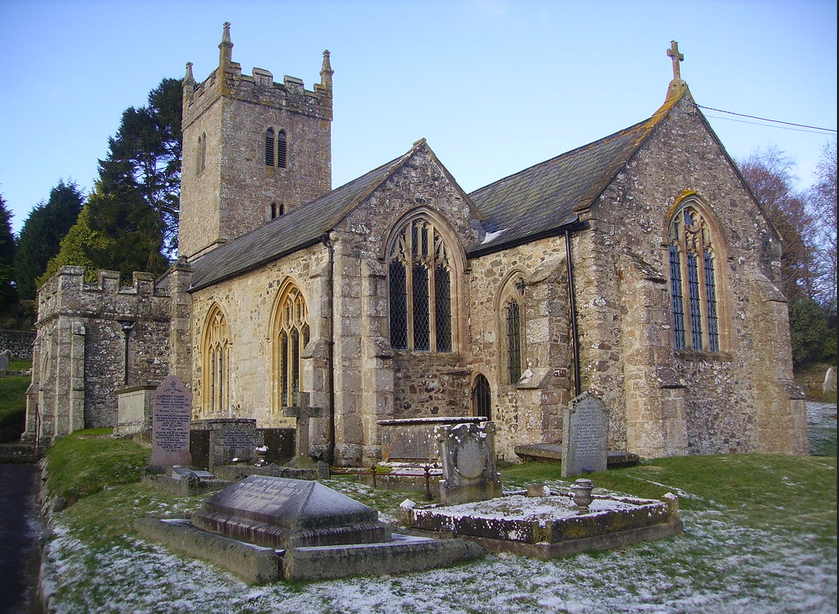
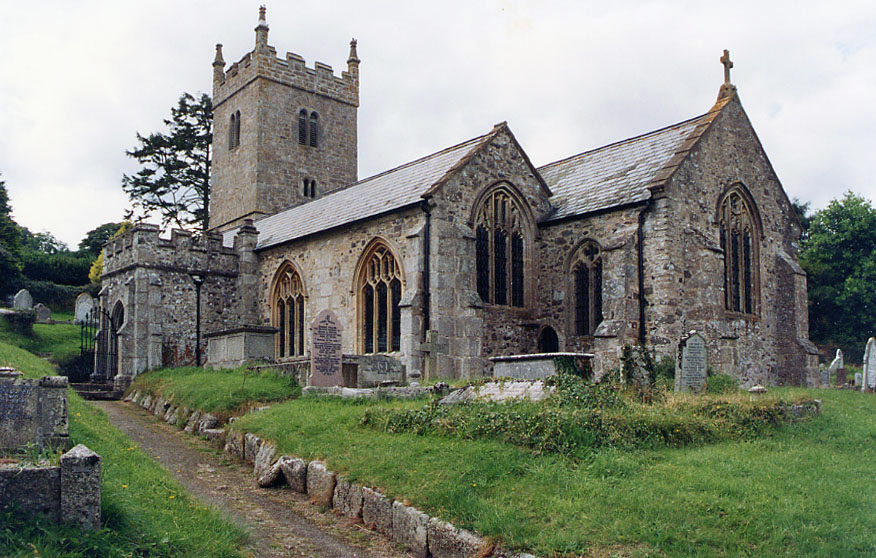
The Hennock Parish Church in Devon, via Steve Stoneman on Flickr.
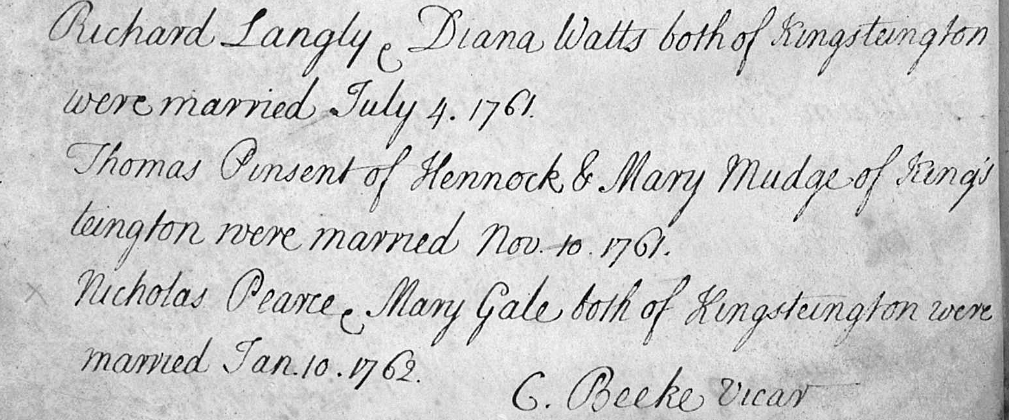
Thomas Pinsent “the younger of Pitt” was the eldest son of Thomas Pinsent and Mary (née Gale) of Pitt Farm, near Chudleigh Knighton, in Devon. He married Mary Mudge, in Kingsteignton, in 1761. He was over forty years old at the time – which seems late for an affluent farmer but there is nothing to suggest an earlier marriage and no sign of his having had children either before, or after, the marriage.
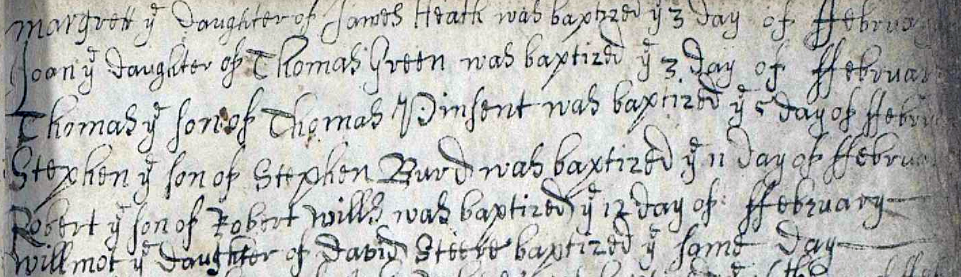
Thomas and Mary marry on November 10, 1761.
His father and mother were still alive when he married and he was referred to as “Thomas Pinsent, junior, yeoman.” His parents died in 1777 and 1774 respectively and he inherited his father’s land in Hennock, Teigngrace and elsewhere. His younger brothers, Robert, Gilbert and John were in commerce in Newton Abbot.
Hennock Parish Land Tax Assessment: 1780-1832. Transcribed from microfilm.
Thomas Pinsent “the younger” probably acquired Lower Albrook Farm in Kingsteignton (Land Tax £1 6s 6d per annum) through his marriage to Mary Mudge. Albrook is near Sandygate just to the north of the town of Kingsteignton. He certainly controlled it by 1780 and managed it, along with Pitt, in Hennock, and “Diamond’s Delight”, in Teigngrace until his own death in 1802.
Thomas had no sons or daughters to help him run the farm, so he must have relied on outside help. As a landowner, he would have been expected to take on apprentices. Some of which were appointed by Overseers, who allocated them according to a set rota.
The Parish Overseers tried to limited the number of new settlers in the parish – especially if they thought that they might become chargeable on the parish rates someday. They conducted “Settlement Examinations” to determine if an individual had the right of residence in their parish. If not, they were summarily kicked out and returned to their parish of birth.
Transcribed text of Chudleigh Settlement Examination in 1781.
The Overseers in Chudleigh examined Jonathan Bird in 1781. He testified that he had been bound as an apprentice to Thomas Pinsent “of Hennock” until he was twenty-one, and had then returned to Chudleigh to get married. The Apprentice Register for Kingsteignton shows that the Overseers assigned John Goodwin to Thomas Pinsent as an apprentice for Lower Albrook in 1791, and William Northway as apprentice for the same place in 1797.
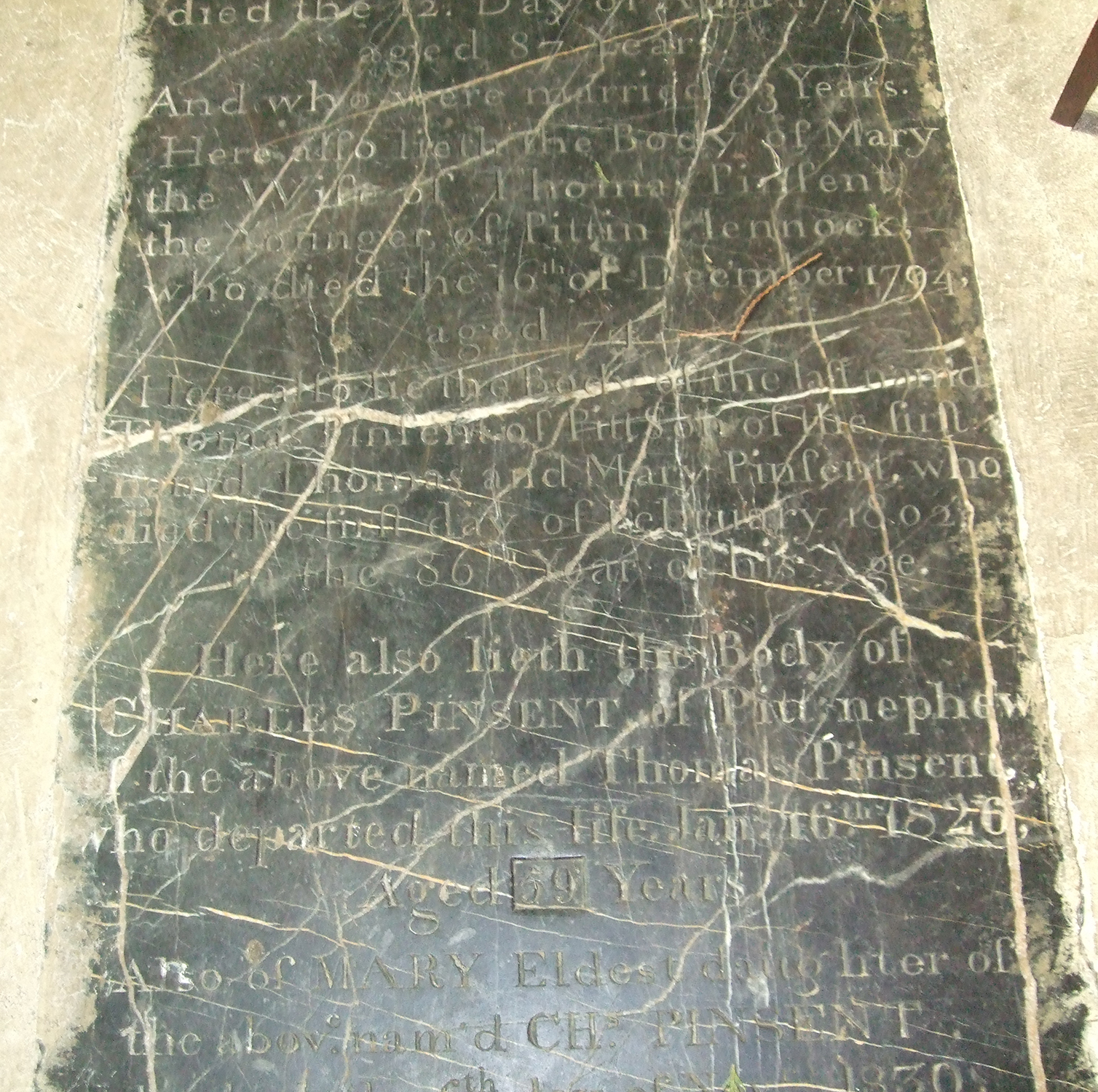
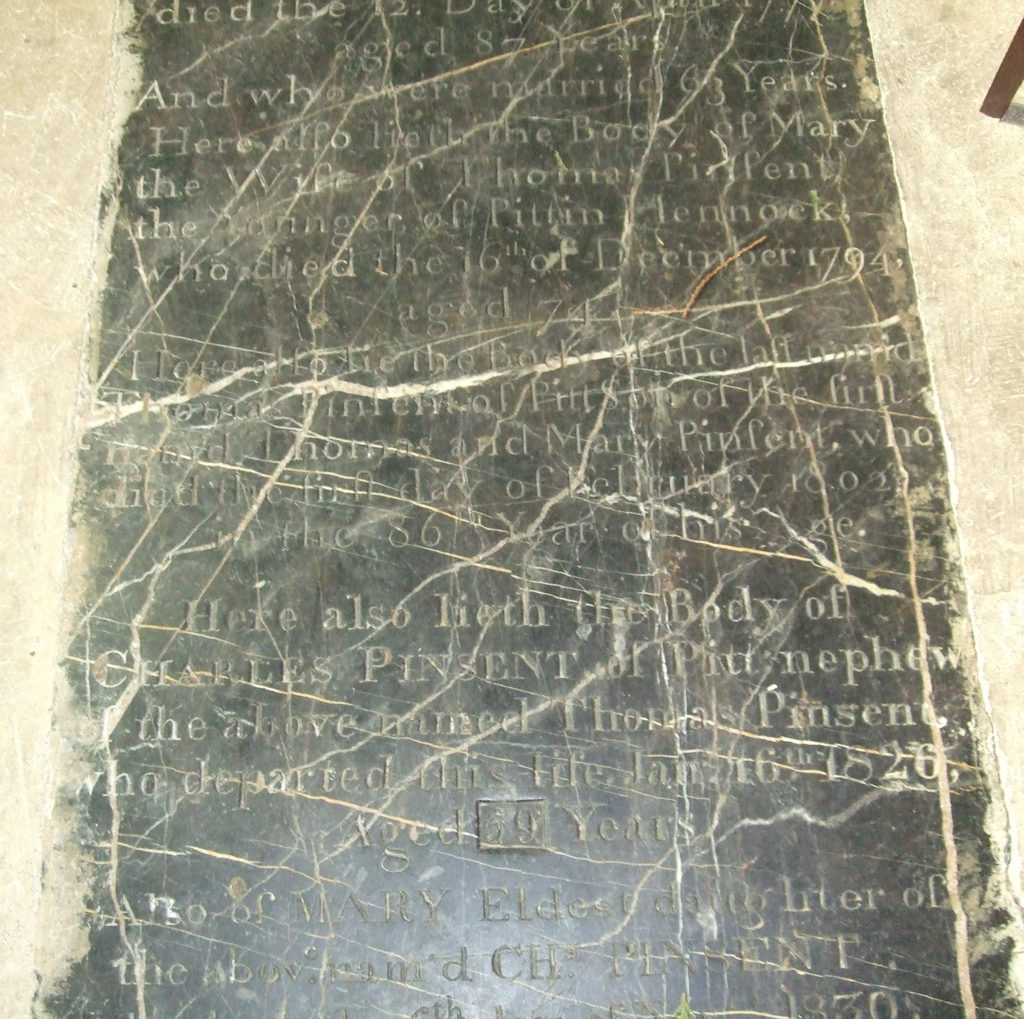
The memorial in Hennock Church.
The memorial in Hennock Church that notes the passing of Thomas Pinsent (“the elder”) of Pitt in 1777 and of his wife, Mary, in 1774 (above) also refers to the death of Mary, the wife of Thomas Pinsent (“the younger”) of Pitt, who died in 1794, and of Thomas, himself, who died in 1802.
Thomas Pinsent left a Will that was destroyed when the Exeter Probate Office was bombed during the Second World War. Fortunately, its content had previously been summarized in the “Death Duty Register for Durham, Ely, Exeter, Oxford (1796-1811)”.
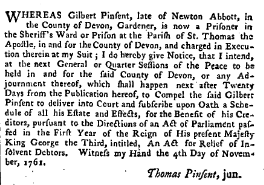
London Gazette, November 3, 1961.
The Will must have been written before 1791 – as Thomas’s brother Gilbert was still alive and his nephew Joseph was still under 21 years of age.
Gilbert was the least successful of Thomas’s brothers and he wound up in debtor’s prison in Exeter, in 1761. It fell to Thomas Pinsent “junior” to bail him out and see that he paid off his creditors (London Gazette: 3rd November 1761).
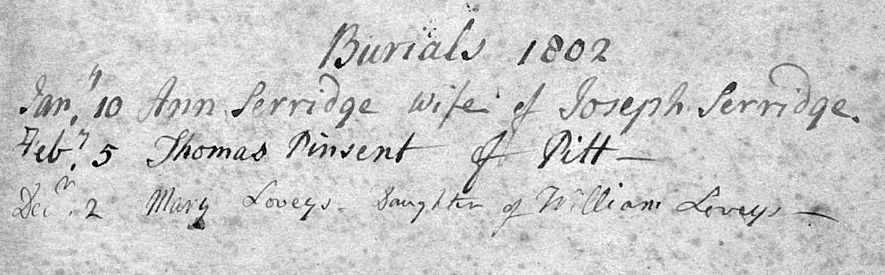
Thomas is buried on February 5, 1802.
Thomas left a bequest to Gilbert (not that he was alive to receive it as he had died in 1794) and gave relatively large bequests to the sons of his then deceased brothers Robert (i.e. Charles, William and John) and John (i.e. Gilbert, Robert, William, Joseph, John and Charles). Their lives are all discussed elsewhere.
Thomas made John’s son Charles – who was by no means the eldest – his principle beneficiary. He inherited Pitt and the rest of Thomas’s land holdings. Brother John had died relatively young (1772) and it seems likely that his younger children, including Charles and Joseph had moved to Pitt to live with their uncle. Charles seems to have taken to farming and it is likely, given Thomas’s advanced age (and absence of children) that Charles had been running the farm for some time.
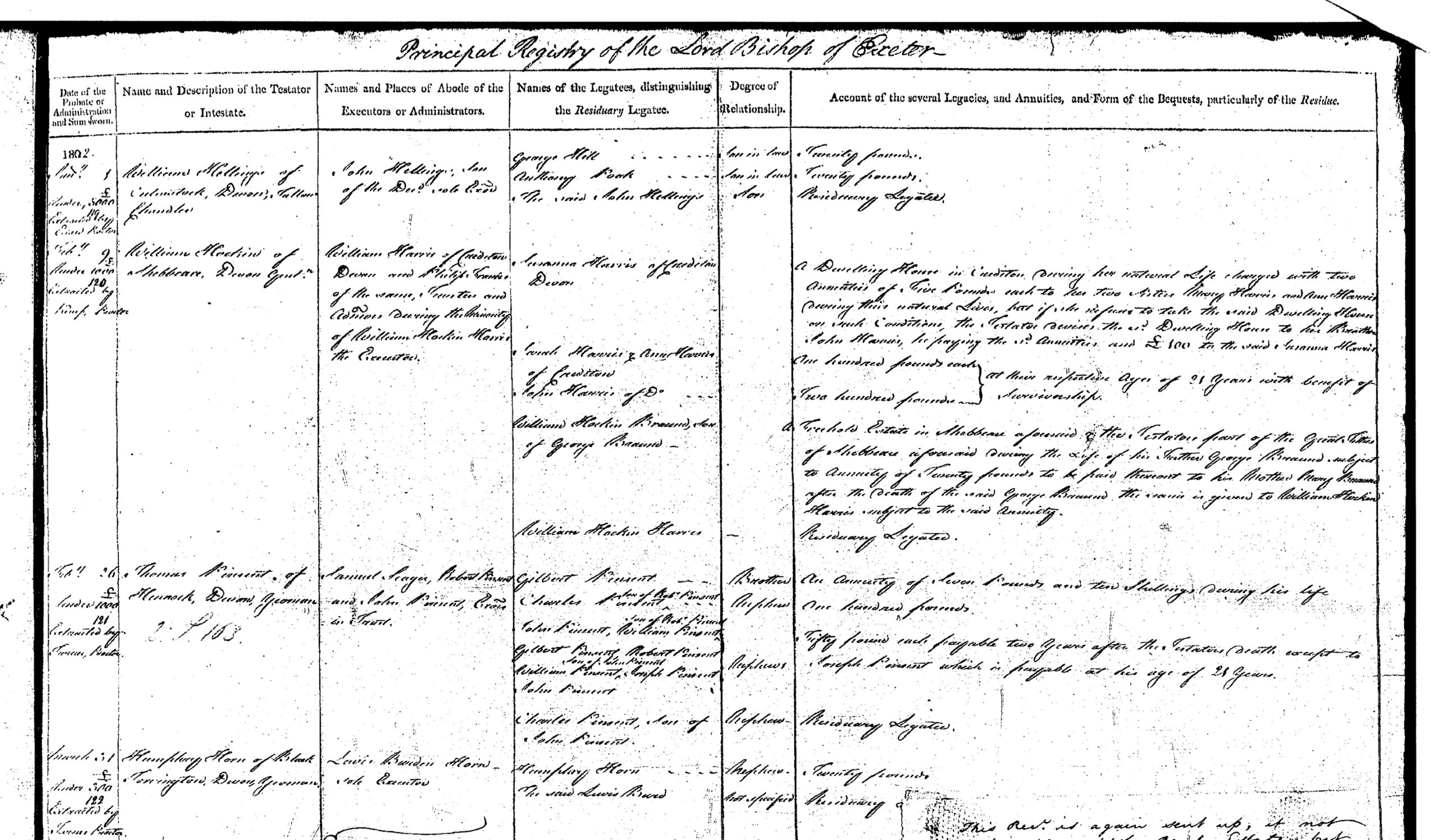
Thomas’s will appears in the Principal Registry of Bishop of Exeter
Charles took responsibility for payment of the Land Tax for Pitt (£1 0s 6d per annum) and for “the Marshes” (10s per annum) in 1791 – when he was 25 years old.
Please use the above links to explore this branch of the family tree. The default “Next” and “Previous” links below may lead to other unrelated branches.
Urith Pinsent: 1714 – 1751 Thomas Pinsent: 1717 – 1802 (Farmer at Pitt, Hennock: Married Mary Mudge of Kingsteignton, 1761) Julian Pinsent: 1719 – 1721 Robert Pinsent: 1721 – 1783 (Sergemaker and Shopkeeper, Newton Abbot: Married Eleanor Shapley of Wolborough, 1744) Gilbert Pinsent: 1724 – 1794 (Woolcomber of Newton Abbot: Married (1) Rebecca Collins, 1746; (2) Sarah Lea, 1791) Julian Pinsent: 1726 – xxxx John Pinsent: 1728 – 1772 (Merchant of Newton Abbot: Married Susanna Pooke of Wolborough, 1750) Mary Pinsent: 1731 – xxxx
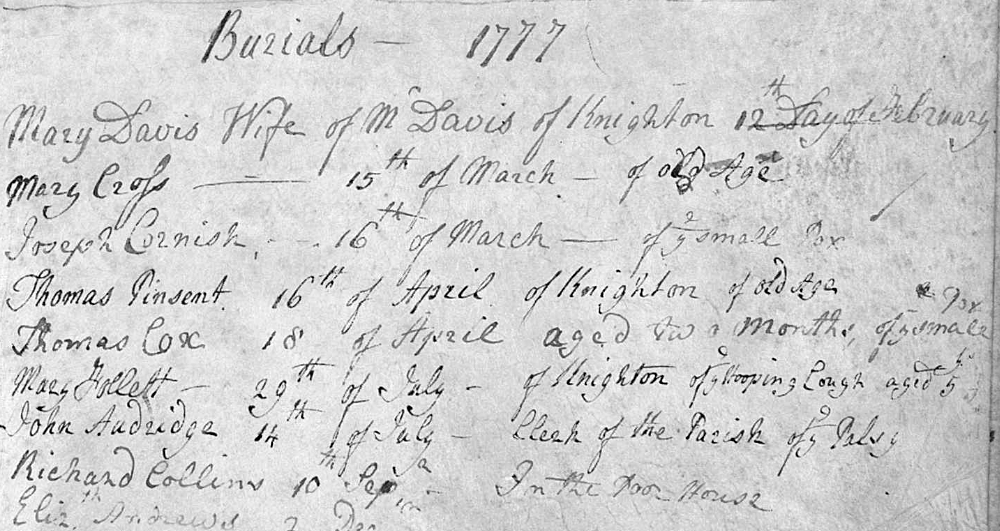
A memorial in St. Mary’s Parish Church, in Hennock, states: “Here lieth the Body of Mary the Wife of Thomas Pinsent of Pitt in this Parish who died the 5th of April 1774 aged 84 Years: Also the Body of Thomas Pinsent her Husband who died the 12th Day of April 1777, aged 87 Years: And who were married 63 years.”
Given the dates, this implies that the Thomas who married Mary was the son of Thomas Pinsent and Ann Waters. He was was baptized in Bovey Tracey in 1690/1691. It reassures us that Thomas Pinsent of “Pitt” was the son of an earlier Thomas Pinsent.
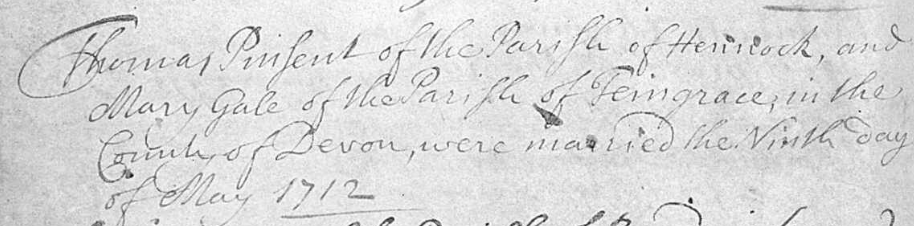
Thomas “of Pitt” married Mary Gale of Teigngrace in 1712 – which is, again, broadly consistent with the inscription. Elsewhere, he is described as being “a tanner of Hennock,” so it seems likely that he worked with his father (?), his grandfather (?) (two more Thomases!) and a putative elder brother (Simon Pinsent) at the family’s “tannery” at “Slade”, near Slade Cross, before settling at “Pitt.” There are gaps in the birth records so Simon’s position in the family is somewhat in doubt. His life is described elsewhere.
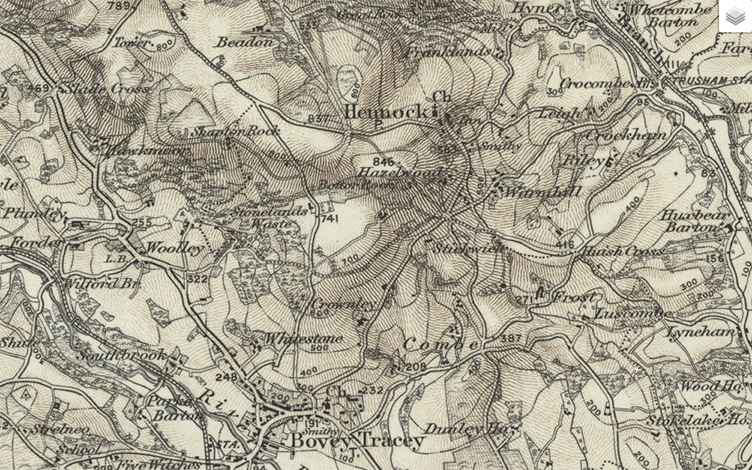
Map of Slade and Huxbeare.
Simon seems to have taken over the family’s “tannery” after his father (?) Thomas Pinsent “senior” and his grandfather (another Thomas Pinsent) died – in 1696 and 1701 respectively. He paid the parish rates for “Slade” (1s 4d per annum), through until 1733 and perhaps beyond, but the data are missing.
In 1723, Simon and Thomas Pinsent “ofHennock” both appeared before the Magistrates at the local Quarter Sessions and swore an oath of loyalty to King George I (QS17/2/1/2 & QS17/2/4/7c) after a failed Jacobite plot in support of “Bonnie Prince Charlie.” The oath was compulsory, and it provides a useful look at who was who in the various parishes around that time.
Simon had several children including Hugh who was born in 1708. He also worked in the tannery and, I would have thought, it would have been passed on to him; however, it seems to have gone to Thomas instead – perhaps Hugh was deemed too young to manage the operation. Simon’s other sons, somewhat enigmatically, seem to disappear from the district. Perhaps they died.
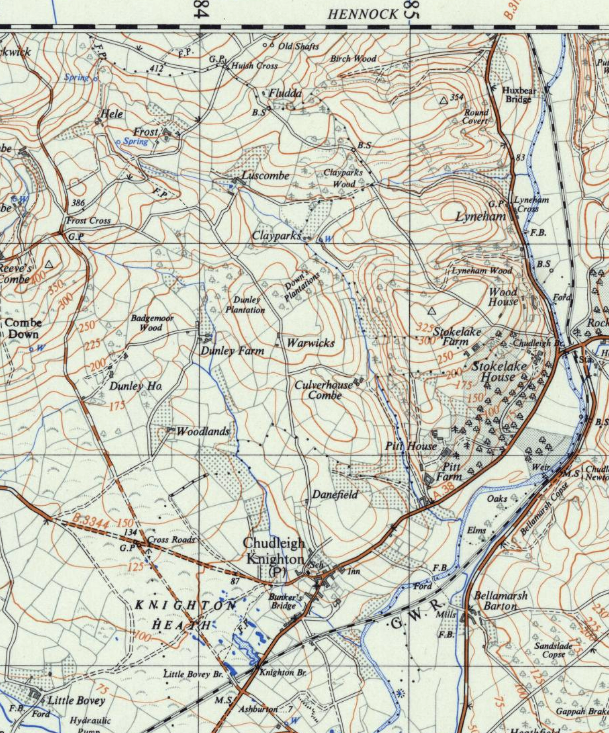
Map showing Pitt Farm near Knighton in Hennock.
Why our Thomas Pinsent switched from tanning to farming is not clear. However, if his elder brother (?) Simon inherited the tannery, he might well have looked elsewhere. “Pitt” is close to “Knighton” near the southern border of the parish and it worth noting that the Pinsents of “Knighton,” who belonged to the DEVONPORT branch of the family, died out in 1711, the year before our Thomas married. He may have inherited or purchased “Pitt Farm” and land that had previously belonged to them.
Thomas married Mary Gale of Teigngrace, in 1712, and he probably acquired “Diamond’s (a.k.a. Dymond’s) Delight” (Land Taxed at 10s per annum) in that parish as part of a marriage settlement. He paid land tax for it – or at least his son did from 1780 onwards. Thomas’s grandson, Charles Pinsent sold “Diamond’s Delight” to James Templar in 1802. Thomas may also have acquired “Dart’s, otherwise Pinsent’s” (Taxed at £1 18s per annum) in Teigngrace from the Gale family; however, if he did so, he must have sold it James Templar as he owned it too in 1780.
Thomas of “Pitt” may have started out as a “tanner” but he was unquestionably a “farmer” by the time he took over the payment of the parish rates for the tannery in 1733 – which was several years before Simon died in Lustleigh in 1744. Thomas stopped paying for “Slade” in 1740. Perhaps he sold it – at any rate it passed out of the family. Interestingly, documents in the Devonshire Archives show that the Hawkmoor family acquired “Slade and Pool Mill Down” sometime in the 1730s [Southwest Heritage Trust: …/4086/T/34-47]. Perhaps they had a leasehold arrangement on the property prior to the sale.
Abstract from the Churchwarden’s Accounts from Hennock Parish, Devon.
The “Roll of Free Tenants of Chudleigh Manor” – a document in the Ugbooke (i.e. Clifford Family) Archive – tells us that Thomas paid 1s per annum as “Chief Rent” for “Pitt Farm” in 1727 and the “Churchwardens’ Accounts” in Hennock make their first mention of Thomas living there the following year. However, that was at the start of a new ledger after a break in the records, so he may have been there for quite a while. Thomas Pinsent paid approximately 9d per year for “Pitt” between 1728 and 1771. He acquired some pasture beside the Teign River in 1749 and also paid an extra 1s 3d for “his marshes”. This, in aggregate, was not a lot, suggesting a far smaller farm than the estate was later to become.
Thomas Pinsent “the elder” or “senior” of Pitt was, occasionally, referred to as Thomas of “Knighton;” for instance at the birth of his son Robert in 1721 and his own death in 1777. However, he does not seem to have owned the farm at “Knighton” and the attribution probably comes from “Pitt” being in Chudleigh Knighton, a village at the south end of Hennock parish – close to the adjoining parish of Chudleigh.
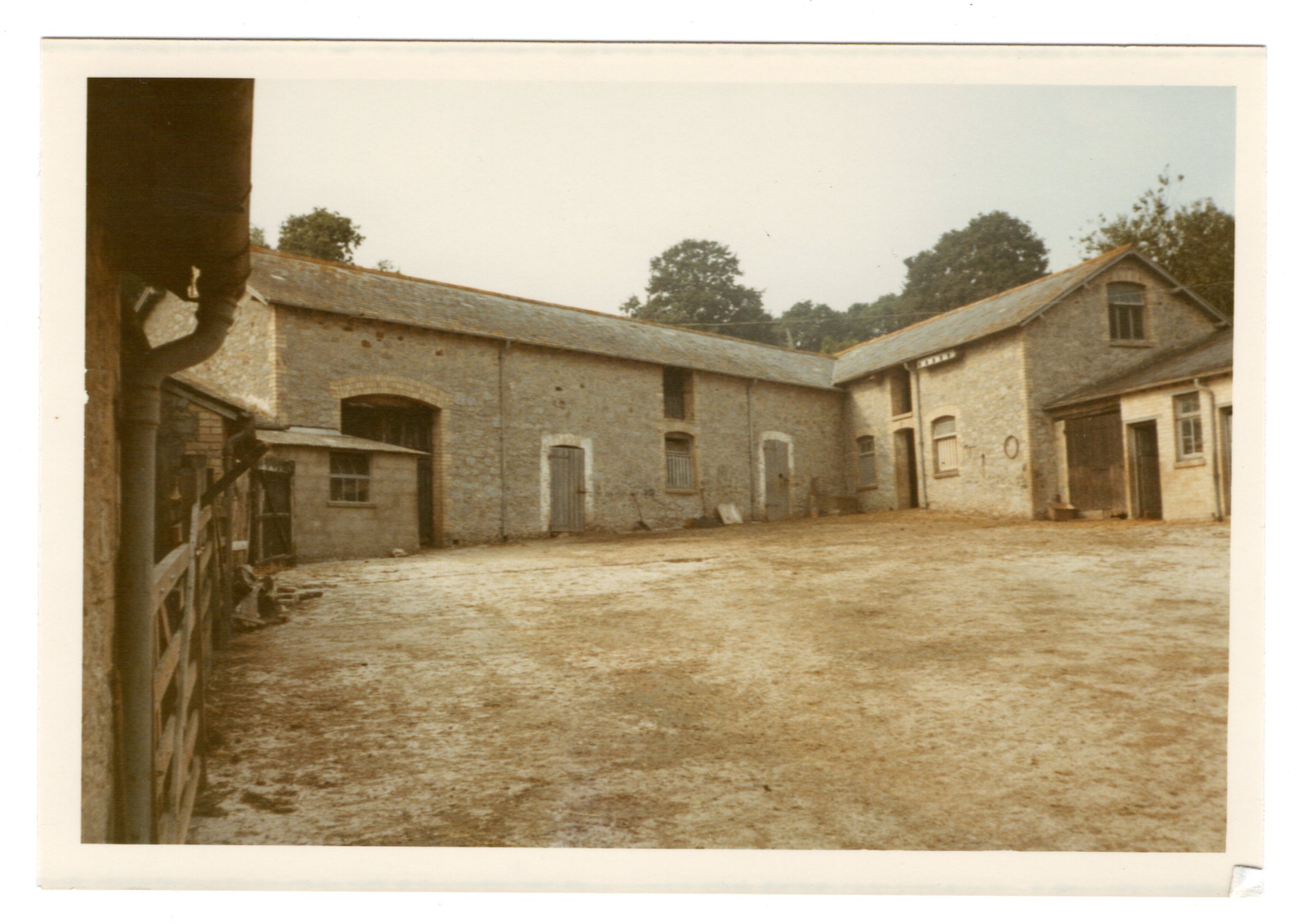
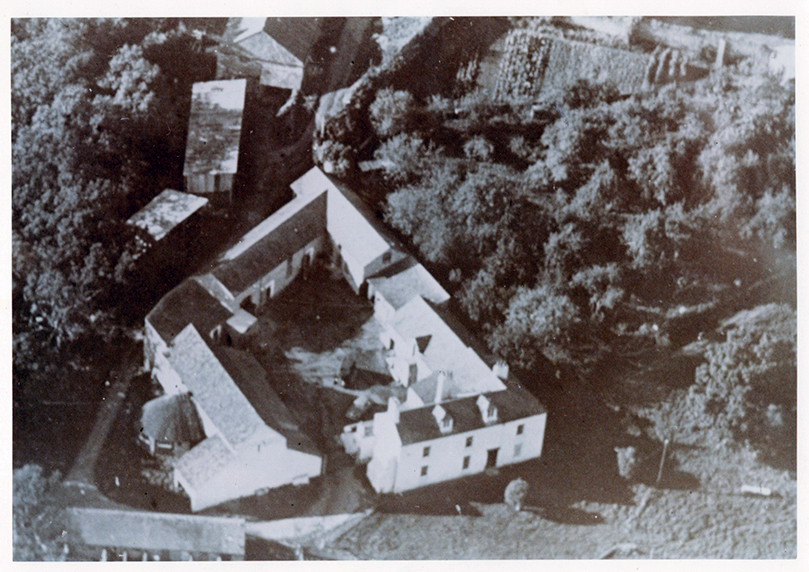
Pitt Farmyard as photographed in the 1960s.
“Knighton Farm,” which had belonged to a DEVONPORT branch of the family from the 1500s into the early 1700s, was said to comprise 69 acres in 1832 when William Noseworthy returned the tenancy to the owner, Rev. John Templer of Lindridge, in 1832 (Exeter and Plymouth Gazette: Saturday 6th October 1832). This would have been a shadow of its former self. “Knighton” was a small manor in its own right in the 1600s.
Pitt Farm as photographed in the 1960s.
After Thomas Pinsent died, his son, Mr. Thomas Pinsent “the younger” (a.k.a the “Second of Pitt”) seems to have taken over and paid similar rates for “Pitt” until he died in 1802. He was also obliged to pay a Government-mandated “Land Tax” of £1 0s 6d per annum for “Pitt” and 10s per annum for “the Marshes” from 1780 onward.
Abstracts taken from the 1780 Land Tax Assessments in Hennock and Teigngrace Parish.
Papers in the Ugbrooke Archive tell us that the elder Thomas’s grandson, Charles Pinsent swapped his “Marshes over Teign” for several small fields or “closes” owned by James Templar, of Stover, in 1810. We shall meet up with Thomas Pinsent “the younger” and also his nephew Charles Pinsent elsewhere.
What happened to Urith and her sisters is unclear. However, Urith may have married Henry Hearder and moved to Teigngrace. Her sister Mary may have been the Mary Pinsent of Hennock who had Letters of Administration processed in 1753, or, alternatively the Mary Pinsent who died in 1768. Their mother Mary (née Gale) died in Hennock in 1774 and her husband, Thomas Pinsent died in 1777 – as shown by the parish records and the memorial stone in Hennock Church mentioned at the beginning of this discussion.
The four boys lived to maturity and married, and their lives, and the lines of descent of the younger three are discussed elsewhere. Thomas Pinsent, being the eldest son, inherited the bulk of the “Pitt” estate; however, as he was childless it then passed to Charles Pinsent who was one of brother John’s sons. It was still in the family in the mid 1800s.
Please use the above links to explore this branch of the family tree. The default “Next” and “Previous” links below may lead to other unrelated branches.
Please use the above links to explore this branch of the family tree. The default “Next” and “Previous” links below may lead to other unrelated branches.