Rosetta Mary Pinsent

Vital Statistics

Birth: 1914
Marriage: 1940
Spouse: John Edward Romainer
Death: 2004

Family Branch: Devonport
PinsentID: GRO0766

References

Newspapers


Family Tree

GRANDPARENTS

Grandfather: Alfred Pinsent: 1848 – 1919
Grandmother: Matilda Churched: 1844 – 1888


PARENTS

Father: Alfred Charles Pinsent: 1877 – 1948
Mother: Mabel Winifred Davis: 1882 – 1949


FATHER’S SIBLINGS (AUNTS, UNCLES)

William C. “Pinsent”: 1866 – xxxx
Mary Caroline Pinsent: 1870 – 1945
Matilda Pinsent: 1873 – 1873
Amelia Elizabeth Pinsent: 1875 – xxxx

MALE SIBLINGS (BROTHERS)

Stanley Arthur Pinsent: 1903 – 1985
Charles Alfred Pinsent: 1905 – 1961
Harold William Pinsent: 1910 – 1967


Please use the above links to explore this branch of the family tree. The default “Next” and “Previous” links below may lead to other unrelated branches.
Roger Philip Pinsent

Vital Statistics

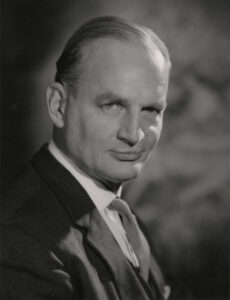
Smirking man wearing a suit.
Roger Philip Pinsent in the National Portrait Gallery, 1963.

Roger Philip Pinsent: 1916 – 1997 GRO0754 (Civil Servant, Sao Paulo, Brazil)

Suzanne Smalley: 1917 – 1999
Married: 1941: London

Children by Suzanne Smalley:

Daughter (GRO0728)
Daughter (GRO0141)
Son (GRO0721)

Family Branch: Devonport
PinsentID: GRO0754

References

Newspapers

Click here to view close family members


Roger Philip was the third son of Sidney Hume by his wife Beatrice Elena Pinsent (née Le Bas). He was born in Rosario, Argentina and his father registered the birth at the “British Consulate Office”. He grew up in Rosario but, like his brothers before him, he was sent back to England for his education. Harold Ross, Paul Desmond and Roger Philip sailed (unattended) from Buenos Aires to Southampton on the “Royal Mail Lines” ship “Almanzora” in September 1930. Presumably, they were heading for “Downside”, a Catholic “Public” (private) School in Stretton on the Fosse in Somerset.

Roger seems to have been a typical schoolboy: His parents must have been mortified when he, along with an older boy (who should have known better) daubed red paint on statues of lions and white paint on a Post Office pillar box on the Isle of Wight – presumably after consuming an excessive amount of some alcoholic beverage (Portsmouth Evening News: 20th September 1932). He was fined 10s and ordered to pay £2 10s in damages. Roger apologized to the Magistrates through his parents. On a more pleasing note – for his parents at least – he played cricket for his school (Western Daily Press: 2nd June 1934). He graduated that summer and, according to “Who’s Who 1982” studied modern languages at “Lausanne”, “Grenoble” and “London Universities”. After a trip home to Argentina, Roger returned to the United Kingdom with his parents and other siblings on the “Royal Mail Line” ship “Arlanza” in September 1937. On that occasion, they were heading for an address in “Kensington Palace Mansions”, in London.

Roger was a “student” studying Modern Languages when the wartime “Register” was compiled in 1939. He finished his degree and graduated with an “Honours Degree in Modern Languages” from London University. The war was well underway by then, and as Roger had served as a “Cadet” in the “Officer Training Corp.” while at school and at university, he joined the “Gloucester Regiment” as a “Second Lieutenant” in February 1941 (London Gazette: 11th March 1941). He married Suzanne Smalley, the daughter of Lt. Col. Edgar Smalley, a “cotton merchant”, in London shortly thereafter, and they had three children who were born during the war: They are still alive – as far as I know.

Although Roger was nominally a “Lieutenant” (later a “Captain”) in the “Gloucester Regiment”, his talents as a linguist were recognized and he transferred to the “Special Operations Executive (S.O.E.)”. The National Archives have a file on him (HS-9/1190/5) but I have yet to see it! What I do know is that “S.O.E.” was a clandestine unit that ran agents and arranged for acts of sabotage in occupied Europe and Roger was sent to the “British Consulate General’s Office” in Barcelona in 1943.

Spain was nominally neutral but the British Government expected the Germans to invade it, and the “S.O.E.” was there to developed plans for sabotage if they ever did so. Over time, its role evolved into one of intelligence gathering (“Against the Grain”: Special Operations Executive in Spain, 1941 – 1945: Intelligence & National Security 20:1 (2005): by David A. Messenger).

In 1946, Roger joined “His Majesty’s Diplomatic Service.” It must have seemed a logical step for a linguist with an ability for intelligence-gathering. Initially, he was attached to the “Southern (European) Department” and assigned to Turkey and Bulgaria. This was at a time when Britain was trying to decide what to do about Bulgaria. Evidently, Roger argued against recognizing it as an independent country as it would inevitably be in the pocket of the Russians (Bulgaria in British Foreign Policy 1943-1949: by Marietta Stankova).

Roger took his family out to America in July 1947 and he joined the “British Legation in Havana”, Cuba the following year. He was part of a “British Delegation” to a “United Nations Commission” that was conducting an economic survey of South America (Report of the Economic Commission for Latin America: Second Session: E/1330/Rev.1). Ships’ manifest records show that Roger and his family returned to England via New York on the “S.S. Queen Mary” in February 1950; however, it was to be a short stay. He was appointed the “British Consul” in Tangiers later that same year. His name crops up in a small item in the Billings (Montana) Gazette  of all places (Billings Gazette: 4th November 1951)! It describes American and British annoyance with the French for expelling a Tunisian nationalist. Roger moved back to Europe in 1952. He was posted to the “British Embassy” in Madrid. However, this too must have been a short stay as he was back at the “Foreign Office,” in London, between 1953 and 1956. It must have been a welcome break from overseas assignments.

Other ships’ manifests show that Roger and his wife Susanne left England for Rio de Janeiro on the “Royal Mail Lines” ship “Highland Princess” on 24th November 1956. He was heading to South America for a posting as “Charge D’Affair” in Lima, Peru. On this occasion, there is no indication that their children went with them. They would have been of school age by then, so they probably stayed home in England. Suzanne have come home early from this assignment as Roger returned alone, on the “S.S. Potosi” in June 1959.

While he was back in Britain, Roger was assigned to a delegation to the “European Community” between 1959 and 1964. He was part of a negotiating team in Luxembourg led by the Right Honourable Edward Heath, M.B.E., M.P. in July 1962 [www.gouvernement.lu/1831389/BID_1962]. Ted Heath was later to become Britain’s “Prime Minister”.

Roger was sent back to South America as British “Ambassador to Nicaragua” in 1963 (Illustrated London News: 2nd November 1963]. This does not seem to have been one of his more enjoyable assignments; however, it may have been one of his more memorable ones! Certainly, Roger is best known to the outside world for a five-page “Confidential” letter of introduction entitled “Last Glance at Nicaragua” that he left for his successor at the Embassy in 1967. Little did he realize that it would come back to haunt him over forty years later. In 2009, the “BBC Radio” acquired it through “freedom of information” and released it on 16th October 2009.  Roger was not overly impressed with Nicaragua – or its people:

“Nicaragua is a land of contrasts. The approaches to the towns are squalid to a degree that shocks the visitor from Europe. On arrival we unwittingly caused some offense by inquiring the name of the first village we passed through on leaving the airport, which turned out to be the capital city of Managua”; …  also … “There is, I fear, no question but that the average Nicaraguan is one of the most dishonest, unreliable, violent and alcoholic of the Latin Americans” [BBC: Radio 4’s parting Shots: 16th October 2009: see also BBC.co.uk/radio4/transcripts/Roger-Pinsent: img_2373.jpg)] There is a photograph of Roger taken by Walter Bird of the International Magazine Service while he was in Managua at the “National Portrait Gallery”, in London.

Roger was a “Counselor” (Commercial) in Ankara, Turkey, from 1967 to 1970. However, he was back in South America for his final posting as “Her Majesty’s Consul-General” in Sao Paulo, Brazil. He was there from 1970 to 1973. While in Sao Paulo, he was “President” of the “Consular Society of Sao Paulo”. Presumably the most senior diplomat then active in Brazil. Roger said his farewells and returned to England in March 1973 (Diario Oficial do Estado: Sao Paulo 20th March 1973).

On his return, he retired to Stow on the Wold, in Gloucestershire, where he died in May 1997. His widow, Suzanna, died there in July, two years later. A relatively early entry in Who’s Who (1982) shows that Roger was a member of the “Institute of Linguistics”, and that he liked music, photography, bookbinding and golf. His son married in Indonesia in 1993; however, I am not aware of any children.


Family Tree

Grandparents

Grandfather: Adolphus Ross Pinsent: 1851 – 1929
Grandmother: Alice Mary Nuttall: 1855 – 1901

Parents

Father: Sidney Hume Pinsent: 1878 – 1969
Mother: Beatrice Elena Le Bas: 1882 – 1956

FATHER’S SIBLINGS and half-siblings (AUNTS, UNCLES)

Sidney Hume Pinsent: 1879 – 1969 ✔️
Frances Maude Pinsent: 1882 – 1953
Cecil Ross Pinsent: 1884 – 1963
Gerald Hume Saverie Pinsent: 1888 – 1976

Basil Hume Pinsent: 1911 – 2000

MALE SIBLINGS (BROTHERS)

Harold Ross Pinsent: 1913 – 1988
Paul Desmond Pinsent: 1915 – 1997
Roger Philip Pinsent: 1916 – 1997 ✔️
Neville James Quintus Pinsent: 1921 – 2013


Please use the above links to explore this branch of the family tree. The default “Next” and “Previous” links below may lead to other unrelated branches.
Robert William Pinsent

Vital Statistics

Robert William Pinsent: 1948 – 2024 GRO00753 (Advertising Executive, Kingston upon Thames)

  1. Wife (GRO1431)
    Married: 1973: Richmond upon Thames
  1. Wife (GRO1432)
    Married: 1977: Surrey Northern

Children by Wife (GRO1432):

Son (GRO1063)
Daughter (GRO1064)

Family Branch: Devonport
PinsentID: GRO0753


Robert William Pinsent was the son of Harold William Pinsent by his wife, Mary (“Mollie”) Swain, née Robinson. His father was a “Plumber” who, with his brother Stanley, had helped create the firms of “Pinsent, Bros, Plumbers” of #13 Ronelean Road, in Surbiton, and “Pinsent Bros Builders” of #102 Grierson Road, in Forest Hill, S.E. after the war. Robert was born in 1948. He was to have a younger sister.

According to a letter that Mollie Pinsent wrote to my father in 1972, she and her then-late husband had hoped that Robert would join the family firm when he grew up; however, his interests were elsewhere, and he elected to go into advertising. He was working for the “Guardian Newspaper”.  

Robert married twice. His first marriage took place in 1973 but did not last long. He remarried, in 1977 and had a son and a daughter by his second wife in the1980s. They are probably alive today. The family was by then living in Kingston upon Thames. 

In 1996, Robert William applied to the Elmbridge authorities for “two sets of 1.9 metres high brick piers and wrought iron gates” for the entry to Furze Lodge, in Oxshott (Esher News and Mail: Wednesday 6th March 1996). Given his family background, he would have been aware of “City Hall’s” role when it came to permitting. The application may have required an amendment as he later applied for the retention of two 2.1-metre-high brick piers to go with the gates (Esher News and Mail: Wednesday 3rd July 1996). Presumably he received the necessary approvals.  

Note: Robert’s wife was a tennis player who met with local success. Although she lost in the finals of the “Ladies’ Singles” at the Oxshott Village Club finals in 1994 (Esher New and Mail: 13th July 1994: Photograph), she won the “Ladies’ Singles” and, with her partner, was runner up in the “Mixed Doubles” events the following year (Esher News and Mail: Wednesday 28th June 1995).

Robert and his wife moved to Bognor Regis, in Sussex, in the 2000s and he died there in 2024. His wife was a member of the Bognor Regis Golf Club in 2025. 


Family Tree

Grandparents

Grandfather: Alfred Charles Pinsent: 1877 – 1948
Grandmother: Mabel Winifred Davis: 1882 – 1949

Parents

Father: Harold William Pinsent: 1910 – 1967
Mother: Mary Swain Robinson: 1919 – xxxx

Father’s Siblings (Aunts, Uncles)

Stanley Arthur Pinsent: 1903 – 1985
Charles Alfred Pinsent: 1905 – 1961
Winifred Mabel Pinsent: 1906 – xxxx
Harold William Pinsent: 1910 – 1967
Gladys Pinsent: 1912 – 1959
Rosetta Mary Pinsent: 1914 – 2004
Eva Violet Pinsent: 1922 – 1990


Please use the above links to explore this branch of the family tree. The default “Next” and “Previous” links below may lead to other unrelated branches.
Robert Maye Pinsent

Vital Statistics

Robert Maye Pinsent: 1881 – 1944 GRO0750 (Merchant, Totnes and Teignmouth)

Mildred Adams: 1881 – 1968
Married: 1908: Bilston, Staffordshire

References

Newspapers

Family Branch: Devonport
PinsentID: GRO0750

Click here to view close family members


Robert Maye Pinsent was the eldest son of John Ball Pinsent “junior” by his second wife, Jane Maye. He was born in Newton Bushell (Highweek Parish) in 1881 and was three years old when his mother committed suicide, in January 1884. Robert was, either then, or perhaps a few years later, sent to live with his uncle Thomas Maye, who was a “beer and cider merchant” in Totnes. He was brought up in the Maye household and was living with them when the Census takers made their rounds in 1891.

Robert attended “Totnes Grammar School”, where he seems to have shown an aptitude for sport. When he was nine years old he competed in track and field events on the School’s Sports Day. He ran in the 100-yards’ flat and the 220-yard (handicap) races for under 13 (years old) boys (Totnes Weekly Times: Saturday 16th May 1891). One has to think the older boys had an unfair advantage. Nevertheless, the following year he placed third in the School’s half-mile race (Totnes Weekly Times: Saturday 9th April 1892). Robert Maye Pinsent was later sent to “Blundells”, which was (and still is) a well-known Private (“Public”) School, in Tiverton, in Somerset. 

Robert played cricket for the “Blundells Second XI” in a match against Uffculme in July 1897 (Exeter and Plymouth Gazette: Monday 5th July 1897). He also played Cricket for the School (albeit without particular distinction) the following year (Exeter and Plymouth Gazette; Thursday 7th July 1898) and was back with the School team in 1899 (Taunton Courier and Western Advertiser: Wednesday 28th June 1899). He does not seem to have been an exceptional player but he clearly enjoyed it as he joined the local Totnes Community team after leaving school and played for them over the summer break (Exeter and Plymouth Gazette: Thursday 10th August 1899). He also played for Totnes the following year. Perhaps persistence pays off. By then, his bowling seems to have improved significantly. Totnes beat a “Royal Artillery” team in May 1900 by an innings and 47 runs. R. Pinsent took took seven of the artillery-men’s wickets – which is a fair haul (Totnes Weekly Times: Saturday 12th May 1900). He seems to have been a bit ham-fisted with the bat though, rarely scoring in the double figures. He did manage to score ten runs in a match against Teign Vale in September 1900 (Teignmouth and Gazette: Friday 14th September 1900).

Robert’s uncle, Mr. Thomas Maye, was the “Master” of the “Dart Vale Harriers;” so it is not particularly surprising that we find Robert Maye Pinsent out with the hunt while he was still a teenager. The two of them rode with Mr. Netherton’s hounds in April 1898 (Dartmouth and South Hams Chronicle: Friday 22nd April 1898) and Robert was out again with his Uncle’s “fifteen and a half couple” of hounds in April 1899 (Totnes Weekly Times: Saturday 29th April 1899). The following autumn he rode with the hounds at Two Bridges (on Dartmoor).

Robert clearly rode for pleasure and not out of obligation to his uncle as he met up with Mr. Netherton’s Bowden Harriers, at the Forest Inn at Hexworth in mid October 1899 (Totnes Weekly Times: Saturday 21st October 1899) and with his uncle’s pack when they met at Follaton Lodge, near Totnes a week or so later (Totnes Weekly Times: Saturday 28th October 1899). On that occasion, “Refreshments were dispensed by Mrs. T. Maye (wife of the master). Huntsman Perry had 14 1/5 couples of hounds all of which were in capital form. Among the mounted followers were Messrs. T. Maye (master), A. Hingston (hon. Secretary to the hunt)” and needless to say, among others, R. Pinsent. He clearly loved riding and the “fun” of the chase and he had several other outings that year.

When the Second Boer War started in South Africa in October 1899, Robert joined “C Company, 5th (The Haytor), V. B. Devonshire Regiment.” It was a “Territorial Army” unit, so he was not immediately called up.  He rode with his uncle and aunt and the “Dart Vale Harriers” again in the spring of 1900 (Totnes Weekly Times: Saturday April 28th 1900) and played cricket for Totnes that summer (Western Times: Sunday 7th May, 1900). Presumably, he also played and trained at being a soldier.

In the meantime; however, he had also found (rugby) “football” and he joined the local Totnes club in the autumn of 1899. He played for the “Totnes Reserve” team in a match against the “Newton Church Institute” in October and, (reportedly) played well “for the homesters” (Totnes Weekly Times: Saturday 14th October 1899). Like his cousins, John Douglas Pinsent and William Henry Pinsent before him; Robert Maye Pinsent played as a “back”. It was a position that called for agility and speed – and the courage to tackle hulking great forwards as they rush down the field towards you. It helps if you can kick well and thereby keep the ball up field, away from your own team’s goal line. He played against a Plymouth team, in November: Pinsent came out at the last moment, as back for Totnes, and proved very safe. He is not fast, but his kicks generally find touch, and he is good at stopping rushes” (Totnes Weekly Times: Saturday 4th November 1899). The “reserves” played games weekly, against a number of teams from Plymouth, Newton Abbot, Paignton, Ivybridge and elsewhere.

He played well and received a fair amount of comment in the local press as the position of “back” was the team’s last line of defense. For instance, in a game between Totnes and Dartmouth “at Totnes on Saturday in most disagreeable weather …  Pinsent, with the exception of a couple of mistakes, gave an excellent display and all the home ‘quarters did well, especially in defensive work …” (Totnes Weekly Times: Saturday 13th January 1900). That summer, R. M. Pinsent was appointed “vice-captain” of the “Totnes Football Club” (Totnes Weekly Times: Saturday 21st July 1900).

Robert Maye Pinsent played cricket over the summer, while waiting for the rugby football seasons to restart; nevertheless, he was persuaded by some of his rugby club-mates to join the town rowing club and enter the Paignton Regatta as part of a “coxed four.” His crew lacked the technique and finesse of Sir Matthew Pinsent (Robert’s co-lateral descendant) and his colleagues and they failed to complete the course. Sadly, their boat foundered: “The Kelpie, after rounding the second mark, failed to get round head to wind, and was capsized. The event was noticed by the official referee, who steamed promptly in his launch to the rescue. All the occupants could swim, and were soon taken on board, but it took the launch nearly an hour to get the capsized Kelpie and her crew back to Paignton Harbour” (Totnes Weekly Times: Saturday 25th August 1900). Nothing daunted, the same crew competed for the “100-guinea Challenge Cup” at the Dartmouth Regatta later that month. The Dartmouth crew romped home – much to the relief of its supporters who had endured five years of disappointment. It would have been insufferable to loose to a land-locked crew from Totnes. The boys stayed afloat this time, but they eventually gave up the chase (Totnes Weekly Times: Saturday 1st September 1900). Robert was appointed appointed “vice-president” of the “Totnes Rowing Club” the following March (Totnes Weekly Times: Saturday 9th March 1901). He did like sport.

The 1900-1901 (rugby) football season opened three weeks after the Dartmouth Regatta and it continued on throughout the winter; however, with lower attendance than the club would have wished for – to the embarrassment of the local journalists (Totnes Weekly Times: Saturday 24th November 1900) who were clearly doing their job far too well: why stand around in the rain if you can read all about it! Still, the rugby players did have fun. The Football Club played a major part in a carnival held in mid-November and “Mr. R. Pinsent, as a clown mounted on a donkey, made free use of his inflated bladder” (Totnes Weekly Times: Saturday 17th November 1900). H’mm. The “football” team won some games and lost others. After a game against Torquay Athletic in December, the local scribe noted: “A special word of praise is due to Pinsent whose defensive powers were severely tested. He played a very safe game, and kicked well. He could not be blamed for either of the tries scored against his team” (Totnes Weekly Times: Saturday 8th December 1900).

It was back to cricket in May 1901. Robert played for Totnes and occasionally, for his home village of Staverton. However, when the two clashed, as they did in July 1901, his allegiance was with Totnes (Totnes Weekly Times: Saturday 6th July 1901). Robert batted and bowled well throughout the summer, and was honoured with the Captaincy in a match between Totnes Grammar School and “Mr. R. M. Pinsent’s XI” – which was played on 15th June 1901. His team lost. This time, he failed at bat; nevertheless, he took five wickets and made one catch (Totnes Weekly Times: Saturday 22nd June 1901), which was a respectable contribution. He batted better for the “Blundell’s School Old Boys” when they played the youngsters a week or so later (Western Times: Friday 28th June 1901), and he bowled particularly well when the town team played a “Britannia 2nd XI” at Dartmouth in July. He took seven of the ten wickets (Western Times: Thursday 11th July 1901).

At regatta time that August (1901), Robert Maye Pinsent entered the“coxed pair” event (which was for locals only) at the Totnes Regatta. He rowed with W. J. Gibson, and F. Rapson joined them as cox of the “Lark”. Whether the name was a reference to the bird or their approach to the outing is not clear. They came in second, behind the “Ida”, which was crewed by three Sims brothers. Unfortunately, the “Lark” got off to a bad start as the “stroke” had difficulty with his rowlock. Robert also took part in one of the swimming events (100 yards backstroke) held in conjunction with the regatta (Totnes Weekly Times: Saturday 17th August 1901. It was a mistake. The Hon. Secretary of the Devon County “Amateur Swimming Association” complained that Robert, among others, had taken part in an unregistered swimming event. … “it was unanimously resolved that all the swimmers named be suspended from further competition as amateurs” (Western Times: Friday 23rd August 1901. I doubt if he was too bothered. He went back to cricket. When the season ended at the end of August, the Totnes Weekly Times (Saturday 14th September) published the Season’s batting and bowling averages. Over the season, Robert had: played 19 innings; he was not out once; had scored 279 at an average of 15.5 runs per innings. He had bowled 151.4 overs (of six balls each), of which 29 were maidens (no runs were scored); had taken 45 wickets for 386 runs at an average of 8.5 runs for each wicket. The last mentioned being not too bad at all!

Then, it was – inevitably – back to rugby-football. Robert played several games in the “back” position in September and October and was good enough that he was invited to a County trial match played in Devonport on 23rd October. He may not have made the team, but he made an impression: At back, Stidston missed an excellent opportunity of establishing his strong claims to the custodianship by failing to kick to touch. Pinsent was the better punter though somewhat indecisive” (Western Times: Thursday 24th October, 1901). There were other games but, realistically, by then his playing days were numbered.

If the above discussion seems to have been overly weighted to sport, it is worth remembering that public school boys were the sons of “gentlemen” and they were not supposed to work for a living! There would have been very little for a young lad of twenty to do in a small town like Totnes, other than get up to mischief or join in community sports and entertainments.

In November, 1901 the Citizens of Totnes held a farewell dinner at the Commercial Hotel for two of its sons, Robert Maye Pinsent “a prominent member of the Totnes Football and Cricket Club” and Mr. C. Hains, the son of a local doctor who were both leaving town. They were shortly to sail for South Africa to join the “South African Mounted Police” (Western Times: Tuesday 26th November, 1901).

The Second Boer War was thought to be just about over and the unit was formed to police the Transvaal and Orange Free State when Britain withdrew its front line troops. Unfortunately, the war lasted longer than expected and the police were drawn into the conflict! Robert (later Lord), Baden Powell – he of Boy Scout fame – fresh from his defense of Mafeking in May 1900 was the unit’s first “Inspector General”. Robert and his friend had been caught up in the patriotic fervour that swept the country followed the “relief of Makeking”. The citizens of Totnes presented them with a purse of coins, and Robert received another gift from his friends in the “Choir” of the Church of St. John’s in Totnes a few days later, when they too gave him a dinner (Totnes Weekly Times: Saturday 30th November 1901). He graciously thanked his benefactors on both occasions. Robert had one last outing with the “Dart Vale Harriers” before he left for South Africa (Totnes Weekly Times: Saturday 30th November 1901). He sailed from Southampton on the “Manchester Merchant” on 3rd December 1901 and arrived all right; however, a letter home showed that his kit had disappeared in transit! (Totnes Weekly Times: Saturday 25th January 1902).

Robert Maye Pinsent joined the “South African Constabulary”, which was part of the “South African Colonial Corps”, as a trooper. He loved riding – which may have influenced his decision to join the mounted Constabulary. He probably hoped (like so many young men who joined the forces only twelve years later) that he would see some action before the war ended. Whether he did or not, I do not know as the Boer War formally ended in May 1902, shortly after he arrived. Documents in the “National Archives of South Africa” show that he stayed on and served in South Africa until 23rd December 1906. He was awarded the “Queen’s South Africa (campaign) Medal” for his service. 

Robert Maye returned to Totnes on leave in the spring of 1904 and was back playing cricket for the local club in August. He also played a few games of rugby for the town team that September as well, although not always in his preferred position of “back” which he had, of course, vacated. He rejoined his unit in South Africa the following month. After describing a rugby match against Exmouth, the sports correspondent notes that “the team played unselfishly and should do well in future matches, in which however, they will not have the assistance of Pinsent, who is returning today (Saturday) to South Africa” (Totnes Weekly Times: Saturday 8th October 1904). Needless to say, he rejoined the team after he returned from South Africa and played for it throughout the 1907 season (Brixham Western Guardian: Thursday 28th March 1907). He rejoined the “Dart Vale Harriers” as well, and rode with them at Belliver Tor in April 1907 (Brixham Western Guardian: Thursday 25th April 1907).

Robert Maye Pinsent married Mildred Adams, the daughter of a “hotel keeper”, at Bilston (near Wolverhampton) in Staffordshire, on 1st August 1908 – shortly after his return from South Africa. Mildred was a Devonian from Seaton – on the Devon coast near its border with Dorset border. Presumably her father was just in the midlands to work. Robert and Mildred may have known each other for some time. The couple settled in Plymouth where Robert bought into a “green grocery” business. The 1911 census takers’ describe him as being a “wholesale fruit and potato merchant living on Hamilton Gardens, at Mutley, in Plymouth”. They do not seem to have had any children.

Robert had paid £350 for a half-share in the firm of “Chalker Bros, Wholesale Fruit and Vegetable Merchants, of Flora Street, in Plymouth”, in May 1907. He invested another £100 in the business in April 1908 and, for better or (as it turns out) worse, a further £300 in February 1909. By then, he owned most of the company so he bought Mr. Chalker out for another £80 in October 1910. At that point, Robert was the sole proprietor.

He ran the business as best he could – until his creditors stepped in in March 1912. At that point, his liabilities stood at £1,090 and his assets at around £300 (Western Daily Mercury: Friday 3rd May 1912). The Trustee arranged for “Peter Hamley and Sons, Auctioneers”, to auction of his wagons, trolleys, scales, containers and office furniture on 4th April 1912 (Western Daily Mercury: Thursday 4th April 1912). The Court determined that Robert should pay a “composition” of 8s in the pound on all of the debt – except for the £452 owing to Messrs. Percy Adams and Charles Pinsent who were Robert’s brother-in-law and brother (London Gazette: 29th June 1912) as he had received this as part of his marriage settlement. Sadly for Mildred, this included railway stock and the mortgage on their house. Robert attributed his problems to heavy wastage on perishable goods, keen competition and bad debts. Ironically, Robert Maye’s cousin William Henry Pinsent was also going through bankruptcy, after the failure of his lodging house in Torquay at about the same time.

Robert Maye Pinsent rejoined the army two years later and fought during the “First World War”. Under the circumstances, he may have been pleased to do so. He joined another mounted regiment and was an Acting Sergeant in the “Military Mounted Police”. At some point, he was promoted to Second Lieutenant and reassigned to the “A.C.C.”. Whether this was the “Army Cyclist Corps” or “Army Corps of Clerks.” both of whom used this acronym, is hard to know. It was probably the latter. Either way, they probably took away his horse. Robert served in Egypt from 15th June 1915 and was discharged on 27th August 1918 (National Archives WO 372/16). His campaign medals (“Victory” and “15 Star”) were sent to his home address of #16 Seaton Avenue, Mutley, in Plymouth.

Robert Maye was a “traveler” or salesman for “Messrs. J. O. Nash & Sons (England Limited), Potato Importers and Exporters” of Woolster Street in Plymouth when the census was taken in 1921. He was still living on Seaton Avenue with his wife, Mildred, who was by then a “nurse” (B.R.C.S.V.A.D.) at the “Military Hospital” at Devonport. Perhaps she had been one during the war.

Robert and Mildred were still living in Mutley at the start of the “Second World War”. The 1939 Register shows that he was a “clerk” working in a “Ministry of Labour Employment Exchange”. Later on in the war, Robert became a “telephone operator” who lived on Reservoir Road in Plymouth. He died there in March 1944, leaving net effects valued at £538. His widow, Mildred, stayed on and died in the same place in June 1968. They had no children.


Family Tree

Grandparents

Grandfather: John Ball Pinsent: 1819 – 1901
Grandmother: Hannah Davie Swain: 1815 – 1887

Parents

Father: John Ball Pinsent: 1844 – 1890
Mother: Jane Maye: 1847 – 1884

Father’s Siblings (Aunts, Uncles)

Thomas Pinsent: 1842 – 1889
William Swain Pinsent: 1843 – 1920
John Ball Pinsent: 1844 – 1890 ✔️
Frederick Richard Steele Pinsent: 1855 – 1856

Male Siblings (Brothers)

Robert Maye Pinsent: 1881 – 1944 ✔️
Charles Pinsent: 1883 – 1937


Please use the above links to explore this branch of the family tree. The default “Next” and “Previous” links below may lead to other unrelated branches.
Robert Pinsent

Vital Statistics

Robert Pinsent: 1678 – 1707 GRO1778

Elizabeth Voisey: xxxx – xxxx
Married: 1703: Hennock

Children by Elizabeth Voisey:

Robert Pinsent: 1703 – 1711
John Pinsent: 1706 – 1706

Family Branch: Devonport
PinsentID: GRO1778

Click here to view close family members


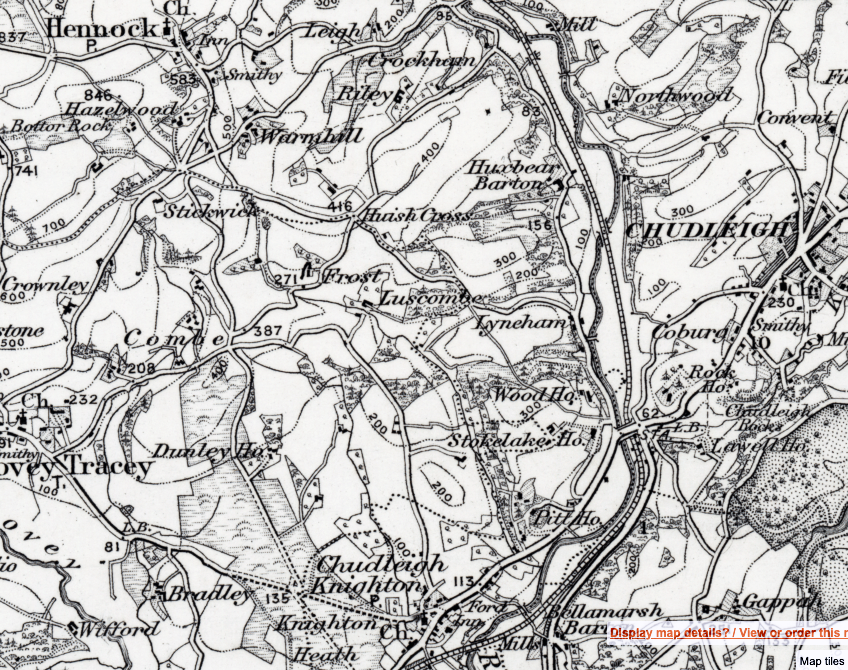
Black and white, cluttered map showing Hennock, Chudleigh, Chudleigh Knighton.
Map of Hennock showing Huxbear Barton near Chudleigh.

Robert Pinsent was the firstborn and the only surviving son of Robert Pinsent “junior” of Huxbeare by his wife Mary (née Hamlyn). He was eight years old when his father died in 1686 and fourteen when his mother remarried. Mary Hart (as she became) seems to have held Huxbeare in trust” for him until he grew of age. Her son, “Mr.” Robert Pinsent married “Mrs.” Elizabeth Voisey in Hennock in 1703. In this case, the terms “Mr.” and “Mrs.” (as above) probably refer to both social and marital status.


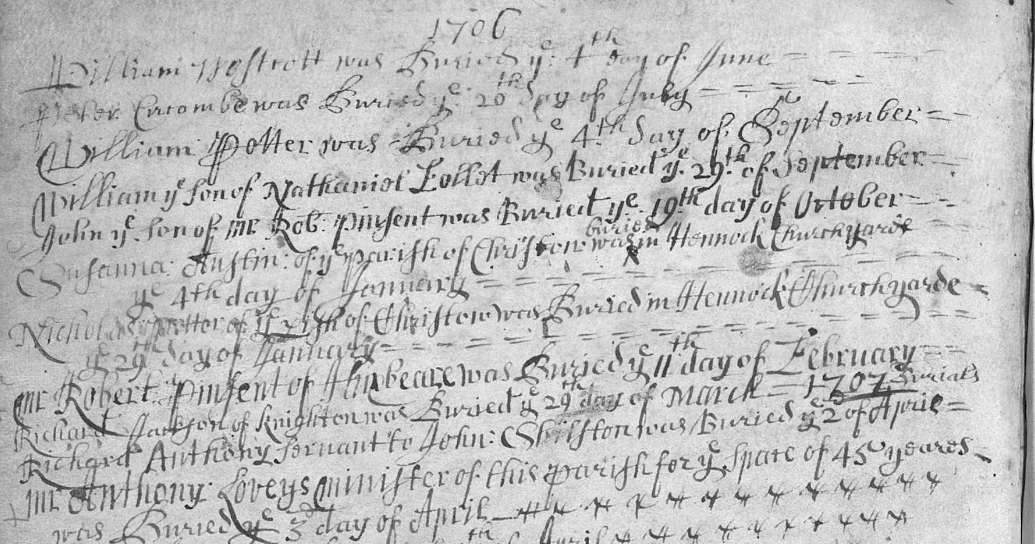
“Mr.” Robert had two sons, Robert Pinsent and John Pinsent by Elizabeth before he died, aged 28 years, in 1707. John had died pretty well at birth in 1706 and Robert’s widow faced the same problem that her mother-in-law had in 1686. His sole remaining heir, yet another Robert, was still a child.

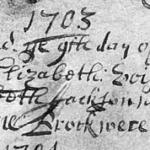
Cramped record of the burial.
Robert is buried on February 11. The year is unclear.

Elizabeth married John Harris the year after her husband died and they tried to keep the farm for her son. However, the parish records mournfully record that Robert Pinsent “ye fourth of Huxbeare” died in 1711, so the Pinsent tenure at Huxbeare came to an end.

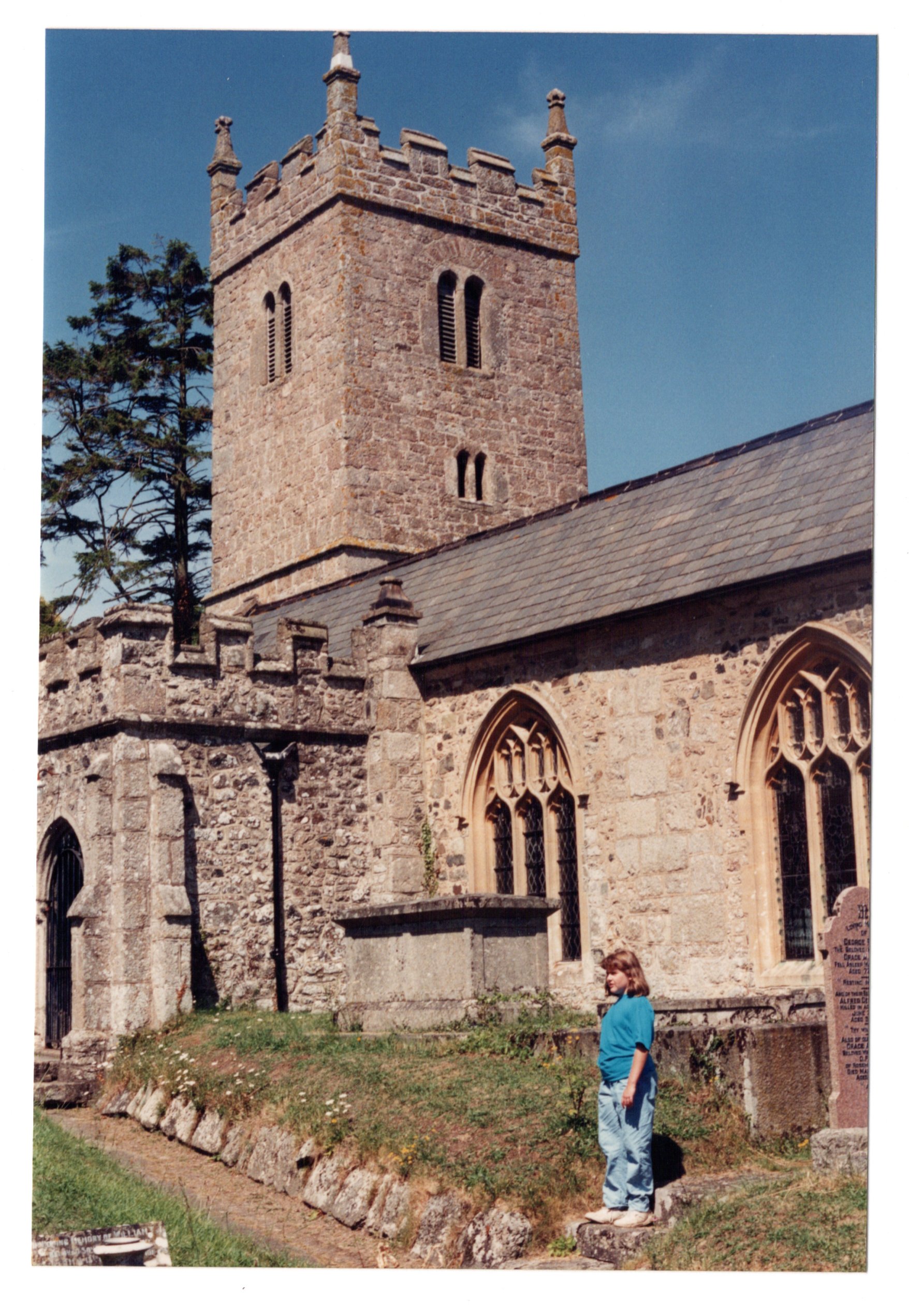
A girl in a blue shirt stands in front of a large stone church.
St. Mary’s Church is photographed in Hennock in 1994.

The mortality rate in Hennock and the surrounding area was extremely high in the early 1700s and it affected other branches of the Pinsent family as well. Why they died is uncertain; however, there were several exceptionally cold winters in Britain in the mid 1690s and early 1700s (The Project Gutenberg ebook. A History of Epidemics in Britain: Vol II (of 2) by Charles Creighton, 2013) although the “Little Ice-Age” was, at last, coming to an end. The influenza virus was, nevertheless, starting to make its presence felt. Perhaps these were contributing factors. The farm at Huxbeare may have passed to Robert Pinsent’s aunt (Robert and Mary’s daughter) Mary Collings (née Pinsent), as it seems to have been in the Collings family in the 1730’s.

The Pinsent connection with Huxbeare had lasted for 200 years or more, as had its connection with Knighton – which, according to the parish records, also came to an end in the early 1700s. The DEVONPORT line transitioned through Kelly to Devonport, and the HENNOCK branch passed through Slade to Pitt (see elsewhere).


Family Tree

Grandparents

Grandfather: Thomas Pinsent: 1597 – 1649
Grandmother: Julian Sidstone: xxxx – 1663

Parents

Father: Robert Pinsent: 1654 – 1686
Mother: Mary Hamlyn: xxxx – xxxx

Father’s Siblings (Aunts, Uncles)

Julian Pinsent: 1651 – xxxx
Robert Pinsent: 1654 – 1686 ✔️
Elizabeth Pinsent: 1658 – xxxx
Marie Pinsent: 1660 – xxxx
Thomas Pinsent: 1663 – xxxx
Ellen Pinsent: 1667 – xxxx

Male Siblings (Brothers)

Robert Pinsent: 1678 – 1707 ✔️
Thomas Pinsent: 1685 – 1694


Please use the above links to explore this branch of the family tree. The default “Next” and “Previous” links below may lead to other unrelated branches.
Robert Pinsent

Vital Statistics

Robert Pinsent: 1589 – 1650 GRO1763

Agnes Stevens: xxxx – 1655
Married: 1617: Hennock

Children by Agnes Stevens:

Margery Pinsent: 1618 – 1664 (Married George Pinsent of Huish, Hennock, 1635)
John Pinsent: 1620 – 1629
Simon Pinsent: 1622 – 1643
Thomas Pinsent: 1624 – 1655
Johanna Pinsent: 1626 – 1627

Family Branch: Devonport
PinsentID: GRO1763

Click here to view close family members.


Old record of baptisms in 1589.
Record of Robert Pinsent’s baptism in 1589.

Robert and Dorothy’s eldest surviving son, another Robert Pinsent, married Agnes Stevens of Ipplepen in Hennock in 1617, and they had three sons (John Pinsent, Simon Pinsent and Thomas Pinsent) and two daughters (Margery Pinsent and Johanna Pinsent) between 1618 and 1626. Their eldest daughter, Margery, was christened in Ipplepen; however the others were baptized in Bovey Tracey – where the family seems to have settled.

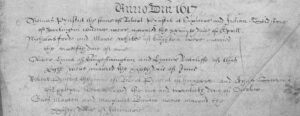
Handwritten record of marriages in 1617.
Record of Robert Pinsent’s marriage to Agnes Stevens in 1617.

Why Robert and Agnes left the family farm, I do not know; however, as Robert had an elder brother, Simon, his father may have set him up in some other local business as Simon would have been expected to inherit the farm when he died. Unfortunately, Simon seems to have died before his father and – because Robert was otherwise occupied – the youngest son, Thomas, was best placed to take over the farm.

Robert’s wife, Agnes, was the daughter of a landed “gentleman” and her brother, John Stevens “gent”, left her a piece of land in Ipplepen (valued at £40 – so not insignificant) when he died. However, John Washer a “clerk of His Majesty’s Court of King’s Bench,” seeing an opportunity, claimed the property as a debt repayment and Agnes was obliged to fight an action in the “Court of Chancery” [C2/CHASI/W100/34:1630] to keep-hold of it. Agnes, through her husband, said that she had paid her brother £8 for a life-interest in the property and that she knew nothing about any deal he may, or may not, have made with Mr. Washer. Whether she won or lost the case, I am not sure. The term “gentleman” or “gent” was not used lightly in those days. A “gentleman” belonged to the lowest rank of the nobility and was eligible for a coat of arms. For Robert to marry into the “gentry” was a sure sign that the family was rising in social status. They had come a long way from the wooden platters of his father’s day.

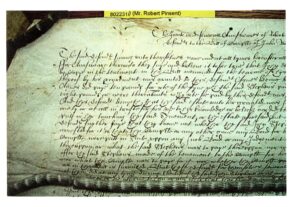
Written record of the court case.
Record of Washer v. Pinsent: Chancery, 1630, C2/CHAS/W109/38.

Robert and Agnes had three sons, but none of them seem to have married. The eldest,  John Pinsent, unfortunately died at the age of nine and his brother Simon, died at the age of twenty-one. Simon had been one of the eight male Pinsents from Bovey Tracey over the age of eighteen who had signed a (mandatory) Oath of “Protestation against the Papacy” in 1641. His father, Robert also signed, and his brother Thomas may have as well; however, given that there were other families around in the town, we cannot be sure.

Thomas Pinsent, the third son, seems to have lived to maturity and inherited “Woodhouse Down”, in Hennock, from his uncle Thomas Pinsent in 1649. Hennock’s parish accounts show us that he paid the parish rates in 1650, 1652 and 1653 and “Agnes and her son” paid in 1655, the year she died. “The widow Pinsent at Woodhouse Down” had been in receipt of parish funds at the time.

When Agnes’s husband Robert died, she applied to the “Prerogative Court of Canterbury” for “letters of administration” [British Records Society: Index Library Volume 68 p. 149]. Presumably, the bulk of his estate passed to his last remaining son, Thomas. What he did with it is unknown. I can find no further mention of Thomas Pinsent in the Devonshire records. Agnes had family connections in London and Thomas may have moved up to London and died there in Stepney, in Middlesex, in 1655. 

Old document recording burials.
Record of Agnes Stevens’ burial in 1655.

It is not clear what happened to Robert’s daughter Johanna either but her sister Margery married George Pinsent of “Huish Farm” in Hennock, in 1635. He seems to have belonged to a completely different (and as yet ill-defined) branch of the family that had been living there since at least 1547. This particular George Pinsent paid the parish rates for the farm and  was, presumably, the man who (along with Thomas and Richard Pinsent) signed off on the 39 Articles of Faith when they were read out in the parish church in 1645. He was a “Church Warden” in Hennock in 1661 and “Overseer of the Poor” in 1663. In the latter capacity, he signed a bond (Devon Record Office 2922A/P013) agreeing to pay the parish “Guardians”  £40 (a considerable sum) should George Earl and his wife “late of Trusham,” become a burden on the parish. Margery Pinsent died in 1664 and George passed away the following year. It is not clear what happened to “Huish” after his death. He had three sons, of whom two (William Pinsent and George Pinsent) are still loose ends.

It is possible that William, was an early settler in Massachusetts. If so, he married Rebecca Green in 1675 and had a son, another William, who was born in Salem in 1677. Salem Court Records show that a William Pinsent/Pinson, “aged 30”, was involved in a court case in 1678/9 concerning the sale of the catch of a ketch called “The Leucy”. William induced his wife’s uncle, Thomas Robbins, to transfer the bulk of his extensive estate in Salem to him in 1681 – on the clear understanding that he, Thomas, and his wife Mary, would be well taken care off in their old age. Unfortunately, it was not to be. William took full advantage the bequest and, as shown in a complaint drawn up in 1685, failed to honour his end of the contract! Presumably he was an alcoholic. He seems to have verbally and physically abused his wife, as well as his elderly benefactor.

William did very well for himself on the strength of his bequest and become a prosperous merchant fisherman in Salem, and one of the “select men” of Salem who signed a petition to the central government, in London, in July 1680, asking for funds to rebuild the town’s Meeting House. Their place of worship was too small for town’s growing population.

William was constable of Salem in 1691 (Genealogical Quarterly Magazine: Volume II: 1901). What role, if any, he played in the “Salem Witch Trials” in 1692 and 1693 I hate to think! He died, in 1695 and left his widow a considerable amount of property in New England. His will was (interestingly) witnessed by a “cousin”  – Thomas Pynson (Genealogical Magazine: Vol. 3, Dec. 1915 – Sept. 1916). We do not know which side of the family this Thomas came from – or if it was really a “cousin” as the term was used fairly loosely in those days. Salem birth records show that a Thomas Pinson had two daughters, Mary and Elizabeth by his wife Mary, in 1694 and 1697/8 respectively.

Whether it was this  Thomas Pinsent who fell on hard times I do not know. The “Salem Town Records” record the presence of a Pinsent, Thomas, “a poor man” in 1697 (Genealogical Quarterly Magazine: Volume II: Ed. Eben. Putman: 1901).


Family Tree

Grandparents

Grandfather: William Pinsent: 1527 – 1601
Grandmother: Joan Unknown: 1535 – 1590

Parents

Father: Robert Pinsent: 1562 – 1626
Mother: Dorothy Carpenter: 1565 – 1643

Male Siblings (Brothers)

Simon Pinsent: 1587 – xxxx
Robert Pinsent: 1589 – 1650 ✔️
William Pinsent: 1591 – 1591
Thomas Pinsent: 1597 – 1649
George Pinsent: 1599 – xxxx
John Pinsent: xxxx – 1600


Please use the above links to explore this branch of the family tree. The default “Next” and “Previous” links below may lead to other unrelated branches.
Robert Pinsent

Vital Statistics

Birth: 1703
Marriage: N/A
Spouse: N/A
Death: 1711

Family Branch: Devonport
PinsentID: GRO1783

Click here to view close family members


Family Tree

GrandParents

Grandfather: Robert Pinsent: 1654 – 1686
Grandmother: Mary Hamlyn: xxxx – xxxx

Parents

Father: Robert Pinsent: 1678 – 1707
Mother: Elizabeth Voisey: xxxx – xxxx

Father’s Siblings (Aunts, Uncles)

Robert Pinsent: 1678 – 1707 ✔️
Mary Pinsent: 1680 – xxxx
Elizabeth Pinsent: 1683 – 1704
Thomas Pinsent: 1685 – 1694

Male Siblings (Brothers)

Robert Pinsent: 1703 – 1711 ✔️
John Pinsent: 1706 – 1706


Please use the above links to explore this branch of the family tree. The default “Next” and “Previous” links below may lead to other unrelated branches.
Robert Pinsent

Vital Statistics

Robert Pinsent: 1654 – 1686 GRO1776

Mary Hamlyn: xxxx – xxxx
Married: 1677
: Widdicombe

Children by Mary Hamlyn:

Robert Pinsent: 1678 – 1707 (Married Elizabeth Voisey, 1703,  Hennock)
Mary Pinsent: 1680 – xxxx (Married Joseph Collings, 1700, Exeter)
Elizabeth Pinsent: 1683 – 1704
Thomas Pinsent: 1685 – 1694

Family Branch: Devonport
PinsentID: GRO1776

Click here to view close family members


Black and white, cluttered map showing Hennock, Chudleigh, Chudleigh Knighton.
Map of Hennock showing Huxbeare Barton near Chudleigh.

Robert Pinsent was the eldest son of Robert Pinsent by his wife Urith Woolcombe. He grew up at “Huxbeare” in Hennock with one brother (Thomas Pinsent) whose fate is currently unknown and four sisters – at least two of whom seem to have married. Robert “junior” was a teenager when his father died in 1671; so his mother kept the farm “in trust” for him until he came of age – in 1675. Robert married Mary Hamlyn of Widecombe-in-the-Moor (the ultimate destination of “Bill Brewer, Jan Stewer, Peter Gurney … and Uncle Tom Cobley and all” of folksong fame) two years later.

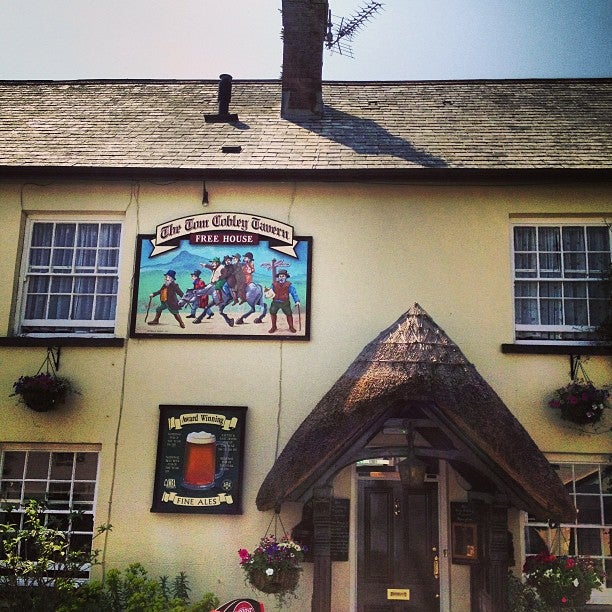
An old building with a colourful sign reading The Tom Cobley Tavern Free House near the door.
The Tom Cobley Tavern in Speyton via TomCobleyTavern.co.uk.

They had two sons (Robert Pinsent (1678 – 1707) and Thomas Pinsent (1685 – 1694)) and two daughters (Mary Pinsent and Elizabeth Pinsent) in the years that followed. However Robert died in 1686 as a relatively young man. He was 32 years old. His widow, Mary, was left with a young family.

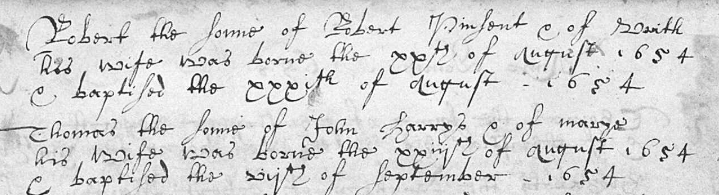
Handwritten record of Robert Pinsent's birth and baptism in 1654.
Robert is born and later baptized in 1654.

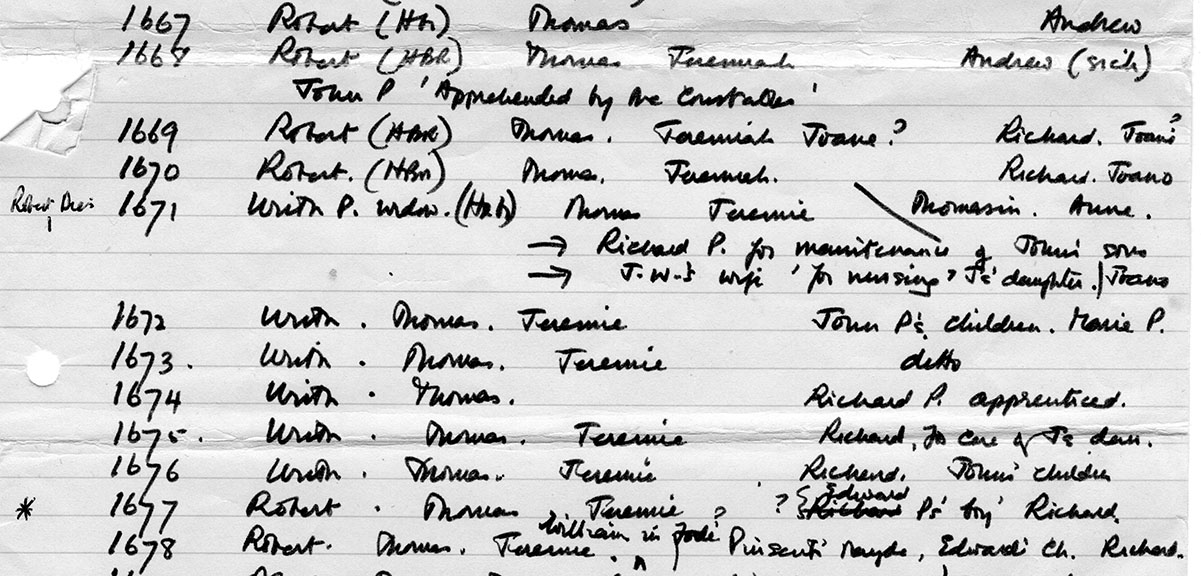
Robert, Mary’s eldest child, was eight years old when her husband died; so she seems to have made arrangements to keep the family farm “in trust” for him until he came of age. Robert’s grandmother, Urith was still alive, and she provided continuity within the family until she died in 1692. Nevertheless, the parish accounts show that there was considerable uncertainty as to who was to pay the rates for Huxbeare while Urith’s male descendants were infants. After her death, they decided to bill “the occupiers” – and left it at that.

Handwritten abstracts listing names and dates.
Abstracts of the Hennock Church Wardens’ Accounts from 1672.

Mary (née Hamlyn) re-married in 1692 (Exeter Marriage Licenses) and her new husband, Richard Hart, presumably, managed the farm until such time as her Robert “junior”, was able to take over. 

Robert and Mary’s other son, Thomas Pinsent, died as a nine-year old child and his elder sister, Elizabeth Pinsent, died as a young (21 year-old) woman. What happened to his other sister Mary Pinsent is uncertain. She may have married Joseph Collings, of Chudleigh, in St. Mary Arches, Exeter, in 1700. However, that is not confirmed. Alternatively, she may have remained single.

After her re-marriage, Mary Pinsent (née Hamblyn) became Mrs. Hart but the Pinsent family link with “Huxbeare” was such she may have been the “Mrs. Mary Pinsent of Huxbeare” who died in Hennock in May 1733.  Alternatively, that may have been her daughter Mary as the term “Mrs.” did not always signify marital status in those days; it was sometimes used to signify social status.

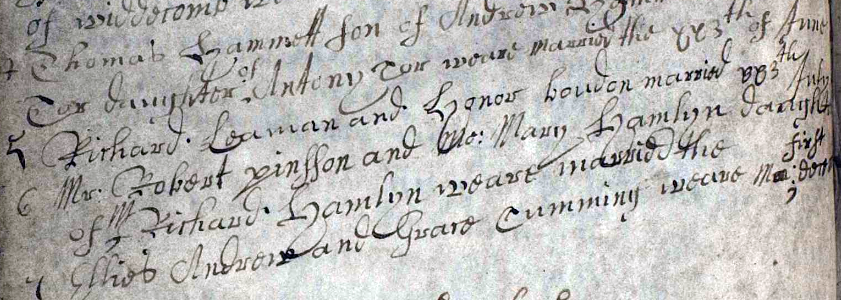
Handwritten record of Robert Pinsent's marriage to Mary Hamblyn.
Robert Pinsent and Mary Hamlyn marry in 1677.

The year before he died, her first husband, Robert Pinsent of Hennock “yeoman,” leased seven pieces of land covering 54 acres and including a small limestone quarry in Chudleigh from Sir Giles Inglett, of Chudleigh, for a year, at a cost of 5s and a nominal rent of “a peppercorn” (Devon Records Office: 22M2 M/25). The soil in Devon is mostly acidic and the limestone was probably used to neutralize soil.

Messy handwriting reads Robert Pinsent was buried this"
Robert is buried in 1686.

Family Tree

Grandparents

Grandfather: Thomas Pinsent: 1597 – 1649
Grandmother: Julian Sidstone: xxxx – 1663

Parents

Father: Robert Pinsent: 1624 – 1671
Mother: Urith Woolcombe: xxxx – 1692

Father’s Siblings (Aunts, Uncles)

Helen Pinsent: 1618 – 1618
Joan Pinsent: 1619 – xxxx
Mary Pinsent: 1622 – xxxx
Robert Pinsent: 1624 – 1671 ✔️
John Pinsent: 1626 – 1663
Julian Pinsent: 1628 – xxxx
Margaret Pinsent: 1630 – xxxx
Thomas Pinsent: 1633 – 1701
William Pinsent: 1638 – xxxx

Male Siblings (Brothers)

Robert Pinsent: 1654 – 1686 ✔️
Thomas Pinsent: 1663 – xxxx


Please use the above links to explore this branch of the family tree. The default “Next” and “Previous” links below may lead to other unrelated branches.
Robert Pinsent

Vital Statistics

Robert Pinsent: 1562 – 1626: GRO1758 (Woodhouse Down and Huxbeare Barton)

Dorothy Carpenter: 1565 – 1643
Married: 1586: Hennock

Children by Dorothy Carpenter:

Simon Pinsent: 1587 – xxxx (Married Elizabeth Stevens of London)
Robert Pinsent: 1589 – 1650 (Married Agnes Stevens of Ipplepen, 1655)
Dorothy Pinsent: xxxx – 1590
William Pinsent: 1591 – 1591
Helen Pinsent: 1592 – xxxx
Thomas Pinsent: 1597 – 1649 (Married Julian Stidstone, 1617; took over Huxbeare Barton in 1626)
George Pinsent: 1599 – xxxx
John Pinsent: xxxx – 1600

Family Branch: Devonport
PinsentID: GRO1758

Click here to view close family members.


Robert Pinsent was, most likely, an early son of William Pinsent of “Huxbeare Barton,” a significant farm on the west side of the River Teign, in Hennock.  However, the clerk who recorded his baptism failed to mention his parents’ names or his place of birth for that matter, so there is still an element of doubt. He would have been the son of William’s first wife, Joan, who died in 1590. 

Handwritten marriage record.
Record of Robert’s marriage to Dorothy Carpenter in 1586.

Robert Pinsent was definitely “of Huxbeare” when he married Dorothy Carpenter, of Exminster, in 1586 and the parish “Churchwardens’ Accounts” tell us that William and his son Robert paid the rates for “Huxbeare” in 1598. They also tell us that Robert and his (presumed) stepmother (another Joan: née Lambshead) shared the responsibility in 1603. William had, presumably, died in the interim. His widow would have been entitled to a life-interest in one third of his property – so she likely paid for one “moiety” (share) and Robert paid for the other two. Robert and and his own wife Dorothy were living at another family farm, “Woodhouse Down,” when his father died. This passed out of the family in the 1700s but it was still in existence when the Parish Tithes were commuted in the 1840s. “Woodhouse” is on the west bank of the Teign River a few miles south of “Huxbeare.” It is close to the main Chudleigh road bridge. The Accounts show Robert was paying the parishes rates for both farms by 1605. His step-mother must have either died or remarried.  

By 1616, Robert was also paying the parish rate for “Creda (Cressida) Downs”. I am not sure where they are. There had been Pinsents living in Hennock for a long time and some of the land may have been in the family for generations. Some may have been “copyhold” land – land that was technically “owned” by the feudal Lord of the Manor but allocated to a named family (essentially) in perpetuity – subject, of course, to rent and other feudal obligations that were written or “copied” into the Manor Roll. If the copy-holder bought-out his rent and other obligations it became “freehold” and thus, importantly, available for transfer and sale. I do not know how much of Robert’s holdings were, by then, “freehold” and how much “copyhold.” However, I do know that Robert also controlled some “leasehold” land.

Mr. William Honeywell, a local gentleman, kept a diary in which he listed the property he rented out in February 1604/5. He leased “To Robert Pynsentt, the Mill Marsh and Meadow below, for £3 6s 8d”. The following December Mr. Honeywell made a note of the fact that he “went to Woodhouse and there sold to Robert Pynsent and his wife 36 pounds of pewter dishes at 7d per pound, which came to 21/-.” Robert and Dorothy were moving up from wooden bowls and platters! Their finances must have improved after they moved to “Huxbeare” as they could then afford servants. The parish register refers to  the death of Zachary Brooking “servant to Robert Pinsent.” He was buried on 2nd September 1612. It also tells us that Dorothy Carpenter “servant of Robert Pinsent of Huxbeare”  was buried on 26th October 1618. Presumably she was probably one of his wife’s relations.

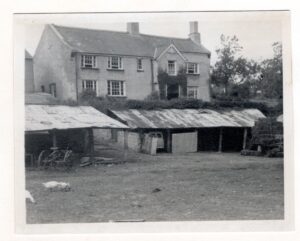
Black and white photograph of an old multistory building and sheds.
Photograph of Huxbeare Barton in the 1940s.

Whether they realized it or not, Robert and Dorothy lived in interesting times. Elizabeth I had come to the throne shortly before they were born and the country was still reeling from the changes her father (Henry VIII) and her elder sister (Mary) had made to the State religion. When she came to the throne  she, sensibly, instituted a compromise form of Protestantism that provided stability in the country at a time when much of Europe was still in a state of political and religious upheaval.

Robert married Dorothy two years before the Spanish Armada arrived off the Devonshire coast and Sir Francis Drake played his famous game of bowls on the Hoe at Plymouth (presumably waiting for the tide to turn before setting out to sea). Elizabeth I died in 1603 and Robert and Dorothy also lived through the turbulent reign of James I. One of their sons (Simon Pinsent) was in London a couple of years after Guy Fawkes was caught trying to blow up the Houses of Parliament: (“gun-powder treason and plot”).

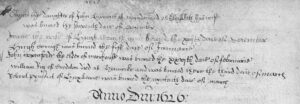
Written burial record.
Record of Robert’s burial in 1626.

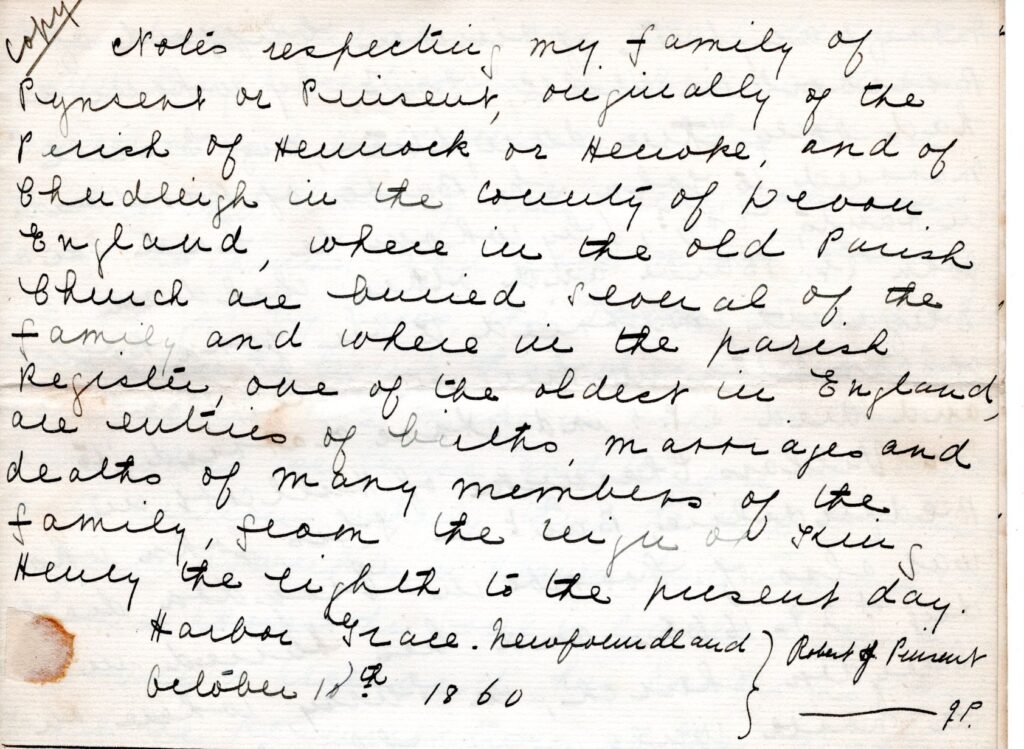
Robert died in 1626 and my great grandfather – Sir Robert John Pinsent – said he found a memorial to him “just inside the chancel” when he visited Hennock in 1860. I could not find it when I went looking in the 1960s.

Robert’s wife, Dorothy (née Carpenter) died in 1643, so she also lived to see King Charles I break with Parliament and raise his standard at Nottingham at the start the English Civil War in 1642. What she made of it all, I have no idea!

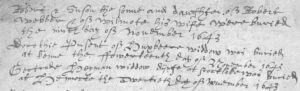
Handwritten burial record.
Record of Dorothy Carpenter’s burial in 1643.

Robert and Dorothy had six sons (Simon Pinsent, Robert Pinsent, William Pinsent, Thomas Pinsent, George Pinsent and John Pinsent) and two daughters, (Dorothy Pinsent and Helen Pinsent) between 1587 and 1600. Life expectancy was; however, low and only two of their sons seem to have grown up and had families of their own.

Their eldest son, Simon, survived childhood and, in an entry in his diary dated 25th April 1607, Mr. Honeywell writes: “I went to Chudleigh Market and there delivered unto Jervis, Mr. Eastchurch’s man, my letter unto Simon Pynsent, in London, for to receive the £8 5s that I had charged his master with in my yellow paper book. There I received his master’s note of debt to the same effect.” Simon would have been 20 years old at the time. He must have been working in London and a useful point of contact. Simon probably married Elizabeth Stevens in St. Gregory by St. Paul’s Parish in London in November 1609. Whether she was a Devonian, and related to the Agnes Stevens we shall meet below, I do not know. I can find no evidence of them having had children. London was not a particularly healthy place and Simon may well have died while there. He seems to have predeceased his father – who died in 1626. Had he not, he would have been first in line to inherit the family farm at “Huxbeare”.  

Robert and Dorothy Pinsent’s eldest surviving son, Robert Pinsent married a girl called Agnes Stevens from Ipplepen and moved to Bovey Tracey. What he did there I do not know. Agnes’s family had connections in London and it is tempting to suggest that she was Elizabeth Steven’s sister; however, I cannot say for sure. I am not aware that either family owned land in Bovey Tracey. It looks as if Robert’s younger brother, Thomas Pinsent stayed on in Hennock and helped  his father run the family estate.

Thomas married Julian Stidstone, a widow, from Dartington, in 1617 and inherited most of the family holdings (including “Huxbeare”) when his father died.

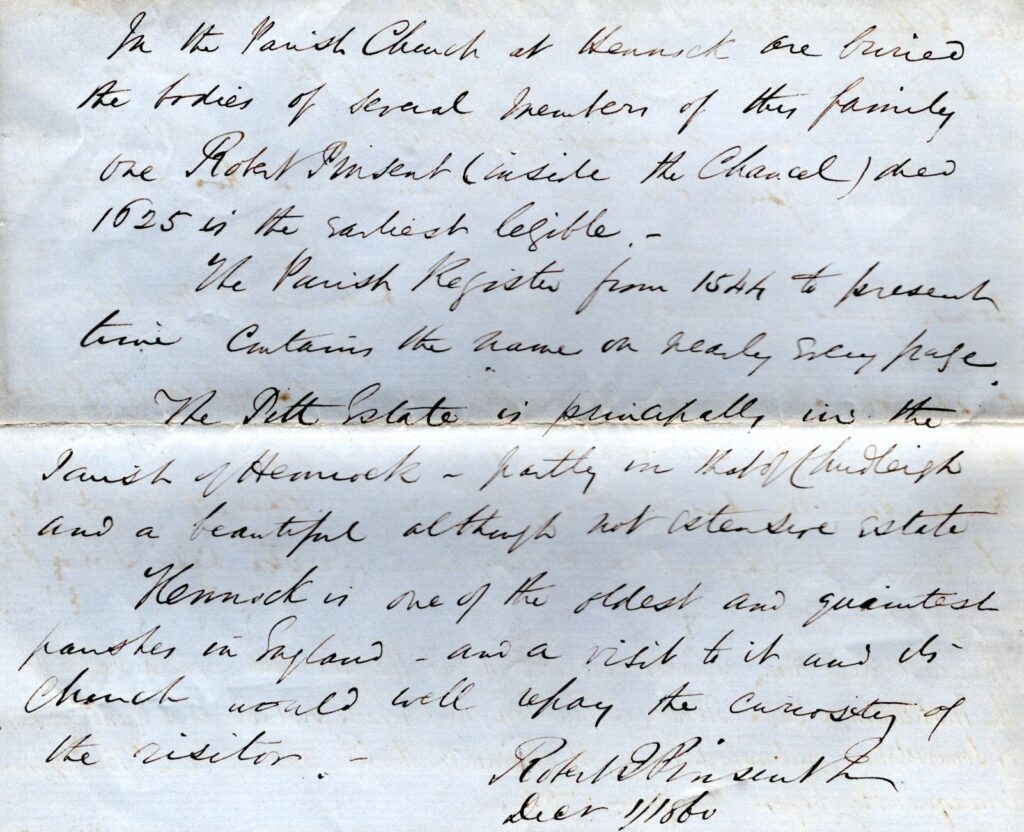
Robert seems to have been buried in the chancel of Hennock Church. It is no-longer visible but I have seen references to it. Whether my great-grandfather, Robert John Pinsent (later Sir Robert J. Pinsent) saw it I am not sure. In a note while in Devon on a visit in 1860 he states that: “In the Parish Church at Hennock are buried the bodies of several members of the family. One Robert Pinsent (inside the Chancel) died in 1625 is the earliest legible.” Robert’s widow, Dorothy Pinsent of “Huxbeare” lived on. She did not die until 1643, early in the Civil War.

Robert “junior’s” brother George was baptized in Exminster in 1598/9. He may have married Elizabeth Soper and he may have also moved to Bovey Tracey. If so, he may be the George Pinsent “Butcher of Bovey Tracey” who was charged in the “Court of King’s Bench” in 1642 over a matter of a debt that he owed to Anthony Gribble (KB27/1676 m178d).

It is not clear what happened to Robert and Dorothy’s younger daughter, Helen. However, it seems clear that her elder sister, Dorothy, was buried in Exminster in 1590. This shows a residual attachment to Robert’s wife’s parish of birth. Their sons William and John both died young.


Family Tree

Parents

Father: William Pinsent: 1527 – 1601
Mother: Joan Unknown: 1535 – 1590


Please use the above links to explore this branch of the family tree. The default “Next” and “Previous” links below may lead to other unrelated branches.