Please use the above links to explore this branch of the family tree. The default “Next” and “Previous” links below may lead to other unrelated branches.
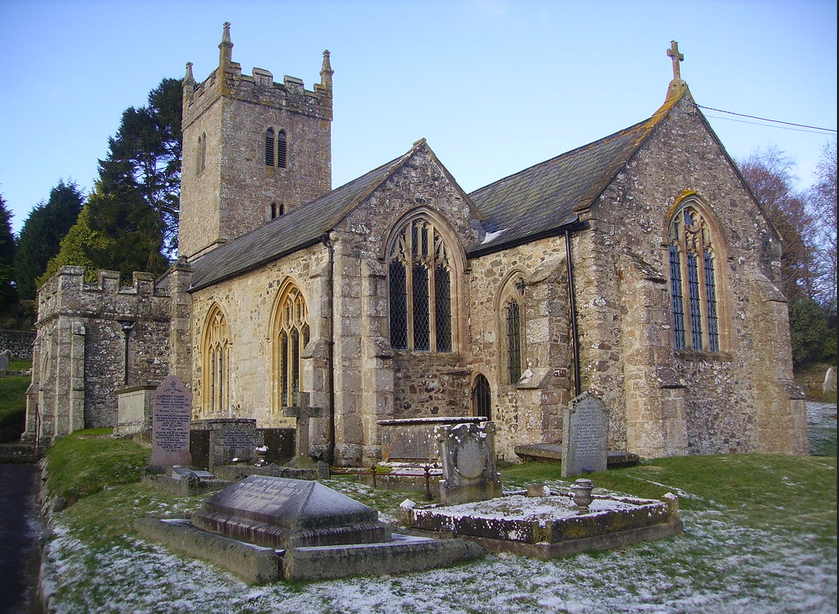
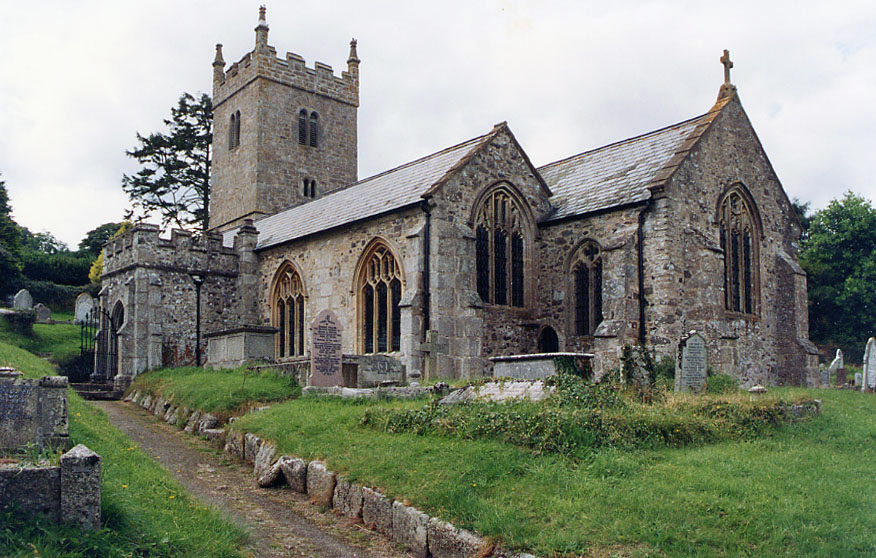
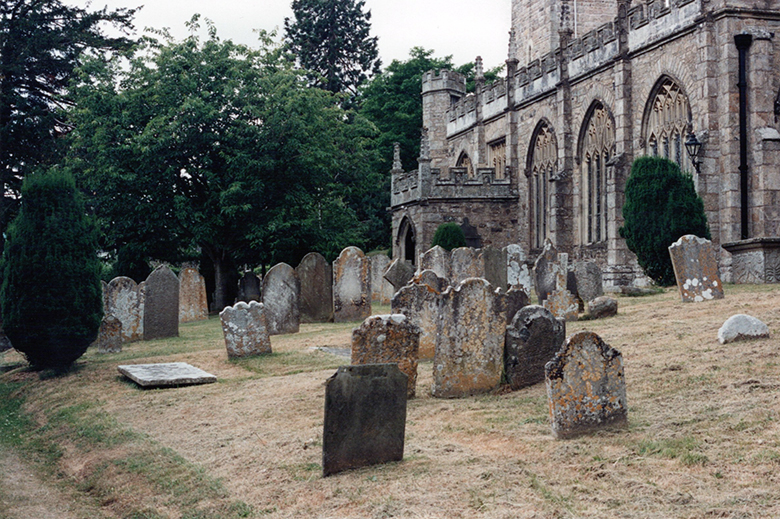
The Hennock Parish Church in Devon, via Steve Stoneman on Flickr.
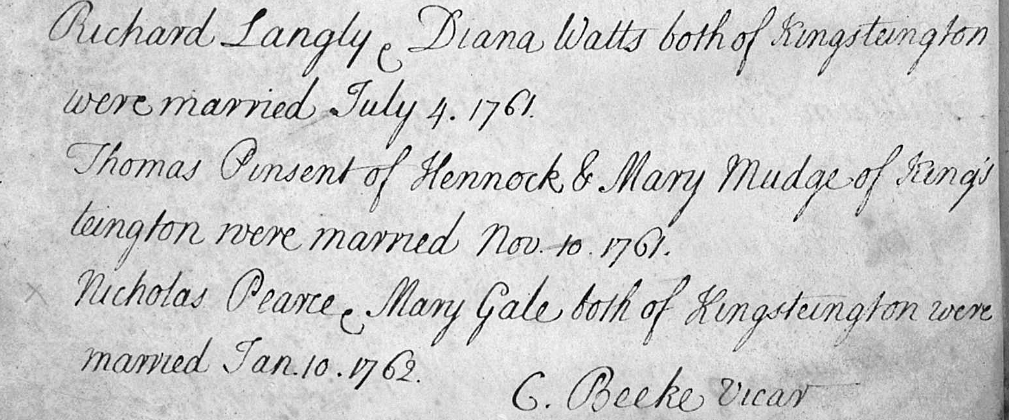
Thomas Pinsent “the younger of Pitt” was the eldest son of Thomas Pinsent and Mary (née Gale) of Pitt Farm, near Chudleigh Knighton, in Devon. He married Mary Mudge, in Kingsteignton, in 1761. He was over forty years old at the time – which seems late for an affluent farmer but there is nothing to suggest an earlier marriage and no sign of his having had children either before, or after, the marriage.
Thomas and Mary marry on November 10, 1761.
His father and mother were still alive when he married and he was referred to as “Thomas Pinsent, junior, yeoman.” His parents died in 1777 and 1774 respectively and he inherited his father’s land in Hennock, Teigngrace and elsewhere. His younger brothers, Robert, Gilbert and John were in commerce in Newton Abbot.
Hennock Parish Land Tax Assessment: 1780-1832. Transcribed from microfilm.
Thomas Pinsent “the younger” probably acquired Lower Albrook Farm in Kingsteignton (Land Tax £1 6s 6d per annum) through his marriage to Mary Mudge. Albrook is near Sandygate just to the north of the town of Kingsteignton. He certainly controlled it by 1780 and managed it, along with Pitt, in Hennock, and “Diamond’s Delight”, in Teigngrace until his own death in 1802.
Thomas had no sons or daughters to help him run the farm, so he must have relied on outside help. As a landowner, he would have been expected to take on apprentices. Some of which were appointed by Overseers, who allocated them according to a set rota.
The Parish Overseers tried to limited the number of new settlers in the parish – especially if they thought that they might become chargeable on the parish rates someday. They conducted “Settlement Examinations” to determine if an individual had the right of residence in their parish. If not, they were summarily kicked out and returned to their parish of birth.
Transcribed text of Chudleigh Settlement Examination in 1781.
The Overseers in Chudleigh examined Jonathan Bird in 1781. He testified that he had been bound as an apprentice to Thomas Pinsent “of Hennock” until he was twenty-one, and had then returned to Chudleigh to get married. The Apprentice Register for Kingsteignton shows that the Overseers assigned John Goodwin to Thomas Pinsent as an apprentice for Lower Albrook in 1791, and William Northway as apprentice for the same place in 1797.
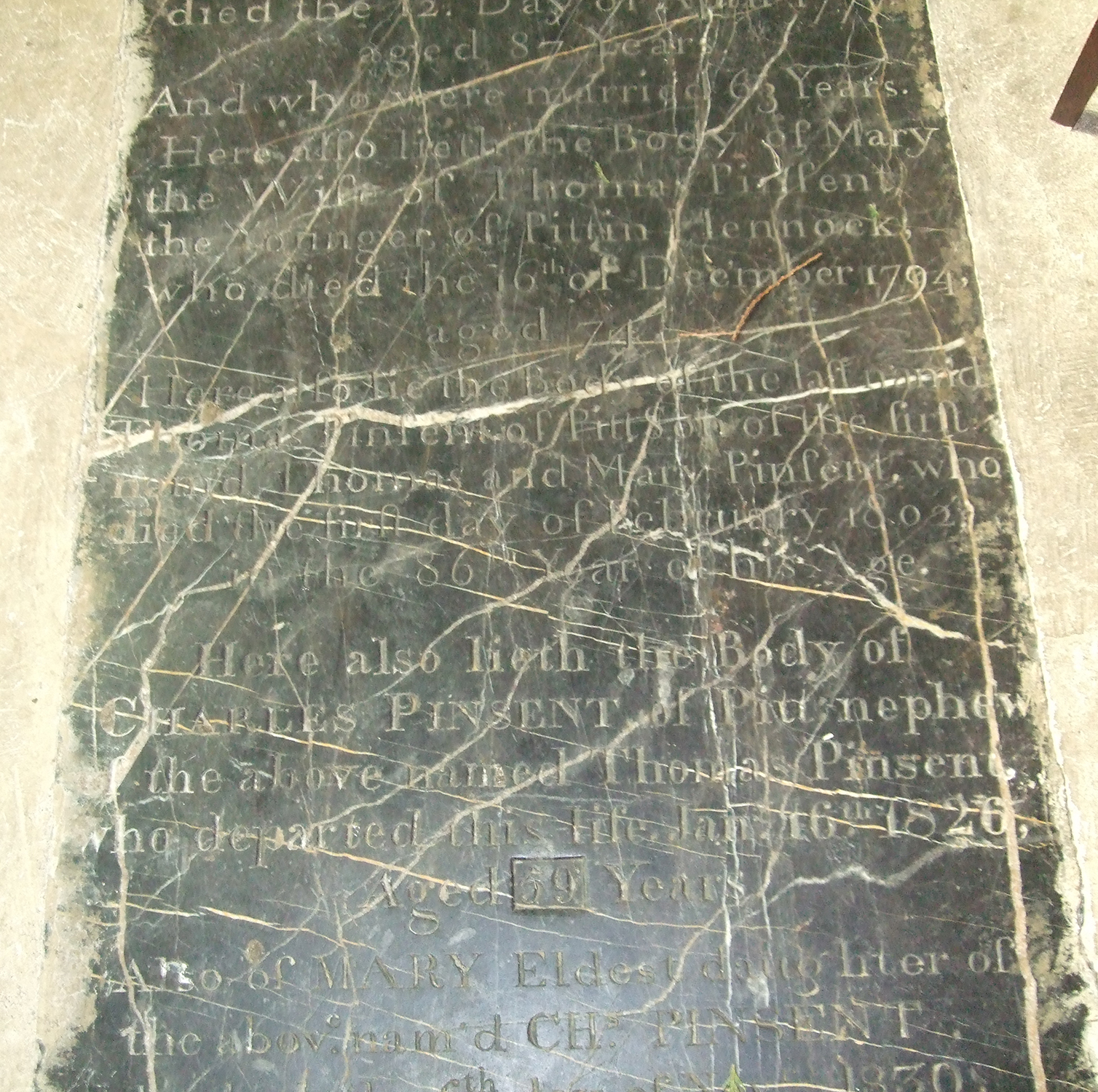
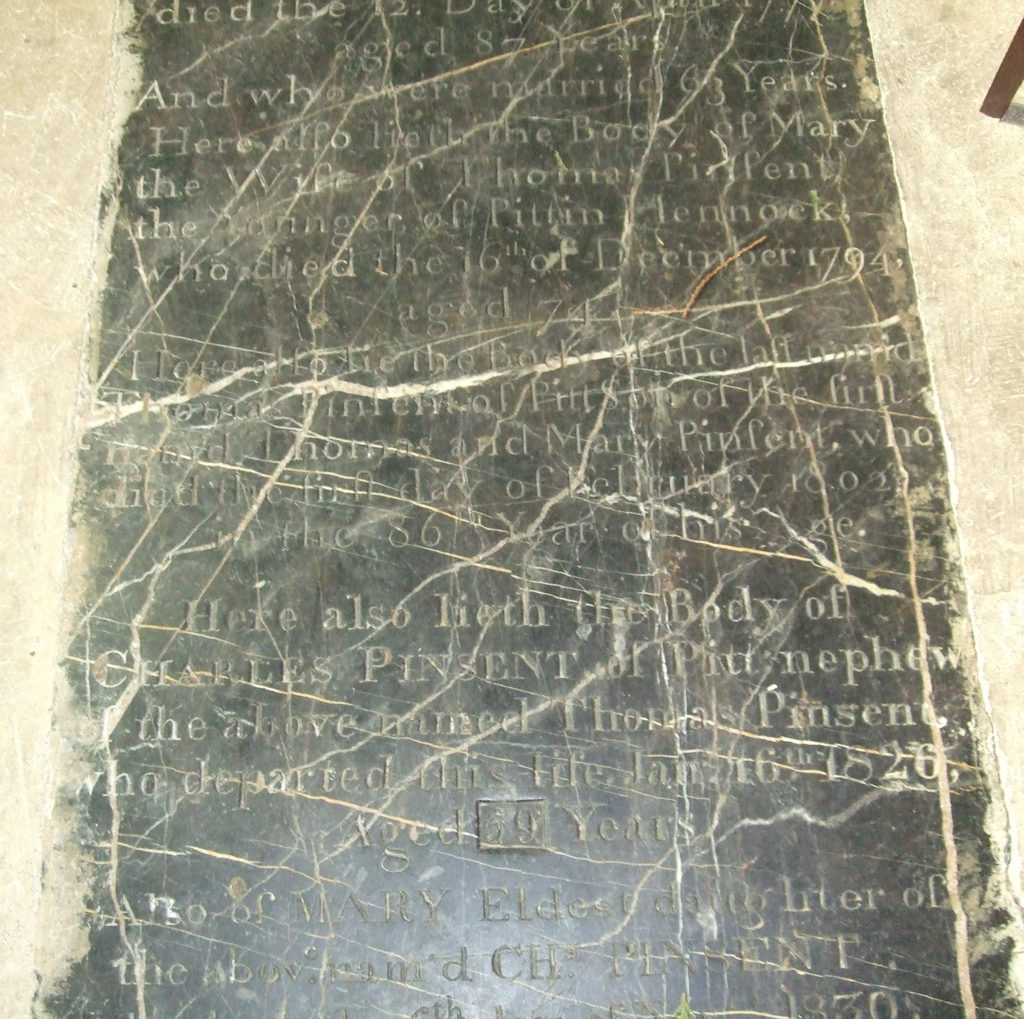
The memorial in Hennock Church.
The memorial in Hennock Church that notes the passing of Thomas Pinsent (“the elder”) of Pitt in 1777 and of his wife, Mary, in 1774 (above) also refers to the death of Mary, the wife of Thomas Pinsent (“the younger”) of Pitt, who died in 1794, and of Thomas, himself, who died in 1802.
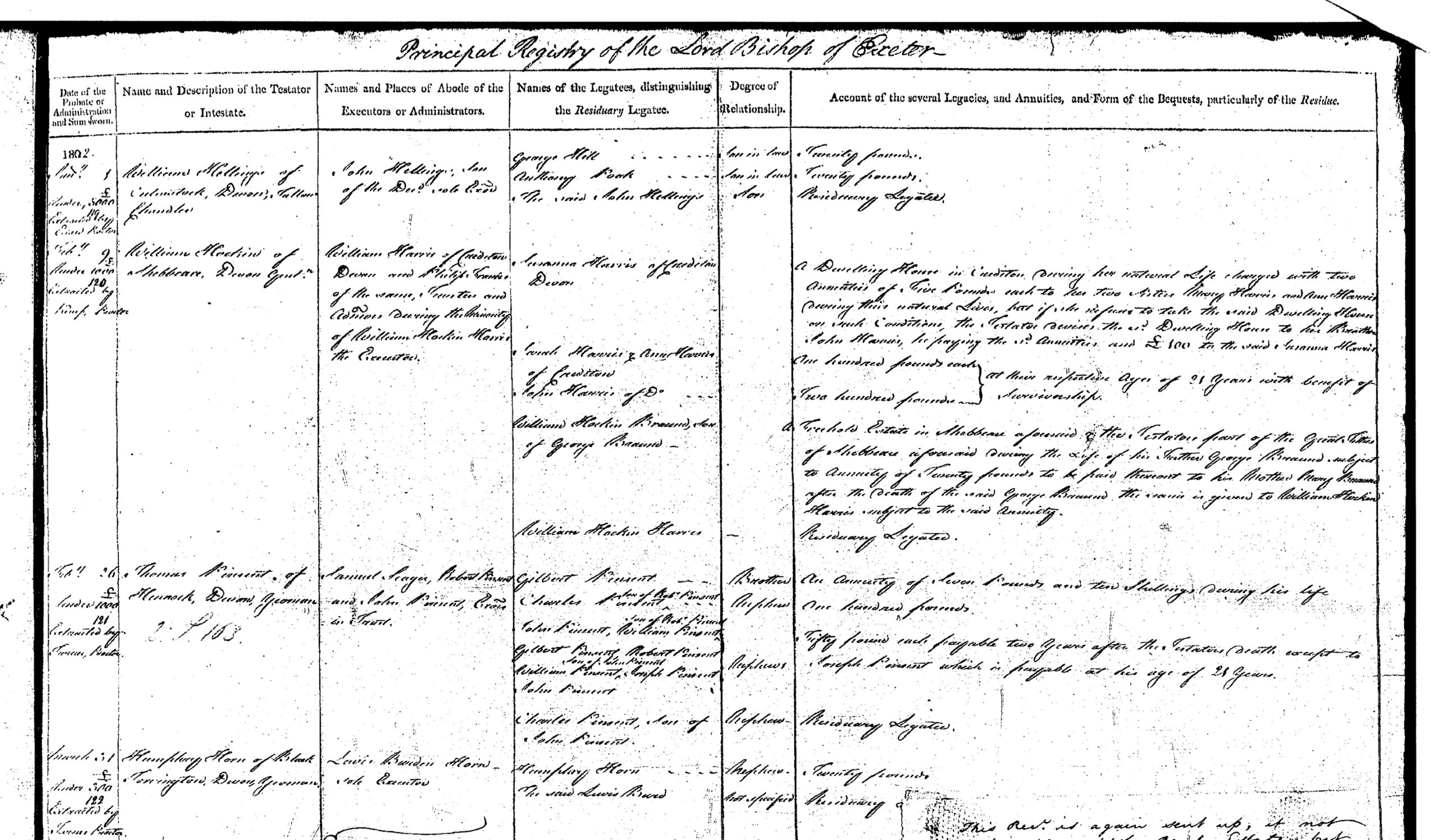
Thomas Pinsent left a Will that was destroyed when the Exeter Probate Office was bombed during the Second World War. Fortunately, its content had previously been summarized in the “Death Duty Register for Durham, Ely, Exeter, Oxford (1796-1811)”.
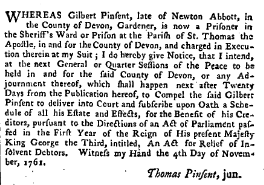
London Gazette, November 3, 1961.
The Will must have been written before 1791 – as Thomas’s brother Gilbert was still alive and his nephew Joseph was still under 21 years of age.
Gilbert was the least successful of Thomas’s brothers and he wound up in debtor’s prison in Exeter, in 1761. It fell to Thomas Pinsent “junior” to bail him out and see that he paid off his creditors (London Gazette: 3rd November 1761).
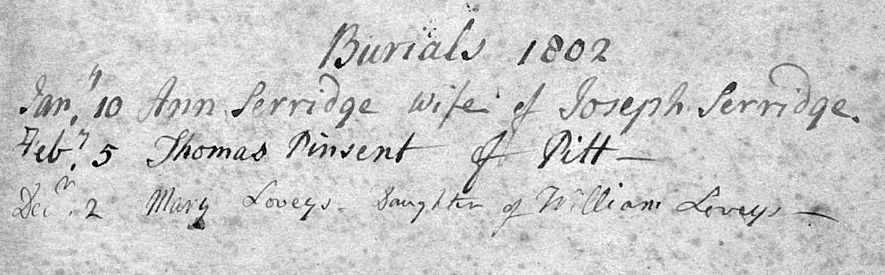
Thomas is buried on February 5, 1802.
Thomas left a bequest to Gilbert (not that he was alive to receive it as he had died in 1794) and gave relatively large bequests to the sons of his then deceased brothers Robert (i.e. Charles, William and John) and John (i.e. Gilbert, Robert, William, Joseph, John and Charles). Their lives are all discussed elsewhere.
Thomas made John’s son Charles – who was by no means the eldest – his principle beneficiary. He inherited Pitt and the rest of Thomas’s land holdings. Brother John had died relatively young (1772) and it seems likely that his younger children, including Charles and Joseph had moved to Pitt to live with their uncle. Charles seems to have taken to farming and it is likely, given Thomas’s advanced age (and absence of children) that Charles had been running the farm for some time.
Thomas’s will appears in the Principal Registry of Bishop of Exeter
Charles took responsibility for payment of the Land Tax for Pitt (£1 0s 6d per annum) and for “the Marshes” (10s per annum) in 1791 – when he was 25 years old.
Please use the above links to explore this branch of the family tree. The default “Next” and “Previous” links below may lead to other unrelated branches.
Urith Pinsent: 1714 – 1751 Thomas Pinsent: 1717 – 1802 (Farmer at Pitt, Hennock: Married Mary Mudge of Kingsteignton, 1761) Julian Pinsent: 1719 – 1721 Robert Pinsent: 1721 – 1783 (Sergemaker and Shopkeeper, Newton Abbot: Married Eleanor Shapley of Wolborough, 1744) Gilbert Pinsent: 1724 – 1794 (Woolcomber of Newton Abbot: Married (1) Rebecca Collins, 1746; (2) Sarah Lea, 1791) Julian Pinsent: 1726 – xxxx John Pinsent: 1728 – 1772 (Merchant of Newton Abbot: Married Susanna Pooke of Wolborough, 1750) Mary Pinsent: 1731 – xxxx
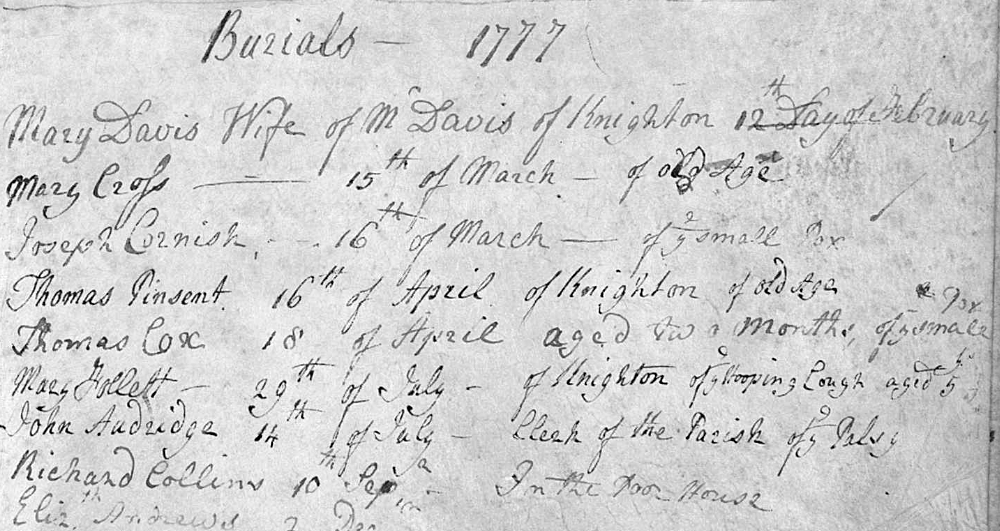
A memorial in St. Mary’s Parish Church, in Hennock, states: “Here lieth the Body of Mary the Wife of Thomas Pinsent of Pitt in this Parish who died the 5th of April 1774 aged 84 Years: Also the Body of Thomas Pinsent her Husband who died the 12th Day of April 1777, aged 87 Years: And who were married 63 years.”
Given the dates, this implies that the Thomas who married Mary was the son of Thomas Pinsent and Ann Waters. He was was baptized in Bovey Tracey in 1690/1691. It reassures us that Thomas Pinsent of “Pitt” was the son of an earlier Thomas Pinsent.
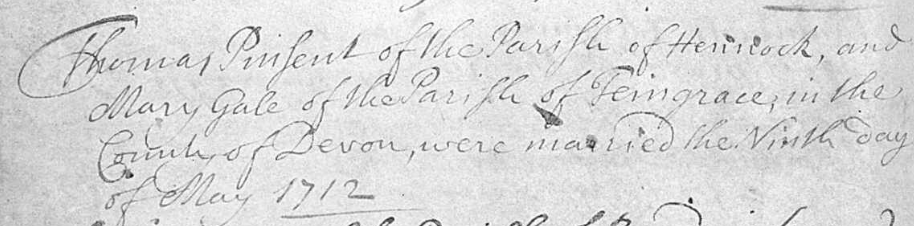
Thomas “of Pitt” married Mary Gale of Teigngrace in 1712 – which is, again, broadly consistent with the inscription. Elsewhere, he is described as being “a tanner of Hennock,” so it seems likely that he worked with his father (?), his grandfather (?) (two more Thomases!) and a putative elder brother (Simon Pinsent) at the family’s “tannery” at “Slade”, near Slade Cross, before settling at “Pitt.” There are gaps in the birth records so Simon’s position in the family is somewhat in doubt. His life is described elsewhere.
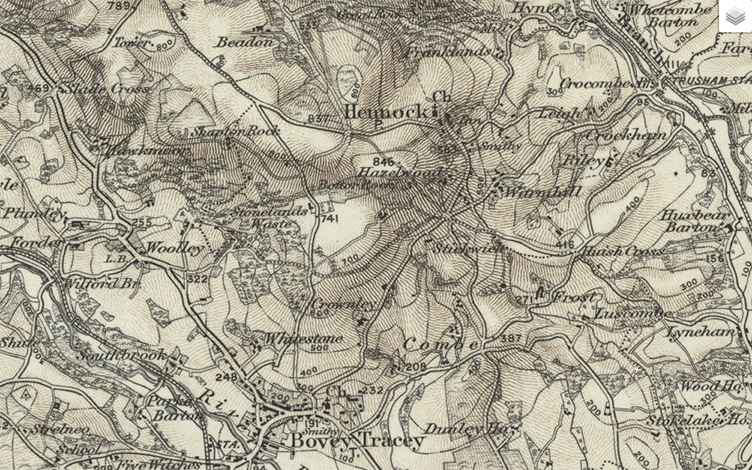
Map of Slade and Huxbeare.
Simon seems to have taken over the family’s “tannery” after his father (?) Thomas Pinsent “senior” and his grandfather (another Thomas Pinsent) died – in 1696 and 1701 respectively. He paid the parish rates for “Slade” (1s 4d per annum), through until 1733 and perhaps beyond, but the data are missing.
In 1723, Simon and Thomas Pinsent “ofHennock” both appeared before the Magistrates at the local Quarter Sessions and swore an oath of loyalty to King George I (QS17/2/1/2 & QS17/2/4/7c) after a failed Jacobite plot in support of “Bonnie Prince Charlie.” The oath was compulsory, and it provides a useful look at who was who in the various parishes around that time.
Simon had several children including Hugh who was born in 1708. He also worked in the tannery and, I would have thought, it would have been passed on to him; however, it seems to have gone to Thomas instead – perhaps Hugh was deemed too young to manage the operation. Simon’s other sons, somewhat enigmatically, seem to disappear from the district. Perhaps they died.
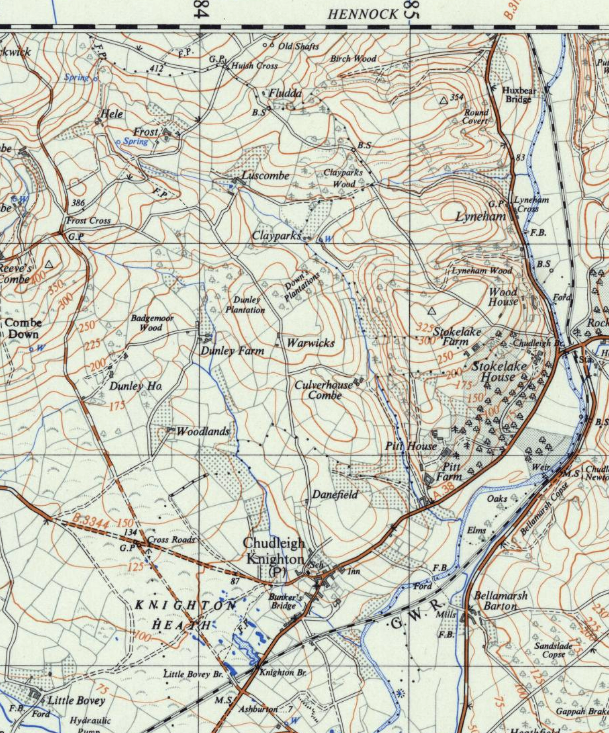
Map showing Pitt Farm near Knighton in Hennock.
Why our Thomas Pinsent switched from tanning to farming is not clear. However, if his elder brother (?) Simon inherited the tannery, he might well have looked elsewhere. “Pitt” is close to “Knighton” near the southern border of the parish and it worth noting that the Pinsents of “Knighton,” who belonged to the DEVONPORT branch of the family, died out in 1711, the year before our Thomas married. He may have inherited or purchased “Pitt Farm” and land that had previously belonged to them.
Thomas married Mary Gale of Teigngrace, in 1712, and he probably acquired “Diamond’s (a.k.a. Dymond’s) Delight” (Land Taxed at 10s per annum) in that parish as part of a marriage settlement. He paid land tax for it – or at least his son did from 1780 onwards. Thomas’s grandson, Charles Pinsent sold “Diamond’s Delight” to James Templar in 1802. Thomas may also have acquired “Dart’s, otherwise Pinsent’s” (Taxed at £1 18s per annum) in Teigngrace from the Gale family; however, if he did so, he must have sold it James Templar as he owned it too in 1780.
Thomas of “Pitt” may have started out as a “tanner” but he was unquestionably a “farmer” by the time he took over the payment of the parish rates for the tannery in 1733 – which was several years before Simon died in Lustleigh in 1744. Thomas stopped paying for “Slade” in 1740. Perhaps he sold it – at any rate it passed out of the family. Interestingly, documents in the Devonshire Archives show that the Hawkmoor family acquired “Slade and Pool Mill Down” sometime in the 1730s [Southwest Heritage Trust: …/4086/T/34-47]. Perhaps they had a leasehold arrangement on the property prior to the sale.
Abstract from the Churchwarden’s Accounts from Hennock Parish, Devon.
The “Roll of Free Tenants of Chudleigh Manor” – a document in the Ugbooke (i.e. Clifford Family) Archive – tells us that Thomas paid 1s per annum as “Chief Rent” for “Pitt Farm” in 1727 and the “Churchwardens’ Accounts” in Hennock make their first mention of Thomas living there the following year. However, that was at the start of a new ledger after a break in the records, so he may have been there for quite a while. Thomas Pinsent paid approximately 9d per year for “Pitt” between 1728 and 1771. He acquired some pasture beside the Teign River in 1749 and also paid an extra 1s 3d for “his marshes”. This, in aggregate, was not a lot, suggesting a far smaller farm than the estate was later to become.
Thomas Pinsent “the elder” or “senior” of Pitt was, occasionally, referred to as Thomas of “Knighton;” for instance at the birth of his son Robert in 1721 and his own death in 1777. However, he does not seem to have owned the farm at “Knighton” and the attribution probably comes from “Pitt” being in Chudleigh Knighton, a village at the south end of Hennock parish – close to the adjoining parish of Chudleigh.
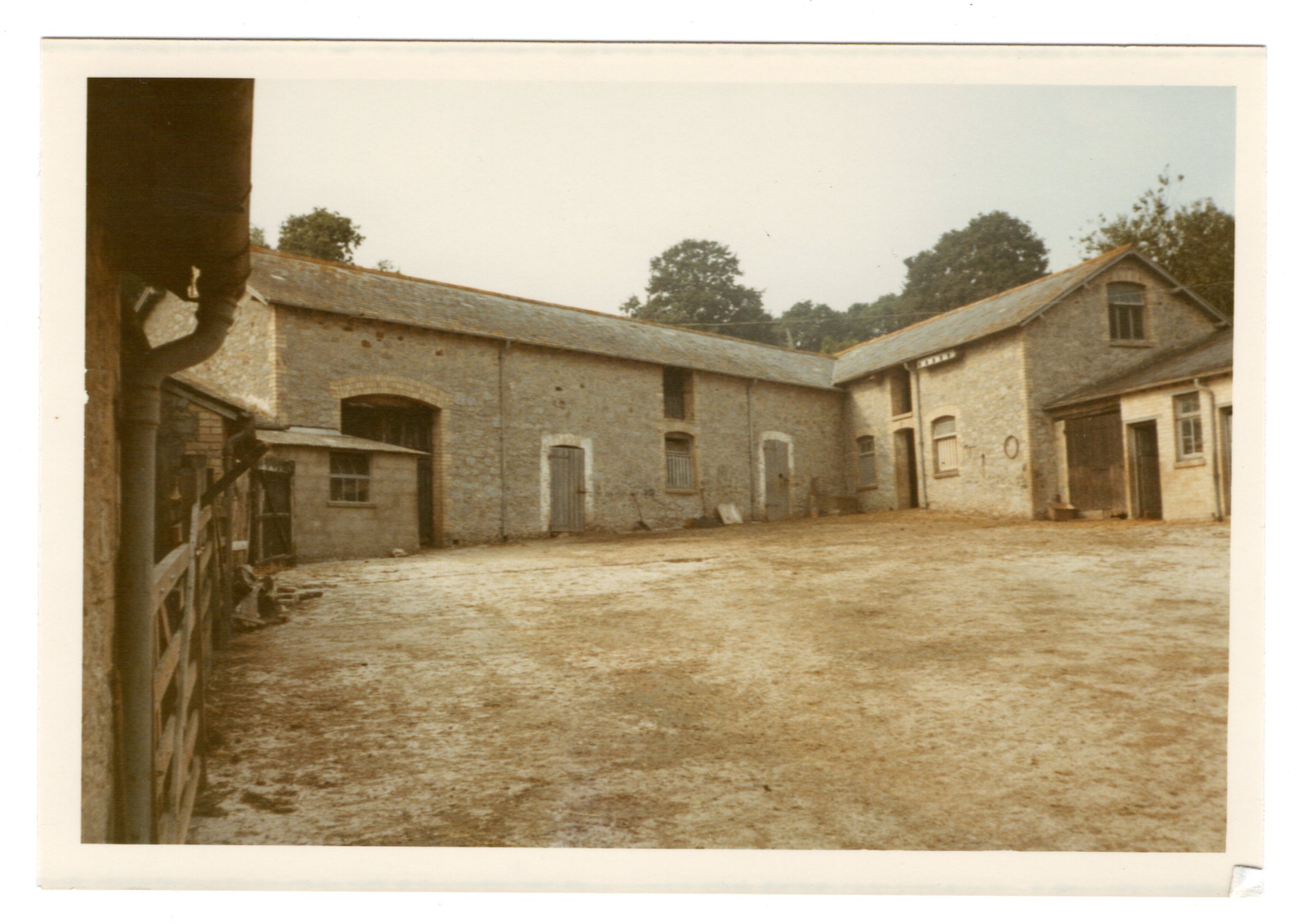
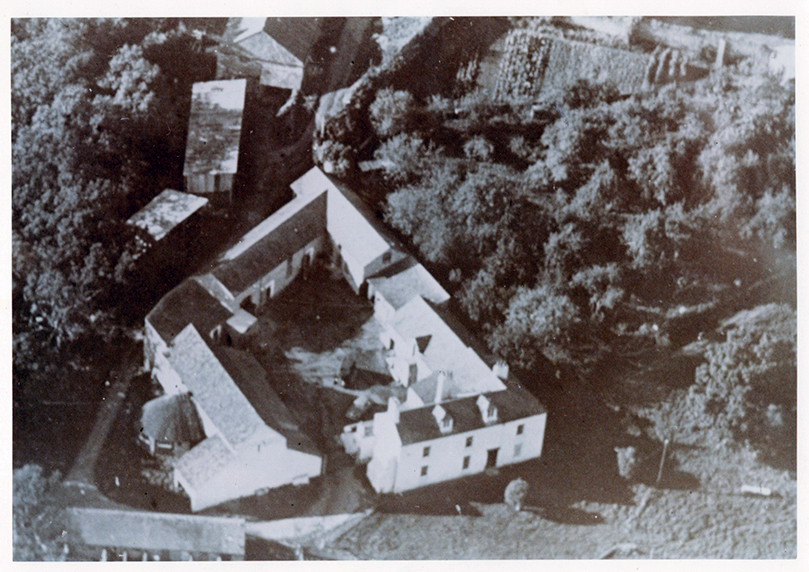
Pitt Farmyard as photographed in the 1960s.
“Knighton Farm,” which had belonged to a DEVONPORT branch of the family from the 1500s into the early 1700s, was said to comprise 69 acres in 1832 when William Noseworthy returned the tenancy to the owner, Rev. John Templer of Lindridge, in 1832 (Exeter and Plymouth Gazette: Saturday 6th October 1832). This would have been a shadow of its former self. “Knighton” was a small manor in its own right in the 1600s.
Pitt Farm as photographed in the 1960s.
After Thomas Pinsent died, his son, Mr. Thomas Pinsent “the younger” (a.k.a the “Second of Pitt”) seems to have taken over and paid similar rates for “Pitt” until he died in 1802. He was also obliged to pay a Government-mandated “Land Tax” of £1 0s 6d per annum for “Pitt” and 10s per annum for “the Marshes” from 1780 onward.
Abstracts taken from the 1780 Land Tax Assessments in Hennock and Teigngrace Parish.
Papers in the Ugbrooke Archive tell us that the elder Thomas’s grandson, Charles Pinsent swapped his “Marshes over Teign” for several small fields or “closes” owned by James Templar, of Stover, in 1810. We shall meet up with Thomas Pinsent “the younger” and also his nephew Charles Pinsent elsewhere.
What happened to Urith and her sisters is unclear. However, Urith may have married Henry Hearder and moved to Teigngrace. Her sister Mary may have been the Mary Pinsent of Hennock who had Letters of Administration processed in 1753, or, alternatively the Mary Pinsent who died in 1768. Their mother Mary (née Gale) died in Hennock in 1774 and her husband, Thomas Pinsent died in 1777 – as shown by the parish records and the memorial stone in Hennock Church mentioned at the beginning of this discussion.
The four boys lived to maturity and married, and their lives, and the lines of descent of the younger three are discussed elsewhere. Thomas Pinsent, being the eldest son, inherited the bulk of the “Pitt” estate; however, as he was childless it then passed to Charles Pinsent who was one of brother John’s sons. It was still in the family in the mid 1800s.
Please use the above links to explore this branch of the family tree. The default “Next” and “Previous” links below may lead to other unrelated branches.
Please use the above links to explore this branch of the family tree. The default “Next” and “Previous” links below may lead to other unrelated branches.
Please use the above links to explore this branch of the family tree. The default “Next” and “Previous” links below may lead to other unrelated branches.
Thomas Pinsent was, most likely, the son of another Thomas Pinsent – by his wife Julian (née Wilmeade). There are strong circumstantial links between him and his (inferred) father but there are gaps in the parish records, so I am unable to confirm his parentage. Given this element of doubt, Thomas has been pruned from the “DEVONPORT” tree and designated the founding father of a separate branch of the family: the “HENNOCK” branch. He was probably born in either Hennock or Bovey Tracey shortly after his parents married in 1657.
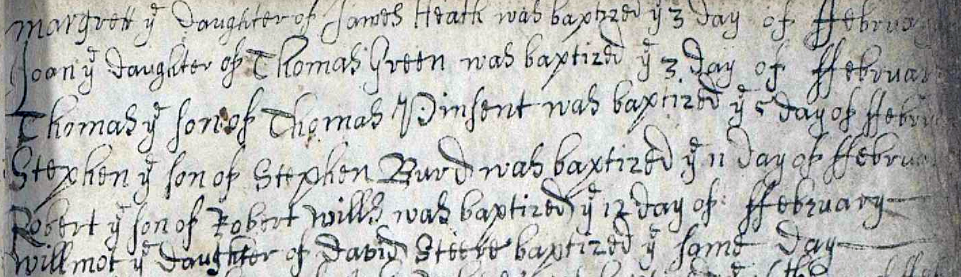
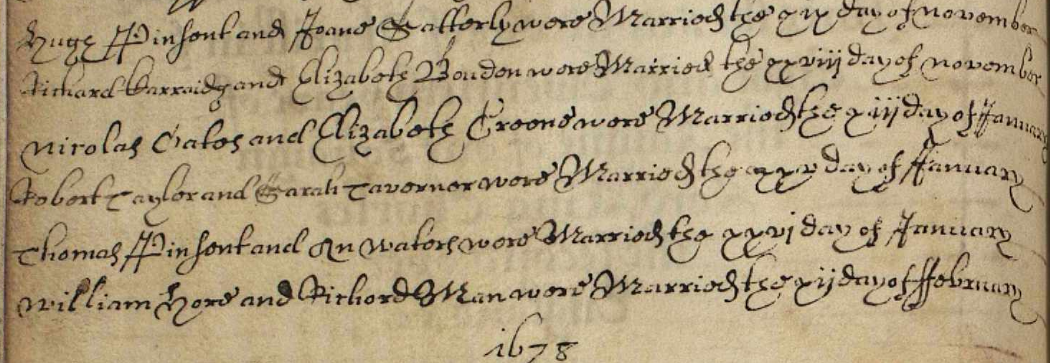
Thomas Pinsent marries Ann Waters in 1678.
This particular Thomas seems to have worked at the tannery at “Slade” that his father acquired through his marriage to Julian Wilmeade (see elsewhere). He lived with his family in Bovey Tracey – which allowed for easier access to the tannery than from Hennock village – and he married Ann Waters there in 1678. They had several children; however, their none of their lives are particularly well documented – again a function of poor record keeping at the end of the 17th Century. In addition to the six children (eight if you include two unnamed twins who were born and (presumably) died in Bovey Tracey in 1696), Thomas and Ann probable had a son called Simon Pinsent – who would been born shortly after they married. Unfortunately, I have not been able to locate his birth record either.
There was a Simon Pinsent born to a Thomas baptized in Bovey Tracey in 1652; however, that was five years before Thomas married Julian Wilmeade, so the date seems completely wrong. The entry was; however, a late addition to the parish register and it could, I suppose, have been inserted as 1652 in mistake for 1657. Perhaps he was Thomas “junior’s” uncle. He is not likely to have been our Thomas’s elder brother!
The younger Simon (son of Thomas and Ann) was included in a “lease for three lives” negotiated by his grandfather (or his father) and, as the, probably eldest, son of Thomas “junior,” he appears to have taken over the tannery at Slade when his grandfather died in 1701. That was the year (coincidentally or otherwise) that Simon married. This would be extremely late for someone born in 1652 or 1657 to start a family. Simon’s life is described elsewhere.
Thomas Pinsent “junior’s” life is hard to differentiate from his father’s as they share a common Christian name. However, Thomas and Ann definitely had a son, Robert Pinsent, but it is not clear what happened to him. He is another loose end. Robert’s younger brother, the Thomas Pinsent, who was born in 1690/1, seems to have joined his father and his (?) elder brother, Simon, in working at the tannery – at least he did until he married, in 1711.
The cemetery at St. Thomas’s in Bovey Tracey, Devon. 1994.
This was the time of the great die-off that occurred in the DEVONPORT Pinsent family at “Knighton” and they ran out of heirs. What happened to the farm there is uncertain. However, this third Thomas and his wife Mary (née Gale) seem to have moved to a nearby farm at “Pitt” in Hennock that very likely included land derived from Thomas’s “Knighton” cousins.
It is worth noting that the “Knighton” area changed radically in the 1700s as the nearby discovery of coal and potter’s clay (“Bovey Beds”) led to industrial development and the farm at “Knighton” seems to have been overtaken by housing. It is not for nothing that the local pub was called the “Clay Cutters Arms.” How much, if any, benefit Thomas “of Pitt” derived from the sale of land is uncertain. However, Chudleigh Knighton, as the community came to be known, grew fast.
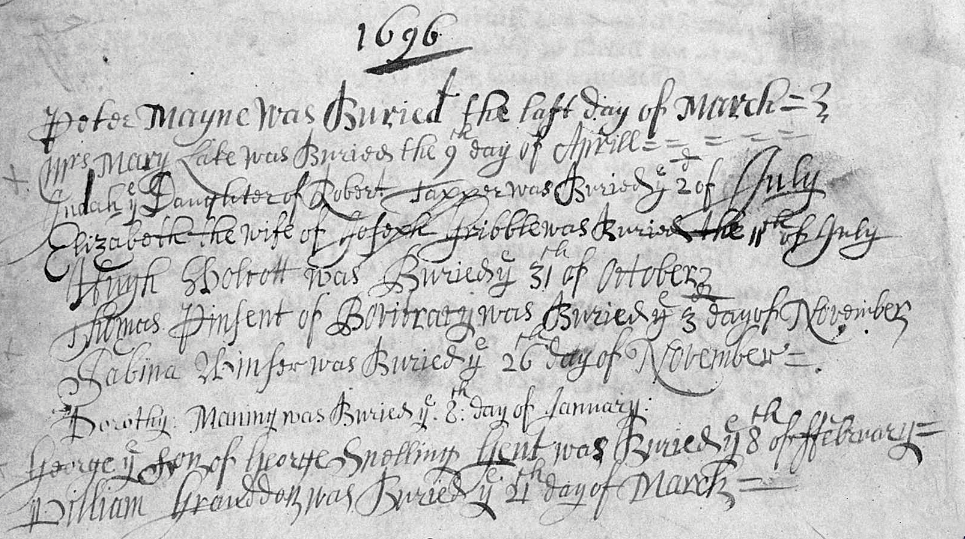
This (third) Thomas’s father, Thomas Pinsent “of Bovey Tracey,” who is discussed here, was buried in his original home parish of Hennock in 1696. If I am right, he predeceased his own father, the original Thomas Pinsent “of Slade,” by a few years. There is a monument to the latter in St. Mary’s Church in Hennock dated 1701.
Please use the above links to explore this branch of the family tree. The default “Next” and “Previous” links below may lead to other unrelated branches.
Please use the above links to explore this branch of the family tree. The default “Next” and “Previous” links below may lead to other unrelated branches.
Please use the above links to explore this branch of the family tree. The default “Next” and “Previous” links below may lead to other unrelated branches.
Please use the above links to explore this branch of the family tree. The default “Next” and “Previous” links below may lead to other unrelated branches.
Please use the above links to explore this branch of the family tree. The default “Next” and “Previous” links below may lead to other unrelated branches.