Vital Statistics
Thomas Pinsent: 1691 – 1777 GRO1304 (Tanner and Farmer at Pitt, in Hennock)
Mary Gale: 1690 – 1774
Married: 1712: St. Mary Arches, Exeter
Children by Mary Gale:
Urith Pinsent: 1714 – 1751
Thomas Pinsent: 1717 – 1802 (Farmer at Pitt, Hennock: Married Mary Mudge of Kingsteignton, 1761)
Julian Pinsent: 1719 – 1721
Robert Pinsent: 1721 – 1783 (Sergemaker and Shopkeeper, Newton Abbot: Married Eleanor Shapley of Wolborough, 1744)
Gilbert Pinsent: 1724 – 1794 (Woolcomber of Newton Abbot: Married (1) Rebecca Collins, 1746; (2) Sarah Lea, 1791)
Julian Pinsent: 1726 – xxxx
John Pinsent: 1728 – 1772 (Merchant of Newton Abbot: Married Susanna Pooke of Wolborough, 1750)
Mary Pinsent: 1731 – xxxx
Family Branch: Hennock
PinsentID: GRO1304
Click here to view close relatives.
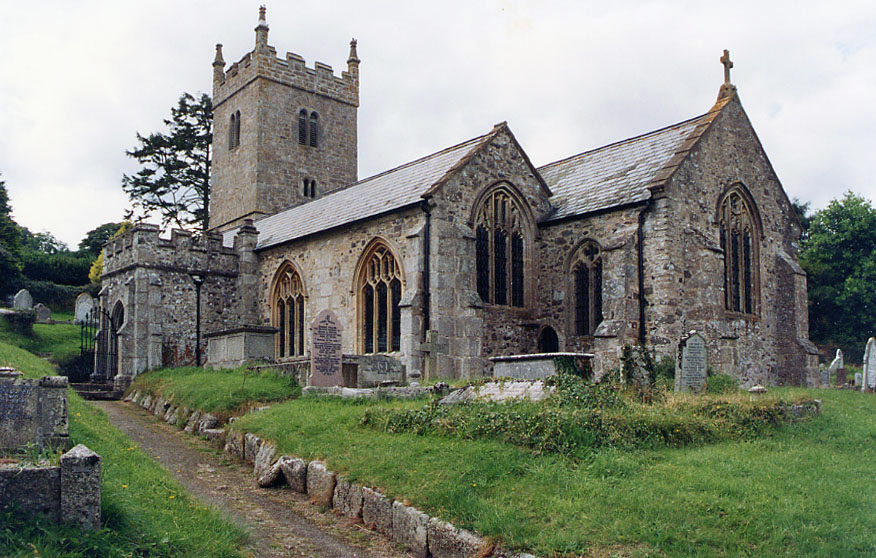
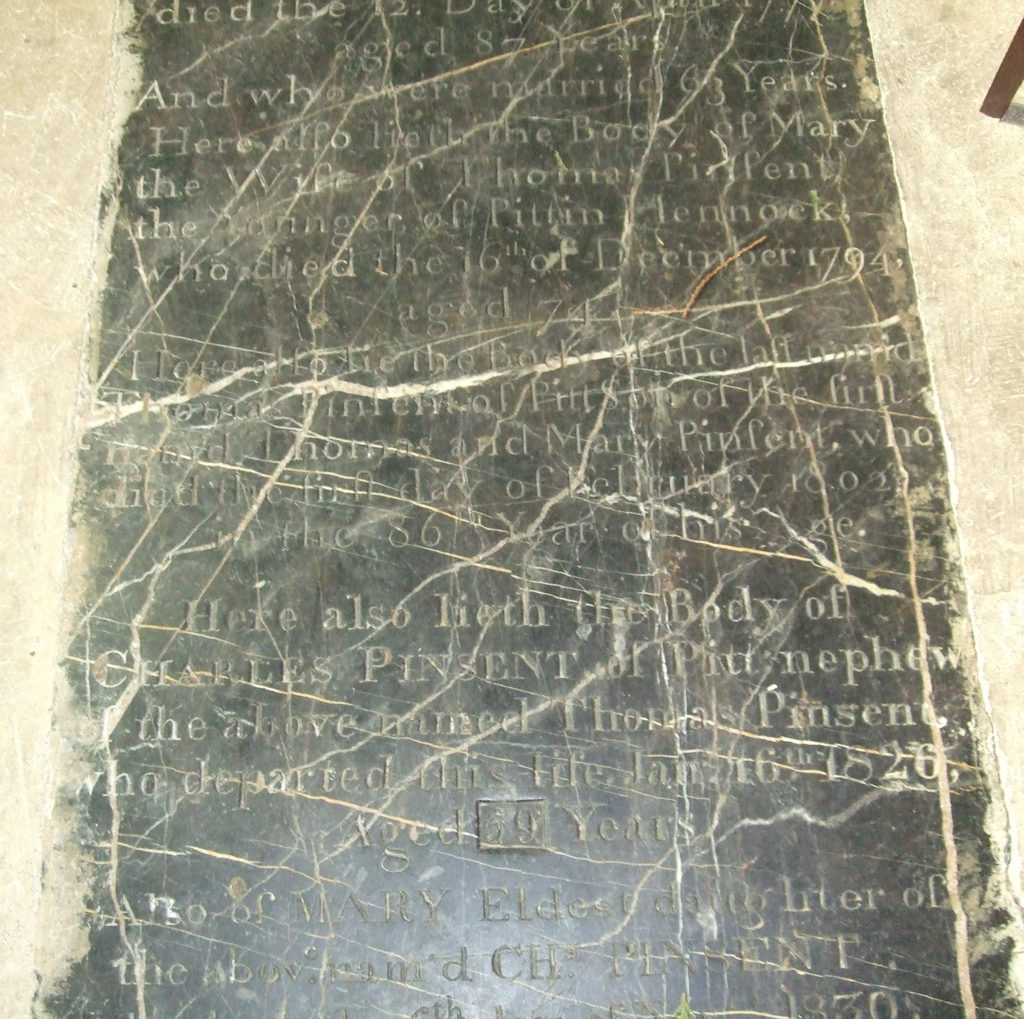
A memorial in St. Mary’s Parish Church, in Hennock, states: “Here lieth the Body of Mary the Wife of Thomas Pinsent of Pitt in this Parish who died the 5th of April 1774 aged 84 Years: Also the Body of Thomas Pinsent her Husband who died the 12th Day of April 1777, aged 87 Years: And who were married 63 years.”
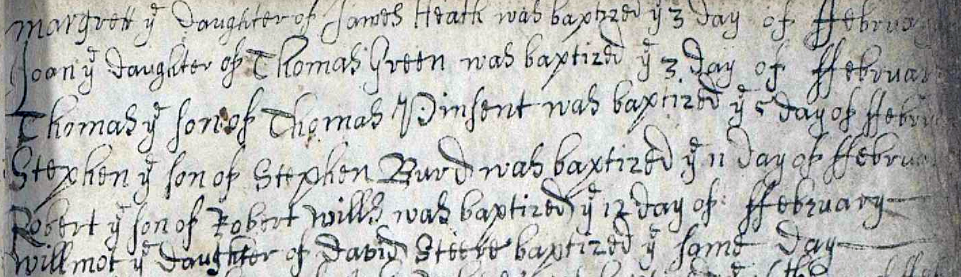
Given the dates, this implies that the Thomas who married Mary was the son of Thomas Pinsent and Ann Waters. He was was baptized in Bovey Tracey in 1690/1691. It reassures us that Thomas Pinsent of “Pitt” was the son of an earlier Thomas Pinsent.
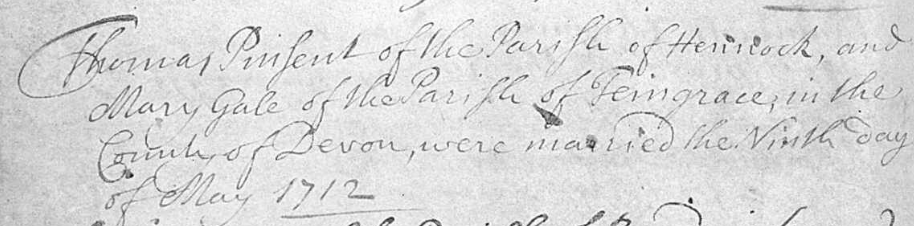
Thomas “of Pitt” married Mary Gale of Teigngrace in 1712 – which is, again, broadly consistent with the inscription. Elsewhere, he is described as being “a tanner of Hennock,” so it seems likely that he worked with his father (?), his grandfather (?) (two more Thomases!) and a putative elder brother (Simon Pinsent) at the family’s “tannery” at “Slade”, near Slade Cross, before settling at “Pitt.” There are gaps in the birth records so Simon’s position in the family is somewhat in doubt. His life is described elsewhere.
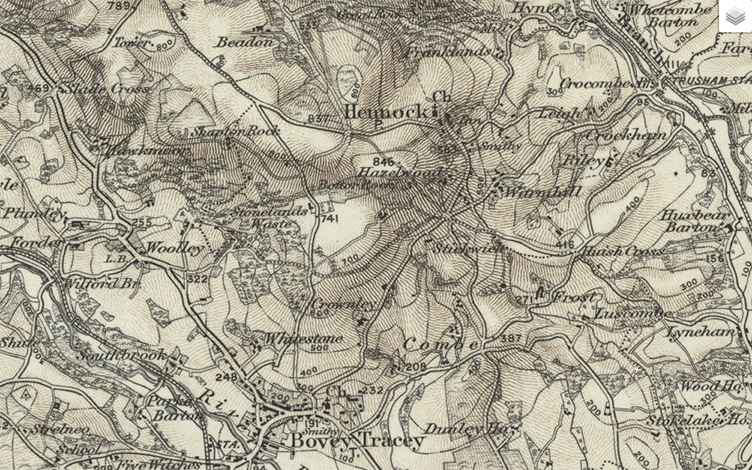
Simon seems to have taken over the family’s “tannery” after his father (?) Thomas Pinsent “senior” and his grandfather (another Thomas Pinsent) died – in 1696 and 1701 respectively. He paid the parish rates for “Slade” (1s 4d per annum), through until 1733 and perhaps beyond, but the data are missing.
In 1723, Simon and Thomas Pinsent “of Hennock” both appeared before the Magistrates at the local Quarter Sessions and swore an oath of loyalty to King George I (QS17/2/1/2 & QS17/2/4/7c) after a failed Jacobite plot in support of “Bonnie Prince Charlie.” The oath was compulsory, and it provides a useful look at who was who in the various parishes around that time.
Simon had several children including Hugh who was born in 1708. He also worked in the tannery and, I would have thought, it would have been passed on to him; however, it seems to have gone to Thomas instead – perhaps Hugh was deemed too young to manage the operation. Simon’s other sons, somewhat enigmatically, seem to disappear from the district. Perhaps they died.
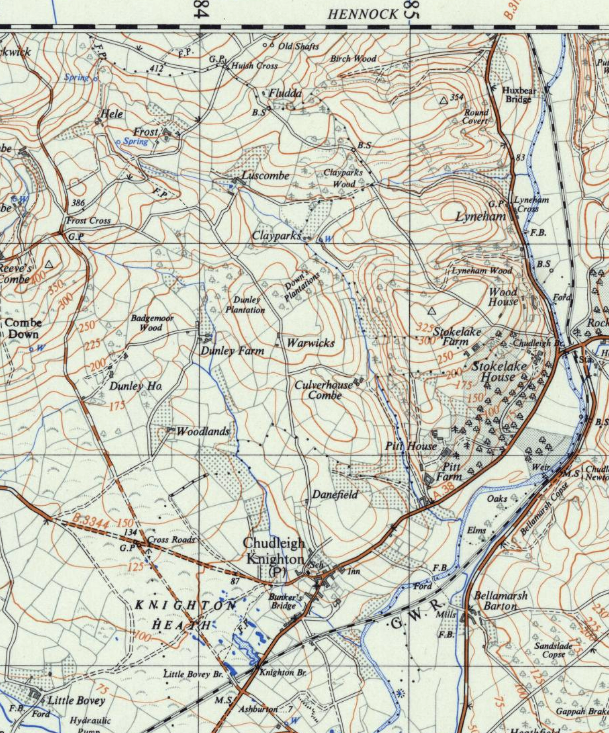
Why our Thomas Pinsent switched from tanning to farming is not clear. However, if his elder brother (?) Simon inherited the tannery, he might well have looked elsewhere. “Pitt” is close to “Knighton” near the southern border of the parish and it worth noting that the Pinsents of “Knighton,” who belonged to the DEVONPORT branch of the family, died out in 1711, the year before our Thomas married. He may have inherited or purchased “Pitt Farm” and land that had previously belonged to them.
Thomas married Mary Gale of Teigngrace, in 1712, and he probably acquired “Diamond’s (a.k.a. Dymond’s) Delight” (Land Taxed at 10s per annum) in that parish as part of a marriage settlement. He paid land tax for it – or at least his son did from 1780 onwards. Thomas’s grandson, Charles Pinsent sold “Diamond’s Delight” to James Templar in 1802. Thomas may also have acquired “Dart’s, otherwise Pinsent’s” (Taxed at £1 18s per annum) in Teigngrace from the Gale family; however, if he did so, he must have sold it James Templar as he owned it too in 1780.
Thomas of “Pitt” may have started out as a “tanner” but he was unquestionably a “farmer” by the time he took over the payment of the parish rates for the tannery in 1733 – which was several years before Simon died in Lustleigh in 1744. Thomas stopped paying for “Slade” in 1740. Perhaps he sold it – at any rate it passed out of the family. Interestingly, documents in the Devonshire Archives show that the Hawkmoor family acquired “Slade and Pool Mill Down” sometime in the 1730s [Southwest Heritage Trust: …/4086/T/34-47]. Perhaps they had a leasehold arrangement on the property prior to the sale.

The “Roll of Free Tenants of Chudleigh Manor” – a document in the Ugbooke (i.e. Clifford Family) Archive – tells us that Thomas paid 1s per annum as “Chief Rent” for “Pitt Farm” in 1727 and the “Churchwardens’ Accounts” in Hennock make their first mention of Thomas living there the following year. However, that was at the start of a new ledger after a break in the records, so he may have been there for quite a while. Thomas Pinsent paid approximately 9d per year for “Pitt” between 1728 and 1771. He acquired some pasture beside the Teign River in 1749 and also paid an extra 1s 3d for “his marshes”. This, in aggregate, was not a lot, suggesting a far smaller farm than the estate was later to become.
Thomas Pinsent “the elder” or “senior” of Pitt was, occasionally, referred to as Thomas of “Knighton;” for instance at the birth of his son Robert in 1721 and his own death in 1777. However, he does not seem to have owned the farm at “Knighton” and the attribution probably comes from “Pitt” being in Chudleigh Knighton, a village at the south end of Hennock parish – close to the adjoining parish of Chudleigh.
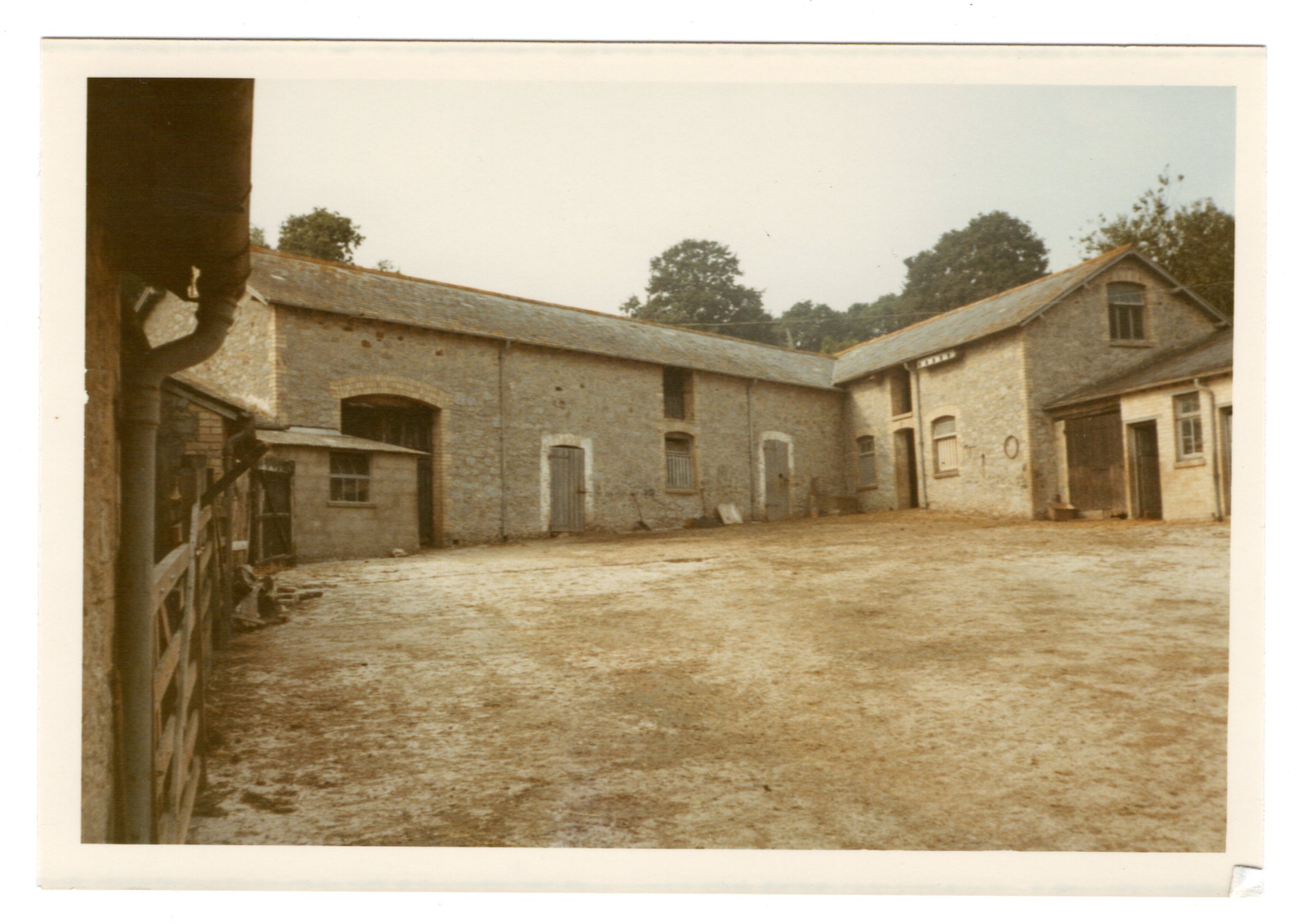
“Knighton Farm,” which had belonged to a DEVONPORT branch of the family from the 1500s into the early 1700s, was said to comprise 69 acres in 1832 when William Noseworthy returned the tenancy to the owner, Rev. John Templer of Lindridge, in 1832 (Exeter and Plymouth Gazette: Saturday 6th October 1832). This would have been a shadow of its former self. “Knighton” was a small manor in its own right in the 1600s.
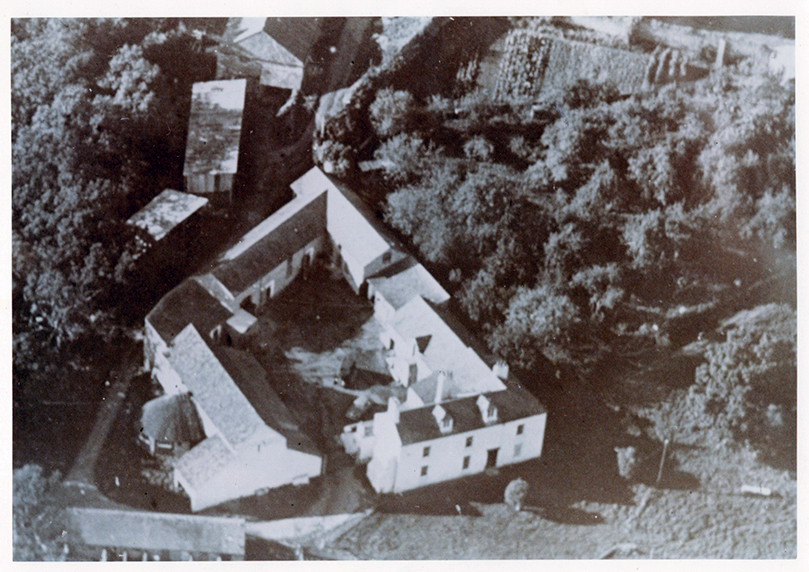
After Thomas Pinsent died, his son, Mr. Thomas Pinsent “the younger” (a.k.a the “Second of Pitt”) seems to have taken over and paid similar rates for “Pitt” until he died in 1802. He was also obliged to pay a Government-mandated “Land Tax” of £1 0s 6d per annum for “Pitt” and 10s per annum for “the Marshes” from 1780 onward.

Papers in the Ugbrooke Archive tell us that the elder Thomas’s grandson, Charles Pinsent swapped his “Marshes over Teign” for several small fields or “closes” owned by James Templar, of Stover, in 1810. We shall meet up with Thomas Pinsent “the younger” and also his nephew Charles Pinsent elsewhere.
Thomas “senior” and Mary (née Gale) had a large family including four sons (Thomas Pinsent, Robert Pinsent, Gilbert Pinsent and John Pinsent). They also had four daughters, Urith Pinsent, Julian Pinsent, Julian Pinsent and Mary Pinsent. Urith is not a particularly common name in the family. In this case, it may have been given as a nod to Urith (née Woolcombe) the wife of Robert Pinsent, the last long-term owner of “Huxbeare Barton”.
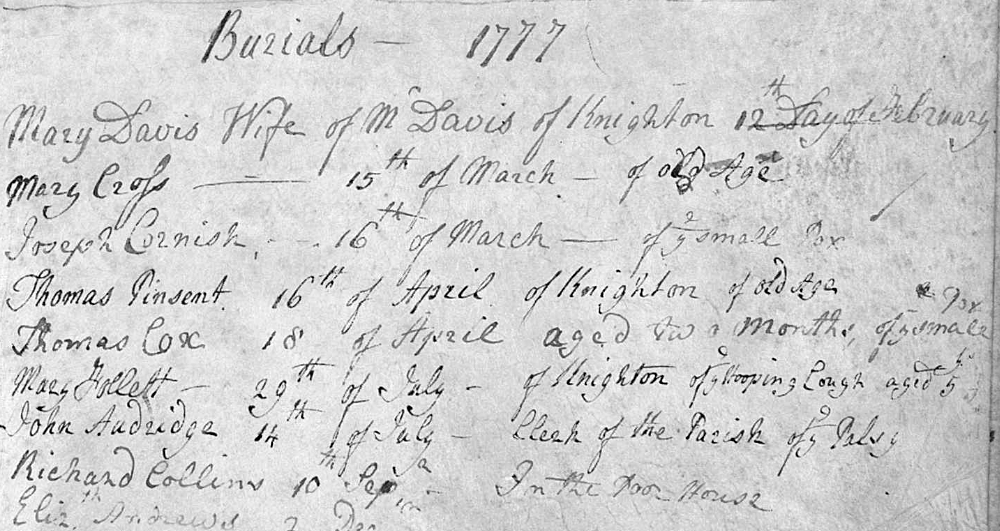
What happened to Urith and her sisters is unclear. However, Urith may have married Henry Hearder and moved to Teigngrace. Her sister Mary may have been the Mary Pinsent of Hennock who had Letters of Administration processed in 1753, or, alternatively the Mary Pinsent who died in 1768. Their mother Mary (née Gale) died in Hennock in 1774 and her husband, Thomas Pinsent died in 1777 – as shown by the parish records and the memorial stone in Hennock Church mentioned at the beginning of this discussion.
The four boys lived to maturity and married, and their lives, and the lines of descent of the younger three are discussed elsewhere. Thomas Pinsent, being the eldest son, inherited the bulk of the “Pitt” estate; however, as he was childless it then passed to Charles Pinsent who was one of brother John’s sons. It was still in the family in the mid 1800s.
Family Tree
Grandparents
Grandfather: Thomas Pinsent: 1633 – 1701
Grandmother: Julian Wilmeade: xxxx – xxxx
Parents
Father: Thomas Pinsent: 1657 – 1696
Mother: Ann Waters: xxxx – xxxx
Male Siblings (Brothers)
(?) Simon Pinsent: xxxx – 1744
Thomas Pinsent: 1684 – 1685
Thomas Pinsent: 1691 – 1777 ✔️
Robert Pinsent: 1693 – xxxx
Unknown Pinsent: 1696 – 1696
Unknown Pinsent: 1696 – 1696
Please use the above links to explore this branch of the family tree. The default “Next” and “Previous” links below may lead to other unrelated branches.