Vital Statistics
John Pinsent: 1880 – 1925 GRO0495 (Clergyman, Winchcomb, Hampshire)
Edith Mary Lane: 1894 – 1989
Married: 1921: Portsea, Hampshire
Children by Edith Mary Lane:
John Pinsent: 1922 – 1995 (Married: Barbara Crumley, 1946; (2) Wife (GRO1442) and (3) Wife (GRO1443))
Mary Catherine Pinsent: 1924 – 1992
Family Branch: Hennock
PinsentID: GRO0495
References
Click here to view close relatives.
John Pinsent was the last born and only surviving son of John and Catherine (née Whidborne). He was born in Combeinteighhead, in Devon, but grew up with seven sisters on “Gambledown farm” in Sherfield English, near Romsey, in Hampshire.
All but one of the girls (Ellen Pinsent), had left home before the census was taken in 1901; however, John Pinsent “junior” was still living with his parents. He was reported to be a “farmers son,” aged twenty. Presumably he would have been a great help to his father who was, by then, in his sixties. In 1911, when the census takers next made their rounds, Ellen was visiting Catherine, her eldest sister, but John “junior” was still at home. However; he had decided against becoming a farmer and he was enrolled as an Anglican “theology student.” Perhaps living next door to “Romsey Abbey” influenced his decision and drew him to “High Anglicanism.” It is worth noting that the St. Barbe Monument in Romsey Abbey harks back to an earlier generation of more affluent Pinsents (Pynsent’s) who lived in the area in the 1600s.
John Pinsent, father and son, may have attended a meeting of the “Sherfield English New Forest Conservative Association” in 1906 (Western Gazette: Friday 20th April 1906); however, his interests lay elsewhere.
John Pinsent “junior” was ordained as a “priest” by the Lord Bishop of St. Albans, in Bedford, in December 1914 (Biggleswade Chronicle: Friday 25th December, 1914). As the Rev. John Pinsent, John went on to hold curacies at Woolwich, Biggleswade, Leiston, Crosby and Lincoln at intervals between 1914 and 1925 (Freeman’s Journal (Sydney: New South Wales): Thursday 11th December 1924). The paper does not give the dates but we know he was Curate of Biggleswade in the summer of 1914 as he organized a “Whist Drive and Dance” on behalf of the local “Nursing Association” (Biggleswade Chronicle: Friday 3rd July 1914).
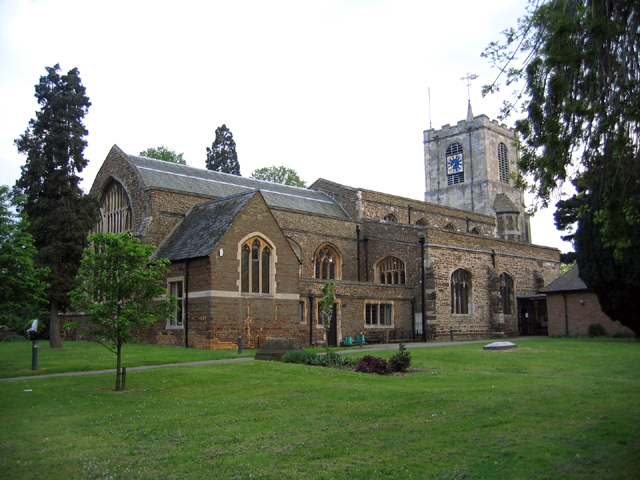
He was at Biggleswade at the outset of the First World War, and we find that he was present at several events and services held in Biggleswade in 1915. Evidently, he built up quite a reputation for his “impressive officiating” – especially at funerals (Biggleswade Chronicle: Friday 16th April 1915) – and was also complimented for his fine tenor voice (Bedford Times and Independent: Friday 19th March 1915).
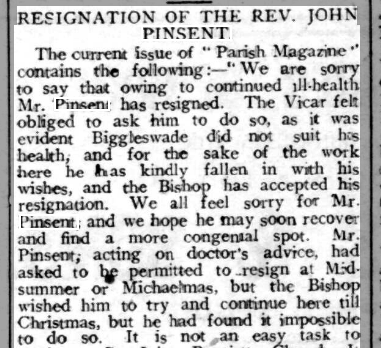
The Rev. John seems to have had a theological breakdown in May 1915 and his doctor instructed him to take a two-month sabbatical (Bedfordshire Times and Independent: Friday 21st May 1915). The diocese agreed to this but as he was unable to return in July, it asked him to resign: “The current issue of the “Parish Magazine” contains the following: “We are sorry to say that owing to continued ill-health Mr. Pinsent has resigned. The Vicar felt obliged to ask him to do so, as it was evident Biggleswade did not suit his health, and for the sake of the work here he has kindly fallen in with his wishes, and the Bishop has accepted his resignation” (Biggleswade Chronicle: Friday 9th July 1915).
Biggleswade village seems to have had more than its fair share of casualties during the First World War – quite apart from those belonging to the various army units that were cycled through the nearby camp. Interestingly, the camp was the home of the “Royal Engineers, “D” Company Signals Section” from “the outbreak of war” in 1914 until August 1919 – when it was under the command of Major John Ryland Pinsent. The “Signals Section” then transferred to Mansfield Park. According to the local paper “their departure will be regretted by many residents in the town and district” (Biggleswade Chronicle: Friday 1st August 1919). Whether the two “John Pinsents” ever met, I do not know.
How long the Reverend John had off, and when he moved on to Leiston, in Suffolk (as suggested above) I do not know. However, he resigned from his position as curate at Leiston citing ill-health in April 1917 (East Anglian Daily Times: 2nd April 1917), was appointed to Crosby in the “Lincoln Diocese” in March 1918 (Lincolnshire Echo: Monday 18th March 1918), and to St. Swithuns, in Lincoln in February 1919 – after the war was over (Sheffield Telegraph: Tuesday 25th February 1919).
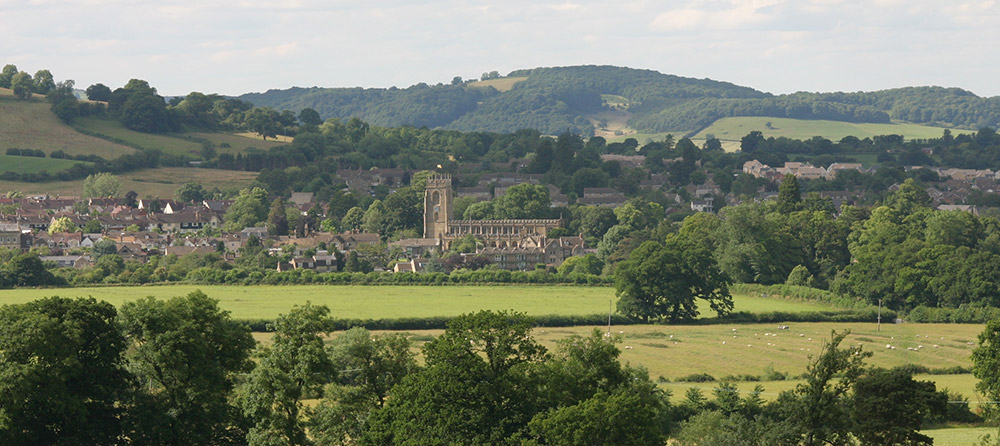
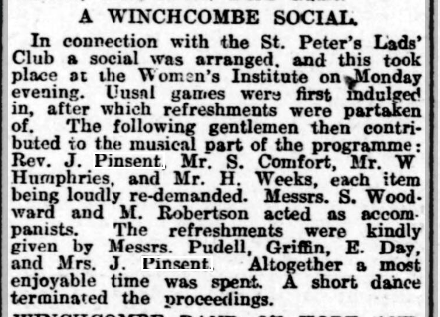
The Reverend John’s final posting was to Winchcomb, in Wiltshire. He was there by November 1921 and, from then on, we find him once again holding services and actively involved in the social life of the community. For instance, he attended a meeting of the “Winchcombe Auxiliary of the Bible Society” (Cheltenham Chronicle: Saturday 26th November 1921). On the social side, his tenor voice was still much in demand at concerts and other events (Gloucestershire Echo: Tuesday 13th December 1921)!
The Reverend John Pinsent was nearly forty-one years old when he married Edith Mary Lane in April 1921. Shortly afterwards, he took her visit his sister Jessie Florence Gibson, in Grimsby, in Lincolnshire. Her husband, Edward Galliard Gibson, was the “chief cashier” at the Grimsby “National Provincial & Union Bank of England.” The census takers have Rev. John down as being a “priest” at St. Bartholomew’s at Southsea.
Edith Mary helped him with his pastoral work at Winchcomb. For instance, she collected food and money for “Cheltenham General Hospital” (Gloucestershire Echo: Friday 2nd December 1921). Rev. John was formally appointed “Curate at Winchcombe” in January 1922 and was actively involved in parish activities throughout that year.
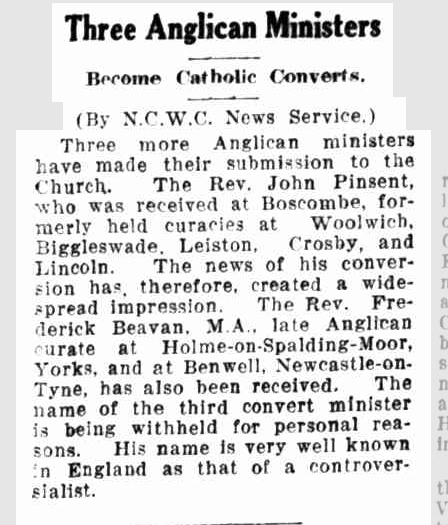
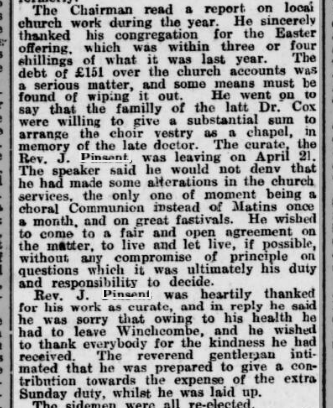
In March 1923, Rev. John resigned his position as “treasurer of Winchcombe St. Peter’s Cricket Club”, saying that he was leaving town (Cheltenham Chronicle: Saturday 31st March 1923). The stated cause of his leaving was, once again, “ill-health”; however, at the Easter Vestry, a week or so later, it became clear that he had had a disagreement with the Vicar, Rev. F. M. Wickham. The Vicar objected to some of John’s changes to the religious services and, although “he wished to come to a fair and open agreement on the matter, to live and let live, if possible, without any compromise of principle on questions which it was ultimately his duty and responsibility to decide” (Cheltenham Chronicle: Saturday 7th April 1923) it was not to be. It seems likely that Rev. John had tried to move to a more Catholic approach to the liturgy but that the Vicar had objected. Certainly, the Roman Catholics considered him to be a convert (Advocate (Melbourne, Victoria) 27th November 1924).
Reverend John and Edith had a son, another John Pinsent, who was baptized in Romsey Abbey in 1922, and a daughter, Mary Catherine Pinsent, who (for some-reason) had her birth registered at Minehead, in Somersetshire, in 1924. How and where she was baptized, I do not know. After leaving Winchcombe, the Rev. John appears to have taken a trip to the West Indies on the “Royal Mail Steam Packet S.S. Andes.“ Again, I am not sure why. Perhaps it was just to clear his head.
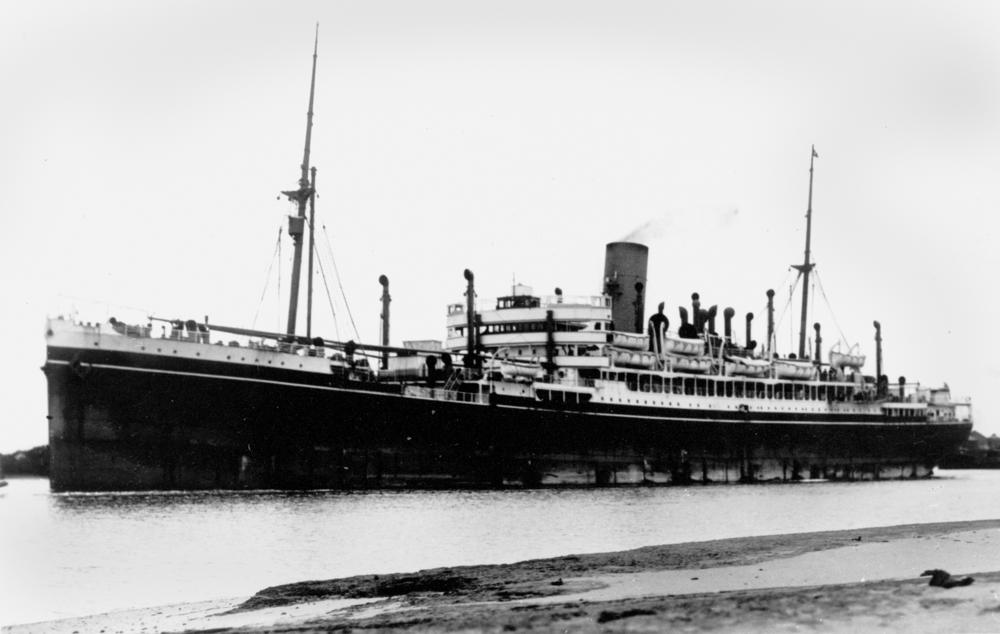
Under the circumstances, it was going to be difficult for Rev. John to re-enter the “Church in England” so, by the time he returned, he had decided to emigrate to Australia. The Reverend John and his family boarded the “Australian Commonwealth Steam Ship Line vessel S.S. Hobson Bay” in London and set off for Melbourne on 31st March 1925.
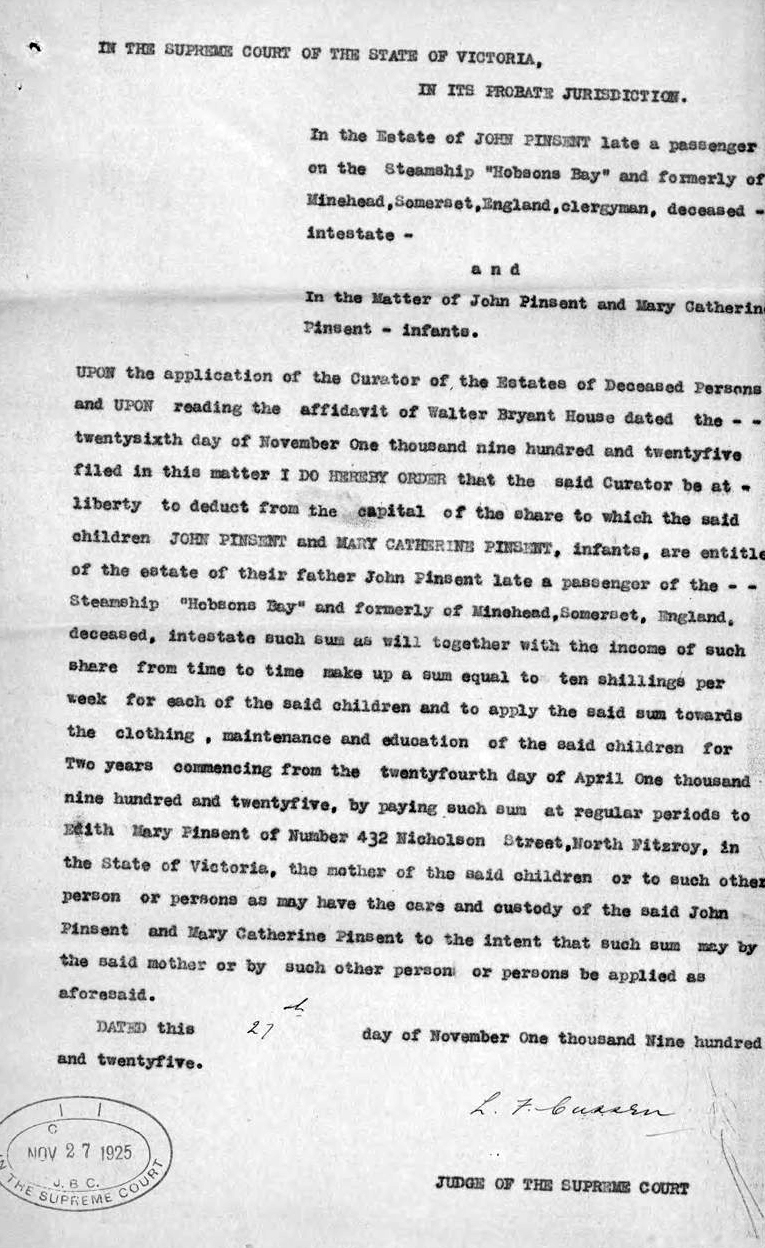
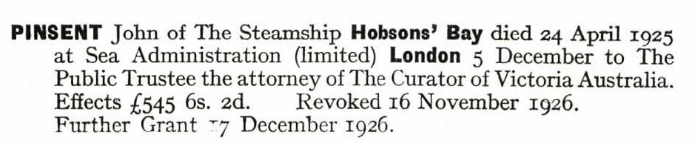
Sadly, he never arrived. The “Calendar of Grants of Probate and Letters of Administration” tells us that “Rev. John Pinsent of the Steam Ship Hobson’s Bay, clerk, died 24th April, 1925, at sea”. His wife had a choice to make. She could either stay on in Melbourne or return to England. She decided to return home; however, before she could do so, the “Public Trustee, the Attorney of the Curator of Victoria, Australia” had to grant Edith preliminary “letters of administration” over her late husband’s effects – which were valued at £497. This took time and the Court in the meantime granted her a small weekly sum out of her husband’s estate for the care of her daughter Catherine and her son John.
The Australian letters were revoked when she returned to England and another set were granted – after John’s English creditors had had a chance to make their claims (London Gazette: 5th January 1926). There was no significant change.
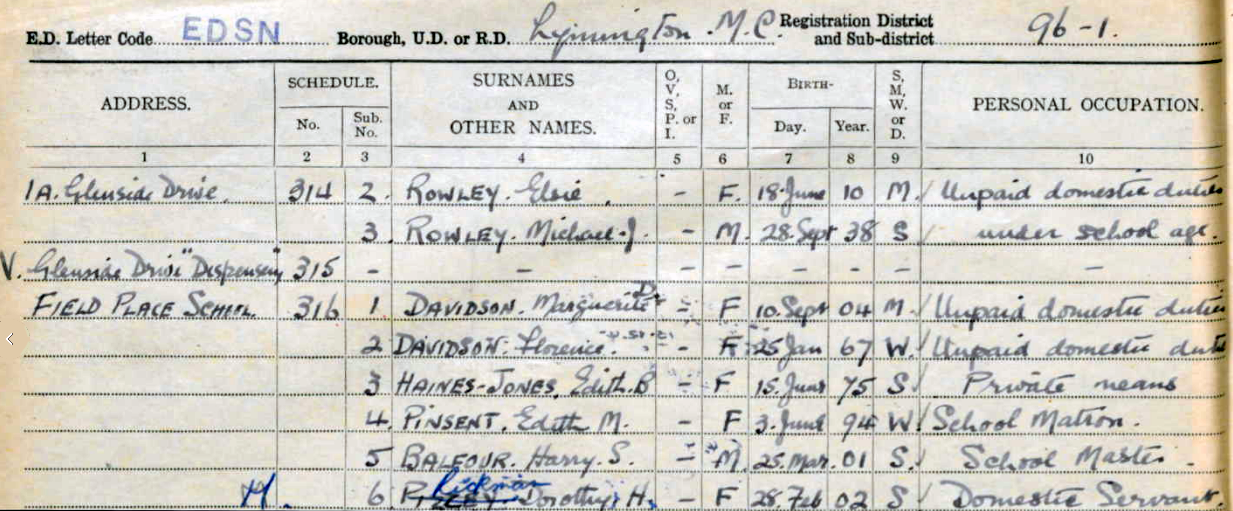
Edith Mary Pinsent was thirty one years old when her husband died. She never remarried. After bringing her children back to England she seems to have brought them up on her own. She settled at Far Dene in New Milton, in Hampshire, and became an active member of the Milton & Milford Choral Society. It had considerable success in local competitions in the 1930s (New Milton Advertiser: Saturday 26th September 1936 etc.). The Wartime Register (1939) tells us that she was a “matron” at “Field Place School”, in Lymington, Hampshire.

Edith died in Oxford in 1989. Her daughter, Mary Catherine, married Haim Musa Nahmad in London in 1957. Her son, another John, attended St. Edmund’s School in Canterbury and went on to serve in the Royal Air Force during the Second World War. He studied classics at Oxford and became a lecturer at Liverpool University. His life is described elsewhere.
Family Tree
Grandparents
Grandfather: John Pinsent: 1799 – 1858
Grandmother: Ann Brock: 1811 – 1866
Parents
Father: John Pinsent: 1838 – 1916
Mother: Catherine Whidborne: 1840 – 1923
Father’s Siblings (Aunts, Uncles)
Anne Pinsent: 1833 – 1907
Martha Pinsent: 1834 – 1908
Eliza Pinsent: 1836 – 1837
John Pinsent: 1838 – 1916 ✔️
Gilbert Pinsent: 1840 – 1918
James Pinsent: 1842 – 1902
Henry Pinsent: 1844 – 1894
Albert Pinsent: 1846 – 1846
Emma Louisa Pinsent: 1848 – 1926
Mary Isabella Pinsent: 1850 – 1935
Harriet Carlotta Pinsent: 1853 – 1895
Male Siblings (Brothers)
John Pinsent: 1880 – 1925 ✔️
George Whidborne Pinsent: 1882 – 1883
Please use the above links to explore this branch of the family tree. The default “Next” and “Previous” links below may lead to other unrelated branches.