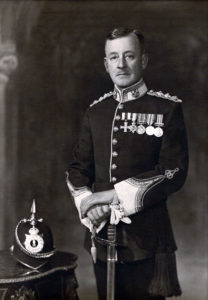
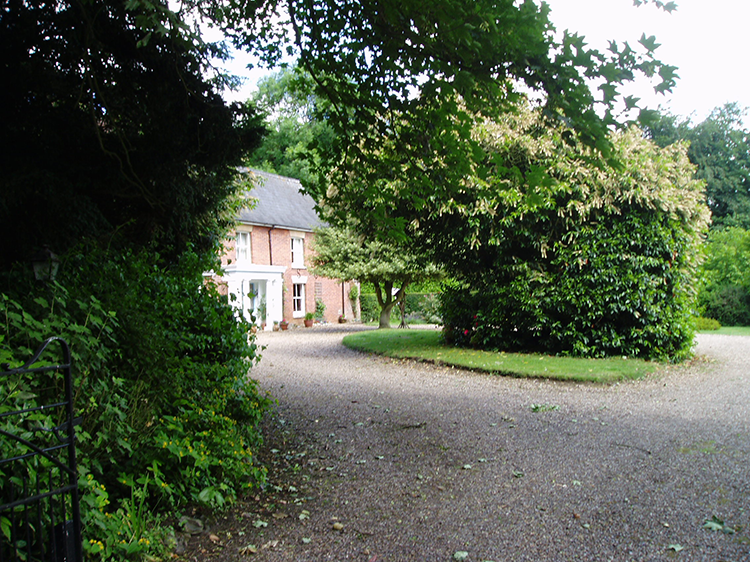
Guy Homfray Pinsent was the youngest son of Sir Robert John Pinsent, a Justice on the Supreme Court of Newfoundland, by his second wife, Emily Hetty Sabine (née Homfray). He was born into an extended family with five half-siblings: (Lucretia Maude, Louisa Catherine, Robert Hedley, Charles Augustus and Alfred Newman) two sister (Mabel Louisa Homfray and Beatrice Mary Homfray) and two brothers (Robert John Ferrier Homfray and Francis Wingfield Homfray). He was born at his mother’s family home in Bintry (Bintree), in Norfolk, in July 1889.
Bintry Rectory, 2005.
Guy spent a few years in St. John’s but would have no recollection of it. His mother – who had always enjoyed fishing and had written articles about it in the “Field Magazine” – recollected in one (published in July 1892) that “We are certainly a sporting family, from the oldest son, who can count up to twelve or fourteen deer shot within a few miles of our home, to the little toddler of three already asking for a fishing rod and a gun”. He returned to England with his family in 1893 and, as far as I know, never returned.
His fathr’s life is described elsewhere. In the 1880s, he was notably busy dealing with the fall-out from a collapsed railway construction contract, and in figuring out the rights of French and Newfoundland fishermen along the so-called “French Shore”. He maintained that the French were only entitled to catch and process cod – and they (what ever they said to the contrary) had no right to interfere with Newfoundlanders efforts to catch, process and can lobsters. He published an article entitled “French Fishery Claims in Newfoundland” (Nineteenth Century: Vol. 158, April 1890). Robert made several visits to England (he gave a talk to the “Royal Colonial Institute” entitled “Newfoundland, our Oldest Colony” in April 1885 (Colonies and India: Friday 17th April 1885)) and was a well known as an advocate for the Colony. Queen Victoria honoured him with a knighthood in 1890.
In 1893, Sir Robert and Lady Pinsent took their younger children to England and, leaving them there, then they went out to Italy to see Guy’s eldest half-sister, Lucretia Maude, who was setting up a Benedictine convent in Rome. Sadly, Sir Robert died of pneumonia soon after they returned. His death created problems for his wife, Emily, as most of the family’s assets in Newfoundland went to the children of his first marriage – most notably his eldest son Charles Augustus Maxwell Pinsent. She was left with two teenage sons (Robert (19) and Frank (18)) in Newfoundland and a grown up daughter (Mabel (20)) and two younger children, Beatrice (10) and Guy (4) with her in England. Lady Pinsent stayed on in England and took employment first as a “House Matron” at Harrow School and then as the principal “Matron” at Denstone School in Staffordshire.
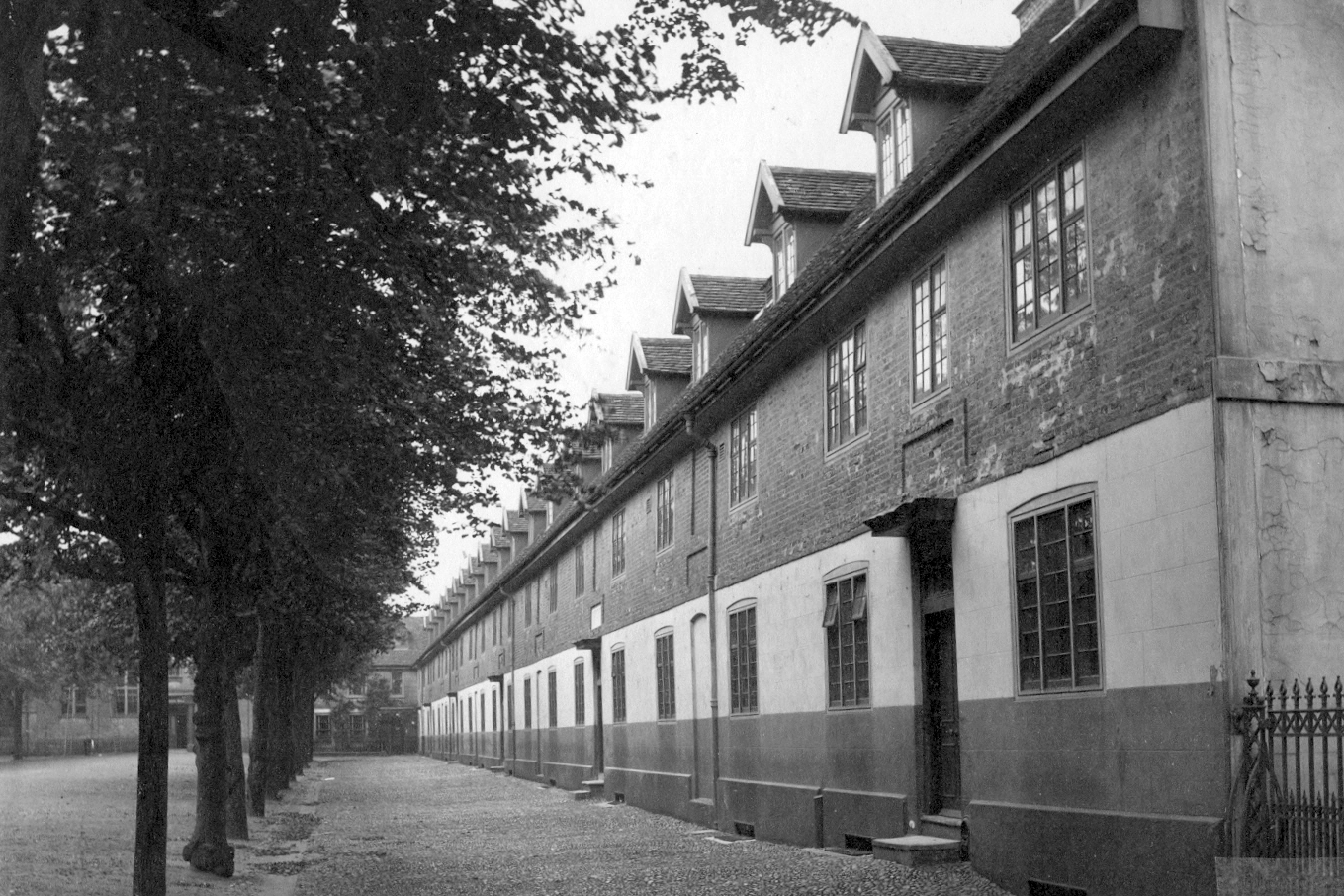
Christ’s Hospital occupied the Bluecoats site from 1682 to 1985. Via Discover Hertford.
Guy and his older sister Beatrice (“Trixie”) were sent to the “Blue Coat School” in Hertford. This was a charitable foundation that was technically based at “Christ’s Hospital” in London; but had had part of its operation in Hertford since the 1700s. Some of the letters Guy’s mother, Emily, wrote to Lucretia Maude have survived. The first, dated November 1899, shows how relieved she was to have her other son, Frank (Francis Wingfield Homfray), back in England and how she regretted not being able to afford to give Beatrice the medical training she wanted. As for Guy, she said: “Little Guy is very happy & I feel now as if he had a father again in Frank.” In October 1900, she went on to say “Guy will soon be leaving Hertford. In the London School he was fortunate in the holidays to make friends with the London Head Master, Dr. Lee.” Guy was still living in Hertford (where the younger boys were taught) when the census was taken in 1901. He must have moved up to the main school, in London, sometime after that.
Lady Pinsent was concerned about what to do with Guy after he left school – particularly as, as she was to point out to Lucretia Maude in December 1901, she thought that “Guy is a dear little fellow & very good but not I am afraid, clever. I don’t think that matters so much as steadiness & the power of work”. To be fair, it would have been hard to follow Sir Robert.
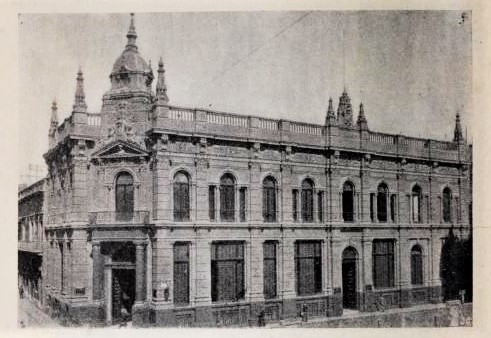
Banco Británico de la América del Sud, via Wikipedia.
Contacts were important: it seems likely that Lady Pinsent persuaded Adolphus Ross Pinsent, who was from the DEVONPORT branch of the family, to take him on as a clerk in the “British Bank of South America Limited” in Buenos Aires. He was a Director of the Company (see elsewhere: DEVONPORT). Guy went out to South America in around 1910 – perhaps at around the time that his mother and brother Frank moved down to Plymouth. A wartime item in The Times (20th April 1917) describes the contribution to the war effort made by the Buenos Aires-based staff of the “British Bank of South America Limited.” It, inevitably, lists fatalities but then goes on to mention the Military Cross awarded to Guy Homfray Pinsent. He seems to have worked there and returned to England to enlist in late 1914. He received his commission as a temporary Lieutenant in October. (Civil and Military Gazette (Lahore): Saturday 14th November 1914).
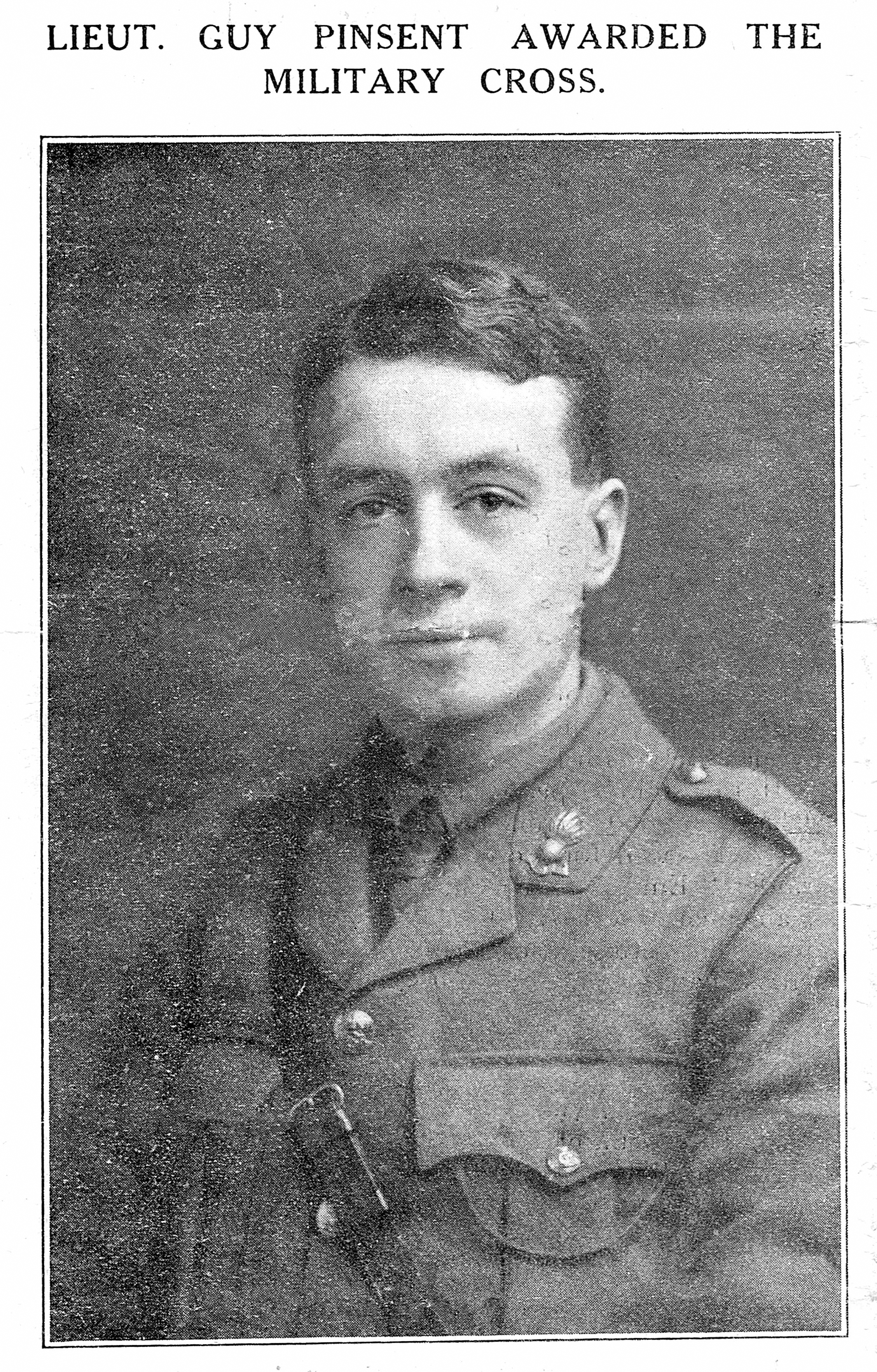
On reaching Britain, Guy joined the “Royal Field Artillery” as a Temporary Second Lieutenant. He was deployed to France in July 1915 and served with his unit during the battle of the Somme in 1916. He was awarded a “Military Cross” for gallantry under fire. The London Gazette (20th October 1916) describes the incident: “2nd Lt. Guy Homfray Pinsent, R.F.A., 33 spec. Res: For conspicuous gallantry: When the order was given for the detachments to be withdrawn owing to heavy shell fire, it was found that one detachment had been buried in the gun-pits. 2nd Lts. Coulesley and Pinsent at once collected a party, and, after half an hour’s working under very heavy fire, they got the men out.”
Lt. Guy Pinsent as photographed in The Zodiac.
The “ Zodiac” describes the incident in more detail: Guy H. Pinsent, R.F.A. “received his commission 10th October, 1914 and was promoted Lieutenant 9th June, 1915. He was wounded at Montanbar on 8th August 1916.” Evidently, he served for fourteen months at the front and was awarded a Military Cross for bravery in rescuing men when under heavy shell-fire: “Owing to the illness of his senior officers, he took a battery into action and held his position for over a fortnight before the enemy discovered the whereabouts of his battery. One day an enemy aeroplane, flying very high, apparently spotted his position, and that night the battery was bombarded heavily for eight hours, and one of the four guns was damaged. At the commencement of this severe “straffing” a shell destroyed the earthworks and six men were buried. Lieut. Pinsent called for volunteers, and they set to work to dig out the unfortunate men. In spite of their exertions, some of the men perished. It was during this “digging out” that Lieut. Pinsent was wounded by shrapnel in the shoulder. With great fortitude he held on at his post, and after the bombardment had ceased he kept the battery in action for four hours, no doubt much to the surprise of the Huns, who probably thought the battery was no longer in existence!” Guy was patched up in France and then sent to Queen Alexandra’s Military Hospital at Millbank. Oddly, the hospital records show that he was in for a gunshot wound in the hand or shoulder and not for shrapnel (British Armed Forces: Soldiers’ Medical Records: Findmypast).
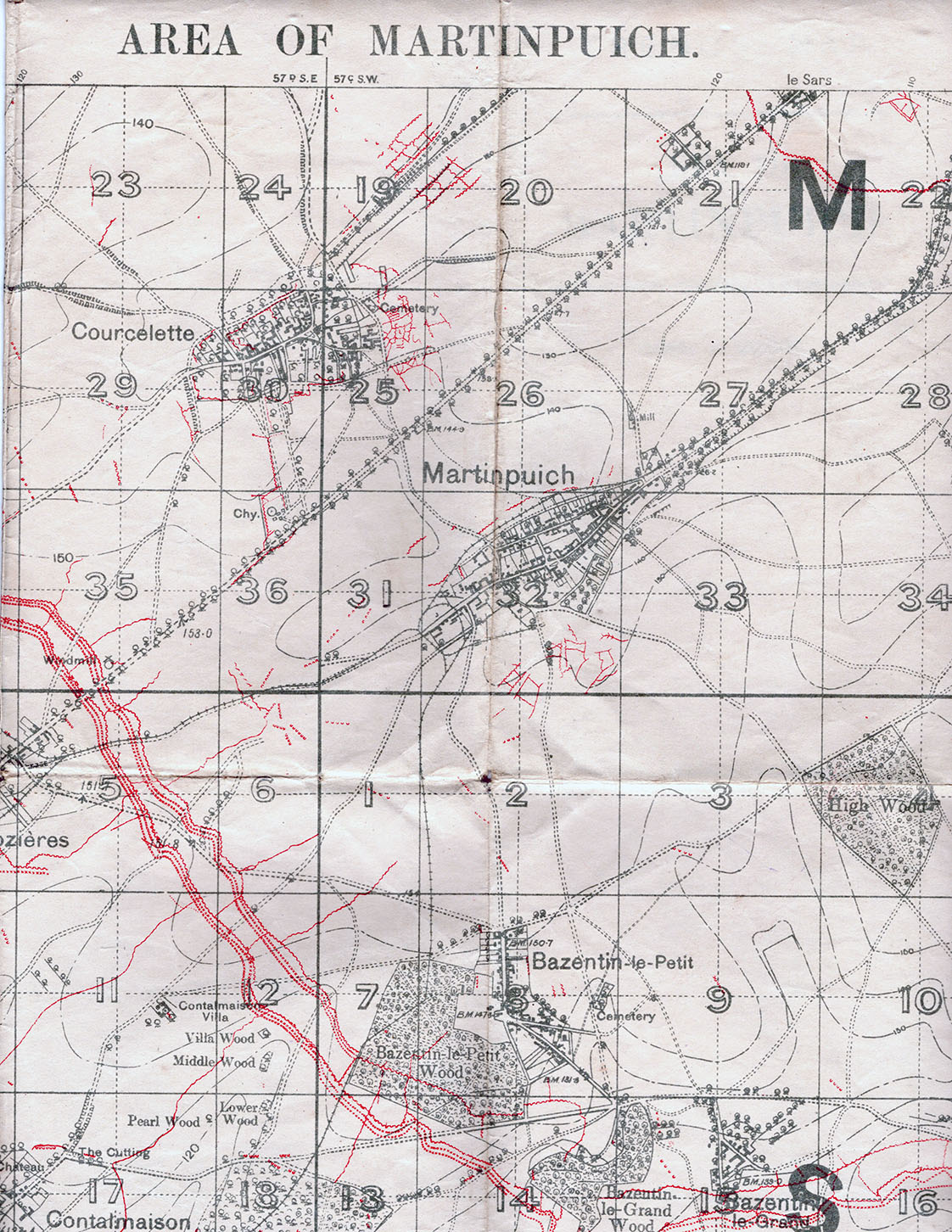
Guy’s map of the trenches at Martinpuich from 1916.
The “Montanbar” referred to was probably “Montauban” which was in the thick of the fighting in the Pas de Calais (north east of Amiens) during the then raging Battle of the Somme. Despite the horrors of the 1st of July (which practically wiped out the “Newfoundland Regiment” (among others) a few miles northwest, the allies had made some progress and managed to advance slightly beyond Montauban by 14th July. They reached Bazentin by 15th September. For some reason, Guy kept a trench map for Martinpuich (a few miles to the north of Montauban).
After the war, Guy Homfray returned to Buenos Aires as part of a contingent of repatriated Officers and their families. They arrived on the Royal Mail Steam Packet, “Meteor,” in August 1919. Guy’s sister, Beatrice went with him and for some reason stayed on. Guy presumably tidied up his affairs and returned to England to continue his military career.
Correspondence his mother had post-war with the War Office regarding his medals, shows that “Bimbashi” (soldier) G. H. Pinsent, M.C., had been assigned to the “Arab Maxim Battery Corp.” He joined them in 1918 and likely saw service with them through to 1920, as he relinquished his commission on 1st April 1920 (London Gazette). In addition to the Military Cross that Guy received from the King, at Buckingham Palace, he also received the normal suite of “First World War” service medals (1915 Star, British and Victory). His mother later wrote to the War Office about his eligibility for the 1914 Star and discovered that he was ineligible as he had not yet been abroad. Guy did, however, received the “Africa General Services Medal and Clasp” for his time with the “Arab Maxim Battery” (U.K. Military Campaign Medals and Awards, 1793-1949: Ancestry.com).
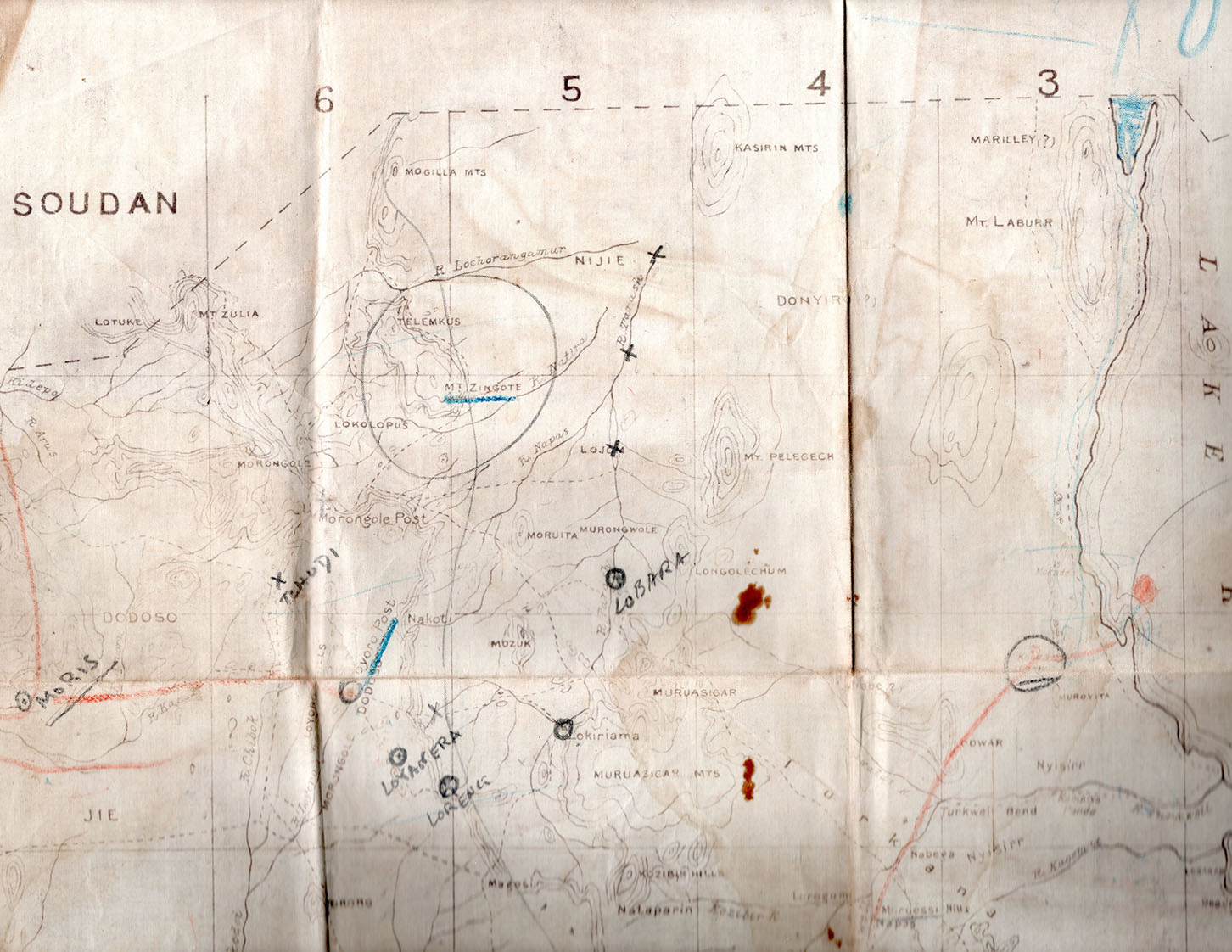
Guy’s map from his time in Sudan.
Guy returned to England and re-joined the army, and in May 1921 received a Commission as a Lieutenant in the 1st Battalion the “Loyal”(“North Lancashire”) Regiment. His seniority was dated back to 1st January 1917. The regimental magazine “The Lancashire Lad” tells us that he was taken on for duty in Constantinople – presumably because he spoke some Arabic. In fact, he was posted to Southern Sudan where he served as a “Government Officer”. It was a relatively short assignment. “Incoming Passenger Lists” show that Lieutenant Guy Pinsent, aged 31, returned to Plymouth from Port Said on the “Devanha” in December 1921. He re-joined his regiment and was promoted to Captain on 1st January 1923 (London Gazette). While he was in North Africa, he led a patrol into the headwaters of the White Nile River, in the East African rift valley west of Lake Rudolf (Lake Tukana). The area was then split between the British protectorates of Kenya and Uganda. He kept his map of the area and I now have it. I would have loved to have a diary.
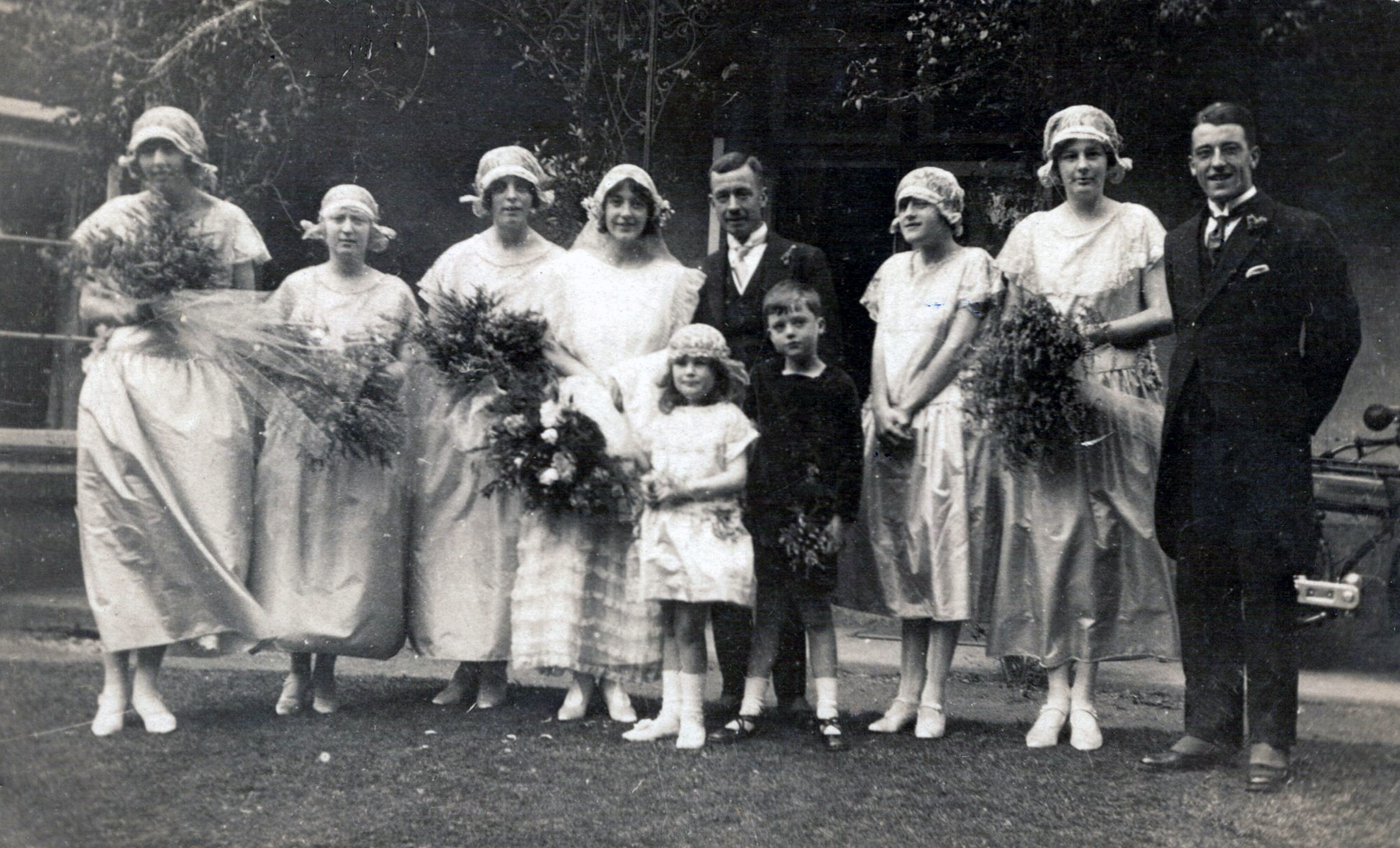
Photo of the wedding party taken at Guy and Betty’s wedding in 1923.
Captain Guy Homfray Pinsent’s engagement to Ethel “Betty” Brittan, daughter of Charles Edward Brittan – a well-known Devonshire landscape artist – was announced in March 1922 (Western Morning News: Saturday 4th March 1922). Sadly, his mother, Lady Pinsent, died a couple of months later and she did not live to see them married at Sheepstor, on the edge of Dartmoor, in September 1923 (Western Morning News: Friday 21st September 1923). The wedding was a significant local event and it was well documented (down to and including the presents: among which was “an autographed silver salver” from the Officers of the 1st Battalion that I also have.) After the reception, Captain and Mrs. Pinsent left for London, Paris and Rome for their honeymoon (Western Morning News: Friday 21st May 1923). Presumably they met up with his half-sister, the Lady Abbess.
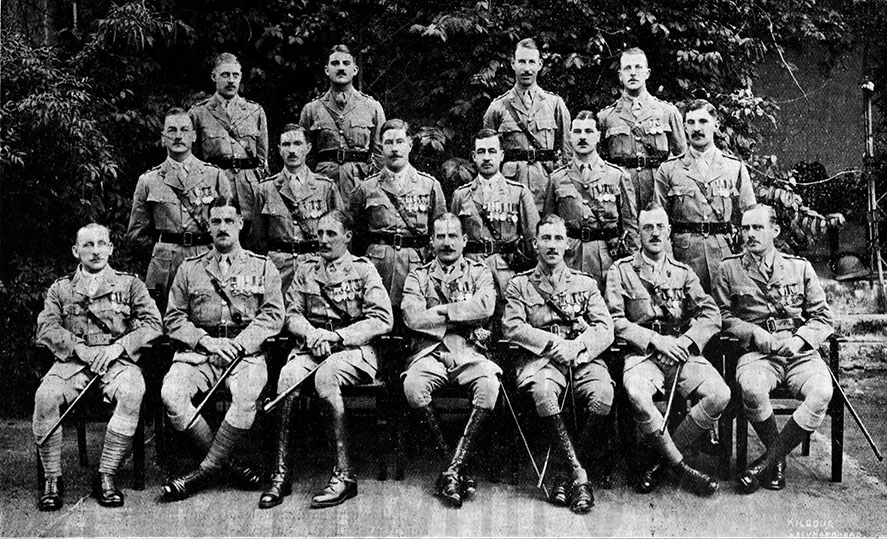
Officers in Tientsin in China, 1926
The couple went out to China with the “Loyal” Regiment in 1924/5. The regiment was sent to Peking (“Beijing”) to protect the British Legation during the long civil war that followed the overthrow of the Quin Dynasty in 1912. The war lasted until 1928. While the regiment was there, it acquired a number of howitzers and it fell to Guy, who had experience of gunnery, to train up volunteers so that they could actually be used – if needed. A small detachment from the Royal Artillery eventually arrived to take over (Lancashire Lad: 1925). Whilst in China, Guy and the Regiment also looked after the international settlements in Tientsin, Canton and Shanghai.
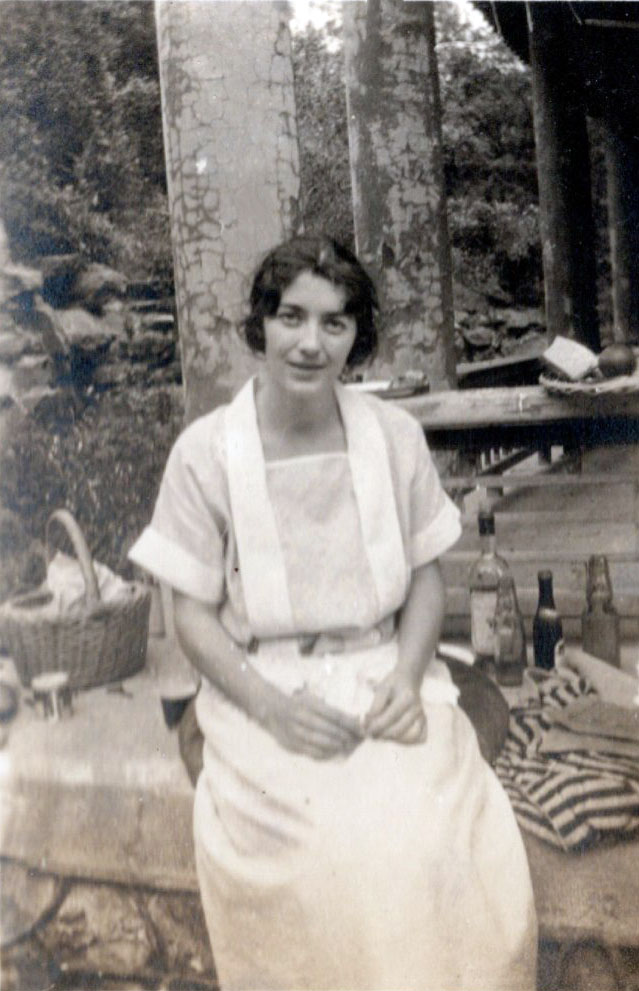
Betty Pinsent in China, 1920s.
Betty never took to China. She fell ill and her husband resigned his commission. They returned to England in December 1926 (London Gazette: 7th December 1926) and by 1931 they had settled in the Home Counties. That was the year that Captain and Mrs. Guy Pinsent gave Miss B. R. Allen and Mr. A. M. Leith a cut glass cigarette box on the occasion of their wedding in Bexhill on Sea (Bexhill On Sea Observer: Saturday 11th July 1931).
While the Pinsents were living at: “Red Lynch House” in Ascot, Betty was summoned at Windsor Petty Sessions for not reporting a minor collision she had with a van while she was driving through a congested section of Peascod Street, in Windsor. However, the Chief Constable on the stand said that the charge should have been for “damage” caused, rather than for not reporting an “accident” and, as there was conflicting evidence given in court, the magistrates dismissed the case on a payment of £1 in costs (Wokingham Times: Friday 3rd May 1935).
Guy and Betty moved around a lot. They lived at “Idle Way” in Sunningdale, near Ascot, from 1935 -1937, “The Squirrels” in Sunningdale in 1938 – 1939, “Rose D’Or” in Egham in 1940 and at “Bennebroek”, in Chobham (Surrey) from 1941 onward (British Telephone Books: 1880-1984). My father met up with his Uncle Guy in London in 1937 and in a letter home mentions that Guy was fit, and also that he had just sold “Idle Way”.
I gather (from family sources) that the reason they moved around so much was that they bought, re-decorated and sold their houses. Perhaps it helped having a connection with the Cowtan family (through Guy’s brother Frank) as “Messrs. Cowtan and Sons Ltd.” were high-class decorators, upholsterers and cabinet-makers in Belgrave Square, in London S.W.1. The Cowtan firm, which was founded in 1790, was particularly well known for its quality wallpaper (London Metropolitan Archives).
Capt. Guy Homfray Pinsent M.C., “having attained the age limit of liability to recall ceases to belong to the Res. of Off.” (London Gazette: 25th July 1939) was removed from the Army’s recall list in July 1939. Whether this was the reason, or not, I am not sure; however, “The Lord Chamberlain is (was) commanded by Their Majesties to summon Captain and Mrs. Guy Pinsent to a Court at Buckingham Palace on Thursday, 13th July 1939 at 9.30 o’clock, p.m.”. Interestingly, it was not a typical garden party. Guy also attended the “47th/81st Dinner Club” annual dinner when it was held at the Naval and Military Club in Piccadilly in 1952.
Guy served with the Home Guard during the Second World War. Guy and Betty Pinsent had settled down in Chobham, in Surrey, by then and they had “Cousin Bob” (Robert Burton Pynsent) living with them long enough in 1945 for him to be added to the electoral roll. Bob had returned from New Zealand and settled in London at the same time as Guy’s mother (Lady Pinsent) and his elder brother (Frank) had done so in the early 1900s. He was a distant relation but a fellow colonial. Bob had left Chobham by 1946.
The 1939 Register compiled at the beginning of the Second World War tells us that Guy was a “Wholesale Manager for Wine and Spirit Merchants” – and that he was “awaiting orders from Sudan Government Administration Authority” which, presumably never came. I am not aware that he went back to Sudan. However, he took Betty on a trip to Casablanca and Morocco in August 1953 (Passenger lists: Findmypast) so he may still have had a hankering for the North Africa. They had gone out to Madeira a couple of years earlier.
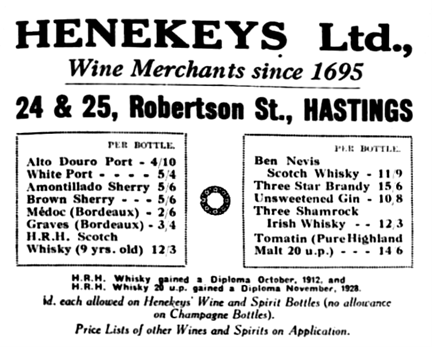
Advertisement for Henekey’s Ltd, wine merchants, taken from a newspaper. Via Hastings Pub History.
After the war, Guy became a director of “Henekey’s Limited” (The Times: 16th August 1945). The company was a wine and spirits importer and liquor distributor owned by Clement Callingham. Among other things, it ran a series of up-market public houses such as “French’s” in Hastings. I imagine Guy kept a good cellar. The product prices have probably gone up a little …
Guy played an important role in the development of this database. In late 1957 or early 1958, he received a letter from Joey Smallwood, the man who ushered Newfoundland into confederation with Canada, asking about Sir Robert John Pinsent – he was looking for information that he could include in what would become his seven-volume “Dictionary of Newfoundland”.
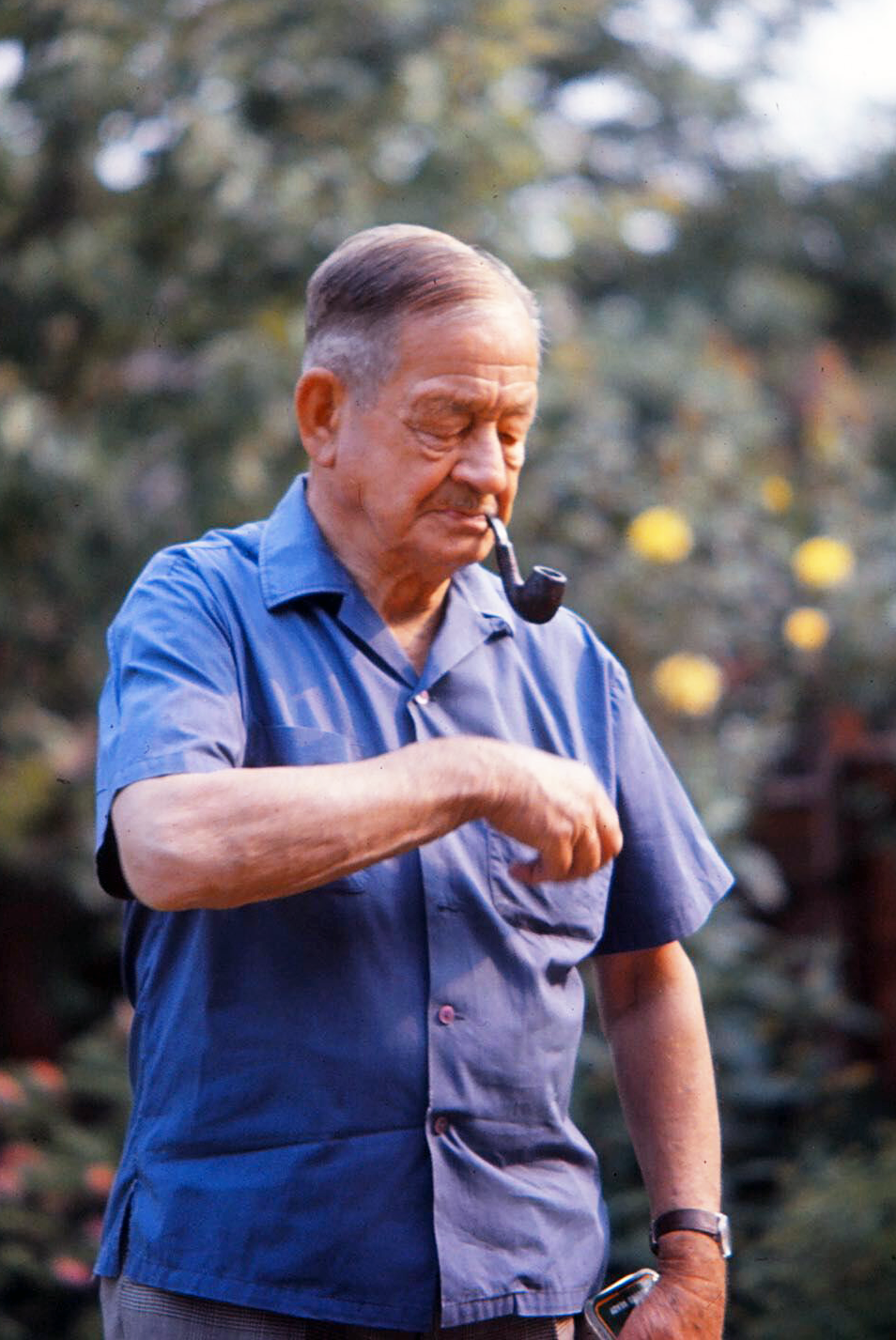
Guy as an older man.
Guy recruited my father and they went through the documents they had in their possession and sent Mr. Smallwood those that they thought were relevant. The correspondence led my father, Dr. Robert John Francis Homfray Pinsent, to think that the time was right to start on a major review of our family’s history. Sadly, he was a generation too early. However, the job is (for now) just about done. There are children around. It will have to be undated.
Guy stayed on in Chobham and died at “Bennebroek”, in November 1972. Betty remained there for a while but eventually moved into a nursing home close to her husband’s family in Devon. She died there in 1986. They had had no children.
Please use the above links to explore this branch of the family tree. The default “Next” and “Previous” links below may lead to other unrelated branches.