Vital Statistics
Arthur Newman Pinsent: 1867 – 1946 GRO1146 (Farmer, Soldier, Saskatchewan, Canada)
Family Branch: Hennock
PinsentID: GRO1146
Click here to view close family members.
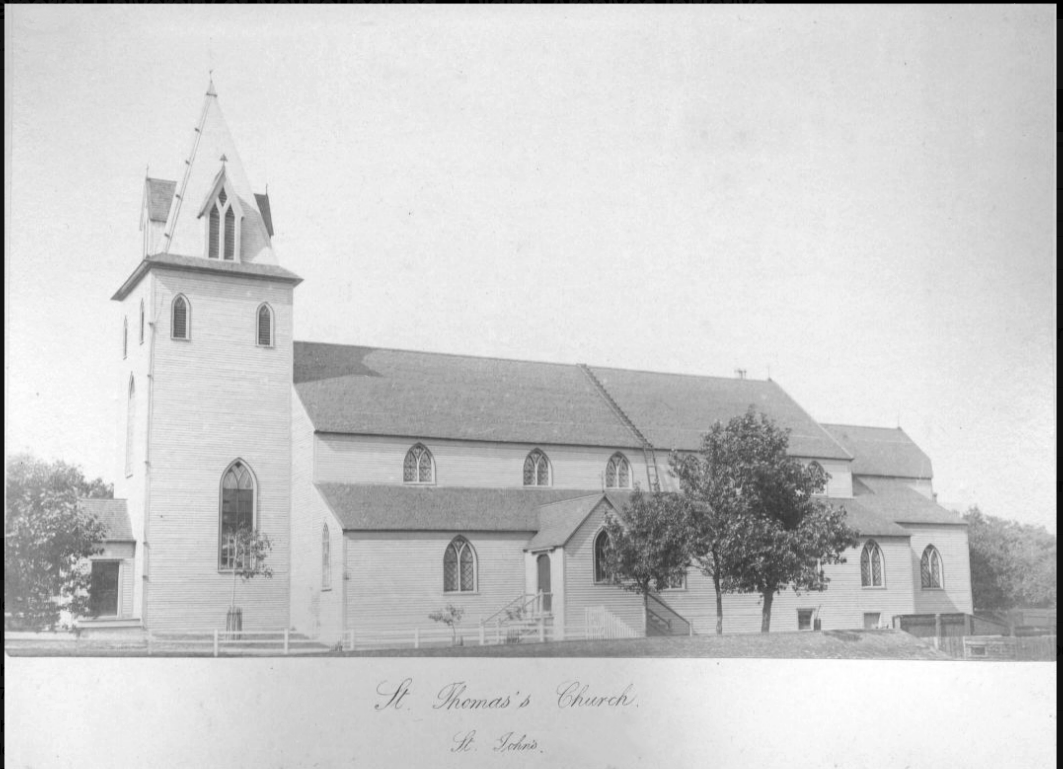
Arthur Newman was the youngest son of Mr. Robert John Pinsent by his first wife, Anna Brown (née Cooke). He was born in St. John’s Newfoundland and baptized in St. Thomas’s Church in 1867. Arthur grew up in St. John’s with two sisters, (Lucretia Anna Maude and Louisa Catherine Pinsent) and two brothers (Robert Hedley Vicars and Charles Augustus Maxwell Pinsent).
His parents divorced in 1870 and the children were left in the care of their father. Robert John married Emily Hetty Sabine Homfray two years later and they started a second family. Arthur was to have three younger stepbrothers (Robert John Ferrier Homfray, Francis Wingfield Homfray and Guy Homfray Pinsent) and two younger stepsisters (Mabel Louisa Homfray and Beatrice Mary Homfray Pinsent). Arthur was born near the middle of a blended family with an age spread of thirty-two years! He seems to have been largely brought up and schooled in Newfoundland; however, some of his siblings seem to have received at least some of their education in England, and he may have too.
Arthur’s stepmother, Emily, came from Norfolk and the she made periodic trips back to England with her husband and children to see her family in Bintry (Bintree) and visit children then at school there. They took one such trip in December 1877 per. Allan Steamer “Nova Scotian.” The ship’s manifest refers to Mr. and Mrs. R. J. Pinsent and their sons, Charles, Arthur, Robert and Francis Pinsent.
While he was still in his teens, his father arranged for him to take a position as an apprentice clerk with the Hudson Bay Company – presumably with the thought that he would rise in the company. It’s employment records tell us that he signed an initial contract in 1882 to work for “The Bay” until 1888. He was based at Esq Bay (?).
In August 1888, when he turned twenty-one, Arthur gave his eldest brother Charles Augustus Maxwell Pinsent some form of power of attorney over his estate – and transferred to him any interest he had in his father’s and his divorced mother’s family’s estate (Newfoundland Archives: Pinsent Collection). What his father thought of that I do not know! Certainly his step-mother was not impressed.
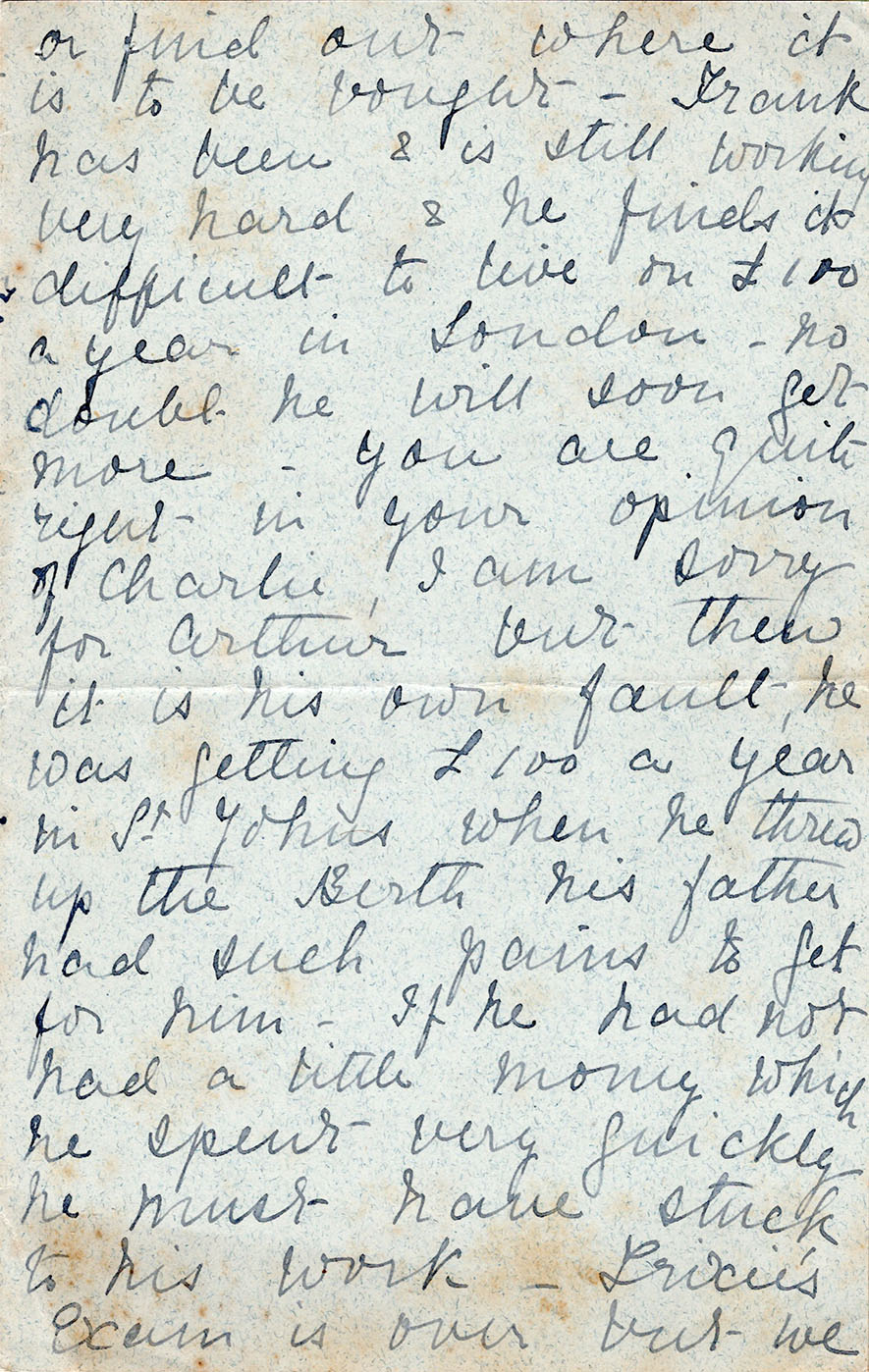
One of his father’s notices of obituary suggests that Arthur moved to the United States and farmed there (Daily Tribune: Saturday 20th May 1893); however, a letter that his stepmother wrote to his elder sister Lucretia Maude (who was then Abbess of a convent in Rome) suggests that Alfred was living in Winnipeg (Manitoba) in 1900. Emily told her that: “I generally write to poor Arthur about 3 times a year. He seems to be settled down now in Winnipeg.” Why “poor” Arthur, she does not say; however, in another letter to Lucretia she sent the following year (both in my possession), she says: “I am sorry for Arthur but then it is his own fault he was getting £100 a year in St. John’s when he threw up the berth his father had such pains to get for him. If he had not had a little money, which he spent very quickly, he must have stuck to his work.” I rather fear that Arthur left Newfoundland to get away from his brother Charles who – as Lady Pinsent well knew – was an alcoholic and occasionally abusive. According to the census taken in Saskatchewan in 1931, he had been in Canada since 1905.
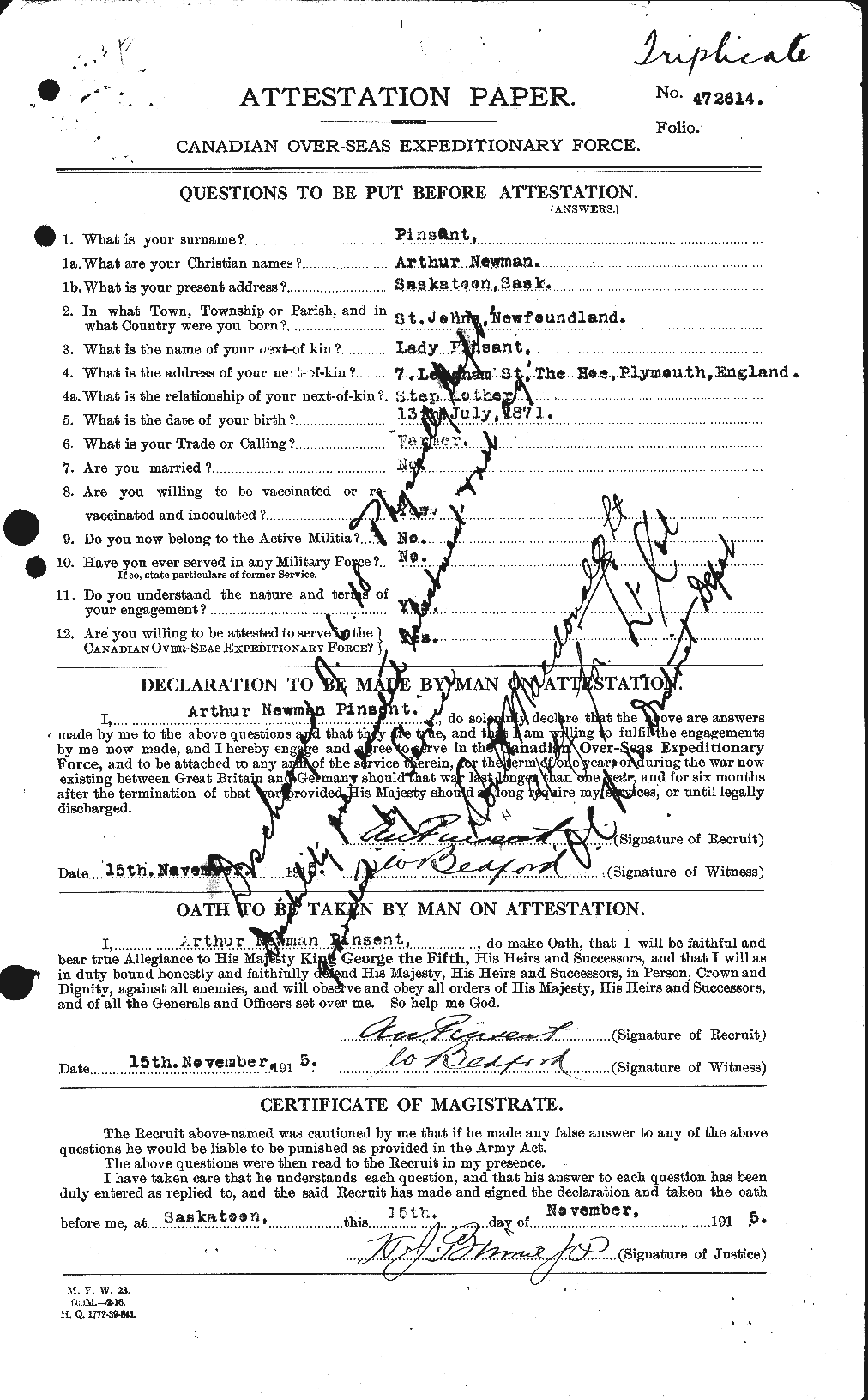
Arthur Newman was a farmer in Saskatchewan when he elected to join the Canadian Army in 1915. According to the “Attestation Paper for the Canadian Over-seas Expeditionary Force” – he signed on 15th November that year, he was a single farmer living in Saskatoon, Saskatchewan. He was 5ft 5ins tall, had a girth (when fully expanded) of 35 ins. (range of expansion 1.5 ins.). He had grey hair and hazel eyes – in case you were wondering! I have yet to find his photograph.
He claimed to have been born in St. John’s on 13th July 1871 (sic), whereas he was actually born on the same day in 1867. The powers that be probably did not care that much. Although why he signed up for active service at the age of 48 years and 4 months is a mystery!
Arthur gave his religion as Church of England and named his stepmother, Lady Pinsent as his next-of-kin. She was then living with her son Francis at #7 Leigham Street on “The Hoe” in Plymouth. Arthur was considered fit for service and he swore both allegiance to King George V and (doubtless with his fingers crossed!) to the truthfulness of his “attestation”. Private Pinsent was assigned Regimental Number 472614 and sent off to join the 65th Battalion, which sailed for England on the “S.S. Empress of Britain” on 18th June 1916.
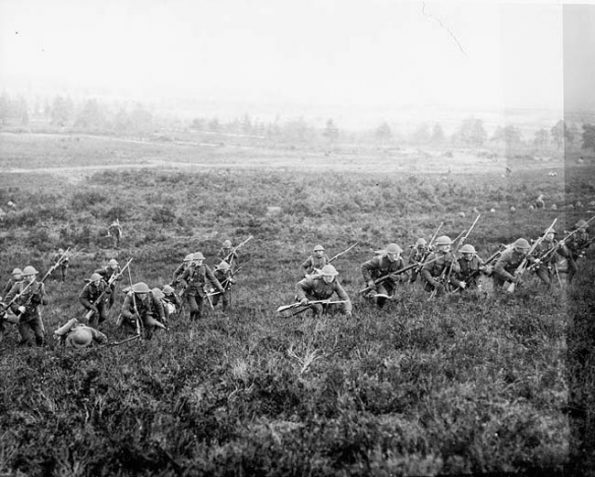
On his arrival, Arthur was transferred to the 46th Battalion at Bramshott, in Hampshire. However, he was unable to complete a route march in July 1916 and was found to have a high blood pressure – not a good sign for a foot soldier! It must have been around then that the Army first started to question his age. The grey hair might have been a clue. Nevertheless, he was sent to France and he served there for seven months before being returned to England in December 1917 suffering from rheumatic fever and myalgia.
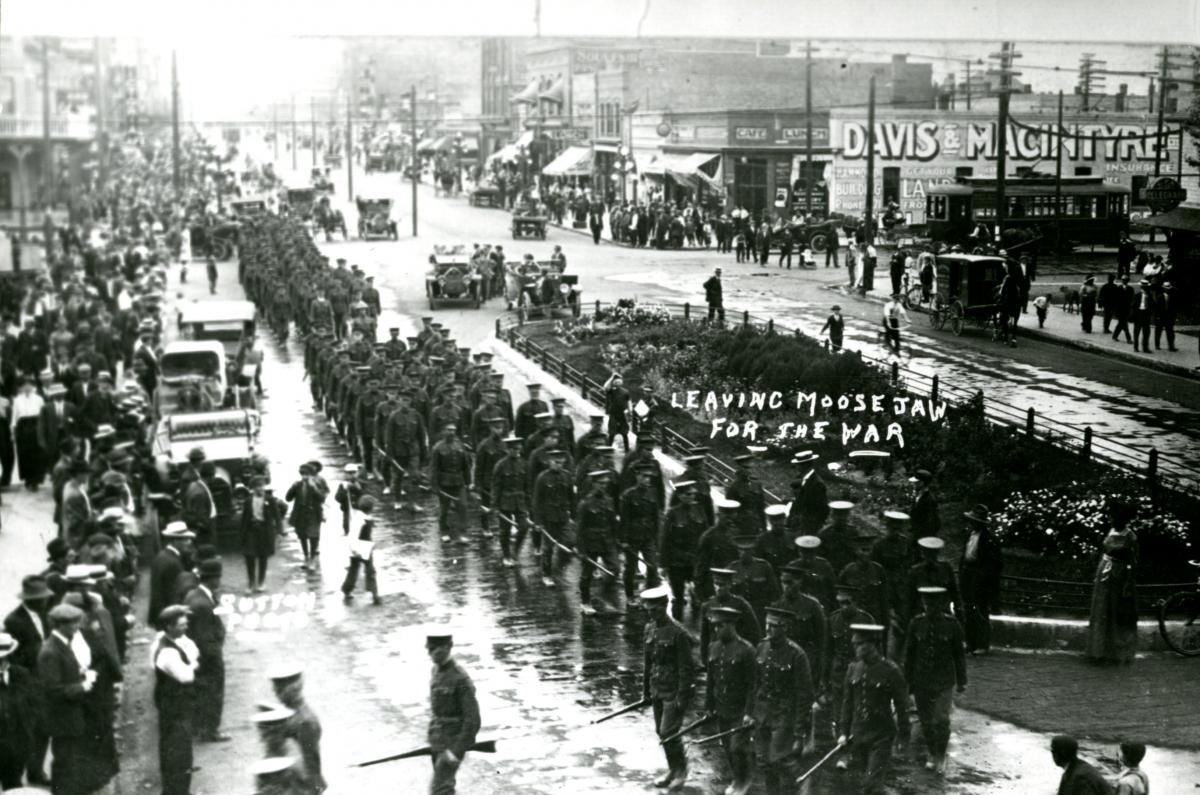
Arthur was, perhaps, fortunate. It was not for nothing that the 46th Battalion (South Saskatchewans) earned the nick-name “The Suicide Battalion”. It suffered combined casualties (dead and wounded) of over 90 per cent. Arthur seems to have been transferred to the “1st Can. Pioneers” as a “sapper” and been stationed at Canadian bases at Bramshott and Purfleet in Essex, and also other camps (and hospitals) until it finally dawned on the Military how over-age he actually was. There is an exasperated note in his personnel file that shows “He is fifty three years of age and looks it …”
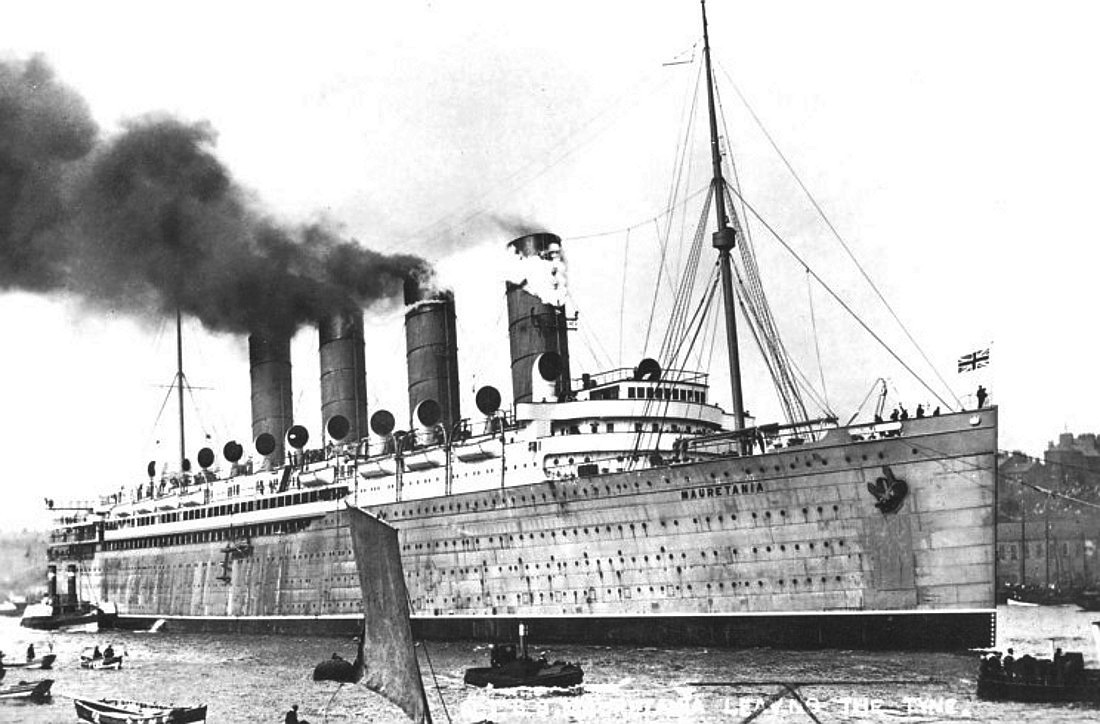
#/media/File:Mauretania,1907_on_Tyne.JPG)
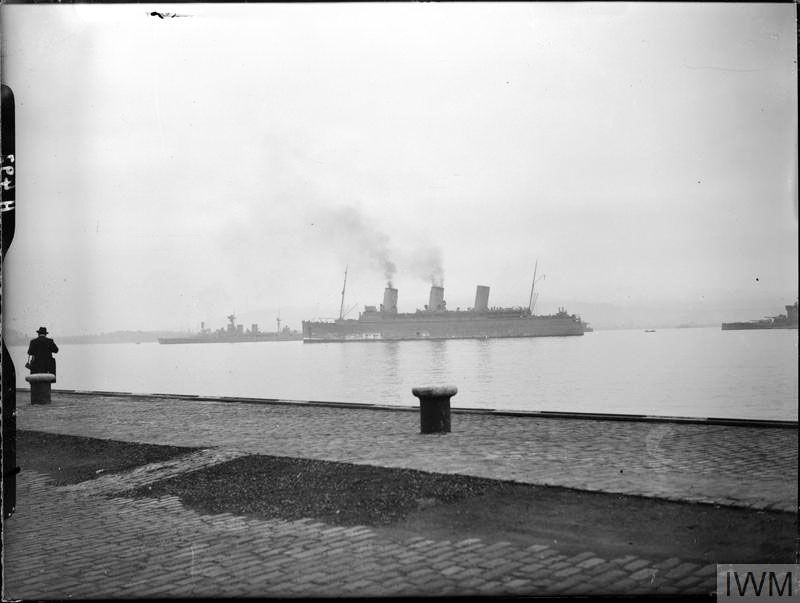
Arthur was shipped back to Canada on the “S.S. Mauritania” in a party of “Medically Unfit Soldiers” slated for discharge. He arrived back in Saskatoon in May 1918. Arthur had been granted a few days leave before returning home. Perhaps he went down to Devon to see his stepmother, who was then living with his step-brother Frank at “Hillsborough” in Horrabridge. If he did so, he probably met my father who would have been two years old at the time. On his return to Canada, the Army denied responsibility for his medical condition (myalgia). It was adamant that his “disability predated Attestment and (it was) not aggravated by service”. He was “Discharged 17th June 1918: Physically Unfit” (Canada WW1: CEF Personnel Files: 1914 -1918). It was old age and not chlorine gas that was the problem!
What happened to Arthur after his return to Saskatchewan, I am not sure. I would have thought he was too sick to farm; however, he applied for and received a Canadian “Soldier Homestead Grant” in April 1927. This entitled him – as a returned soldier – to receive 160 acres. In his case it was at “NW: 32: 44: 6: W3” – [Grant #15717: Section 32, Township 44, Range 6, Meridian 3]. This is (I think) some distance due north of Saskatoon and west of North Battleford. Arthur was sixty years old. Saskatchewan Residency Lists show that he lived at Blaine Lake in Saskatchewan from 1920 to 1929. The Saskatchewan census shows that he was a retired lodger in Prince Albert by 1931.
Arthur Newman was probably the “A. Pensent” who lived on River Street East in Moose Jaw, Saskatchewan in 1945 (Canada Voters List: 1940 – 1972). His army records tell us that he died on 14th December 1946. Arthur may have left some residual estate in Newfoundland as an “Arthur Pinsent” had his will probated in St. John’s Newfoundland in 1949 (Newfoundland Wills Book: Volume 20: page 517). HOwever, I have not seen it.
Arthur Newman never (to the best of my knowledge) married. He has no known descendants.
Family Tree
Grandparents
Grandfather: Robert John Pinsent: 1798 – 1876
Grandmother: Louisa Broom Williams: 1808 – 1882
Parents
Father: Robert John Pinsent: 1834 – 1893
Mother: Anna Brown Cooke: 1837 – 1882
Father’s Siblings (Aunts, Uncles)
Mary Speare Pinsent: 1833 – 1833
Robert John Pinsent: 1834 – 1893 ✔️
Thomas Williams Pinsent: 1837 – 1890
Charles Speare Pinsent: 1838 – 1914
Louisa Williams Pinsent: 1841 – 1921
Mary Elizabeth Pinsent: 1844 – xxxx
William Burton Pinsent: 1846 – 1846
Male Siblings (Brothers, Half-brothers)
John Cooke Pinsent: 1861 – 1861
Robert Hedley Vicars Pinsent: 1862 – 1888
William Satterly Splatt Pinsent: 1864 – 1865
Charles Augustus Maxwell Pinsent: 1866 – 1910
Arthur Newman Pinsent: 1867 – 1946 ✔️
Robert John Ferrier Homfray Pinsent: 1874 – 1899
Francis Wingfield Homfray Pinsent: 1875 – 1948
Guy Homfray Pinsent: 1889 – 1972
Please use the above links to explore this branch of the family tree. The default “Next” and “Previous” links below may lead to other unrelated branches.