In the very beginning
1066 and all that
The Devonshire Pinsons
Pinsents appear
And then the Plague
Finding home
Pinsents at sea
To the manor born
In the beginning
The story continues
The taxman cometh
Parish records
Pinsents past
The here and now
Early days in Devonshire
THE TAXMAN COMETH
Devon prospered during the 15th and 16th centuries through the production of tin, wool and cloth and it continued to do so throughout the 17th and 18th Centuries – through farming and, and among other things, its participation in the Newfoundland cod fishery.
By the early 1500s (early 16th century) there were several “Pinsons”/”Pinsents” wealthy enough – in terms of “land”, “goods” or “work” – to catch the eye of the taxman, and the Devon Subsidy Rolls for 1524/5 show that John Pynsent “of Combe” (mentioned above) was not alone in paying tax. There were five men apiece in Bovey Tracey and Hennock and also one each in the neighbouring parishes of Ashton and Kenton that were deemed to be taxable.
Twenty years later, the 1543/5 rolls show that there were seven taxable “Pinsons”/”Pinsents” in Bovey Tracey and nine in Hennock. There were two in Ashton and one in Chudleigh. Sadly, the rolls do not tell us who they were or where they lived in the parish; however, contemporary parish and other records show that some of them likely came from the farms at “Combe” and “Southbrook” in Bovey Tracey, from the town of Bovey Tracey, and from “Huxbeare”, “Huish” and “Warmhill” in Hennock. The two latter parishes are discussed in some detail elsewhere.
Both rolls list several Johns, Williams and Thomas’ along with one or two Richards, Roberts, Georges’ etc. Many were probably closely related; however, if the “Pinsons”/”Pinsents” had been living in the same general area for over two hundred years (as they probably had!) some of the families may have been from long divergent lines.
PARISH RECORDS
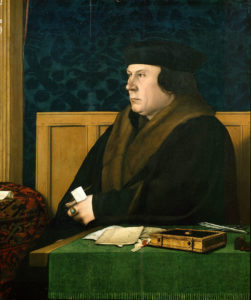
In 1537, Henry VIII’s Chancellor, Thomas Cromwell, decreed that every parish in the Country should keep an accurate record of its births, marriages and burials. The idea did not go over particularly well in Devon (or elsewhere for that matter) as many country-folk (perhaps rightly) thought that it would lead to more efficient taxation – and they were not particularly keen on that. Some parishes were slow to comply – or, perhaps more charitably, took longer to systematize the collection and preservation of their records.
All six parishes in our principal area of interest fell in line – eventually: Ashton (1547), Bovey Tracey (1538), Christow (1555), Chudleigh (1558), Hennock (1541) and Trusham (1559). When they started up, all but two, Christow and Trusham had at least one “Pinsent” family contributing its share of births, marriages and deaths. Parish Register entries are extremely important in genealogy; however, they can be frustratingly difficult to use as the pool of first names our (o.k. – my) ancestors used was distressingly small! Also, many of the clerk’s entries were perfunctory at best. For instance, who was “John son of John Pinsent”? The local parishioners would have known; however in some cases we can only speculate, and I am reluctant to go too far with that.
It was probably John Pencent “ye clarke” who started collecting the parish data in Bovey Tracey. In 1541, he recorded the birth and subsequent burial of one of his own sons, and he specifically added a note to the effect that he was the parish “clerk”. Presumably, he did so to distinguish himself from John Pinsent “of Combe” – who was also adding names to the register. The latter founded an interesting line that died out in the mid 1700s. Meanwhile, another John Pinson was a “weaver”, William Pinson and his wife, Elizabeth, were farming at “Southbrook”, and a Thomas Pinson was living at “Colehouse”. This was probably the “Culverhouse” we came across earlier.
There is plenty of room for confusion in the early records; however, some people can be slotted into their households fairly easily and others can, with the help of supporting evidence. The Bovey Tracey registers contain, on average, two baptism, marriage or burial entries a year over their first forty years of existence and they continue with sporadic entries through to relatively modern time. Unfortunately, there are gaps and the birth, marriage and burial records for the years from 1740 to 1770 consist of little more than scribbles on fragments of torn and corroded paper or parchment. They give us ten Pinsent references (findmypast.com); This must be an underestimate. Some of the notes are duplicate entries, so may not have been meant to be part of the formal record at all. These gaps have prevented me from going back further in time than I have when it comes to the Bovey Tracey related families. Regardless, the registers contain over 470 family-related entries prior to 1837; when the Civil Registration process takes over and relationships become clearer.
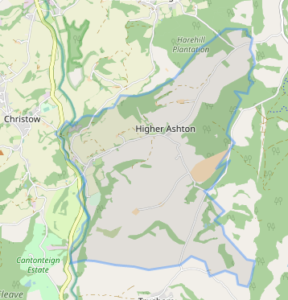
Life was simpler in Ashton Parish, where there seems to have been only one family present at the outset. Stephen Pinsent married a Frediswide in 1551. Frediswide was a perfectly respectable girl’s name in those days. Their children are easy to identify but matching them to later burials is a dangerous game as lifespans vary considerable. A death record could refer to an infant, a child or an adult. Three of the Ashton men made wills – which suggests that there may have been some wealth in the family. Unfortunately, they were destroyed when the Exeter Probate Office was bombed during the Second World War. The Ashton family has yet to be assigned to an established tree. It is an interesting twig that has been put to one side for now. This discussion is mainly concerned with those family lines that clearly made it through into (relatively) modern time.
In the neighbouring parish of Hennock, John Pinson of “Huxbeare Barton’s” daughter married in 1541 and Richard Pinsent of “Huxbeare” died in 1548. A “barton” was a relatively large manor farm, so there was probably some wealth in the family. Meanwhile, Robert Pinson was living at “Warmhill” (the “Warmehele” of 1429) in 1545 and Thomas Pinson was farming at “Huish” in 1547. There was also a William Pinson living at “Huish” two years later.
These entries indicate the presence of several families in Hennock in the early 1500s. How they fit together, if at all, is hard to know. A Richard, son of John Pinson “the younger” was baptized in 1553. Which John would that be? In most cases, the farm affiliation was omitted from the record entry. Just to complicate matters, large farms, such as “Huxbeare” and “Warmhill”, had several “messuages” or houses, so that more than one family (in the sense of a married couple) could and probably were in residence at the same time!
At an average of 1½ entries-per-year over the first forty years, the problem of name duplication in Hennock is less acute than for Bovey Tracey; nevertheless, there is still considerable room for error. In all, there are approximately 350 family-related entries in the (also, admittedly, incomplete) Hennock registers prior to 1837. However, Hennock’s “Overseers & Churchwardens Accounts” have helped to clarify the family affiliations in my “HENNOCK” branch of the family. When the principal farmer at “Huxbeare” died his name would be dropped from the “Accounts” and one of his son’s inserted. My family later moved to “Pitt” farm and it was still living in the parish in the 1840s.
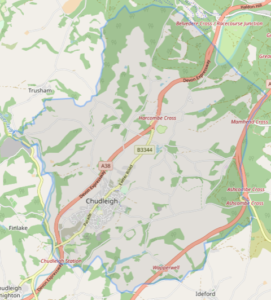
The Chudleigh records start with several productive families. Robert Pynson was an altar “warden” in 1559 and Thomas, Richard and Anthony Pinson all had children baptized there in the 1560s. How long they had been in the parish and where they all came from before that, I am not sure. However, we do know that the John Pinson who moved to Chudleigh and set up in business as an “inn-keeper” was born elsewhere. When he gave evidence before the “Court of Exchequer” in 1602, he deposed that he was “aged 70, born in Bovey Tracey and dwelt there thirty years before moving to Chudleigh, three miles away”. He came from “Combe.”
Approximately 150 family-related entries were made in the Bovey Tracey parish records by 1837. This gives an average register entry rate of 1 per year over the first forty years. Thus, despite the early births and its attractions as an established County town, Chudleigh was less well populated with “Pinsons” and “Pinsents” than either Bovey Tracey or Hennock! This is surprising. However, it should be noted that these are Church of England Records – later on they may miss a Dissenter or two. Chudleigh was home to one particularly important family – that of the Sir William Pynsent mentioned above. Whether he knew it or not, he was descended from the innkeeper. His ancestry is discussed in the section dealing with “The Pynsent Baronetcy: The Trials and Tribulations of a Litigious Family: 1687-1765”.
PINSENTS PAST
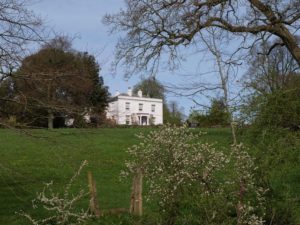
Wealthy families leave a far better paper trail than poorer ones and their trees are generally easier to grow. In addition to the Pynsents of “Combe,” who founded the first baronetcy, there are other broken branches that carry the family name.
The Reverend John Pinson (1596-1661) of Talaton’s life is reasonably well documented. The Reverend gentleman made the mistake of supporting King Charles I during the English Civil War and was thrown out of his living for doing so. His estates were sequestered (confiscated) by Oliver Cromwell and his “roundheads” in 1646; however, there was a happy ending as he got his job and his lands back when the monarchy was restored in 1660. His line is hard to follow but the family seems to have died out with the death of a Jonah Pynsent of Talaton in 1792. Jonah’s property passed to a member of the Mathew family and they carried the Pynsent name forward. There were Pynsent – Mathews living in Devon well into the 1800s.
The John of “Combe,” mentioned previously, seems to have created several twigs, one of which ended with the death of Sir William Pynsent in 1765 and another in the death of Reverend John Pinsent – the Rector of Great Easton in Essex – in 1776. Another member of the family at large, held the farms of “Higher” and “Lower Penson,” in Colebrook parish, near Crediton on the north side of Dartmoor. The name “Penstone” is a modern-day reminder of the family’s past presence in the area. Thomas Pinsent (xxxx – 1666) was a far less affluent “miller” in Sandford in Devon who found time to start a short line.
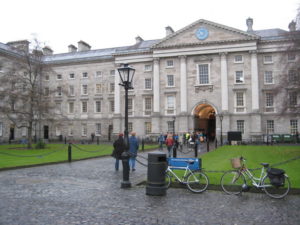
These and other broken branches have yet to come into focus. Where, for instance, do the Irish Pinsents fit in? They had some social standing in Dublin. One or two of them attended “Trinity College” in the 1600s and became clergymen. Others served in the “Royal Irish Regiment” in the reign of Queen Anne. They fought for the Duke of Marlborough. Sadly, Captain Henry Pinsent was killed at the siege of Namur in 1695, and Ensign James Pinsent was wounded storming the Schellenberg in 1704.
A somewhat later clergyman, the Reverend Robert Pynsent, who was Rector of Athy in Co. Kildare, assumed the baronetcy on the death of Sir William Pynsent at Burton Pynsent in 1765. The baronet had no heirs and Robert had absolutely no right to the title! Nevertheless, it was The Reverend “Sir” Robert Pynsent who died in 1781.
Given the abundance of Johns, Thomas’s, Marys and Elizabeths in a limited number of parishes, it is hardly surprising that some lines are hard to follow. For instance, there were three Thomas Pinsents born in 1754 and it took very careful reading to establish which was which – and figure out what happened to them. Some of the major family lines carry through with time; however, the lesser twigs may hang together for only a generation or two. It is a pity really, because there are plenty of colourful characters looking for a place on the “tree”. Although some lines appear to die out, it is worth remembering that there may well have been daughters to pass down the family genes.
THE HERE AND NOW
By the early 1800s, the Pinsent family was well established in Devon and had settled in other parts of England and could also be found in several other countries. There were well-defined clusters in Australia, the United States and Newfoundland that have developed their own lines and continue to grow.
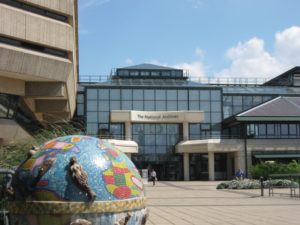
Parish records are extremely useful where they can be interpreted. However, the British Government’s “Civil Registration” process that started in 1837 provides a more complete and systematic record of births, marriages and deaths throughout the Country. My father had access to the “Pinsent” (but not “Pinson”) records in the “General Records Office” in London in the 1960s and he used them to trace out the then current branches of the English family.
Government “Census records” collected at ten-year intervals between 1841 and 1921 have helped to confirm many of the linkages and the lines discussed here are pretty well established. This website provides biographical information on each of the productive families. Much of the data can be found on-line; however, some can only be found in the National Archives, at Kew, in London or at the Devon Records Office, in Exeter.
Despite the abundance of early twigs and branches, the records showed that the modern English “Pinsents” and their over-seas relatives come from no more than seven or eight “founding fathers” – most of whom lived in the early 1800s. They were:
1) Thomas Pinsent (1754 – 1841);
2) Thomas Pinsent (1691 – 1777);
3) Thomas Pinsent (1738 – 1825);
4) Thomas Pinsent (1738 – 1818);
5) Richard Pinsont (1745 – 1825);
6) Roger Pinsent (xxxx – 1720);
7) Henry Pinsent (1769 – 1854); and
8) Thomas James Pinsent (1833 – 1915)
Of these, families #1 and #3, from “DEVONPORT” and “TIVERTON” are the largest in terms of family size; followed by #5, “BRISTOL” (with #8 “Australia”) and #2, “HENNOCK” . The origins of the other smaller families (#4, “BOVEY TRACEY”, #6 “TEIGNMOUTH” and #7 “INDIA” are less well understood.
I have attempted to trace all the lines back in time using parish and other records. It looks as if the “DEVONPORT”, “HENNOCK” and possibly “TIVERTON” families come from a single farm, “Huxbeare”, in Hennock; whereas the “TEIGNMOUTH” and “BOVEY TRACEY” lines somehow root back into Bovey Tracey. Unfortunately, some of the parish records are missing so it is difficult to connect these two up. The “BRISTOL” family comes from the neighbouring parish of Lustleigh, but it too may have originally come from Bovey Tracey. The “AUSTRALIANS” are an off-shoot of the “BRISTOL” branch. The origin of the “INDIA” line is less certain. It may be a late switch from an old “Pinson” or “Penson” line. They are something else again.
Two interesting quirks are worth mentioning: One branch of the “HENNOCK” Pinsent family reverted back to the “Pynsent” spelling and one branch of the “BRISTOL” Pinsent family continues to use the “Pinson” spelling. Life gets complicated!
The next section discusses the early history of the family as it comes into focus in Bovey Tracey and Hennock. The section after that discusses the importance of “Huxbeare”, and the sections that follow provide “Branch Summaries” that describe the descent of each of the current lines through time. Each productive son is tagged with his “GROID” identifier, so, if you would like more information on him, you may find it by “clicking through” to the more detailed potted biographies that describe each “Family’s Descent”.
Back: Finding home
Next: Early days in Devonshire