Vital Statistics
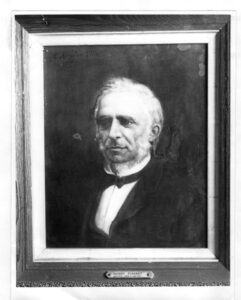
Savery Pinsent: 1815 – 1886 GRO0798 (Solicitor, Durban, Natal, South Africa)
Family Branch: Devonport
PinsentID: GRO0798
References
Click here to view close family members
Savery Pinsent was the eldest surviving son of Thomas Pinsent and Mary (née Savery). He was born at #4 Stoke Terrace, Stoke Damerel in July 1815 and was brought up in Devonport, where his father owned a “drapery” business and at “Greenhill”, in Kingsteignton, where he owned a farm.
Savery was “apprenticed” to “John H. Terrell of Exeter, Solicitor” as a “clerk” in 1836 (LDS Film #0916878) and was noted to be such when he and Mr. Terrell prepared Jane Snell’s will later that year (Inland Revenue Wills: 1836). Two years later, in the spring of 1838, Savery applied for admission to the bar as an “Attorney.” He was living in London, near Russell Square, at the time (The News (London): Sunday 6th May 1838). By 1843, he was a fully fledged “solicitor” and entitled to practice law in London. That year, the firm of “Pinsent and Palk” (i.e. his father Thomas and his “brewery” partner Edward Palk) filed an action against Mr. John Furze, a “licensed victualler” of Paignton, in the “Court of Bankruptcy” and “Mr. Pinsent, of London” (i.e. Savery) represented them in Court (Public Ledger and Daily Advertiser: Saturday 20th May 1843). The same year, Savery was described as being a “Solicitor of #9 Bow Lane, Cheapside, London.” in one of London’s local directories (Robson’s London and Commercial Directory: 1843). There were several “Pinsent” related law-suits heard in London in the years that followed. Some, such as “Palk v. Kneebone,” and “Pinsent v. same” (Morning Herald (London): Tuesday 4th November 1845) must relate to the DEVONPORT family somehow but other like “Pinsent v. Hopper” (Morning Herald (London): Friday 15th November 1844) may not. Whether Savery was involved, is hard to tell.
Like his two grandfathers and his father before him, Savery was a committed Baptist and he took part when a “numerous and highly respectable meeting assembled at the Mermaid Tavern in Hackey” to discuss the work of The “Evangelical Voluntary Church Association” (The Patriot: Monday 25th April 1842). The chairman was particularly offended that Church of England Clergymen traveling throughout the country seemed to ignore the Baptists completely.
Two years later, the Morice Square (Devonport) Baptists’ made Savery Pinsent “of Devonport and Modbury” their delegate at a series of “Anti-State-Church” Conferences held in London in April 1844, May 1845, and May 1847. He helped draft a “Scheme of Organization” for the non-conformist community (London Nonconformist: Wednesday 7th May 1845) and was appointed to committee that was asked to prepare a petition to parliament in opposition to the third reading of the “Maynooth College Bill” in 1845 (The Patriot: 20th May 1845). It restricted the Baptists’ and favoured the Roman Catholics. Two years later, he was back working with the independents to oppose the Government’s “Education Scheme”- which did little to address their concerns (The Patriot: 16th April 1847).
Savery went out to the British Colony of Natal in 1849. I do not know why. He arrived on the (as we shall shortly see) not-so-good ship “John Gibson” in October (A Century of Progress in Natal, 1824-1924). Like most of his fellow travelers, he planned to set up a farm or a sugar plantation but on his arrival he seems to have heard that very few were successful and he seems to have changed his mind and set up in practice as a “solicitor”. The Natal Colony records show that, as one of his first duties, he wrote to the “Registrar of the District Court” from a house “on Mr. Clarence’s Farm, near Peel’s Drift on the Umgani” in 1851 concerning the death of a servant.
Life in Natal was precarious and although the Zulu and Boer wars were still many years off, British settlers were subjected to periodic outbreaks of native and Dutch unrest. The British had taken Natal from the Boers by force and had established a Colony there in 1843. At first, it had been administered through Cape Town (in South Africa); however, it gained a modicum of independence with the establishment of a “Legislative Council” in 1857. Unfortunately, the Council disagreed with its Lieutenant Governor over a spending bill in 1859, and it was temporarily dissolved by the “Colonial Office” in Westminster for this act of impertinence (Cape and Natal News: Wednesday 2nd March, 1859). Mr. Pinsent had warned the Council that there might be repercussions, and that the Queen might suspend its charter – but apparently they had not listened … The Australians f0llowed all this with considerable interest – in light of their own colonial status (The Melbourne Argus, 15th June 1859). Savery was elected a “City Councillor” of Durban and served from 1856 to 1859 and also in 1870. He was elected Mayor in 1857 and 1859. This was during a period of considerable political upheaval.
In 1860, Councillor Pinsent lobbied for an “endowment for the establishment of a high-school, college, and public library at the port” in D’Urban (Cape and Natal News: Wednesday 1st August 1860) and his wishes seem to have been met as the “Mechanics’ Institute” in Durban was split into a high school and a college (Port Natal: J. Malherbe, 1965). He later oversaw the founding of Durban’s Botanical Gardens.
Savery was one of three candidates who ran for one of Durban’s two seats on the Colony’s Legislative Council in 1869. He came third behind Mr. Goodricke who offered to resign in his favour – but the electors would have none of it and Mr. Goodricke join Mr. Churchill on the Council (Cape and Natal News: Monday 8th February 1869).
Operating a business in Natal, or any other newly established colony for that matter, provided considerable room for litigation and Savery seems to have spent much of his time sorting out the contradictions and conflicts that inevitably occurred between local values and British laws. He was actively involved in several commercial enterprises – including the local “not quite three miles long” railway line from the port to the town. He attended and helped run the annual general meeting in May 1864 and asked for the financial records and estimates to be printed and circulated (Cape and Natal News: Monday 16th May 1864). He also commented on the “Natal Railway Company’s” proposal to lease the “Government’s Umgeni line” the following year (Cape and Natal News: December 1st 1865). He noted several changes between the original deal and that then under discussion. Not least that the agreement as written only required approval of the Directors, as opposed to the shareholders as had been intended. At much the same time, he was caught up in a dispute in the “Supreme Court”, in London, between the “Natal Marine Insurance and Trust Company” and two of its shareholders who found themselves required to pay £6 per share on “calls” made by Company Directors (Cape and Natal News: Monday 2nd December 1867). Similarly, he attended a meeting of the “Natal Fire Assurance and Trust Company’s” creditors in 1870 and, in his capacity as an “advocate”, made an application to the “Supreme Court” to assist the company come to terms with its creditors (Cape and Natal News: Tuesday 25th January 1870).
Another inter-colonial issue of significance arose in 1867, when “the Bishop of Natal applied for an interdict restraining the Rev. J. H. Wills, chaplain to Bishop Twells of the (Orange) Free State, from holding services or otherwise officiating here, without having first received the license of the lawful bishop of the diocese, Dr. Colenso” (Brisbane Courier: Tuesday 26th November 1867). The thought of a Boer preaching in the Colony without a license was intolerable. The Bishop was at war with his Dean, the Very Rev. J. Green and his Archdeacon, the Ven. Rev. Archdeacon Fearne and the Rev. J. Walton, and he ordered them to appear at a “Court of Citation” charged with denial of his authority, brawling in the Cathedral Church and participating in the election of an alternative bishop! Savery, regardless of any disdain for the Anglican Church he may have felt, was brought in to argue the Bishop’s case and he seems to have won (John Bull: 29th June 1867). Dr. Colenso had at least been to Natal; he wrote a book about a visit he made in 1854. It was entitled “Ten Weeks in Natal: First Tour of Visitation Among the Colonists, Zulu Kafirs of Natal”. It had been published in London in 1855. The independents in Natal, who had no love of Dr. Colenso – who they considered far too Catholic – went about building their own Congregational Chapel in D’Urban. It was built on a “site was furnished by Mr. Pinsent at half-market value” and paid for by local activities and donations from England, and opened on 8th June 1856 (The Patriot: Wednesday 8th October 1856).
The Rev. William Taylor, in his book “Christian Adventures in South Africa” published in 1877 describes how Savery overcame a crisis of conscience. When, is not made clear. According to Rev. Mr. Taylor, “Mr. Pincent, of D’Urban, in Mr. George Cole’s judgement, though not an eloquent pleader, is the best law counsellor in South Africa” came to him and told him of his struggles, and said that although he was sick of sin he feared that he would never be forgiven. Mr. Taylor goes on to say that he finally persuaded Savery that he would be forgiven by using a legal analogy – that a penitent should trust in God just as a defendant should trust in his advocate. It all came down to trust in someone better qualified. Evidently, the crisis passed and “From that, Brother Pincent became decidedly active as a witness and worker for God, and very useful in leading poor sinners to Christ.” The Reverend gentleman went on to say that he had discussed “Pincent’s conversion in Cape Town” and had been chastised in the press for using his name. However, he was able to rebut the complaint by saying that it was by Mr. Pincent’s own authority that he made use of his name, he having said to me; “so much of my life has been wasted, that for the rest of it I wish my time, talents and testimony, all used in any way that will promote the glory of God and the salvation of sinners, and you are entirely at liberty to make any use of my name s you like for such purposes.”
Diamonds were found in the Vaal River near what is now Kimberley in 1867 and, although the Witwatersrand gold fields were not discovered until 1884, the political landscape in Southern Africa started to change. There may have been another Colonial controversy brewing in 1868 as the Speaker of the House of Commons in Westminster is reported to have read out a letter of petition from “Mr. Savery Pinsent of D’Urban, in the Colony of Natal” praying that a dispatch from the “Secretary of the Colonies” to the “Lieutenant Governor” be cancelled, in June 1868 (London Standard: 11th June 1868). What that was about, I do not know.
Savery was a practicing “attorney” throughout the 1860s and his fingerprints can be found on several letters and legal opinions in the colonies archives. The last noted was dated 14th December 1871 (Natal Archives, Deceased Estates). Evidently, a Mr. Nall had made a will in England before moving out to Natal and making his fortune there. His executors still lived in England and it was not clear what his legal representative in Natal had to do to receive authority to liquidate his assets. Savery dug into the precedents and determined that he had to apply to the Executors to become their “agent”. This was one of several occasions when he found himself trying to reconcile the objectives of the Imperial Government with the needs of the newly arrived colonists. There had been a similar case a few years previously where it had proved difficult to reconcile English and Colonial probate requirements (Cape and Natal News: Monday 22nd April 1867).
Savery must have returned to England, periodically, as the Natal Register of Immigrants shows he returned to Durban on the “Natal Star” on 1st February 1867. However, he made his final trip home to Devon shortly after his father, Thomas, died in 1872. Whether he had been expected back is unclear as his father’s executors were in the process of selling the family estate at “Greenhill”. Savery was not particularly land-rich but he must have been very well off. The “Returns of Owners of Land: 1873” shows that “Savery Pinsent, of Clifton, owned land with an estimated gross rental of L.17 0s 0d“.
On his return, Savery Pinsent became a member of the local “Liberal Association” and he supported the nomination of Mr. Seale-Hayne, as Candidate for the Kingsbridge Division at an upcoming parliamentary election, in 1885 (Western Times: Thursday 12th March 1885). Savery became a leading member of the Congregational Church in Newton Abbot. He was a “deacon” and “Sunday school teacher”, and one of the principal advocates for a “Union Conference on Scriptural Holiness” held by the Nonconformist community in Newton Abbot in November 1875. He was deeply suspicious of the then current idea of a “Reformed” Church of England, believing it to be a vehicle for Roman Catholicism. He complained bitterly about a recent “Mission” in Newton Abbot at which Nonconformists were invited to attend under (the false) assurance that their principles would not be brought into question. He complained that the children of “dissenters” who attended were taught that priests can forgive them their sins and that if they cross themselves it will ward off the devil! (Western Times: 14th December 1875.) He was not amused.
In 1878, a Mr. Cowey wrote to the editor of the Natal Mercury (Monday 25th February 1878) with a suggestion of what might be done with £50 that his firm held in trust for the, now defunct, Durban Branch of the “Religious Tract Society,” of which a James Blackwood had been treasurer and Mr. T. Pinsent hon. sec. Unless anyone else had any bright ideas, he proposed to give the money to the treasurer of the “Sailors’ Home.” The Mr. T. Pinsent he mentions was most likely Savery. I am not aware of another Pinsent in residence in Natal.
The back windows of the Congregational Church and an adjacent “bakery” in Kingsteignton were broken one night in August 1881 (Western Times: Friday 26th August 1881). This led to considerable discussion as to whether the act was a threat to the churchgoers or a protest against the rising price of bread. Mr. Pinsent put the matter in the hands of the police who concluded that it was neither. The “ill-disposed” persons responsible had been throwing stones at apples in a nearby orchard and had broken the windows accidentally.
Savery was appointed “Superintendent” of the “Congregational Sunday School”, He was an strong advocate of education and he added several rooms to the “British School” in Kingsteignton at a personal cost of £400. It considerably increased the school’s ability to handle all “classes” of people. The Rev. J. Sellicks (an Independent Minister) opened the extension in October 1880 and praised Savery for the philanthropic work he was doing in the community. He replied by acknowledging the work of others, including his father “in whose foot-steps he was proud to tread.” He just hoped that people would take advantage of the school … (Western Times: Tuesday 26th October 1880).
Savery must have been a well known figure in-and-around Kingsteignton and Newton Abbot in the 1870s and early 1880s. He had never married and had no immediate family, so we find him as an “annuitant” or pensioner lodging at “Town End” farm in Kingsteignton, the home of a Mr. Thomas Knowles, a cattle dealer and farmer, at the time of the 1881 Census. His death five years later was reported in the London Times (24th May, 1886) and Mr. Charles W. Freestone, of the “British School Newton Abbot”, sent a short notice concerning his death to Durban, where it was published in the Natal Mercury on 30th June 1886. In it, he notes that Savery had lived near the family residence of “Greenhill”, carried on his father’s philanthropic work and done what he could to counter the practices of the Episcopalian Church. His dying words were, “I am so happy, I feel God supremely precious to me…”.
The Calendar of Grants of Probate and Letters of Administration shows that Savery Pinsent, “late of Kingsteignton”, gentleman, died 18th May 1886. His will, which still exists — although I have not seen it (Hillary Preston, Personal Communication, 2009) – was proved in Exeter by Thomas Horton of #3 Tamar Terrace, Stoke Damerel, a “draper.” He was Savery’s nephew. His theological and other books were sold at auction, in London, in December 1886 (Morning Post: Saturday 18th December 1886). Among other items, Savery left “Cotty Meadow” in Kingsteignton to his trustees for the building of a non-sectarian elementary school. His personal estate was estimated at £8,628 10s 9d. He was buried with his sister, Anna, next to their parents in the Baptist Churchyard in Bovey Tracey.
Interestingly, the Western Times published a letter from a Natal friend of Savery’s on 18th August 1886. In it, Mr. W. E. Bale, of Martizburg wrote to describe his early experiences with Savery; saying that they sailed from London together on the “John Gibson” and arrived in Durban in October 1849 after a particularly wretched journey where they suffered from bad food and bad weather. He says that they, and others on the ship, had intended to farm; however, on arrival they discovered that there was no market for farm produce and they decided they would be better off pursuing their original trades and professions. That, presumably, is why Savery stayed a lawyer.
Savery was not completely forgotten in Natal. The Durban City fathers named a road after him. Among the “Final Names in the Irish Sweepstake Draw” of 11th October 1932 (Daily News: London), I find “Tsaka, 11 Pinsent, Road Durban, Natal.”
Family Tree
Grandparents
Grandfather: Thomas Pinsent: 1754 – 1841
Grandmother: Anne Ball: 1747 – 1794
Parents
Father: Thomas Pinsent: 1782 – 1872
Mother: Mary Savery: 1780 – 1859
Father’s Siblings and half-siblings (Aunts, Uncles)
Anna Thomasin Crout Pinsent: 1777 – 1799
Thomas Pinsent: 1779 – 1779
Thomas Pinsent: 1782 – 1872 ✔️
Elizabeth Pinsent: 1789 – xxxx
Maria Pinsent: 1797 – 1864
John Pinsent: 1799 – 1870
William Pinsent: 1808 – xxxx
Charles Pinsent: 1812 – 1863
George Pinsent: 1814 – 1894
Male Siblings (Brothers)
Thomas Pinsent: 1807 – 1826
Savery Pinsent: 1816 – 1886 ✔️
John Ball Pinsent: 1819 – 1901
Richard Steele Pinsent: 1820 – 1864
Please use the above links to explore this branch of the family tree. The default “Next” and “Previous” links below may lead to other unrelated branches.