Vital Statistics
John Ryland Pinsent: 1888 – 1957 GRO0528 (Army Officer, Teacher, Mayor of Winchester)
Kathleen May Boyce: 1894 – 1969
Married: 1915: Birmingham
Children by Kathleen May Boyce:
John Laurence Pinsent: 1916 – 2014 (Married Margaret Molyneux Favell, 1940)
Mary Kathleen Pinsent: 1919 – 1919
Richard Alan Pinsent: 1931 – 2019 (Married Wife (GRO1376))
Family Branch: Devonport
PinsentID: GRO0528
References
John Ryland was Sir Richard Alfred Pinsent’s third son by his wife Laura Proctor, née Ryland. He was born at “Selly Wick House” (#47 Sellywick Road), Selly Park in August 1888 and was baptized in Selly Hill Church. “Selly Wick” was a large, suburban property in a residential district on, what was then, the outskirts of Birmingham.
John was sent to “Winchester College”, a “Public” (private) school, in 1902 and he moved to the “Royal Military Academy” at Woolwich in 1907. Cpl. J. R. Pinsent won a prize for signaling, which perhaps explains why his ultimately destination was to be the “Corps of Royal Engineers” (Army and Navy Gazette: Saturday 4th September 1909). John Ryland was one of several “Gentleman Cadets” who left to join His Majesty’s forces as “Second Lieutenants” in August 1909. He must have been recognized to be a talented young officer, and “2nd Lt. J. R. Pinsent” was one of many presented to His Majesty the King at a Levee held at St. James Palace in March 1910. His name had been submitted to the the Lord Chamberlain’s Office by the Inspector General of the Armed Forces (Morning Post: 2nd March 1910). On who’s recommendation I am not sure. John owned a car while at Aldershot, and relied on E. McGrath & Co. in Gillingham to keep it running – which was quite a challenge in those day! He wrote them a letter of appreciation on leaving Aldershot in September 1911: “As I am leaving Chatham, I should like to say how pleased I have been in all my dealings with your firm. Not only are your charges low, but the work has been well done and done by the day for which your promised it. Yours truly, J. R. Pinsent” (Chatham, Rochester and Brompton Observer: 30th March 1912).
John Ryland was promoted to full “Lieutenant” in the “Corps” in January 1912, and he probably returned to Aldershot for duty with “A” Signal Company that December (London Evening Standard: Tuesday 24th December 1912).
John Ryland was physically active throughout his early life. In fact, how he found time for military training I am not sure! The army seems to have given him considerable latitude when it came to sport. He was good team player and sport was to become an important part of his life. John (and a couple of colleagues) won the 450 yards relay race for first year students at Woolwich in March 1908 (Evening Mail: Wednesday April 1908), and he was on the “Woolwich Military College” cricket team when it played “Sandhurst” – another military college – in June the following year. It must have been a hard fought match. Sandhurst won (Cricket: Thursday 1st July 1909).
The “Royal Corps of Engineers” were based in Chatham, in Kent, and “Second Lieutenant” John Ryland was sent there in August 1909 (Evening Mail: Wednesday 25th August 1909). When he arrived, he picked up his bat and started started playing for the “Engineers.” The papers show that he played in a cricket match against a touring team from Canada (Zingari Tour Group) in July 1910, and for the “Sappers” (as the Engineers were known) in a drawn two-day match against the “Yorkshire Gentlemen” a year later (Lloyd’s Weekly: Sunday 25th June 1911).
John Ryland also playing field hockey in the winter months. He was extremely good at it and he played as a forward for the “Royal Engineers” and for the Kent “County” team. He helped the latter beat “Sussex” at Worthing Sports Ground in January 1911 (Bexhill on Sea Observer: 28th January 1911; Daily Mirror: Wednesday 1st February 1911). He also selected to play for the Army against the Navy the following month (Westminster Gazette: Friday 10th March 1911.) John Ryland continued to play for the“Engineers” and two years later he was, once again, asked to attend the Army’s hockey trials at Aldershot (Pall Mall Gazette: 14th January 1913). I do not know if he was selected.
If that were not enough, John played soccer for the “Army Officers” against the “Household Brigade” at Chelsea in March 1914 – this appears to have been a warm up for a match against a team of Dutch Army officers scheduled to be played at the Hague (Sporting Life: 14th March 1914). How that match went, I do not know; however, a couple of weeks later he played in the Army Cup – semi-final at Aldershot. After that match, the Army selected its team for a game that was shortly to be play against a similar Army team from Ireland. Lieut. J. R. Pinsent (R.E.) was named as reserve (Sporting Life: Monday 23rd March 1914). This is pretty good for a young man who had, almost certainly been brought up playing rugby football at school!
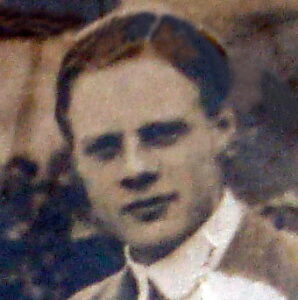
Before the war, John Ryland was called upon to represent the “Royal Engineers” in several cricket matches. He suited up against the “Household Brigade” at “Burton’s Court” in Chelsea, and against the “M.C.C.” (“Marylebone Cricket Club”) at their home ground at “Lords” during “Military Week” in the Summer of 1913 (Yorkshire Post and Leeds Intelligencer: 23rd & 24th July 1913). Many English school-boy cricketers dream of playing at “Lords;” few actually do! John Ryland played in a match against the “King’s Liverpool Regiment” in June and the “11th Hussars” the following summer (Sporting Life: Friday 19th June & 8th July 1914). His team lost to the “Royal Artillery” in July 1914 (Sporting Life: Monday 27th July 1914) but drew against “Aldershot Town” a few days later(Sporting Life: Friday 31st July 1914).
Sadly, his life, and that of his friends and sporting foes was about to change. In June 1915, “Sporting Life” published a list of well-known sportsmen who had signed up. It included “Pinsent, Lieut. J. R., R.E. – Played hockey for R.E. and Army, and cricket for R.E. Second in long jump at last Aldershot R.E. Meeting” (Sporting Life: Thursday 24th June 1915). The “First World War” changed everything. He was one of the lucky ones. He survived.
Lieutenant John Ryland Pinsent went to France with the “British Expeditionary Force” in 1914; however, before he left he had his “silver hunter watch and a metal watch chain, together of the value of £5”, stolen and there was that issue to be dealt with. Fortunately for him, it was found in an officer’s servants’s kit bag and he, and another sticky-fingered officer’s servant, were prosecuted at Alresford Petty Sessions and then at the Hampshire Assizes. The servant charged with stealing the watch pleaded “not guilty” and he was acquitted after it was determined that the other soldier, who shared his tent at Tichborne in Hampshire was clearly responsible for similar thefts. The prosecuting lawyer “observed he could not resist the conclusion that (the guilty) prisoner must have placed the articles in the other man’s bag” (Hampshire Chronicle: 27th June 1914).
John Ryland was promoted to “Captain” the following August (Civil and Military Gazette (Lahore): Saturday 2nd October 1915) and was back in England and had able to marry Kathleen May Boyce, the daughter of Ernest Joseph George Boyce, a “Colonel” in the “Royal Engineers,” by special licence a month later. They married in Edgbaston in Birmingham (Birmingham Daily Post: 17th September 1915). Interestingly, two of John’s brothers, Roy and Philip R. Pinsent signed the marriage licence. I do not know if Richard Alfred and Laura Proctor made it to the wedding. John and Kathleen seem to have started their family before he returned to France. Their eldest son, John Laurence Pinsent, was born in Birmingham in June 1916.
Captain Pinsent was mentioned in dispatches several times during the war and the French Government awarded him the “Legion of Honour Croix d’Officier” for meritorious service, in May 1917. John Ryland was promoted to “Major” and it was as “Major John Ryland Pinsent” that he received the “D.S.O.” (“Distinguished Service Order”) from His Majesty the King in March 1918 (Evening Mail: 11th March 1918). Whether this was for the same action that so impressed the French, I am not sure.
John Ryland Pinsent served out the remainder of the war as an “Acting Major” in the “Royal Engineers (5th Army H.Q., Sig. W. RE.)”. When it was over, he was sent to Command “D” Company, “Royal Engineer’s Signals Section” in Biggleswade, Bedfordshire John Ryland Pinsent (nominal) retired as a “Brevet Major” and was added to the list of “Reserve Officers”, in 1919 (London Gazette: 1st May 1919). Despite this, he seems to have remained on active service and he organized the transfer of “D” Company from Biggleswade to Maresfield Park, in Sussex, in August 1919. Biggleswade had been home to the “Signal Section” since 1915 and it must have been a blow for the local community when they left (Biggleswade Chronicle: 1st August 1919).
In November, 1920, John Ryland formally rejoined the army, not as a “Major” but as a “Captain” in the newly formed “Royal Corps of Signals” – which seems to have been spun out of the “Royal Engineers.” Date of rank was all important in the army in those days and he returned “with seniority back to August 1915”. It was not long before he regained the rank of “Major.”
Major John Ryland Pinsent and his wife, Kathleen May were living at Manor Cottage in Piltdown, in Sussex, in 1921, when the census was taken. He was serving with the “Royal Corps of Signals” at Maresfield Park and she was in charge of “home duties” and had a live-in “parlour maid”. The couple had a short-lived daughter, Mary Kathleen Pinsent not long after moving to Maresfield Park. However, she died shortly thereafter, at her grandfather’s home in “Selly Wick”, in Birmingham.
The Sussex Agricultural Express (19th November 1920) tells us that John had at least one minor scare while living at Maresfield Park. He accidentally ran into one of several small boys who were playing at the entrance to a Mr. Flint’s yard. One of them ran across the road with his hoop and was knocked down by the wing of the Major’s car. John promptly took the lad to the local “Cottage Hospital”. Fortunately, he had only received a slight concussion and bruises on the forehead and leg and his injuries were not considered serious.
Major Pinsent was, once again, able to indulge in his interest in competitive sport. The Mid Sussex Times (9th March 1920) tells us that he played rugby football for the “Signals Section” at Maresfield in the spring of 1920, and the Sussex Agricultural Express (12th November 1920) shows that he played field hockey for the “County of Sussex” the following autumn. At year’s end, the sports critic for the Daily Mirror noted that “It is a tribute to the advance of Services hockey that six Army and Navy players find places in the Southern trial. Of these Commander Manners (centre forward), Commander Harbottle (full back) and Major Pinsent (centre forward) have been much to the fore in county games” (Daily Mirror: Tuesday 28th December 1920). Major Pinsent (“R. E.”) attended an invitational “Sussex County” hockey trial match in Brighton in February 1921 (Worthing Herald: Saturday 5th February 1921). Whether he was chosen or not, I do not know. I would have thought that there would have been younger men to call on. According to the local papers, John Ryland played golf at the “Piltdown Golf Club” – how he found the time I have no idea!
Major Pinsent played cricket for the “Royal Corps of Signals” against the “M.C.C.” when they played at Maresfield in the summer of 1921 (Kent and Sussex Courier: 17th June 1921) and he still played into 1923; however, opportunities for team sport declined when he joined the “Royal Signals Unit Staff” in March 1923. Still, he was able to squeeze in the odd game of golf. Major J. R. Pinsent and Captain H. A. Parsons represented the “United Services Club” in the “Bath Club Challenge Trophy” matches in 1924 (The Sportsman: Saturday 26th April 1924). They did well, but it was the pair from the “Royal Automobile Club” that won.
John Ryland Pinsent was thirty-six year sold when he retired from the Army with the rank of “Brevet Major.” in 1924. He cut back on most of his sporting activities but continued to play golf. He was a member of the “Hockely Golf Club” (Hampshire Advertiser: Saturday 23rd September 1933) by 1933 and he played an occasional round with his teenage son, John Laurence Pinsent. For instance, they played in July 1935 (Hampshire Advertiser: Saturday 20th July 1935).
John Ryland and Kathleen bought a house called “Prior’s Barton” in Winchester and and they lived there for the rest of their lives. Ever active, John returned to his old school, “Winchester College,” as an “Assistant Master.” He was there from 1926 to 1933. I do not know what subjects he taught – but I am sure he was an asset to the sports programme. John’s second son, Richard Alan Pinsent, who was fifteen years younger than his elder brother, John Laurence, was born in Winchester in 1931.
John Ryland was politically active. He may have belonged to the “Southampton Labour Party” as he seems to have been appointed to the “Executive Committee of Freemantle Ward” in 1930 (Hampshire Advertiser: Saturday 1st February 1930). However, he was certainly considered to be a possible “Independent Candidate” for St. Thomas’s Ward seat on the “City of Winchester Council” the following year (Hampshire Advertiser: Saturday 31st October 1931). He ran for the seat unopposed in 1934 (Hampshire Advertiser: Saturday 27th October 1934).
His experience as a teacher would have been useful to the Council, as the “City Education Committee” was trying to decide whether or not to raise the school leaving age (Hampshire Advertiser: 30th June 1934). Among the other issues, the Council had to deal with parking! An exasperated Colonel Pinsent (interesting promotion there!) said “that they had never been given a reason why one-side parking was not possible. He suggested a time limit on parking in the streets” (Hampshire Advertiser: Saturday 14th July 1934). Winchester was slowly moving into the modern world.
John Ryland Pinsent was raised to the level of “Alderman,” and elected “Mayor” in 1936 (Portsmouth Evening News: 9th November 1936). As an “Old Wykamist” and erstwhile school teacher, it is hardly surprising that he promoted the city’s “Education Committee”. “I feel sometimes,” he said at his investiture, “that the Education Committee is the Cinderella of the council, and that except for a faithful band of followers, is more shunned than sought after. No one can be blamed for this, as that committee demands more time from its members than any other committee and the great bulk of the work is concerned with small matters of routine. Yet, from time to time, questions of policy of the most vital importance have to be decided” (Hampshire Advertiser: Saturday 14th November 1936). He made his move to improve the school system two years later!
As Mayor, he had his fair share of both social and official duties to perform: a week after his election (13th November), he was presiding over the “Winchester Chrysanthemum Show”. The following day he was welcomed to the “Bench” in his capacity as “Chief Magistrate”. He said he had the experience the administering justice at “Courts Martial” and that if there was anything to inheritance, he thought he should be able to learn the duties as his aged father, who was now 85, had for many years been chairman of the “Discipline Committee of the Law Society” (Portsmouth Evening News: 14th November 1937).
There was a considerable amount of ceremony associated with the opening of the “Assize Courts” in those days. The Mayor, accompanied by Members of the Council and the Town Clerk escorted by the Head Constable and a Police escort waited on “Their Lordships” at the Judges’ lodgings in the Close, and escorted them to the Castle, where the Assize took place as the Cathedral bells rung out in salute (Portsmouth Evening News: 13th July 1937). John’s wife, Kathleen, the “Lady Mayoress”, was also kept busy. There were patients to visit (Hampshire Advertiser: Saturday 2nd December 1937) and civic dinners to attend (Hampshire Advertiser, Saturday 9th January 1937).
In December 1936, the “Mayor” and “Mayoress” organized a Christmas party for 1,200 elementary school children. There was a film presentation for some of the the older ones and “1,600 new three-penny pieces for the younger children who could not be got into the theatre.” The Mayor also handed out 95 dozen packets of chocolate (Portsmouth Evening News: 26th December 1936). John (like his brother Roy in Birmingham) was a strong supporter “Boy’s Clubs” and he chaired a meeting of the “Hampshire Association of Boy’s Clubs” at the Abbey House in Winchester in February 1937. It’s first annual report showed that there were 37 clubs in the county, with a combined membership of 2,274.
The Headmaster of “Winchester College” wrote a “special foreword” – most likely with the strong encouragement of the Mayor (Portsmouth Evening News: 4th February 1937)! In April 1937, 20 boys from Portsmouth “Y.M.C.A. Boys’ Club” ran a relay from the Guildhall in Portsmouth to the Mayor’s residence in Winchester. They carried a letter of greeting from Portsmouth’s Mayor to his inland counterpart. John Ryland was there in the late afternoon ready and waiting to receive it. He replied with a letter of his own, which called for the “health and happiness of our young people and, may those who carry this letter continue and prosper in their good work” (Portsmouth Evening News: 1st and 3rd April 1937.
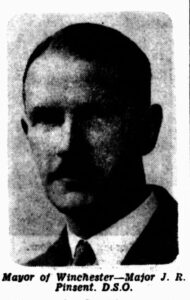
John Ryland was Winchester’s Mayor during the pre-war constitutional crisis caused by King Edward VIII’s insistence on marrying a divorced American woman – Wallis Simpson. King Edward decided to abdicate in favour of his younger brother, Albert (later to be known as King George VI), on 10th December 1936. What John Ryland thought of the matter isn’t on record. Nevertheless, when it came to the Coronation, it was Albert and not Edward who he watched being crowned in Westminster Abbey the following May. He there as a Civic official representing Winchester (Hampshire Advertiser: Saturday 15th May 1937).The City went through its traditional Coronation observances – including a Royal Salute “fired” on the Cathedral bells. However, it did so in the absence of its Mayor.
There were numerous foreign dignitaries in attendance at the Coronation including a group of French army officers who were also invited to attend a “Coronation Tattoo” at Aldershot. Later, they were to be the guests of the Mayor of Winchester, and he entertained them and showed them around the city (Lancashire Evening Post: 29th May 1937). I hope they were impressed by his “Legion of Honour Croix d’Officier” and by the fact that he addressed them in French (Hampshire Advertiser: Saturday 19th June 1937).
The Officers were also there to witness an “Empire Air Day” display put on by the “Royal Air Force” at “Worthy Down.” One of the main features was a demonstration of plane -to-plane radio usage during formation flying (Hampshire Advertiser: Saturday 29th May 1937). This was a skill that the “Royal Air Force” was shortly to make considerable use of in the conflict that was shortly to follow.
The RAF Base at “Worthy Down” had recently added a golf course to its amenities and it was officially opened by Air Commodore C. H. B. Blount, O.B.E., M.C. in September 1937. John Ryland and his son Laurence teed off against the Air Commodore and Squadron Leader Hayward and (tactfully) allowed them to win (Hampshire Advertiser: Saturday 11th September 1937).
In 1937, there were growing concerns about Germany and the threat of war was being felt in many different ways. At a meeting of the “City Council” that August, the Mayor explained that a proposed sewerage scheme would have to wait, as the steel pipe required for the project had been taken to meet the Navy’s re-armament needs. He did not expect to be getting replacement pipe any time soon (Portsmouth Evening News: 6th August 1937). Meanwhile, there were Regimental Dinners to attend: at a “Hants” (Hampshire) Regiment reunion the Mayor of Winchester. Major J. R. Pinsent “recalled the Regiment’s fine service in the Great War when battalions served on every theatre of war except one …” (Hampshire Regiment: Friday 12th November 1937).
John had the option of staying on as Mayor, but decided not to. He stepped down in favour of Councilor Richardson in November. It had been a particularly hectic year and Major and Mrs. Pinsent must have been relieved to see someone else take over. In “Referring to the retiring Mayor, Councilor Sankey said that Councilor Pinsent was a gentleman and a sportsman. He had declined to serve a second year but had indicated his willingness to take office again if his services were required” (Hampshire Advertiser: Saturday 13th November 1937).
John reverted to being a councilor; however, as there was a vacancy on the “Aldermanic bench” he was promptly re-elected and upgraded to “Alderman” (Portsmouth Evening News: 9th November 1937). The vacancy that that left on Council was filled by a by-election that December.
John Ryland’s term may have ended; however, there was still work to do. “Alderman John Ryland Pinsent, D.S.O.” was named to the “Land Tax Commission” for the County of Southampton (London Gazette: 22nd April 1938). Also, as he had retained his position as “Chairman of Winchester’s Education Committee” he had the unenviable task of telling the electorate that, although that year’s rate was set at 10s 6d in the pound, “additional expenditure would have to be met next year, and would probably lead to an increase in the rate” (Hampshire Advertiser: 5th March 1938).
The reason for this came clear in December when he presented to Council the scheme for reorganizing the city’s “Senior Elementary Schools” that he had hinted at at his investiture in 1936. The changes were expected to cost approximately £30,000 – which would account for his earlier statement about the rates. The plan called for the closure of some schools and construction of others with the help and support of the “County Education Authority” and the “Church of England” (Portsmouth Evening News: 8th December 1938). The Church was to receive a 75 per cent capital grant towards the rebuilding of some of their schools (Hampshire Advertiser: Saturday 7th May 1938). The City “Council” approved the plan but, in the light of the political climate, I am not sure it was ever implemented.
Sport and recreation were a priority with John Ryland and sometime in the 1930s he donated “Pinsent Camp” a six-acre site at Crabwood, just outside Winchester, to the “Boy Scouts”. t was meant for camping and related activities. The camp fell into disuse after the Second World War but regained relevance when the Winchester Scouts went looking for a site to build a year-round Scout training centre (Aldershot News: Friday 2nd April 1965). I am sure he would have approved of the centre. He had been refereeing “Boy Scouts'” sports events as early as 1934, while still a member of Winchester’s “Education Committee” (Hampshire Advertiser: Saturday 15th September 1934). How he found the time, I am not sure.
“Alderman Major J. R. Pinsent” lobbied hard for the construction of a covered swimming pool with adjoining squash and badminton Courts before the war, and in his capacity as “Chairman” of the “Juvenile Organizations Committee” he helped organized a boxing tournament in Winchester (Hampshire Advertiser Saturday 4th and 29th March 1939).
As “Chairman of the Winchester Education Committee,” John Ryland was responsible for looking after the billeting of boys evacuated to the city (Portsmouth Evening News: 9th September 1939). They, of course, increased the number of boys in the community and he felt they increased the need for more playing fields. In his capacity as chairman of the “Hampshire and Isle of Wight Playing Fields Association,” Major Pinsent lobbied hard for more – but was prevented from attending a critical meeting in June 1940 “by war work.” (Hampshire Advertiser: Saturday 1st June 1940). I doubt if he got any – my understanding is that many of the existing playing fields were converted into military camps or dug up and planted.
“Major J. R. Pinsent” had reached the age limit of liability for recall to the Army by the time the war started and he had been dropped from the “Reserve Officers’ List” (Yorkshire Post and Leeds Intelligencer: 13th August, 1938). Technically, he was a civilian and could have remained one; however, he rejoined anyway and was appointed “Officer Commanding” at “Royal Corps of Signals Officer Cadet Training Unit” (“O.C.T.U. 152”) at Catterick, in Yorkshire. His wife, Kathleen, stayed on in Winchester and opened up their house at “Prior’s Barton” to evacuees, and assisted in other “evacuation duties” (1939 Register).
John Ryland later spent several years in Command of a “War Office Selection Board” (“W.O.S.B.”) at Watford, in Hertfordshire. Between 6,000 and 7,000 men passed through his hands. Most were British; however, the board also processed 400 allied officers and approximately 600 Americans – who were sent to Watford to study psychological warfare before “D-day” (Yorkshire Post and Leeds Intelligencer: 20th February 1945).
According to Richard A. Chapman (The Civil Service Commission: 1855 – 1991) Colonel Pinsent (as he was then) received a visit from Sir Percival Waterfield towards the end of the war. He was looking for ways to improve the hiring process to be used by the “Civil Service” after the war. He was impressed by what he saw and, when the time came, he appointed Colonel Pinsent to head Britain’s first “Civil Servants Selection Board” (“C.S.S.B”).
There was considerable criticism of the selection method in 1948 as some (presumably the parents of “Public School” candidates who expected their children to be accepted through the “Old Boy Network System” ) felt that “many promising young men and women have their careers destroyed because they fail to pass the psychological tests (they take) at a week-end house party.” The “C.S.S.B” process was condemned by Lord Cherwell and others in the “House of Lords” (Daily News (London): Tuesday 28th May 1848). Nevertheless, other people, when they looked into it, thought it worked rather well (Daily News (London): Monday 24th May 1948.
One of the board’s successful candidates, John Godley, breached protocol and came to Colonel Pinsent’s defense. In an article published in the Daily Mirror (1st June 1948) he described the whole harrowing process. Apparently, Colonel Pinsent would entertain prospective candidates for a week-end at a Tudor manor house in Stoke D’Abernon, near Cobham, in Surrey. While there, the candidates were interviewed and monitored and given a wide range of simple and complex tasks to perform, and tests to complete. The Colonel deliberately created a high-pressure environment that was designed to show the candidates leadership qualities, tact and ability to work with others and think on his or her feet. The process ended with a probing interview before a panel of senior “Civil Servants”. Evidently, only 17 per cent of candidates passed – so it was not quite the joke that Lord Cherwell had implied.
After John Ryland’s death in 1957, one of his erstwhile colleagues had this to say about him: “John Pinsent’s experience as a soldier, a schoolmaster, as Commandant of an O.C.T.U. and president of a W.O.S.B., had given him a wide experience of young men and had left him with a judgment of character that was both penetrating and charitable. He was not to be convinced by opinions that were not backed by solid evidence and if, occasionally, he stretched a point in favour of the man with a gallant war record, his reports never concealed from the Final Selection Board where the risk might be.” He also noted that in a speech in the “House of Lords” on 26th May 1948, Lord Pakenham, the Chancellor of the “Duchy of Lancaster”, replying for the Government in a debated on “C.S.S.B.”, said: – “I cannot conclude this part of my account without expressing my strong personal admiration for the way in which the techniques of selection, whatever its merits or demerits in principle, had been applied and developed by the C.S.S.B. team under the wise, the Rhadamanthine presidency of Colonel Pinsent. … I myself found a fairness, a zeal, a humility and also a lack of fanaticism and dogma about their methods which I am sure will make a deep impression on any member of the House who is to visit them:” (The Times: 8th October 1957). Colonel Pinsent was appointed a “Commander of the British Empire” (C.B.E.) in the New Years’ Honours in 1948. He retired from the “Civil Service Selection Board” in 1950 and returned to Prior’s Barton, in Winchester. While there, in 1954, he joined the board of an engineering company (“Birfield Limited”).
John Ryland tended his garden: apparently, he was a great advocate of chicken manure and he gave a talk on the subject to the “Hampshire Group of the Soil Association” in June 1951 (New Milton Advertiser: Saturday 23rd June 1951). His home at Prior Barton was no ordinary site. It consisted of five acres of what had once been the home farm of the Priors of Winchester Cathedral. It was partially wooded and had a steam, and a sunken garden around the “Winchester Stone” – a pre-Norman cross-base. John and his wife, Kathleen, opened the garden to the public under the “National Gardens Scheme of the Queen’s Institute of the District of Nursing” in 1950 (New Milton Advertiser: Saturday 22nd April 1950), and after his death she allowed visitors most years through to at least 1965 (Aldershot News: Friday 9th April 1965).
Colonel John Ryland Pinsent, C.B.E., D.S.O., died at “Prior’s Barton”, in Winchester, on the 2nd October 1957 (Portsmouth Evening News: Friday 4th October 1957) and a memorial service was held for him in the Chapel of “Winchester College” the following week. It was well attended. Probate was granted to his widow, Kathleen May Pinsent, and to his sons, John Laurence Pinsent and Richard Alan Pinsent.
John Ryland’s eldest son, John Laurance Pinsent was born in 1916. He served in the armed forces, trained as a “lawyer” and joined the family firm of “Pinsent & Co.” as a solicitor. He then wen back to Devon to farm. His life is discussed elsewhere. His younger brother, Richard Alan Pinsent, was born in Winchester in 1931 and grew up at “Prior’s Barton”. He studied agriculture and, after spending time in the Bahamas, married in Dorset in 1954. His life is also discussed elsewhere.
Family Tree
Grandparents
Grandfather: Richard Steele Pinsent: 1820 – 1864
Grandmother: Catherine Agnes Ross: 1830 – 1906
Parents
Father: Richard Alfred Pinsent: 1852 – 1948
Mother: Laura Proctor Ryland: 1855 – 1931
Father’s Siblings (Aunt, Uncles)
Adolphus Ross Pinsent: 1851 – 1929
Richard Alfred Pinsent: 1852 – 1948
Edith Mary Pinsent: 1853 – xxxx
Hume Chancellor Pinsent: 1857 – 1920
Male Siblings (Brothers)
Roy Pinsent: 1883 – 1978
Clive Pinsent: 1886 – 1948
John Ryland Pinsent: 1888 – 1957
Laurence Alfred Pinsent: 1894 – 1915
Philip Ryland Pinsent: 1897 – 1916
Please use the above links to explore this branch of the family tree. The default “Next” and “Previous” links below may lead to other unrelated branches.