Pinson Name Meaning:
English and French: from Old French pinson ‘finch’, perhaps a nickname applied to a bright and cheerful person. English and French: metonymic occupational name for someone who made pincers or forceps or who used them in their work, from Old French pinson ‘pincers’ (a derivative of pincier ‘to pinch’). [Dictionary of American Names @2013, Oxford University Press]
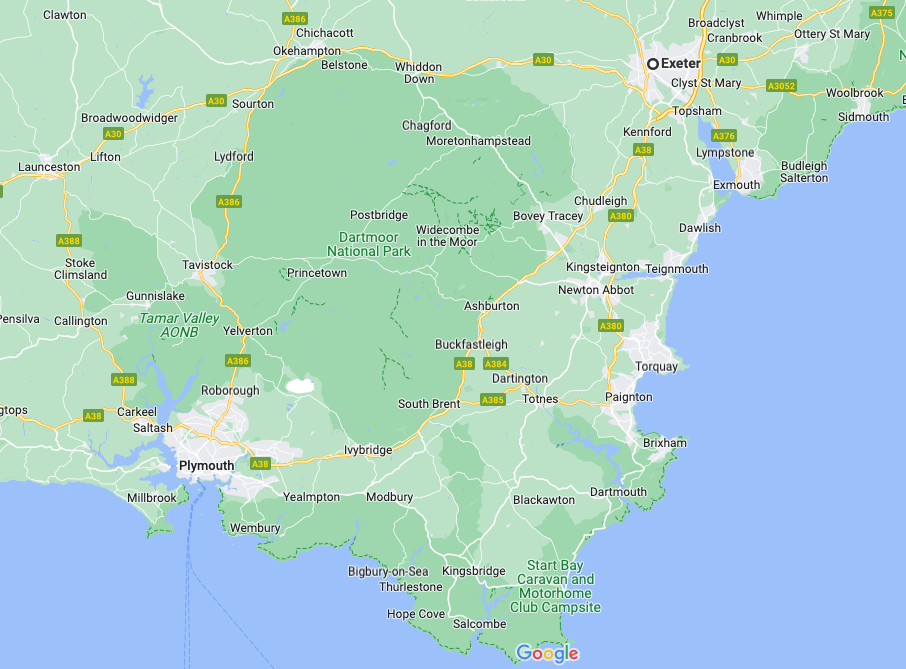
Welcome to the Pinsent family – an offshoot of the Norman-French Pinson (“Pincon”) family that settled in Devon, in England, sometime after the Battle of Hastings (1066). It would be nice to think that a bunch of happy pincer makers made their way across from France, but many of the early arrivals must have had a somewhat higher social standing as their names appear in relatively high-level Government documents.
This website describes the Devonshire branch of the English “Pinson” family as it evolved into the “Pinsent” family in the 16th Century and split into several distinct lines that made their way through to modern times. It is suitable vague about living “Pinsents” but it does discuss their forebears – often in considerable detail. There is plenty of documentary evidence to show that the Devonshire “Pinson” and “Pinsent” families are related, and there may be DNA data (or more likely coincidence) to back up the proposition. However, the split occurred a long time ago. If you are interested in the “Pinsents,” then read on!
In the introductory section, you will find discussions on the Creation, Design, and Content of the database and some broad observations on the History of the family. The latter includes a section on its Early Days in Devonshire. Elsewhere, you will find equally broad-brush reviews of the recent and current English Family Branches and biographical descriptions of their principal male members. The database will (eventually) include Birth, Marriage and Death dates as well as transcripts of critical data used in the various discussions. It has a section on Resources that is still very much a work in progress.
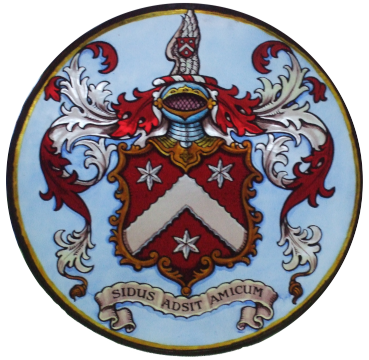
For those interested, I also attach a book I wrote entitled “The Pynsent Baronetcy: The Trials and Tribulations of a Litigious Family: 1687-1765.” It was written in 2014 and describes an important but broken branch of the Pinsent/Pynsent family tree. The coat of arms (shown here) is that of Sir William Pynsent, a member of this highly litigious family who was, sadly, predeceased by his children. He left his considerable estate to William Pitt, the “Great Commoner,”– who promptly ditched the House of Commons and moved up to the House of Lords as Earl of Chatham!